Every team is a data team — bring Amazon Redshift analytics to ChatGPT Work | Amazon Web Services

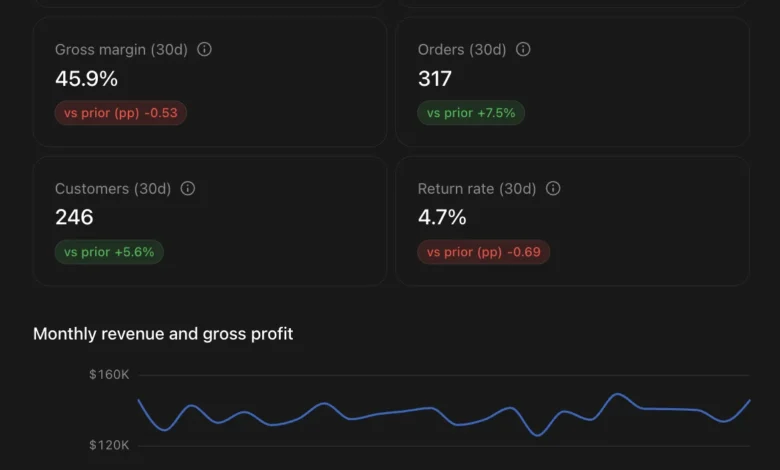
Amazon Web Services (AWS) has officially launched the AWS Data Analytics plugin, a significant integration designed for the newly unveiled Data agent within ChatGPT Work. This development marks a pivotal shift in how enterprise organizations interact with their data, moving away from traditional, siloed SQL-based querying toward a more intuitive, conversational interface. By connecting Amazon Redshift—AWS’s flagship cloud data warehouse—directly to ChatGPT Work, the plugin allows non-technical business users to query massive, governed datasets using everyday natural language.
The release addresses a longstanding bottleneck in business intelligence: the friction between the data engineering teams who maintain complex infrastructure and the business leaders who require immediate insights. By automating the translation of natural language queries into optimized SQL, AWS aims to democratize data access while maintaining the rigorous security and governance standards required by large-scale enterprises.
The Evolution of Conversational Analytics
For over a decade, Amazon Redshift has served as a cornerstone for organizations seeking to run demanding analytics at scale. Since its inception, Redshift has evolved from a simple data warehouse into a comprehensive analytics engine capable of spanning data warehouses and data lakes. With the rise of generative AI, the industry has seen a push toward "natural language processing for SQL," but earlier iterations often struggled with the nuances of enterprise-specific metadata and complex join logic.
The integration with ChatGPT Work’s Data agent represents the next phase of this evolution. The chronology of this rollout follows a year of rapid advancement in agentic workflows. In early 2024, industry leaders began emphasizing the "agentic" nature of AI—systems that do not just provide text responses but perform tasks across multiple environments. The AWS Data Analytics plugin utilizes this agentic architecture to navigate the complexities of Amazon Redshift, identifying appropriate tables, columns, and metric definitions without requiring the user to have a background in database architecture.
Supporting Data and Infrastructure Capabilities
The technical underpinnings of this plugin rely on the Agent Toolkit for AWS, which provides the necessary specialized "skills" for an AI agent to interface with cloud services. The plugin supports both Amazon Redshift provisioned clusters and Serverless workgroups, ensuring that organizations of varying sizes can adopt the technology without re-architecting their current environments.
Key capabilities supported by the integration include:
- Automated SQL Synthesis: The plugin converts user questions into syntactically correct and performant SQL queries tailored to Redshift’s specific architecture.
- Context-Aware Dialogues: The agent maintains state, allowing users to ask follow-up questions—such as drilling down into regional revenue or comparing performance across different quarters—without needing to restate the initial query parameters.
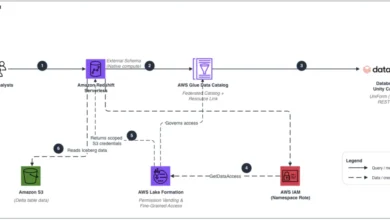
- Governed Access: The plugin operates within the organization’s existing identity and access management (IAM) framework. This ensures that a sales representative can only query data for which they have explicit authorization, preventing the accidental exposure of sensitive financial or personal information.
- Cross-Service Integration: The plugin leverages the broader AWS ecosystem, enabling the agent to tap into AWS Glue Data Catalog, Amazon S3 Tables, and Amazon Athena to synthesize data from both structured warehouses and unstructured data lakes.
Official Perspectives on the Integration
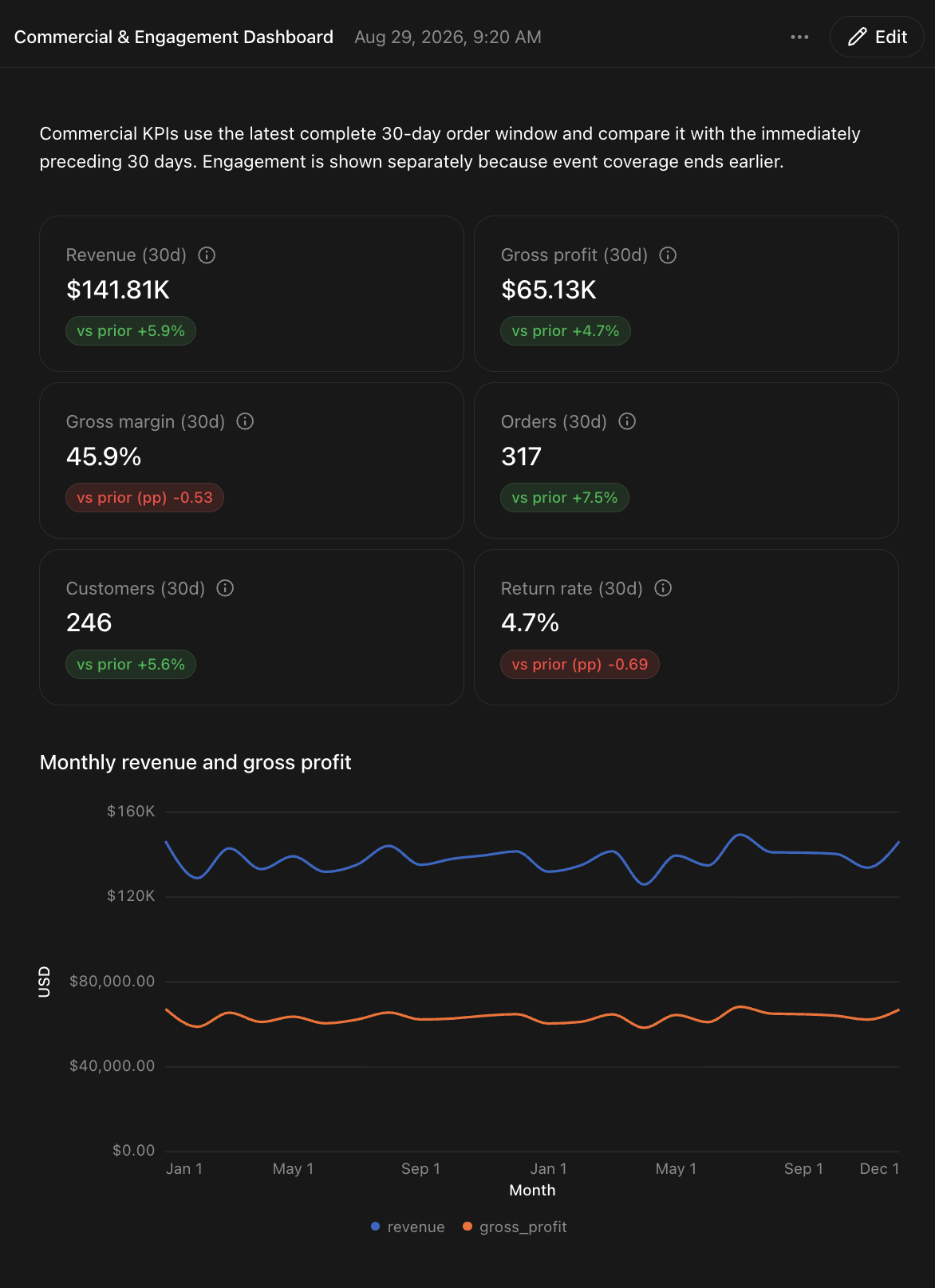
The collaboration between AWS and OpenAI reflects a broader trend of ecosystem convergence. Arpan Shah, General Manager of Technology at OpenAI, emphasized the strategic importance of this integration, noting that business teams achieve higher velocity when they can source their own analytics. "Our work with AWS gives more people that ability, helping them understand changes in performance and decide where to focus," Shah stated. By bridging the gap between conversational AI and governed corporate data, the collaboration effectively turns a standard chat interface into a powerful business intelligence dashboard.
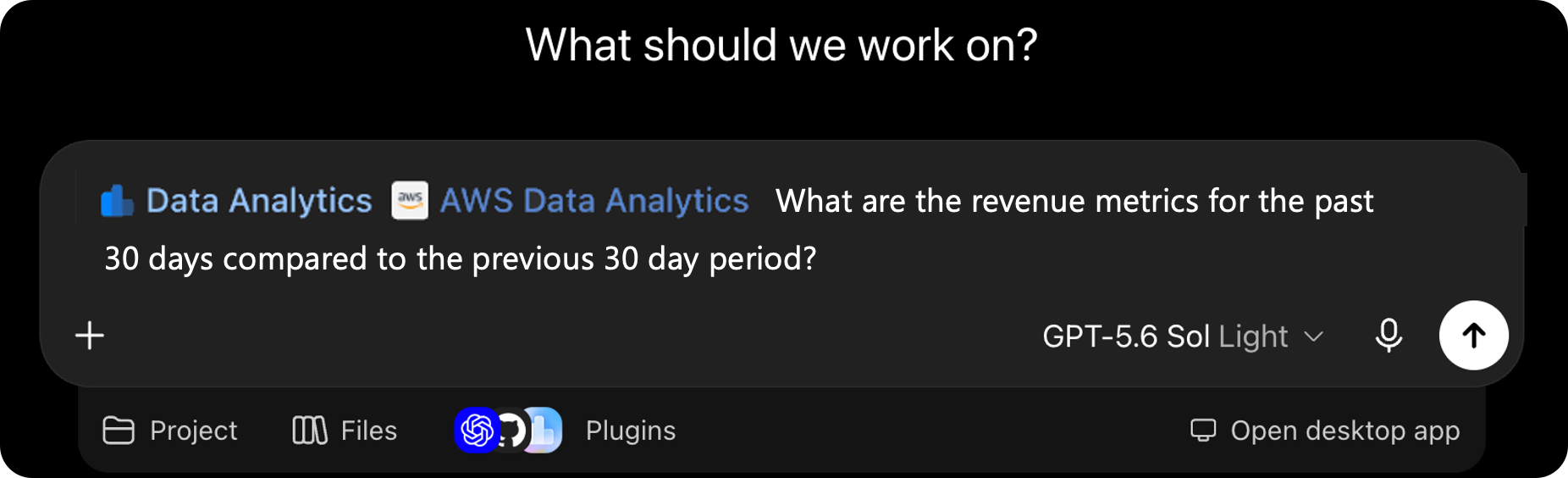
From the AWS perspective, the goal is to free up data analysts and engineers from the mundane task of "ticket-based" reporting. Currently, in many organizations, an operations manager might wait several days for a data analyst to fulfill a request for a custom report. By empowering the manager to run that query in seconds via a chat interface, AWS anticipates a significant reduction in operational latency and a corresponding increase in data-driven decision-making.
Analysis of Implications for the Data Market
The introduction of the AWS Data Analytics plugin carries several implications for the data and analytics market. First, it signals the commoditization of the "dashboard." For years, the creation of static, interactive dashboards via tools like QuickSight, Tableau, or Power BI has been the standard. While these tools remain essential for long-term reporting, the ability to generate "ad-hoc" insights through a conversation suggests a shift toward more ephemeral, task-specific analytics.
Second, the move emphasizes the importance of data governance as a prerequisite for AI success. The plugin does not "scrape" data; it queries it. This distinction is crucial. Organizations that have invested in cleaning their data, defining clear schemas, and implementing robust access controls in Amazon Redshift will be the primary beneficiaries. Companies with "data swamps"—unstructured and poorly documented data lakes—will find that even the most sophisticated AI agent cannot extract meaningful, reliable insights without the underlying structural foundation.
Finally, the shift toward agentic AI indicates that cloud providers are moving away from being just infrastructure hosts to becoming "intelligence layers." By providing the tools for AI to operate within their cloud environments, AWS is securing its position as the primary platform where the most sensitive and valuable corporate data lives.
Future Outlook and Operational Best Practices
As enterprises begin to integrate these agents into their workflows, industry experts suggest a phased implementation approach. Organizations are encouraged to:
- Audit Data Cataloging: Ensure that all critical business metrics are documented within the AWS Glue Data Catalog so the agent can discover and correctly interpret them.
- Define Security Policies: Since the agent operates on behalf of the user, ensure that Row-Level Security (RLS) and Column-Level Security (CLS) are strictly enforced in Redshift to match the user’s organizational role.
- Monitor Query Performance: While the agent is designed to construct efficient queries, the introduction of natural language querying can lead to a surge in database requests. Monitoring usage patterns via Redshift’s query history will be essential for managing compute costs, particularly in provisioned cluster environments.
The AWS Data Analytics plugin for ChatGPT Work serves as a bridge between the sophisticated, highly structured world of cloud data warehousing and the intuitive, accessible world of generative AI. By lowering the barrier to entry for data exploration, AWS is setting a new standard for how organizations interact with their digital assets. As the adoption of this tool scales, the focus for enterprises will likely shift from "how do we get the data" to "what questions should we be asking," effectively moving the needle toward a more profound, data-centric organizational culture.
In summary, the plugin is not merely an automation tool; it is a catalyst for cultural change within the enterprise. It acknowledges that the most valuable insights often come from the people closest to the business operations, provided they are given the tools to interact with their data on their own terms. As this technology matures, the ability to converse with one’s own data will likely become a baseline requirement for competitive businesses in the global digital economy.