The UX Professional as Architect of Intelligence: Why Prompting is Simply Brief Writing Redefined

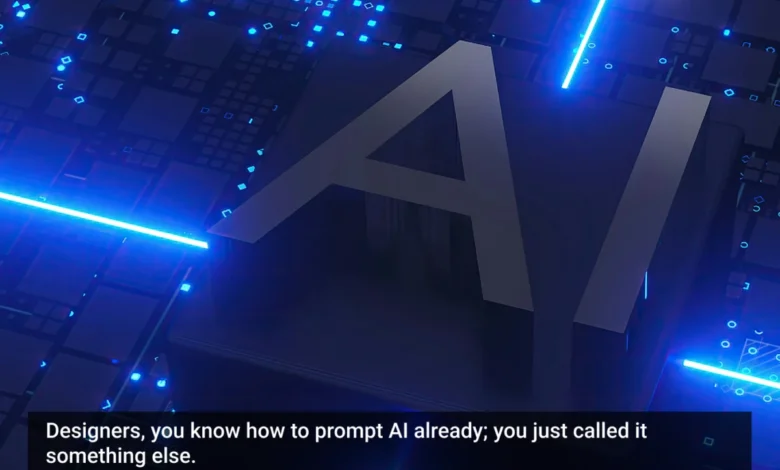
The rapid emergence of generative artificial intelligence has sent shockwaves through the global design community, triggering a debate that has lasted for over two years. At the center of this discourse is a pervasive and potentially damaging misconception: that AI is destined to replace the human designer. However, as the industry matures in its adoption of these tools, a more pragmatic framework has emerged. Rather than viewing AI as a replacement, forward-thinking practitioners are categorizing it as an exceptionally fast, tireless, and well-read intern. Like any junior colleague, this intern requires clear direction, rigorous judgment, and firm accountability from a senior lead. This realization shifts the focus of the conversation from technical mastery of software to the refinement of a core professional competency: the ability to craft a precise, actionable, and context-rich design brief.
The Evolution of the Design Brief in the AI Era
For decades, the design brief has served as the foundational document for any successful creative project. It is the vehicle through which a lead designer communicates the objective, audience, constraints, and tonal requirements to a team. When a designer drafts a brief, they are not merely writing instructions; they are constructing a mental model that allows another party to make autonomous, high-quality decisions.
In the current professional landscape, the "prompt" has become the modern iteration of this process. The industry’s preoccupation with the term "prompt engineering"—a phrase borrowed from software development—has arguably done a disservice to design professionals. It frames interaction with AI as a technical, coding-adjacent skill to be learned from scratch. In reality, the skills required to prompt an AI effectively are the exact same skills that senior designers and researchers have spent their entire careers cultivating. A professional who can brief a copywriter, mentor a junior designer, or outline a complex user research study is already equipped with the foundational capabilities to command large language models. The surface has changed, but the underlying competence remains rooted in the principles of human communication and strategic intent.
Supporting Data and Industry Projections
The shift toward AI-integrated workflows is not merely a trend; it is a fundamental transformation of the global labor market. According to the World Economic Forum’s Future of Jobs Report 2025, AI and big data fluency are projected to be the fastest-growing skills demanded by employers through 2030. The report estimates that approximately 39% of core professional skills will change significantly within this five-year window.
This transformation creates a unique opportunity for UX professionals. While technical roles like machine learning engineers have historically dominated the AI conversation, the current market reality suggests that the ability to define what an AI produces is becoming more valuable than the ability to build the underlying architecture. Data from the Nielsen Norman Group suggests that the highest-value contributors in product teams today are those who bring UX-led frameworks to the questions of how AI should behave, what it should produce, and how those outputs should serve the human user.
A Chronology of the Prompting Paradigm
The trajectory of this shift can be traced through three distinct phases:
- The Phase of Initial Distrust (2022–2023): Following the public release of advanced generative models, the design community experienced widespread anxiety regarding job security. This era was marked by a binary view of AI—either as a tool to be avoided or a threat to be managed.
- The Phase of Technical Mystification (2023–2024): The rise of "prompt engineering" as a career path led many designers to believe they needed to learn complex, syntax-heavy commands. This period saw the proliferation of "prompt libraries" and the adoption of software-centric terminology.
- The Phase of Strategic Integration (2025–Present): The industry has begun to reconcile with the fact that AI performs best when it is treated as a collaborative partner. This phase emphasizes "intent-based communication," where the designer’s experience in managing ambiguity, iterating on feedback, and empathizing with users is recognized as the primary engine for effective AI interaction.
The Anatomy of an Effective Interaction
A successful prompt, much like a successful design brief, must contain four critical elements. When any of these are missing, the output loses its strategic value.
- The Goal: Moving beyond vague requests. A prompt asking to "write onboarding copy" yields generic, unusable results. A prompt specifying that the goal is "to convert first-time visitors from paid search into newsletter subscribers for a financial planning product" allows the AI to align its output with measurable business objectives.
- The Audience: The AI lacks an inherent understanding of human context. Designers must provide specific user personas—including their knowledge levels, skepticism, and environmental context—to ensure the output is relevant.
- The Constraints: Creativity without boundaries often leads to irrelevant solutions. By defining technical limitations, regulatory requirements, and brand guidelines, the designer sets the parameters within which the AI can operate effectively.
- The Context: Unlike a human colleague, an AI does not carry a memory of previous project meetings or organizational history. Every prompt must be treated as a fresh entry point that provides the necessary background to prevent the model from making flawed assumptions.
Implications for Organizational Structure
The current "prompt engineering" narrative presents a strategic risk to organizations. When AI interaction is relegated solely to technical roles, the product development cycle often suffers from a disconnection between machine capability and user needs. If engineers define the workflows but lack the nuance of UX design, the resulting product may be technically functional but fail to address the core problem for the user.
To mitigate this, design teams must move beyond the role of "output consumers"—where they receive AI-generated content to refine—and become "workflow architects." This involves defining the system prompts that govern AI behavior, designing the user flows that incorporate AI, and establishing the evaluation frameworks to ensure the AI’s output is not just plausible, but genuinely useful.
Addressing the Failure Modes
The most common reasons for AI failure in a design workflow are remarkably similar to the failure modes of poorly written briefs. These include:
- Ambiguity in Intent: Failing to define the "what" and the "why," leading the AI to hallucinate or provide overly broad solutions.
- Lack of Iterative Feedback: The belief that a single prompt should yield a perfect result. In reality, the most sophisticated design work is iterative; the AI should be treated as an initial draft generator that requires multiple rounds of refinement and critical evaluation.
- Ignoring System Limitations: Treating the AI as a human expert rather than a probabilistic model. Designers who understand the limitations of the system—such as its tendency to prioritize statistical likelihood over factual accuracy—are better prepared to build guardrails into their prompts.
Conclusion: The Strategic Opportunity
The transition of the design profession into the age of AI is not a story of replacement, but one of evolution. The professional who recognizes that their brief-writing competence translates directly to AI prompting fluency is positioned to lead the next generation of product development.
The task for designers today is to stop waiting for external technical guidance and start applying their existing expertise in communication and strategy to these new tools. The interface between human intent and machine output is, fundamentally, a design challenge. By reclaiming the narrative and asserting their role as the architects of intelligence, designers can ensure that the next wave of digital products is defined by human-centric values rather than merely technical output. The tools have changed, but the requirement for clear, precise, and empathetic communication has never been more critical.