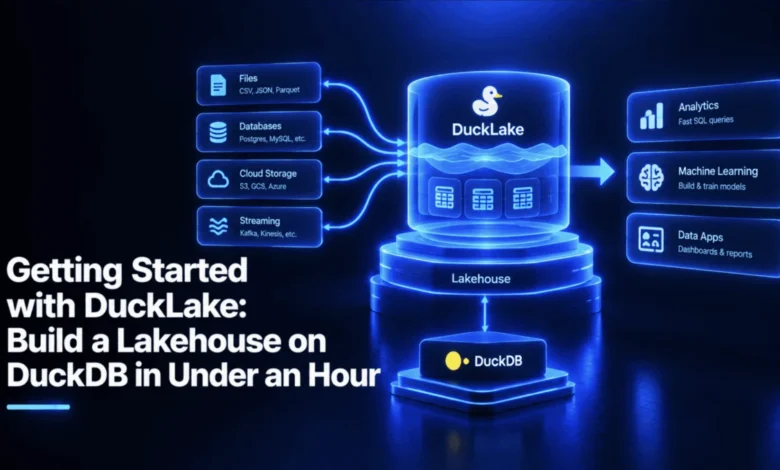
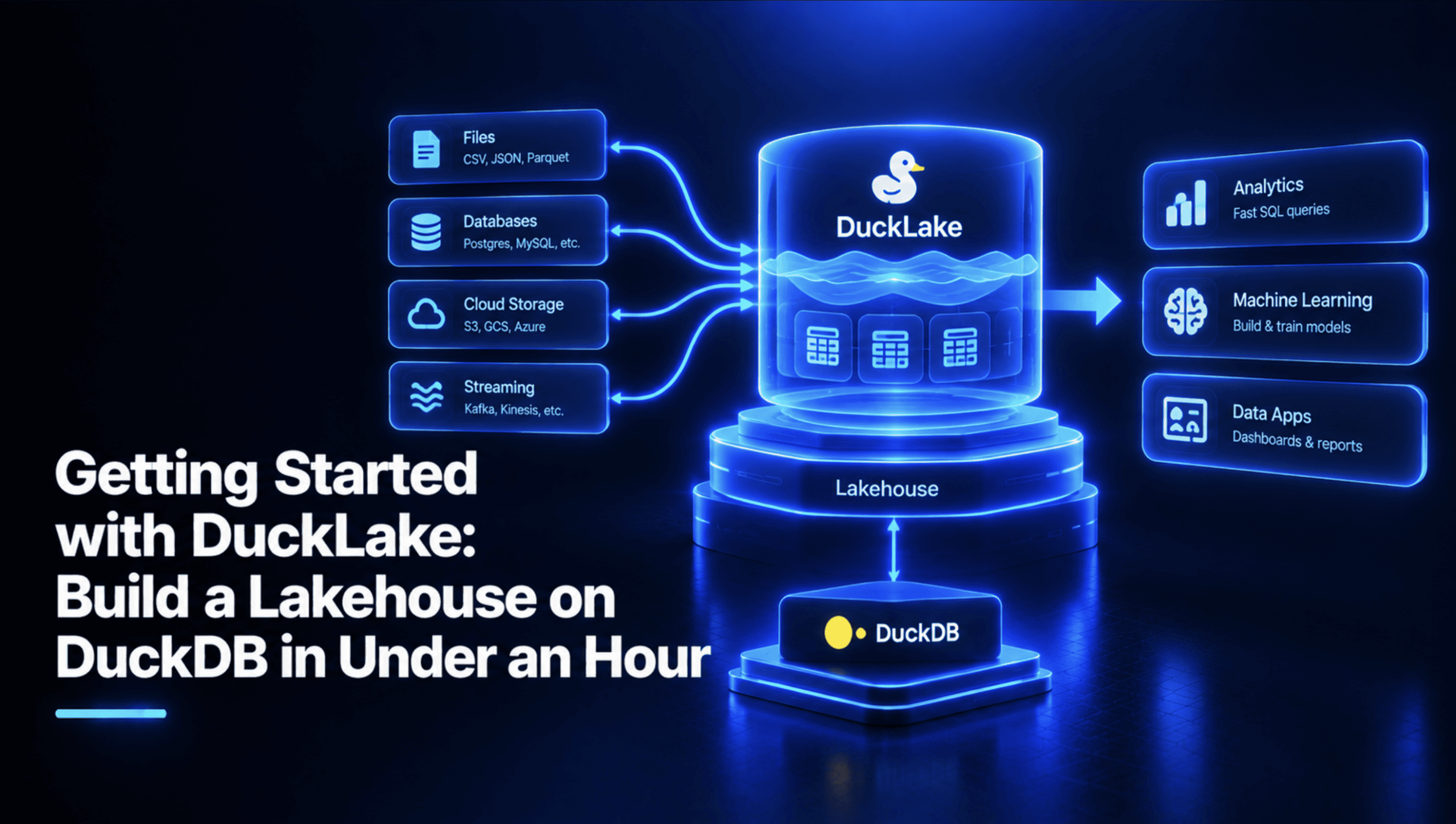
The release of DuckLake 1.0 in April 2026 marked a significant shift in the landscape of data architecture, offering a lightweight, open lakehouse table format specifically optimized for the DuckDB ecosystem. By decoupling table metadata—housed in a traditional SQL-compliant catalog—from raw data stored in Apache Parquet files, DuckLake provides a streamlined alternative to complex, large-scale data lake formats like Apache Iceberg or Delta Lake. This article explores the architecture, implementation, and operational implications of adopting this technology for local and distributed analytical workloads.
Architectural Foundations of DuckLake
At its core, DuckLake operates on a principle of simplicity. Unlike other table formats that rely heavily on manifest files and complex metadata structures stored alongside data, DuckLake leverages the transactional integrity of SQL databases. Whether using DuckDB for local tasks, SQLite for multi-client access, or PostgreSQL for enterprise-grade concurrency, the catalog maintains essential information including table lists, schema definitions, snapshot histories, and file-level statistics.
This design choice allows developers to perform operations that would typically require specialized engines using standard SQL queries. Because the system relies on ACID-compliant catalog databases, it ensures that table updates remain consistent. However, developers must note that DuckLake, by design, does not implement traditional database constraints such as primary keys, foreign keys, or unique and check constraints, favoring instead the performance and flexibility inherent in a lakehouse environment.
The Evolution of Modern Data Lakehouse Formats
The rise of the lakehouse architecture has been driven by the need to combine the cost-effectiveness and scalability of data lakes with the performance and ACID guarantees of data warehouses. Traditional formats like Apache Iceberg emerged to solve the "file-listing problem"—the performance degradation experienced when data lakes grew to contain millions of files. By using metadata to track files, these formats significantly improved query planning.
DuckLake enters this space with a distinct philosophy: instead of inventing a new file-based metadata standard, it utilizes the existing, highly optimized SQL engine of the host database to manage metadata. This reduces the overhead of maintaining proprietary metadata formats and integrates natively with the existing SQL-based tooling used by data engineers.
Chronology and Implementation: A Practical Workflow
To implement a DuckLake environment, developers must first ensure compatibility with DuckDB v1.5.2 or later. The installation process is straightforward, requiring the DuckDB Python package and the subsequent dynamic loading of the ducklake extension.
The practical lifecycle of a DuckLake implementation follows a rigorous sequence:
- Data Ingestion: Utilizing standard Parquet files, users define the baseline for the lakehouse.
- Snapshot Creation: Every write operation—whether an insertion, update, or schema evolution—triggers the creation of a new snapshot. This provides a granular historical record.
- Schema Evolution: DuckLake supports schema modifications, such as adding or renaming columns, through metadata operations. These actions update the catalog without requiring a full rewrite of the underlying Parquet files, providing significant time and resource savings.
- Time Travel: By utilizing the
AT (VERSION => n)syntax, users can query the state of a table at any historical point, facilitating debugging and data recovery. - Maintenance: To maintain performance, administrators must perform routine housekeeping, such as merging small adjacent Parquet files and expiring obsolete snapshots to reclaim storage space.
Operational Data and Performance Considerations
Data inlining is a notable feature within the DuckLake framework. By default, small write operations (typically involving 10 rows or fewer) are stored directly within the catalog database rather than being written to new Parquet files. This minimizes the creation of "small file syndrome," a common performance bottleneck in big data systems where high counts of tiny files increase I/O latency.
For developers managing larger datasets, the ducklake_merge_adjacent_files utility is essential. This tool consolidates smaller, neighboring files that share the same schema version, thereby optimizing query performance. However, because DuckLake retains all historical data files to support time-travel functionality, storage costs can escalate if snapshot expiration policies are not properly configured. Organizations are advised to implement a strict retention schedule alongside the CHECKPOINT command to manage long-term storage footprints effectively.
Multi-User Environments and Scaling
While the default DuckDB-file catalog is ideal for single-user, local analytical workflows, it is inherently limited by its architecture. For teams requiring multi-user access or high-concurrency environments, DuckLake supports migration to PostgreSQL. By swapping the catalog backend to a PostgreSQL instance, teams can maintain the same DuckLake syntax while gaining the benefits of a robust, server-based transactional database. This transition requires minimal code changes, primarily involving the adjustment of the ATTACH command to point to a PostgreSQL connection string.
Industry Implications and Future Roadmap
The integration of DuckDB Labs into the Amazon Web Services (AWS) ecosystem in late 2026 has catalyzed speculation regarding the future of DuckLake. As DuckDB continues to iterate, the roadmap for version 2.0 indicates a focus on more advanced features, including git-like branching and incremental materialized views.
The industry impact of these developments is twofold. First, it democratizes the lakehouse architecture, allowing individual engineers and small teams to build robust, version-controlled data pipelines without the complexity of deploying a full-stack data platform. Second, it shifts the focus of data management toward "client-server" flexibility, where the same logical schema can be deployed on a laptop for development and on a cloud-based PostgreSQL instance for production.
Fact-Based Analysis of Utility
The primary advantage of DuckLake is the reduction of "metadata friction." In many enterprise data lakes, the synchronization between data storage (S3, GCS) and the metadata catalog (Glue, Hive Metastore) is a frequent point of failure. By binding these two components via an ACID-compliant SQL catalog, DuckLake eliminates the need for external synchronization tools.
However, users must exercise caution regarding the lack of native database constraints. In an environment without primary key enforcement, data integrity must be managed at the ingestion layer. Developers must ensure that their ETL processes are robust enough to handle deduplication and validation before data is committed to the DuckLake structure.
Conclusion and Best Practices
As the data landscape moves toward more modular and lightweight solutions, DuckLake offers a compelling case for organizations seeking to simplify their stack. Successful adoption hinges on a disciplined approach to maintenance. Administrators must prioritize:
- Strategic Snapshot Management: Define retention windows to balance the need for historical auditing with the reality of storage costs.
- Routine Maintenance: Schedule regular file merging to prevent performance degradation.
- Catalog Security: When migrating to a multi-user environment, treat the catalog database (PostgreSQL) with the same security protocols as any primary production database, as it contains the "source of truth" for the entire lakehouse.
As the ecosystem matures toward the release of version 2.0, the synergy between DuckDB’s high-performance analytical engine and the flexible, SQL-based metadata management of DuckLake suggests a continued trend toward local-first, portable data architectures. For teams currently struggling with the maintenance overhead of heavier formats, DuckLake provides a streamlined, highly capable alternative that aligns with modern development workflows.