Crosslam Unveils Aurora 275: Brazil’s Tallest Hybrid Mass-Timber Building Redefines Sustainable Urban Construction

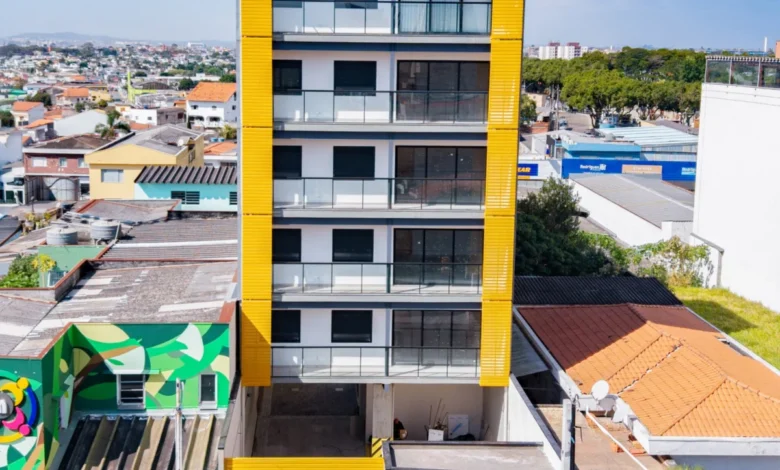
Engineering and construction firm Crosslam has officially unveiled Aurora 275, a groundbreaking hybrid mass-timber apartment building located in the Suzano municipality of São Paulo, Brazil. Standing at an impressive 22 meters tall, the structure is celebrated by its creators as the tallest building of its specific type in the country. By combining a reinforced concrete core and metal framing with advanced mass-timber elements—including glued-laminated timber (glulam) beams, columns, and cross-laminated timber (CLT) floorplates—Aurora 275 represents a pivotal shift in the nation’s architectural and real estate sectors. The project not only showcases the untapped potential of engineered wood within South America’s largest economy but also provides a tangible blueprint for industrialised housing production, carbon-neutral construction, and rapid project delivery in densely populated urban environments.
Main Facts and Structural Anatomy of Aurora 275
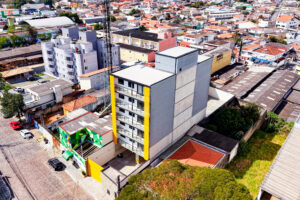
Rising 22 meters into the skyline of Suzano, Aurora 275 is a masterclass in hybrid structural engineering. While traditional high-rise and mid-rise developments in Brazil rely almost exclusively on reinforced concrete or steel, Aurora 275 introduces a sophisticated structural synergy. The building’s backbone is formed by a robust reinforced concrete core, which provides essential lateral stability, wind resistance, and vertical circulation paths. Radiating outward from this central core are metal structural components and extensive mass-timber elements.
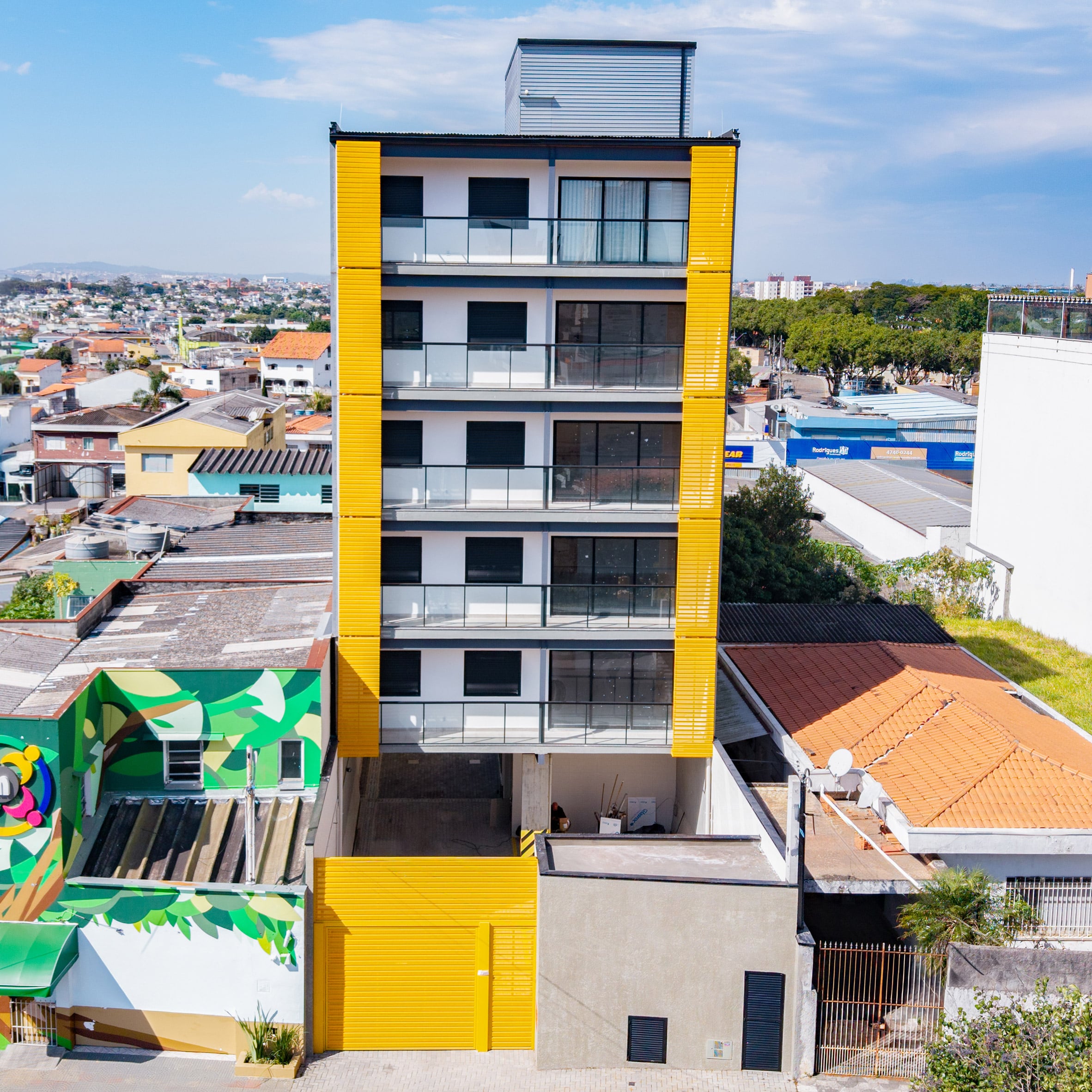
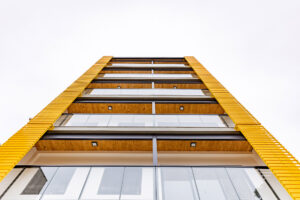
The building spans a total of ten residential apartments, each thoughtfully designed with private balconies that extend outward in two primary directions. Externally, the building features a sleek, modern metal-clad facade highlighted by striking yellow detailing that runs vertically up its face, creating a distinct visual identity among the surrounding lower-rise residential structures. On the exterior, the natural timber is discreetly showcased along the undersides of the balconies.
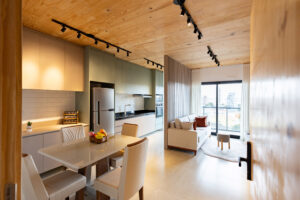
Step inside, however, and the architectural philosophy shifts dramatically. The interior spaces celebrate the natural warmth and aesthetic appeal of wood. Exposed glulam beams and visible cross-laminated timber floorplates define the ceilings and structural grid of each apartment, offering residents a biophilic living environment that connects urban inhabitants with natural materials. All timber used in the construction was locally sourced within Brazil and manufactured to precise engineering standards directly inside Crosslam’s specialized production facility.
The Chronology and Genesis of the Project
The realization of Aurora 275 was not merely an architectural commission, but a calculated strategic initiative conceived by Crosslam to alter the trajectory of the Brazilian construction market. Traditionally operating behind the scenes as an engineering consultant and structural subcontractor for external developers, Crosslam recognized a profound hesitation within the local industry regarding mass-timber construction.
In Brazil, the construction sector has historically remained deeply entrenched in conventional methods, viewing concrete and brick as the only reliable, cost-effective, and code-compliant materials for multi-story residential developments. Engineered wood, despite its massive global adoption across Europe and North America, was largely perceived by local developers as risky, expensive, and unproven for vertical growth.
Driven by the desire to break this market inertia, Crosslam’s leadership decided to step into the role of both developer and builder. "We believed that, to sell the first timber building, we first had to build our own," explained Crosslam founder José Alberto Corrêa. "Otherwise, the Brazilian market wouldn’t trust that it was possible."
The timeline for the project highlights the astonishing efficiency of mass-timber construction when paired with prefabrication. Once site preparations and the foundational concrete core were completed, the actual assembly of the superstructure took place in a remarkably brief window of just four weeks. The entire installation was executed by a lean, highly specialized team of only five workers. This rapid deployment starkly contrasts with the months or even years typically required to build traditional concrete structures of comparable scale, underscoring the logistical and temporal advantages of prefabricated engineered wood.
Supporting Data and Technical Advantages of Mass Timber
The completion of Aurora 275 brings to light a wealth of technical, environmental, and economic data that champions mass-timber construction as a viable alternative to carbon-intensive building materials. According to the project engineering team, utilizing engineered wood introduces unprecedented efficiencies through the industrialization of the construction process.
The primary advantages demonstrated by the Aurora 275 project include:
- Accelerated Assembly Speed: Prefabricated components manufactured off-site allow for a just-in-time delivery model, drastically reducing on-site construction timelines by up to 75 percent compared to traditional methods.
- High Dimensional Precision: Computer Numerical Control (CNC) cutting ensures that beams, columns, and panels fit together with millimeter-level accuracy, eliminating costly on-site adjustments.
- Minimized Construction Waste: Because timber elements are pre-cut and manufactured to exact specifications in a controlled factory environment, on-site material waste is reduced to near zero.
- Structural Weight Reduction: Timber structures are significantly lighter than concrete equivalents, which translates to reduced foundation loads and lower seismic vulnerability.
- Environmental Impact and Carbon Sequestration: Trees absorb carbon dioxide as they grow, locking the carbon within the wood fibers for the lifetime of the building. Furthermore, Crosslam has certified that Aurora 275 is a carbon-neutral development, counterbalancing the embodied carbon of its metal and concrete components through the biogenic carbon stored in its mass-timber framework.
Official Responses and Industry Perspectives
The unveiling of Aurora 275 has sent ripples through the Brazilian architectural, engineering, and real estate communities, prompting widespread discussion about the future of urban development in the region. Industry experts and municipal planners have lauded Crosslam for taking a bold, pioneering risk to demonstrate what is technically achievable under current Brazilian building codes.
Architectural analysts point out that while Brazil possesses vast forestry resources and a booming timber industry—particularly in sustainably managed pine and eucalyptus plantations—the country has historically exported the vast majority of its high-value processed wood rather than utilizing it for domestic high-rise construction. Aurora 275 serves as a physical proof-of-concept that domestic resources can be channeled directly into high-density urban housing solutions.
Furthermore, reactions from structural engineering associations emphasize that the success of the hybrid system used in Aurora 275—pairing a concrete core with glulam and CLT—offers a pragmatic roadmap for tropical climates. By shielding vulnerable timber elements behind protective facades while exposing them strategically on the interior, the design addresses concerns regarding moisture, humidity, and weathering that are critical considerations in São Paulo’s subtropical climate.
Broader Impact, Global Context, and Future Implications
The completion of Aurora 275 arrives at a time of profound global transformation in the construction industry. Across North America and Europe, mass timber has transitioned from an experimental niche into a mainstream movement, with towering timber office blocks and residential complexes redefining city skylines. This global momentum recently reached a monumental milestone in Australia, where the world’s tallest timber hybrid tower, Atlassian Central in Sydney, topped out, cementing mass timber as a premier material for the 21st century.
By introducing Aurora 275 to South America, Crosslam has successfully bridged the technological gap between the Global North and emerging markets in the Global South. The broader implications of this project for Brazil and Latin America are immense. As urbanization accelerates and the demand for affordable, high-density housing intensifies, cities face mounting pressure to reduce the carbon footprint of the built environment. Buildings account for a staggering share of global greenhouse gas emissions, with cement and steel production alone responsible for a significant percentage of industrial carbon output.
Transitioning toward mass-timber construction offers an actionable pathway toward meeting international climate targets and achieving net-zero urban development. For Brazil, Aurora 275 demonstrates that sustainable mass-timber housing is not a distant utopian ideal, but a present-day reality achievable through local labor, local forestry, and forward-thinking engineering.
As Crosslam pivots from proving the concept to marketing mass-timber solutions to commercial developers across the country, Aurora 275 will likely stand not just as the tallest building of its kind in Brazil today, but as the foundational catalyst for a much larger architectural revolution across the region.
Related posts: