Australian Design Studio YSG Transforms Diluted Bali Concrete Bunker into Moon Gang Boutique Hotel

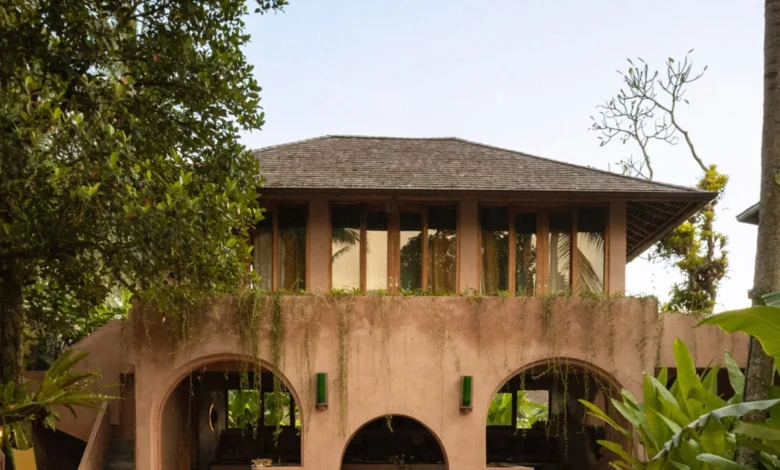
Nestled quietly amid the emerald-hued rice fields of the northern outskirts of Ubud, Bali, a former private vacation residence that once languished in severe disrepair has undergone a radical architectural metamorphosis. Conceived and executed by the Australian multidisciplinary design practice YSG Studio, the newly unveiled Moon Gang Bali boutique hotel represents a synthesis of cross-cultural dialogue, sustainable engineering, and playful spatial design. Far from a conventional luxury resort, this secluded sanctuary merges a deep-seated reverence for Indonesian music, culture, and craftsmanship with hybrid Japanese architectural elements and cosmic spatial references.
The realization of Moon Gang Bali underscores a growing trajectory in Southeast Asian hospitality: the adaptive reuse of neglected architectural assets into hyper-curated, experiential destinations. Accessible exclusively by foot or motorbike down a narrow, unassuming rural alleyway, the property strips away the sterile formality of modern tourism, offering instead an intimate, culturally immersive enclave designed specifically for what the hoteliers describe as "dreamers, misfits, and wanderers."
From Dilapidated Concrete Bunker to Modern Babylon
The genesis of Moon Gang Bali was rooted in severe structural challenge. When the Australian hoteliers acquired the property, the building was little more than a structurally compromised concrete bunker, suffering from extensive water damage, rotting wooden walls, compromised roof sections, and degraded concrete flooring. The physical isolation of the site compounded these structural liabilities, presenting significant logistical hurdles for transporting heavy building materials and machinery.
Rather than clearing the site and starting anew—a common practice in contemporary tropical resort development—YSG Studio embraced a philosophy of radical adaptive reuse and localized problem-solving. The design team systematically addressed the building’s foundational ailments while actively transforming its heavy, bunker-like vernacular into what the studio characterizes as a "modern-day Babylon infused with cosmic references."
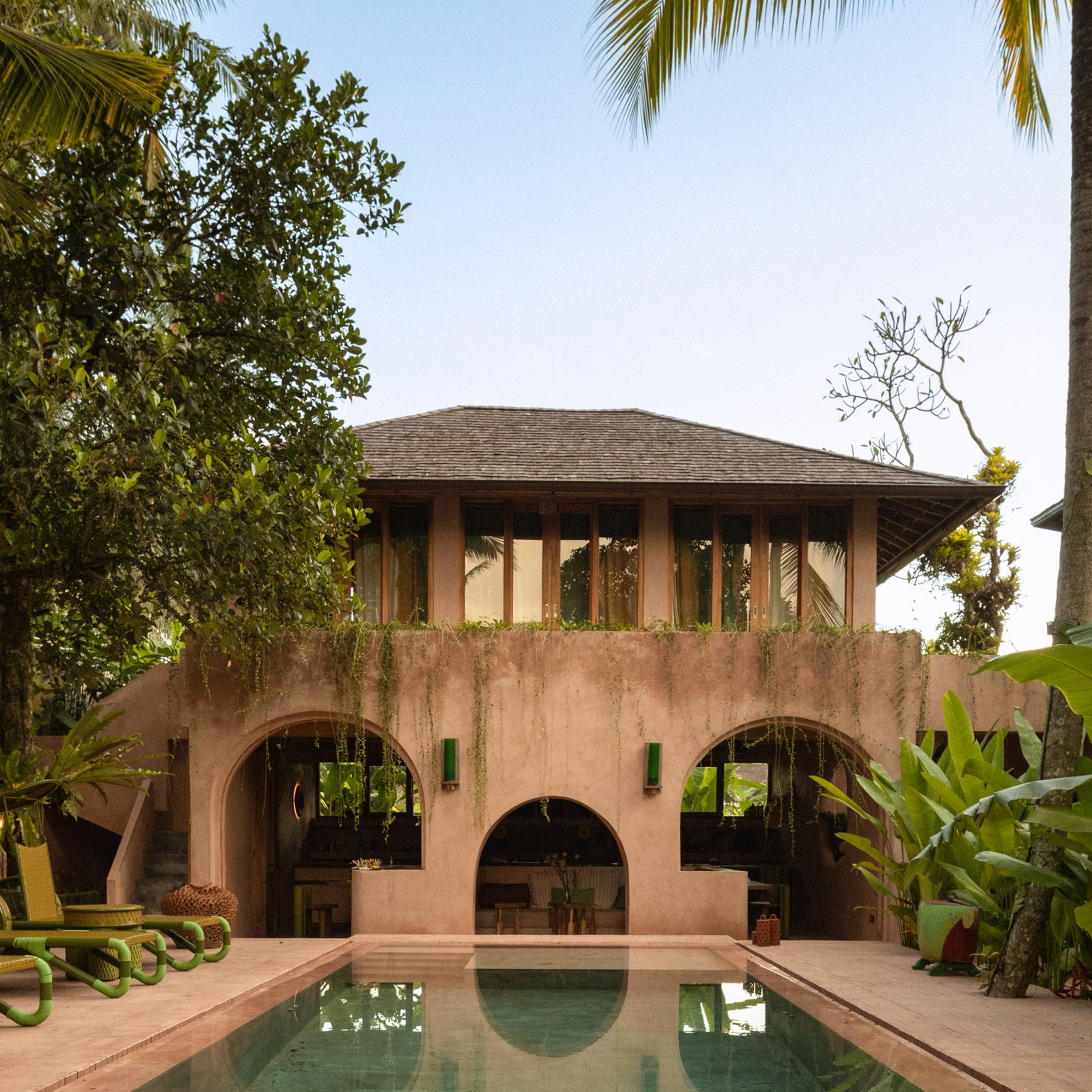
Central to this structural rescue operation was a commitment to localized material sourcing and circular economy principles. To overcome the difficulties of transporting construction debris away from the secluded site, YSG devised ingenious methods of on-site recycling. Damaged terracotta tiles and breeze blocks were meticulously crushed and repurposed as foundational drainage riffraff, mitigating future flood risks while reducing waste. Furthermore, the hotel’s joinery was engineered to allow for modular assembly directly on-site, minimizing the need for heavy transport logistics.
The architectural intervention also expanded the property’s spatial footprint. The studio introduced a striking second-storey suite constructed entirely from sustainable bamboo, crowned by an oversized skylight that invites natural light and stargazing into the private quarters.
Architectural Synthesis: Indonesian Heritage Meets Japanese Aesthetics
The material palette and spatial layout of Moon Gang Bali reflect a deliberate cross-pollination of Indonesian vernacular traditions and Japanese minimalist craftsmanship. Structurally, the hotel utilizes renewable bamboo and warm timber frameworks contrasted against cool, tactile lava stone tiling.
Upon arrival, guests are funneled through an entry sequence situated on the far side of a central courtyard pool. This central aquatic feature acts as the beating heart of the property, embraced on three sides by five interconnected guest suites, open-air terraces, and communal lounging areas.
Subtle cultural nods are woven seamlessly into the physical fabric of the architecture. Encircling the edge of the courtyard pool is a distinct black-and-white checkered tile relief. This pattern serves as a direct architectural tribute to the Saput Poleng—the sacred checkered cloths traditionally wrapped around ancient trees and holy statues across Bali to symbolize the balance of cosmic dualities, such as good and evil, light and dark.
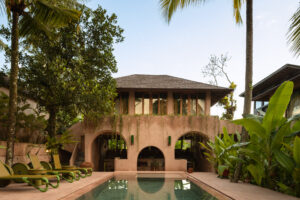
Inside the spa facility, the fusion of Indonesian and Japanese design is acutely evident. Sliding bamboo doors are meticulously crafted to depict the various phases of the moon, reinforcing the cosmic motif that ripples throughout the property. These doors open into an all-day wellness spa that prioritizes introspection and sensory grounding.
Curated Culture: A Haven for Audiophiles and Artisans
Beyond its physical architecture, Moon Gang Bali distinguishes itself through an uncompromising dedication to sound, tactile art, and local craftsmanship. Driven by what the Australian hoteliers describe as a "feverish obsession with Indonesian music and culture," the hotel positions auditory culture as a primary amenity rather than background noise.
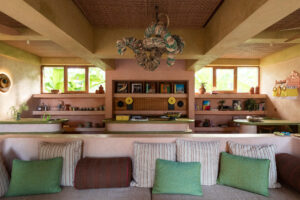
At the core of this sonic experience is a dedicated "DIY DJ station." The station comes fully stocked with a hand-picked vinyl record collection focusing on Indonesian obscurities and Japanese city pop, thoughtfully curated by prominent regional DJ collective Midnight Runners. This interactive music hub encourages guests to engage directly with the auditory heritage of the region, fostering a communal atmosphere that breaks down the typical social barriers of luxury hospitality.
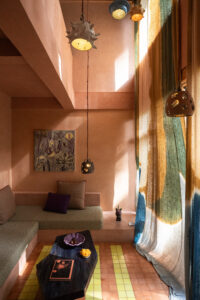
The guest suites continue this ethos of hyper-local curation. Walls throughout the rooms are finished with recycled earth-based plasters, providing a raw, grounding texture that contrasts with the bespoke furnishings inside. Every object, fixture, and piece of furniture within the hotel has been sourced from or manufactured by independent local Indonesian art and design studios:
- Weedoo Plastics: Responsible for producing durable counters and stools manufactured entirely from recycled plastic bottle tops, marrying environmental consciousness with vibrant industrial design.
- BYO Living: Handcrafted the pool lounge chairs, utilizing upcycled materials woven into intricate, tactile patterns suited for tropical lounging.
- AA Practice: Fabricated the ambient wall sconces, blending local seseh wood with deep green-colored resin to cast warm, organic light across the interiors.
Chronology and Evolution of YSG Studio’s Portfolio
Moon Gang Bali marks a significant international milestone for YSG Studio, expanding the firm’s design footprint beyond its native Australia into the competitive landscape of Southeast Asian boutique tourism.
The studio has built a formidable reputation over recent years for its bold, narrative-driven spatial transformations. In July 2026, YSG garnered international acclaim for converting an industrial warehouse into an energetic co-working space in Sydney, Australia, playfully dubbed the Cinderella House. Prior to that, in late 2024, the studio injected vibrant 1970s nostalgia into Superfreak, a prominent local cafe interior in Sydney.
The transition from urban Australian commercial interiors to a secluded, culturally resonant wellness retreat in Ubud demonstrates YSG’s growing versatility in handling complex architectural briefs across different geographical and climatic contexts.
Industry Implications and the Future of Boutique Hospitality in Bali
The opening of Moon Gang Bali arrives at a critical juncture for the island’s tourism and real estate sectors. In recent years, Bali has faced increasing scrutiny from local communities, environmentalists, and policymakers regarding overdevelopment, unchecked mass tourism, and the ecological footprint of foreign-owned hospitality projects.
By choosing to revitalize an abandoned concrete structure rather than breaking ground on untouched agricultural land, YSG Studio and its hoteliers offer a responsible alternative model for development in sensitive rural zones like Ubud. The project’s heavy reliance on upcycled materials, on-site waste mitigation, and collaboration with local Indonesian artisans signals a maturing approach to luxury design—one that values cultural integration and environmental stewardship over generic opulence.
Furthermore, the hotel’s integration of regional auditory culture, such as Japanese city pop and Indonesian vinyl archives, redefines the sensory parameters of a boutique hotel stay. It moves away from Westernized spa clichés toward a shared, participatory cultural exchange.
As international travelers increasingly seek hyper-local, authentic, and environmentally conscious destinations, properties like Moon Gang Bali point the way forward. By turning structural liabilities into creative assets, YSG Studio has not only rescued a neglected building from decay but has established a fresh blueprint for sustainable, culture-forward hospitality in the heart of Indonesia.
Related posts: