Calvin Klein Collection S/S 2027: Veronica Leoni Returns to the Raw Architecture of Minimalism


The Calvin Klein Collection Spring/Summer 2027 runway show marked a pivotal moment in the brand’s contemporary evolution as creative director Veronica Leoni unveiled a collection defined by radical reductionism. Eschewing the conventional seasonal expansion of menswear and womenswear, Leoni focused her creative output entirely on six foundational pillars of the Calvin Klein identity: the coat, the shirt, tailoring, the trouser, the pencil skirt, and the slip. Held within the industrial expanse of Manhattan’s Terminal Warehouse, a 19th-century freight hub in Chelsea, the presentation served as a synthesis of fashion design and mid-century art history, bridging the gap between the heritage of the label and the austere, precise principles of American Minimalism.
The Architecture of Removal: A Philosophical Shift
The collection represents Leoni’s fourth runway presentation at the helm of the brand, a tenure characterized by an increasingly disciplined approach to form. In a statement regarding the creative process for S/S 2027, Leoni emphasized that her inspiration stemmed from the rigorous reductionist practices of artists like Donald Judd and Frank Stella, whose influence shaped the late-20th-century American aesthetic.
"American Minimalism was a discipline of removal: take away everything that does not carry the work, until only what is necessary remains," Leoni stated. This philosophy, which initially defined Calvin Klein’s meteoric rise in the 1980s as a rejection of the ornamental excess of the era, has been reinterpreted by Leoni to prioritize the relationship between garment and anatomy. By stripping away external embellishments, the collection aims to expose the "desire" inherent in the silhouette. Where the brand’s founder focused on the structural integrity of the clothes in relation to the environment, Leoni claims to shift that focus inward, toward the woman wearing them, creating an intimate dialogue between textile and skin.

Curating the Space: The Legacy of Walter De Maria
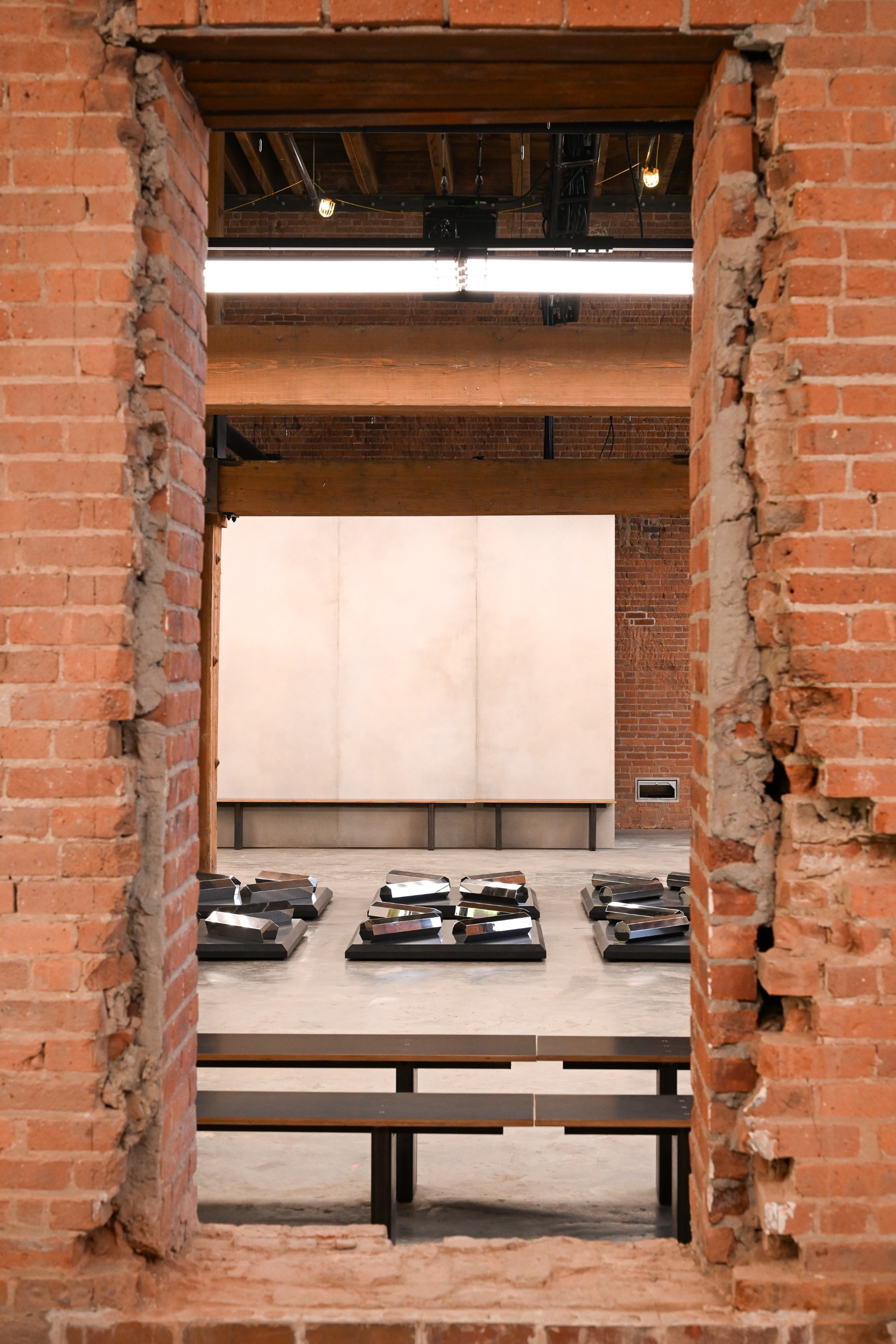
The atmospheric success of the show was significantly augmented by the installation of sculptural works by Walter De Maria, curated by Antwaun Sargent. Sargent, a prominent New York-based critic and director at Gagosian, collaborated closely with Leoni to ensure that the chosen works—Truth / Beauty (1990–2016), 14-Sided Open Polygon (1984), 16-Sided Open Polygon (1984), and 13, 14, 15 Meter Rows (1985)—engaged directly with the industrial architecture of the Terminal Warehouse.
The choice of De Maria is historically significant. As a pioneer of the Minimalist movement, his career was defined by large-scale, site-specific installations, such as the iconic The New York Earth Room (1977). Sargent noted that the dialogue between the sculptures and the fashion was intentional. The stainless-steel surfaces of the works acted as a mirror to the collection’s focus on precise lines and structural clarity.
"De Maria was equally concerned with how viewers experience his artworks as he was with the works themselves," Sargent explained. "The sculptures achieve a paradox: they maintain intense physical heft while appearing delicate through precise geometric fabrication and the reflective nature of stainless steel." By placing these works within the runway environment, the show effectively blurred the lines between a traditional fashion display and a gallery exhibition.
The Six Pillars of the Collection
The core of the S/S 2027 collection was the strict adherence to six archetypal garments. This "foundational" approach reflects a broader industry trend toward "wardrobing"—the creation of timeless, high-quality pieces designed for longevity rather than transient trends.
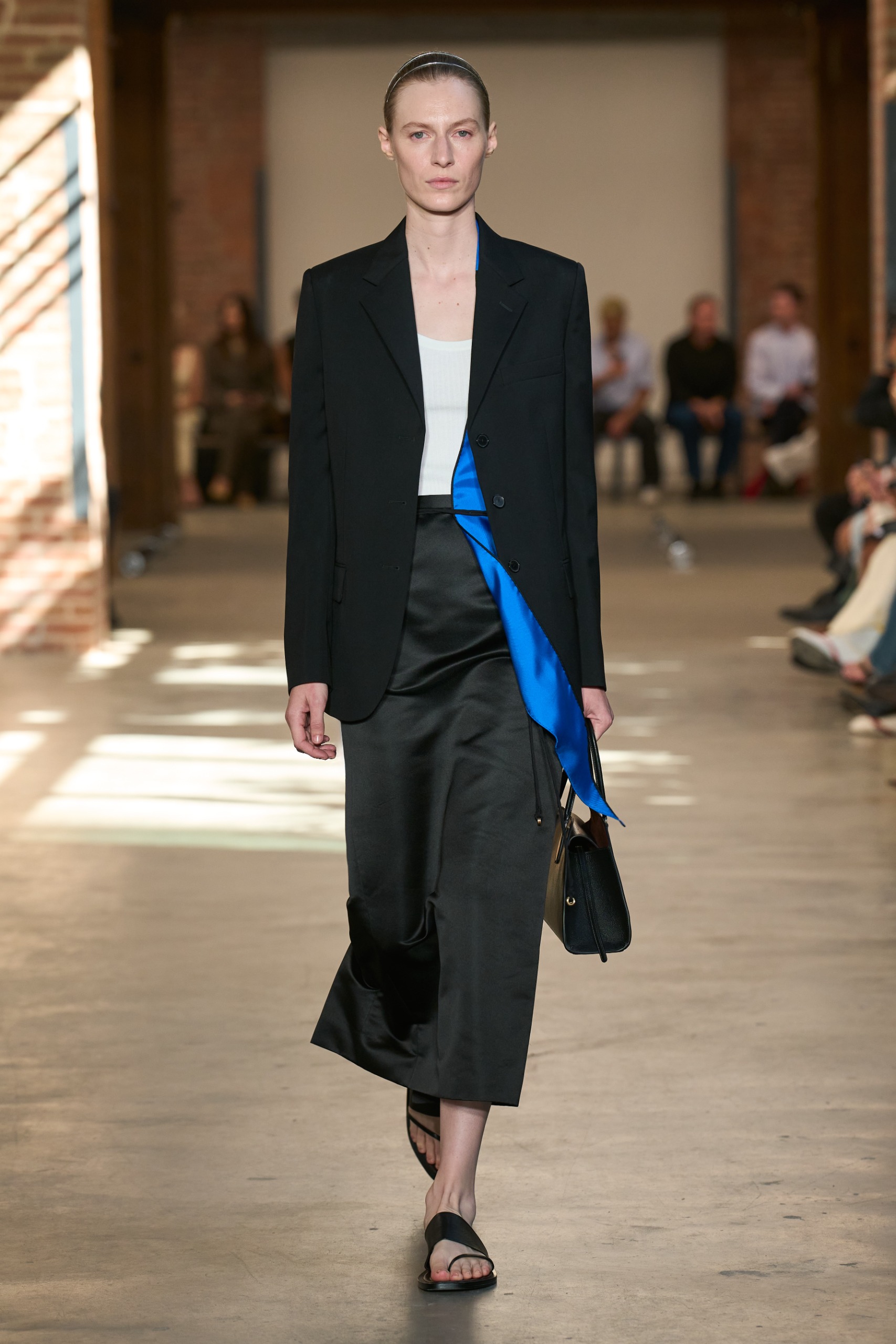
- The Coat: Constructed with architectural precision, the coats emphasized clean lines and structured shoulders, minimizing bulk while maintaining an imposing presence.
- The Shirt: A masterclass in simplicity, focusing on fabric weight and collar geometry to redefine a staple item.
- Tailoring: The collection’s tailoring moved away from the oversized silhouettes of recent years, opting for a return to sharp, body-conscious proportions.
- The Trouser: Designed with a focus on movement, these pieces utilized high-grade wools and synthetics to maintain shape without the need for heavy interlining.
- The Pencil Skirt: A signature of the house, re-engineered for the modern wearer with a focus on seamless construction.
- The Slip: The most intimate piece, serving as the link between the body and the outer layers, stripped of lace or unnecessary trim to highlight the fluidity of the fabric.
Market Context and Industry Implications
The decision to streamline the runway to a single, focused narrative marks a distinct departure from the "maximalist" strategies often employed by luxury houses to capture social media engagement. By focusing on foundational items, Calvin Klein is positioning itself as a brand that provides the "backbone" of a wardrobe.
Data from recent retail performance reports suggests that luxury consumers are increasingly gravitating toward "quiet luxury"—a segment characterized by high-quality materials and understated design. This pivot aligns with the current economic climate, where consumers are favoring investment pieces over fast-fashion iterations. By invoking the history of American Minimalism, Leoni is not only tapping into a deep well of cultural prestige but is also signaling a long-term commitment to a recognizable, permanent house style.
Historical Chronology of the Calvin Klein Minimalist Aesthetic
The brand’s trajectory has often been punctuated by a return to its minimalist roots, serving as a cyclical corrective to the industry’s tendency toward excess:
- 1970s: Calvin Klein establishes the foundation of his brand on the principle of the American sportswear aesthetic, focusing on comfort and simplicity.
- 1980s–1990s: The "Calvin Klein" brand becomes synonymous with minimalism, marked by iconic advertising campaigns and sleek, monochromatic collections that reject the maximalism of the era.
- 2010s: A period of experimentation with various creative directors sees the brand oscillate between high-concept artistic expression and commercial streetwear focus.
- 2020s: Under the direction of Veronica Leoni, the brand begins a process of refinement, culminating in the S/S 2027 collection, which serves as a definitive return to the brand’s minimalist origins.
Analysis: The Future of the "Foundational" Wardrobe
The success of the S/S 2027 collection suggests that the future of high-fashion runway shows may lie in this marriage of intellectual curation and product-centric design. By inviting a curator of Sargent’s caliber to oversee the environment, the brand elevated the presentation from a commercial pitch to a cultural event.
The implications for the brand’s future are clear: by limiting the scope of the collection to six essential categories, Leoni is effectively building a "Core Collection" strategy. This allows for higher production quality, better supply chain control, and a stronger brand identity. When a consumer buys a coat or a slip from this collection, they are buying into a specific, identifiable aesthetic that remains relevant beyond the shelf life of a single season.
Conclusion
The Calvin Klein S/S 2027 runway show was a profound statement on the power of restraint. By stripping away the noise—both the literal inclusion of menswear and the metaphorical clutter of excess—Veronica Leoni has successfully recalibrated the brand to meet the needs of the modern, discerning consumer. The collaboration with Antwaun Sargent and the integration of Walter De Maria’s sculpture provided the necessary context to understand this shift not just as a design choice, but as a philosophical stance. In a world of infinite choices, the brand’s return to the "essential" serves as a powerful reminder that sometimes, the most radical act is to remove, leaving only what is truly necessary. As the industry continues to evolve, Calvin Klein’s commitment to the clarity, restraint, and essential form of American Minimalism ensures its place as a enduring pillar of global fashion.