In the modern corporate software landscape, the integration of artificial intelligence is frequently championed as an inevitable stride toward ultimate efficiency. Organizations across industries rush to embed large language models and machine learning algorithms into enterprise applications, driven by competitive pressure and the promise of automating tedious labor. However, a recurring paradox frequently undermines these deployments: an AI feature is engineered to save users time on a specific task, only for those users to spend that saved time meticulously checking, editing, and verifying the machine-generated results.
This friction points to a deeper systemic flaw in how technical capabilities are prioritized over workflow realities. To address this, product teams are increasingly adopting rigorous evaluation frameworks—such as practical pre-deployment audits—to determine precisely where artificial intelligence earns its place and what structural guardrails users need to safely evaluate its output.
The Anatomy of a Failed Deployment: A Case Study in Health Insurance
The hazard of unvetted AI integration is vividly illustrated by a recent initiative at a major health insurance provider. The organization’s product development team sought to implement an AI feature designed to draft complete, written benefit-determination letters for appeals specialists. From a technical standpoint, the implementation was a success. The underlying model generated structured, grammatically correct prose explaining why specific claims were upheld or overturned, adhering strictly to the insurer’s policy guidelines.
Yet, despite meeting all initial technical specifications, the feature stalled. Specialists quickly
abandoned the tool entirely, while those who persisted found that processing a case took significantly longer than it did when they relied solely on their traditional methods.
A rapid post-implementation evaluation uncovered a critical human-factors miscalculation. Reading an AI-generated determination with sufficient scrutiny to safely sign off on it required roughly as much cognitive effort as writing the document from scratch. Furthermore, the specialists had to actively hunt for subtle hallucinations, logical disconnects, or policy misinterpretations—errors they would never have committed themselves. Rather than alleviating labor, the feature injected an invisible layer of administrative and cognitive overhead into a workflow these professionals had already mastered.
The product team ultimately rescued the initiative by rescoping the release based on the actual bottleneck of the task. In the redesigned second version, the AI was stripped of its copywriting duties. Instead, the technology was redirected to instantly surface relevant policy provisions, regulatory clauses, and historical precedents tied to each specific appeal, leaving the actual synthesis and composition to the human specialist. Consequently, the tedious search phase vanished, review times plummeted, and the core intellectual work remained firmly in the hands of the domain experts. The underlying technology remained identical across both versions; the vital distinction lay entirely in which component of the task the AI was assigned to manage.
Finding the Break-Even Line in Enterprise Software
Every interface modification imposes a cognitive tax on the user before delivering any tangible return on investment. End-users must mentally reconstruct their understanding of how a tool operates, navigate altered visual hierarchies, and calibrate their trust in the system’s outputs. Cognitive psychology research, including foundational work on working memory limits by cognitive scientist Nelson Cowan, indicates that human short-term mental storage capacity is tightly constrained—typically holding only about four distinct items in mind simultaneously. Complex enterprise AI features heavily tax this limited cognitive reservoir.
When an organization delegates synthesis to an algorithm, the human operator is effectively demoted to a passive checker. If the system goes further and generates automated recommendations, the job is reduced to a rubber-stamp exercise. Either shift demands considerable user attention. For professionals whose standing and confidence are rooted in specialized training and experiential knowledge, these interface changes can inadvertently translate into a perceived threat to professional identity.
Empirical research published in health informatics journals underscores this tension; studies examining physicians interacting with AI-supported clinical decisions reveal that increased algorithmic automation often correlates with heightened concerns regarding professional autonomy, even when system accuracy is high.
To establish whether a proposed capability is viable, product teams must identify the "break-even line." An AI feature officially earns its rightful place in a workflow only when the net value it returns comfortably surpasses the cumulative adjustment effort demanded of the user. These returns generally manifest in three distinct ways: reducing cognitive load on ambiguous tasks, accelerating processing scale, or catching oversight errors that manual reviews reliably miss. When fraud-screening tools flag anomalies that human analysts would have otherwise overlooked, the catch rate justifies the verification cost, placing the feature safely above the break-even line.
Four Diagnostic Questions for Product Roadmaps
To locate the break-even line before committing weeks or months of engineering resources to design and coding, product squads can evaluate proposals against four sequential questions. These inquiries must be addressed collectively during the initial ideation phase, ideally in consultation with frontline workers—such as loan officers, claims analysts, or customer service agents—who execute the target workflow daily.
-
Does this reduce the total effort the task takes for this user?
Product teams must calculate the total cumulative cost of the task, encompassing critical thinking, physical interactions, and post-generation verification. A reduction in raw click counts is deceptive; eliminating three clicks while introducing a burdensome proofreading requirement leaves the user working harder. Conversely, surfacing conflicting financial disclosures for a loan officer reduces heavy cognitive friction, whereas pre-filling a straightforward data-entry field merely shifts the burden of validation onto the human operator. -
Does this beat the way the user does the task now?
Developers must rigorously benchmark the AI workflow against existing user habits, spreadsheets, and established workarounds. Artificial intelligence excels in scenarios characterized by genuine ambiguity, massive scale, high processing speed, or strict cross-team consistency. However, if an end-user possesses a highly practiced, rapid route to a known conclusion, artificial intelligence introduces unnecessary friction. For example, using AI to discover overlooked internal talent pools for succession planning leverages the technology’s capacity for complex pattern matching. Conversely, deploying AI to draft standard notification emails imposes an unwanted interaction layer onto a simple, routine communication task.
-
Can the user catch the errors?
Because all machine learning systems are prone to probabilistic failure, teams must evaluate how easily an end-user can detect an error. Visibility varies widely: an AI travel planner suggesting a museum on its scheduled closing day presents an invisible error, whereas a flight itinerary with overlapping connection times displays an obvious contradiction. Coupled with automation bias—a well-documented psychological tendency for humans to uncritically defer to automated output—invisible errors carry severe consequences. Consequently, high-consequence, low-visibility error surfaces require strict design mandates, including transparent provenance displays and clear verification prompts. -
After a year of using this, can the user still tell when the AI is wrong?
While offloading routine administrative tasks is beneficial, core human judgment must remain active to ensure oversight remains viable. Radiological studies investigating diagnostic accuracy demonstrate that continuous reliance on algorithmic suggestions can gradually erode baseline human competence, making operators slower and less accurate when the underlying system fails. If a user cannot independently evaluate output quality after prolonged reliance on a feature, the workflow design must incorporate mandatory friction—such as periodic blind reviews or randomized non-assisted task rotations—to keep critical verification skills sharp.
The AI Addition Decision Matrix
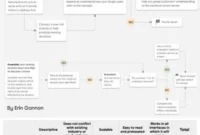
To synthesize these evaluations into actionable project requirements, product organizations utilize structured decision matrices within their design briefs. By establishing clear criteria for when AI succeeds versus when it creates unwarranted drag, teams can preemptively define necessary safeguards. For instance, features displaying high-stakes, low-visibility error risks are formally categorized as "do not ship" unless integrated with verifiable source tracking. Embedding these requirements into initial project scopes prevents vital security and verification features from being categorized as expendable polish when development timelines inevitably compress.
Broader Industry Implications and Future Outlook
The systemic shift toward human-centric AI evaluation reflects a broader maturation within the tech industry. As the initial novelty of generative models fades, enterprises are moving away from undiscerning feature accumulation—a phenomenon often described in innovation literature as pro-innovation bias. Organizations are recognizing that sustainable digital transformation depends not merely on what an algorithm can technically achieve, but on how seamlessly it respects and preserves human cognitive capacity.
Ultimately, human attention remains a finite daily resource, entirely independent of model parameters or processing speeds. By explicitly calculating the hidden verification costs of proposed features before writing code, product teams can successfully navigate internal pressures, bypass superficial hype, and deliver sustainable tools that genuinely enhance professional workflows without compromising human agency.