Unlocking Long-Term Amazon Redshift Observability through Seamless Integration with Amazon S3 Tables and Datadog

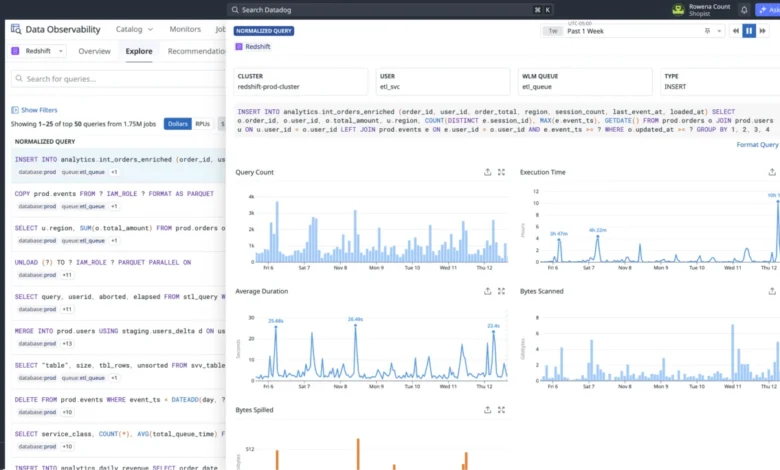
Data-driven enterprises today face a persistent challenge: the ephemeral nature of operational telemetry within high-performance data warehouses. Amazon Redshift, the industry-leading cloud data warehouse, has historically maintained a strict seven-day retention policy for system metadata. While this window is sufficient for immediate debugging and short-term performance tuning, it leaves a critical gap for organizations requiring long-term audits, trend analysis, and deep-dive forensic investigations. The recent integration between Amazon Redshift system tables and Amazon S3 Tables, coupled with enhanced support from Datadog Data Observability, marks a significant shift in how data teams maintain visibility into their analytical ecosystems.
The Problem of Ephemeral Metadata
For years, administrators of Amazon Redshift clusters and Serverless workgroups have relied on internal views—such as SYS_QUERY_HISTORY and SYS_QUERY_TEXT—to monitor performance. These views provide a granular look at query execution, resource consumption, and user-driven changes. However, once the seven-day retention period lapses, this data vanishes, creating a "black hole" for any performance regression analysis that requires a broader historical scope. Compliance mandates, which often require data retention for months or years, have historically forced organizations to build complex, custom ETL pipelines to offload and store these logs manually.
This manual approach is not only resource-intensive but also introduces latency and potential data integrity risks. Furthermore, relying on active warehouse queries to extract this metadata consumes valuable compute cycles that should be reserved for business-critical analytics. The industry has long sought a more streamlined, automated mechanism for persisting this diagnostic information.
The S3 Tables Integration: A Structural Shift
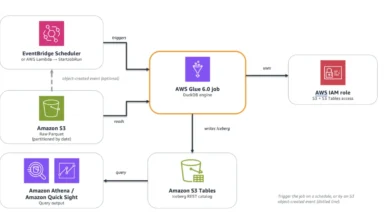
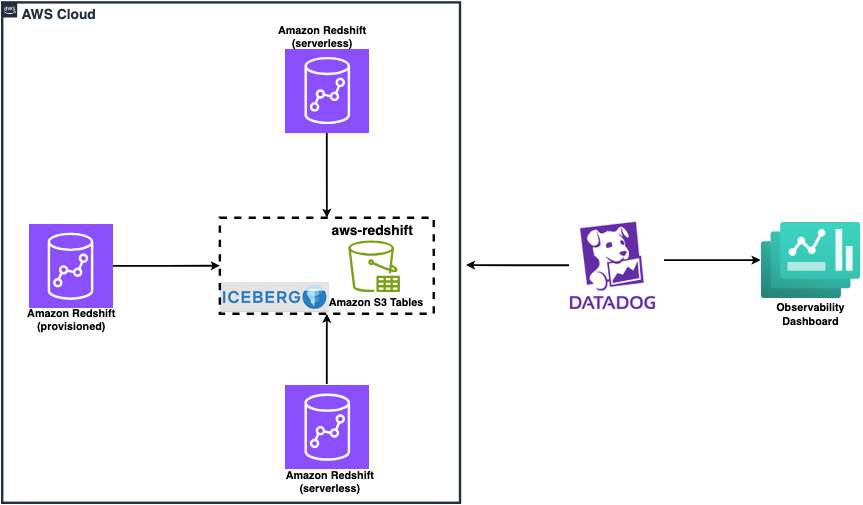
The introduction of system table integration with Amazon S3 Tables represents a architectural pivot. By enabling this feature, Amazon Redshift automatically routes system telemetry into Apache Iceberg-formatted tables residing within Amazon S3 Tables. Because Apache Iceberg is an open-table format, it provides a high degree of interoperability, allowing users to query this metadata using Amazon Athena, Amazon Redshift itself, or any other engine that supports the standard.
This integration shifts the burden of maintenance away from the end-user. S3 Tables manages the underlying complexities of data compaction, snapshot maintenance, and storage tiering. Crucially, the delivery of this data is provided at no additional charge, with users incurring costs only for the storage and the compute required to read the data. This decoupling of storage and compute ensures that organizations can archive years of operational history without impacting the performance of their primary production clusters.
Bridging the Gap with Datadog
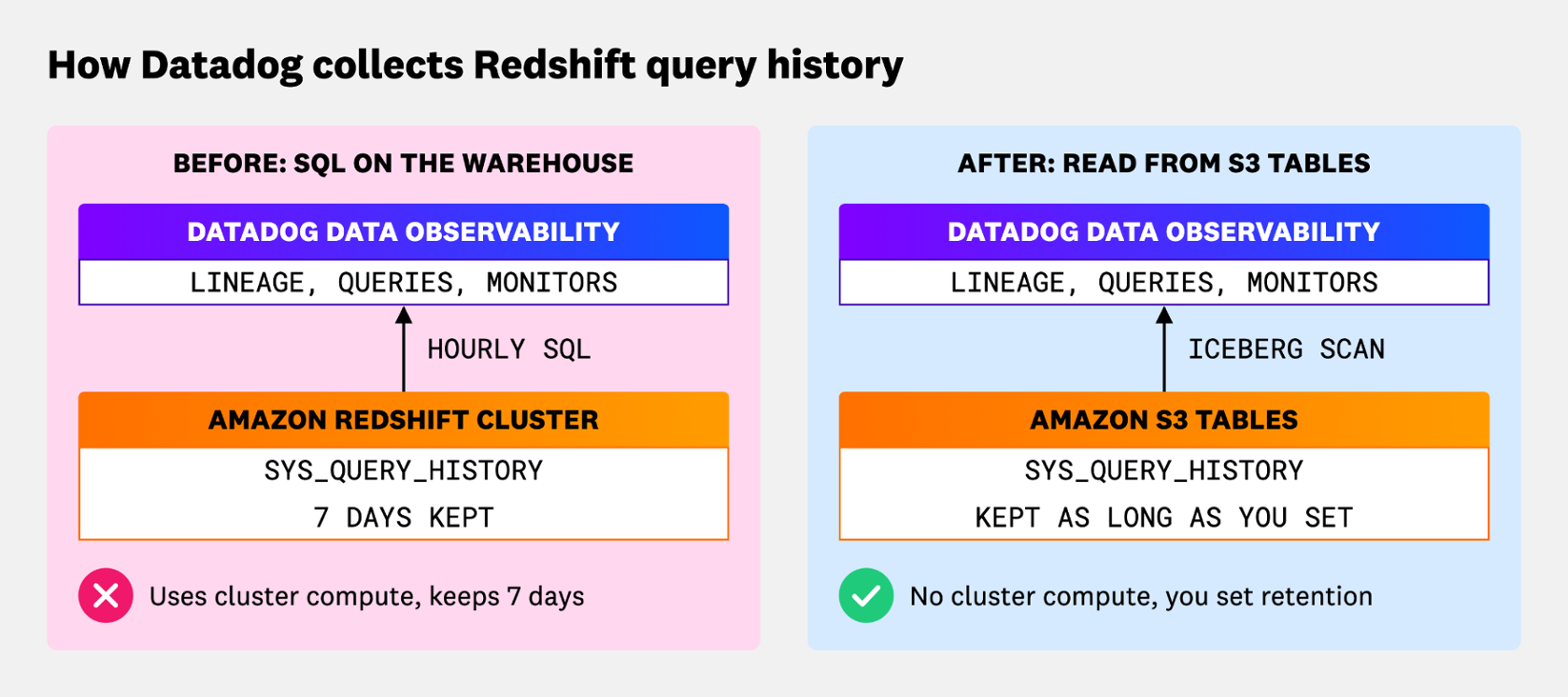
The collaboration between AWS and Datadog serves as the practical application layer for this new data stream. Datadog, an AWS Specialization Partner, has refined its Data Observability platform to consume these exported system tables directly. Previously, Datadog agents were required to execute read-only SQL queries against the active warehouse on an hourly basis to scrape metadata. This polling-based approach was inherently limited by the warehouse’s own retention constraints and placed an additional, albeit minor, load on the system.
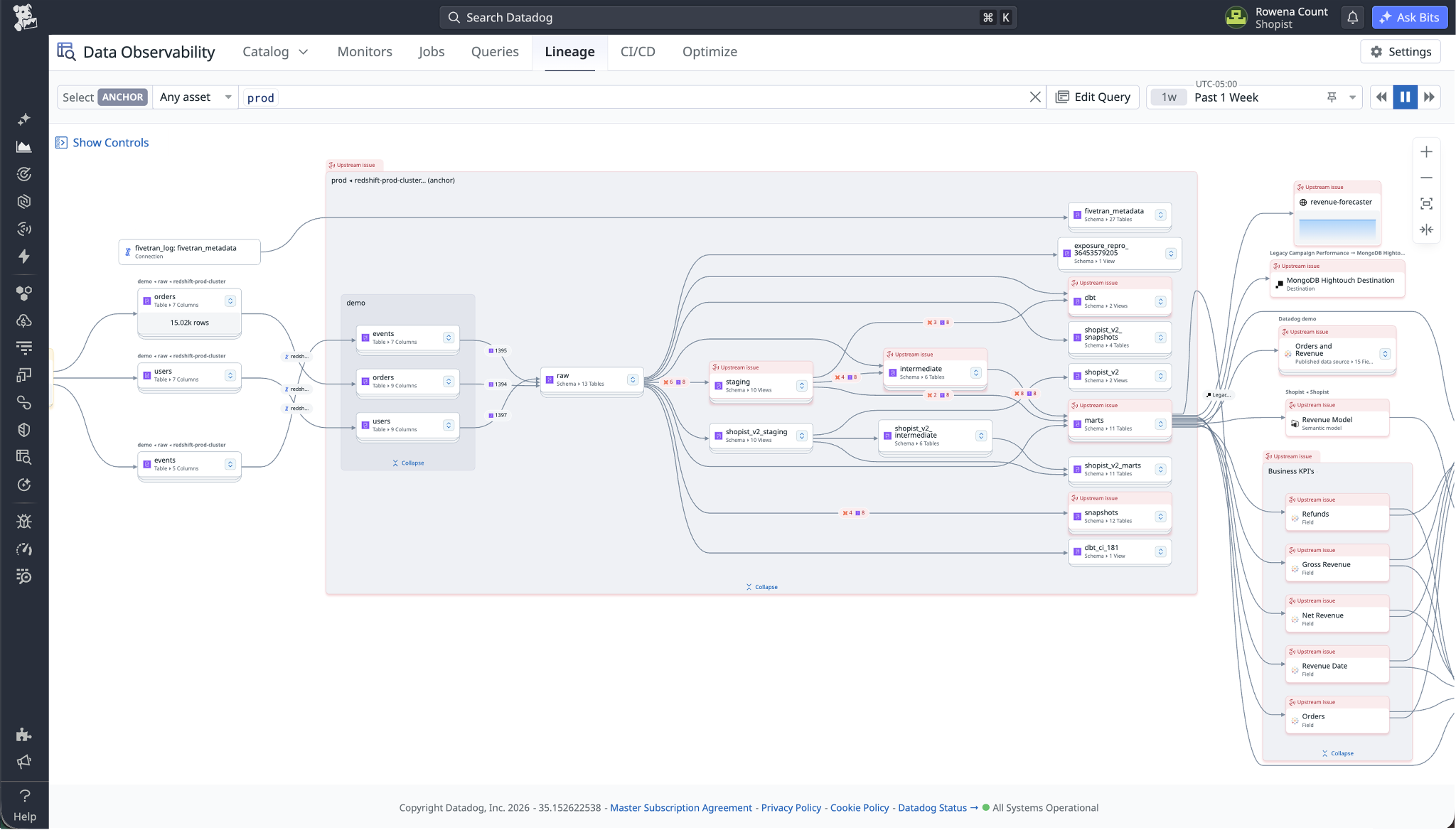
By pivoting to the S3 Tables integration, Datadog now performs an "out-of-band" analysis. It reads the historical logs directly from the S3 data lake. This transition is not merely a change in transport; it is a fundamental improvement in data quality and reach. Datadog now constructs column-level lineage that spans from source pipelines—such as those managed by AWS Glue or dbt—all the way to downstream business intelligence dashboards. This provides a unified pane of glass that links query performance trends to business outcomes, enabling teams to trace a stale dashboard back to a failed upstream transformation job in seconds rather than hours.
Strategic Implications for Data Engineering Teams
The implications of this integration for the modern data stack are profound. First, it addresses the "last seven days" bottleneck, allowing for multi-quarter trend analysis. Data engineers can now perform longitudinal studies on query costs, identifying "slow-moving regressions" where queries that were once efficient gradually consume more resources as data volumes grow.
Second, it bolsters security and compliance. With a permanent record of user activity, connection logs, and query text, organizations can satisfy internal and external audit requirements with minimal effort. Because the logs are stored in an account-owned S3 bucket, the data remains immutable and secure according to the organization’s own defined policies.
Third, the integration fosters a more proactive culture of data quality. By leveraging Datadog’s anomaly detection, teams no longer need to manually set static thresholds for every table in their environment. The system learns the normal cadence of data arrivals, volume shifts, and query patterns. If an anomaly is detected, the platform correlates this with lineage to show the specific upstream job that likely triggered the issue, drastically reducing the "mean time to resolution" (MTTR).
Implementing the Solution: A Procedural Overview
The implementation process is structured to ensure minimal disruption. Administrators must first ensure that their AWS Identity and Access Management (IAM) roles are correctly configured to grant Datadog access to the specific S3 Tables bucket. This involves providing permissions for s3tables:GetTableBucket and s3tables:GetTableData. If the data is encrypted—which is a best practice—the role must also have the necessary kms:Decrypt permissions.
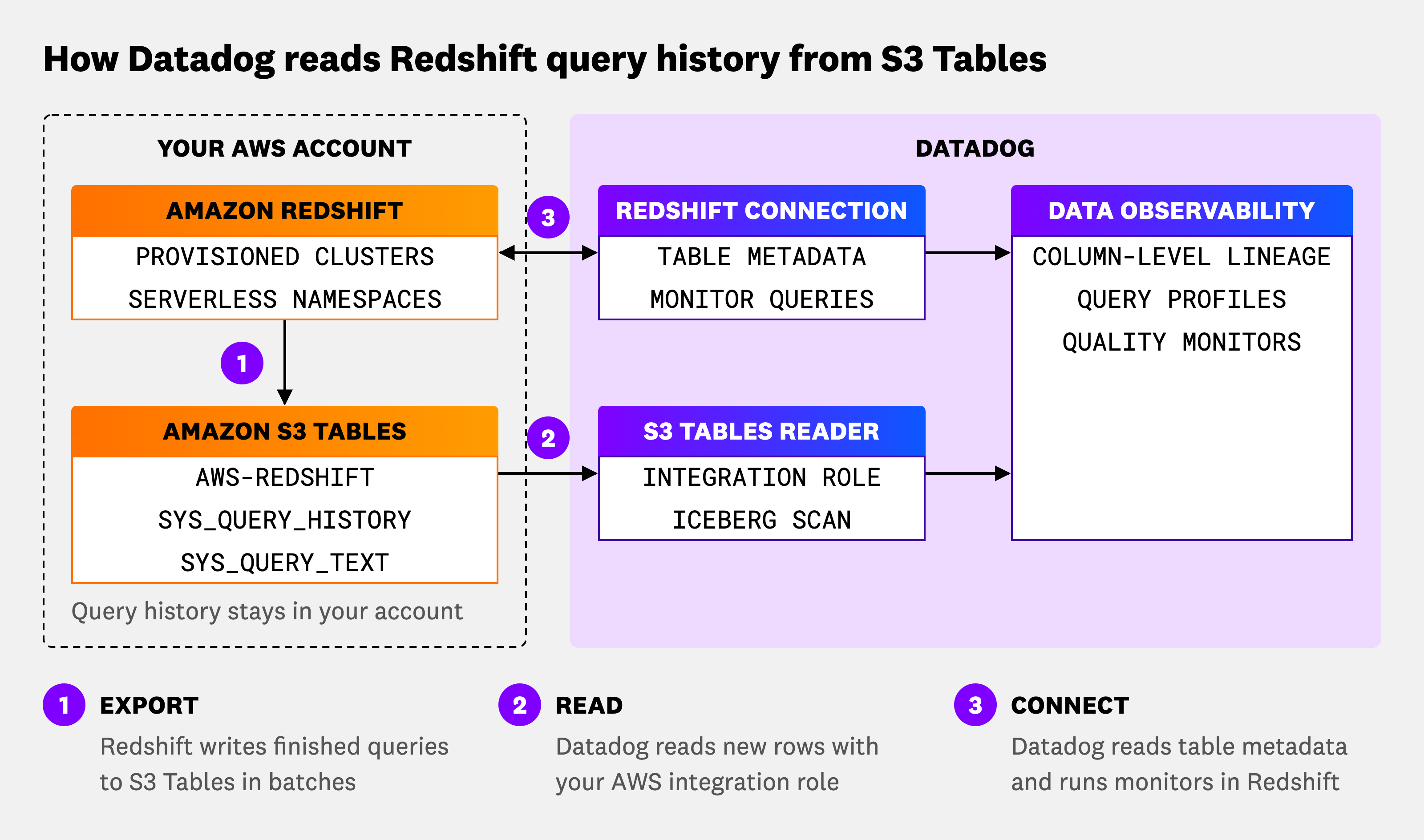
Once the permissions are in place, the organization’s Datadog account team activates the S3 Tables source within the platform. Because Datadog tracks the ingestion position, the transition from warehouse-based polling to S3-based ingestion is seamless, ensuring no data loss or duplication occurs during the switchover.
For those managing provisioned clusters or serverless workgroups, the integration can be toggled via the AWS CLI. For example, disabling the logging for a cluster is handled through a straightforward disable-logging command. However, users are advised to coordinate this with their Datadog account team to ensure that the data collection source is correctly re-provisioned to prevent gaps in historical tracking.
Analyzing Query Patterns at Scale
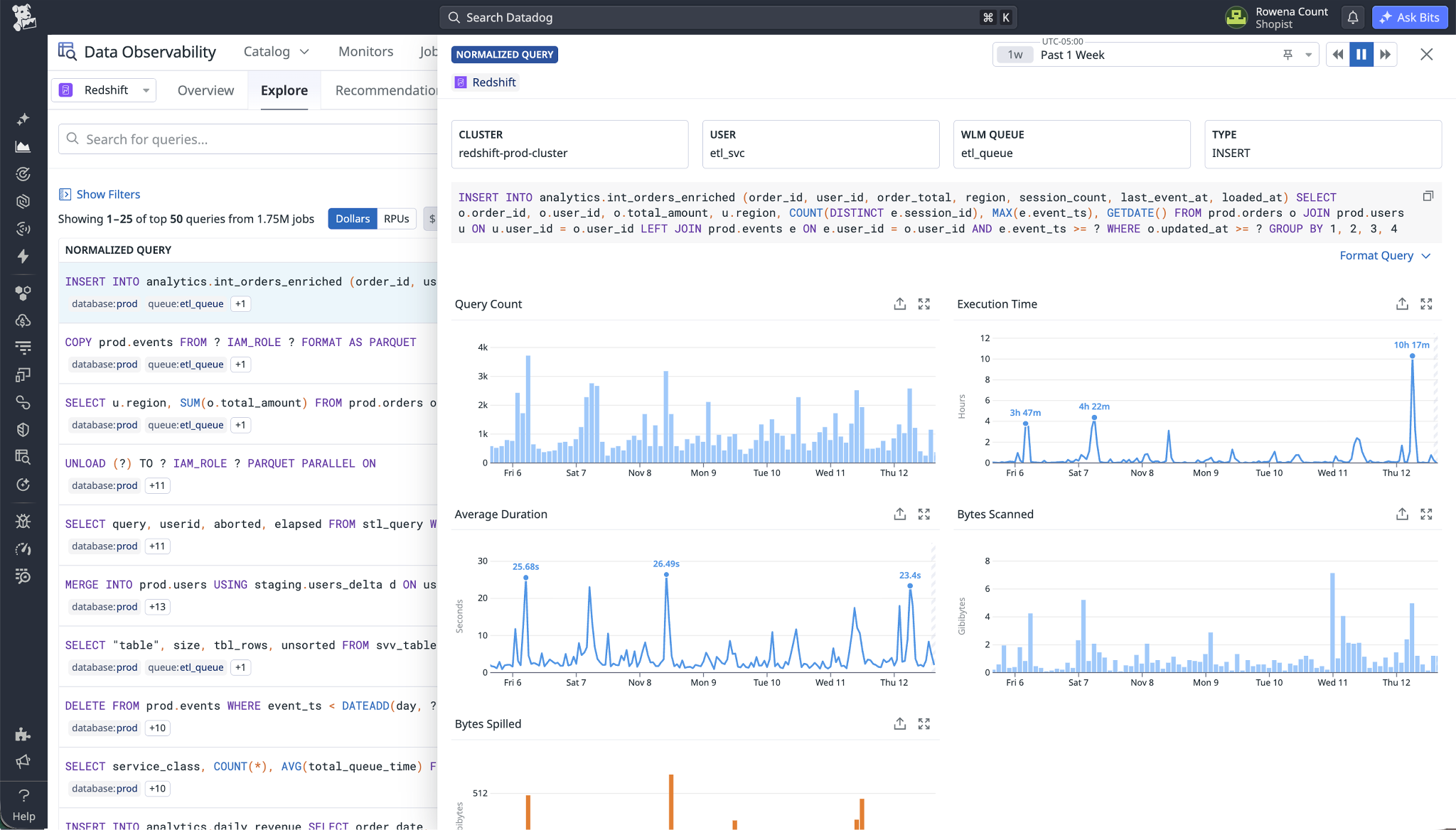
With this architecture, the "Queries" view in Datadog transforms from a limited dashboard into a powerful analytical engine. By aggregating query history across the entire fleet of Redshift clusters, organizations can answer cross-organizational questions:
- Which users or service accounts are responsible for the highest bytes-scanned volume over the last 90 days?
- How has the execution time of critical ETL jobs evolved since the last cluster upgrade or data model change?
- Are there redundant queries running across different workgroups that could be consolidated to reduce compute costs?
By analyzing the "bytes spilled" and "execution duration" metrics over a long horizon, teams can perform a cost-benefit analysis of optimization efforts, proving the return on investment for refactoring specific SQL patterns.
Future-Proofing the Data Warehouse
The shift toward leveraging S3 Tables for system telemetry is indicative of a broader trend in cloud architecture: the movement toward "open and observable" data platforms. By utilizing open standards like Apache Iceberg and integrating them into robust observability tools like Datadog, AWS is enabling a level of operational transparency that was previously prohibitively expensive or technically complex to achieve.
As enterprises continue to scale their data operations, the ability to maintain a historical record of system behavior becomes a competitive advantage. It allows teams to move from reactive firefighting to proactive optimization. With this integration, the metadata generated by Amazon Redshift is no longer a fleeting exhaust of the system, but a durable asset that can be queried, analyzed, and leveraged to ensure the long-term reliability and efficiency of the data warehouse.
As the industry moves toward more complex AI and machine learning workloads, the dependency on high-quality, reliable data pipelines will only increase. This solution provides the necessary observability infrastructure to ensure that when a data-driven decision is made, it is based on a foundation of verified, performant, and well-understood data. For those already utilizing the AWS ecosystem, this represents an essential upgrade in the toolkit for managing the modern, high-scale data warehouse.