The Ultimate Guide to Naming UI Components, Design Tokens, and Digital Products: Best Practices and Essential Tools

The digital product development lifecycle is fraught with subtle yet persistent bottlenecks, none quite as pervasive—and frequently underestimated—as the challenge of nomenclature. From foundational architecture to front-end implementation, the language utilized by multidisciplinary teams fundamentally shapes cognitive frameworks and cross-departmental dialogue. When designers, developers, product managers, and end-users speak in disparate lexicons, systemic friction emerges. This communication gap regularly manifests as confusion surrounding colors, iconography, user interface components, and feature sets, ultimately leading to downstream complications in design token taxonomies, HTML class structures, and codebase variables.
To address this systemic industry hurdle, a comprehensive collection of practical guides, open-source repositories, and structured taxonomies has emerged from across the web design and development community. These resources aim to bridge the gap between abstract concepts and concrete definitions, offering structured approaches to naming conventions that enhance both team collaboration and user adoption.

The Cognitive Impact of Nomenclature in Digital Design
Naming conventions have historically suffered from a Goldilocks dilemma: labels are frequently categorized as either excessively generic, rendering them opaque and difficult to parse, or overly specific, severely restricting flexibility, scalability, and component reuse. This dichotomy has prompted industry leaders to re-evaluate how digital artifacts are cataloged across organizational ecosystems.
According to design guidelines established by industry specialists like Javier Cuello, an effective name must adhere to a strict set of structural criteria. It should be logically organized, concise, semantically meaningful, universally understood within the organization, and strictly decoupled from transient visual properties. Violating these principles often results in fractured systems where team members resort to localized dialects—creating a distinct designer vocabulary, a developer terminology, and a separate product management lexicon.
Industry analysts note that when feature adoption stalls or user engagement lags, the root cause is frequently not a deficiency in utility, but rather poor discoverability driven by confusing or non-intuitive nomenclature. Users require interfaces that mirror their own mental models and natural language patterns, necessitating a user-centric approach to feature and component labeling.

Curated Resources for General Naming and Ideation
When teams find themselves stalled by the blank-page syndrome during code development or architecture planning, external repositories can serve as cognitive catalysts. Tools such as Classnames, developed by Paul Robert Lloyd, provide structured inspiration for HTML classes, CSS properties, and JavaScript functions by encouraging developers and designers to think beyond conventional technical terminology.
Classnames functions by offering thematically grouped lists of terms that describe behavioral traits, structural relationships, groupings, and associations. Crucially, the platform incorporates thematic collections drawn from domains traditionally distant from software engineering, including nature, art, theater, music, architecture, fashion, and publishing. By cross-pollinating vocabulary from these diverse fields, engineering teams can construct more evocative and contextually rich identifiers without resorting to hyper-technical jargon.
Similarly, for product and service naming, open-source directories like Onym aggregate methodologies, brainstorming frameworks, vetting strategies, and etymological resources. These repositories furnish organizations with structured prompts and historical case studies to navigate the treacherous landscape of product branding and avoid costly nomenclature pitfalls.

Color Systems and the Challenge of Chromatic Taxonomy
Establishing a standardized color palette across a multi-platform enterprise presents significant structural challenges. Traditional naming conventions often rely on hardcoded hex values, semantic placeholders like "primary-blue," or arbitrary numerical scales that break down the moment a theme shifts or brand guidelines evolve.
To combat this, the open-source community has developed massive collaborative repositories. David Aerne’s comprehensive color-names repository stands as a prominent example, currently cataloging over 30,355 unique color names sourced from historical references and thousands of individual user contributions. Accompanied by interactive utilities like Color Parrot and integrated color pickers via CodePen, these resources provide teams with a standardized vocabulary for chromatic values. This expansive database allows organizations to transition away from subjective color descriptions toward universally recognized identifiers, facilitating smoother handoffs between design tools like Figma and codebase variables.
Scaling Design Token Taxonomies for Multi-Brand Enterprises
As organizations scale to encompass multiple brands, localized themes, and varied product lines, the complexity of design token management multiplies exponentially. A notable case study in resolving this complexity comes from the engineering and design teams at Intuit, the parent company behind major financial and productivity platforms such as Mailchimp, QuickBooks, TurboTax, and Mint.

Faced with the limitations of legacy token systems that failed to scale across disparate brand guidelines, Intuit’s team engineered a flexible design token taxonomy. Detailed in architectural case studies by Nate Baldwin, the new taxonomy established a rigorous hierarchy that separates brand-agnostic primitive tokens from semantic and component-specific variables. This foundational overhaul allowed the corporation to maintain brand consistency while simultaneously granting individual product teams the autonomy required for rapid iteration.
Building upon these architectural methodologies, the Vodafone UK Design System team introduced their Variables Taxonomy Map via the Figma Community. Expanding on the foundational design token work pioneered by Nathan Curtis of EightShapes, Vodafone’s system breaks down the anatomy and categorization of design tokens into an orchestrated sequence of collections.
The framework maps out four distinct tiers required to support a robust multi-brand architecture:

- Brand and primitive tokens (foundational values)
- Semantic tokens (contextual application)
- Component tokens (UI-specific implementation)
- Page and layout-level variables (macro-structural placement)
This structured mapping ensures that any stakeholder can inspect a token name and immediately deduce its origin, intended context, and scope of application. For practitioners seeking immediate implementation frameworks, tools like Romina Kavcic’s Design Token Naming Guide and the accompanying Design Token Names Inventory spreadsheet offer interactive builders and bird’s-eye spreadsheet structures to audit, filter, and scale token inventories without losing track of dependencies.
Standardizing UI Component Libraries
The proliferation of proprietary design systems across the technology sector has historically resulted in semantic fragmentation. A UI element functioning as a collapsible container might be designated as an "accordion" in one design system, a "disclosure" in another, and an "expander" in a third.
To mitigate this fragmentation and establish industry-wide benchmarks, Iain Bean compiled the Component Gallery. This comprehensive reference catalogs real-world interface components gathered from dozens of production design systems. Spanning more than 50 distinct UI patterns—ranging from basic layout structures to accessibility-focused utilities like visually hidden elements—the gallery documents the various aliases and synonyms assigned to identical interface patterns across different organizations.
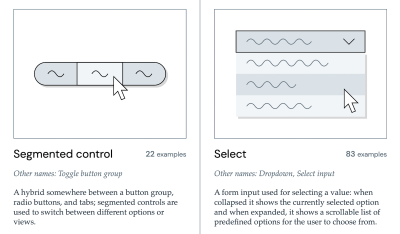
Complementing this, visual dictionaries such as Name That UI provide teams with rapid visual verification tools to ensure that internal design system documentation aligns with broader industry standards. By standardizing component nomenclature, engineering teams reduce onboarding friction for incoming developers and streamline the translation of designs into accessible front-end code.
Feature Discoverability and User-Centric Naming
Beyond internal developer tooling and design token architecture, the nomenclature applied to user-facing features directly dictates product success metrics. Research into product engagement highlights that poor feature adoption is frequently tied to discoverability issues rooted in abstract or overly corporate feature naming.
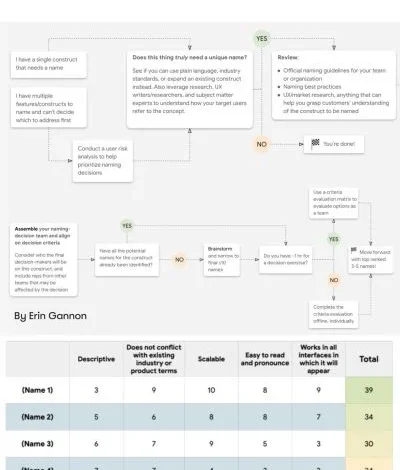
In an extensive practical analysis titled "What Do We Call This Thing?", UX strategist Erin Gannon outlines a framework for naming product capabilities so they are immediately discovered, comprehended, and integrated into user workflows. Gannon posits that effective feature names must be anchored in the user’s "job-to-be-done," clearly signaling the ultimate value or outcome delivered by the functionality.

The core recommendation of this user-centric methodology involves direct qualitative research: asking target users to describe a specific capability or workflow in their native terminology, rather than relying on internal corporate acronyms or marketing buzzwords. By adopting the user’s phrasing, product teams can drastically reduce cognitive load, accelerate the learning curve, and foster higher long-term engagement rates.
Broader Implications and Industry Outlook
The systematic attention being paid to naming conventions, taxonomies, and design token architecture reflects a maturing digital industry. As software ecosystems grow increasingly complex—spanning multi-brand enterprises, cross-platform applications, and stringent accessibility mandates—the cost of ambiguous communication compounds rapidly.
Industry analysts emphasize that standardizing nomenclature is not merely an administrative exercise, but a foundational engineering prerequisite. By investing time in establishing rigorous taxonomy maps, leveraging open-source naming repositories, and aligning internal terminology with user-centric language, organizations can eliminate redundant conversations, minimize technical debt, and foster seamless cross-functional collaboration.

Ultimately, the most effective name remains the one that is universally understood and actively utilized by both the multidisciplinary team building the product and the end-user navigating the digital interface. As the web development and design communities continue to champion open knowledge-sharing through guides, open-source toolkits, and collaborative workshops, the standard for digital nomenclature continues to rise, paving the way for more intuitive, coherent, and accessible digital experiences.
Related posts: