Ozzy Osbourne’s Philosophy on Creative Imperfection Offers a Vital Framework for the Era of Artificial Intelligence

In the rapidly evolving landscape of the 21st-century creative industries, the intersection of legacy craftsmanship and modern technology has become a focal point of intense debate. While the current discourse often centers on the technical capabilities of generative artificial intelligence (AI), a decade-old reflection from legendary rock vocalist Ozzy Osbourne has re-emerged as a foundational argument for the preservation of human "texture" in art. Originally shared during a 2011 interview with The Guardian, Osbourne’s insights into the recording process and the nature of rock music provide a prescient critique of the move toward digital perfection—a trend that has only accelerated with the advent of AI-driven automation.
The core of Osbourne’s argument lies in the rejection of sterile precision. Reflecting on his time working with the late guitar virtuoso Randy Rhoads, Osbourne noted that the "soul" of a performance often resides in the very elements that modern technology seeks to eliminate. "Rock music is not meant to be perfect," Osbourne stated, highlighting how Rhoads took pleasure in the audible artifacts of his craft, such as the sound of fingers sliding across guitar strings. This observation serves as a stark contrast to the contemporary trend of "ironing the air," a phrase Osbourne used to describe the over-processing of audio through technology to achieve a flawless, yet potentially characterless, output.
The Chronology of the Analog-to-Digital Shift
To understand the weight of Osbourne’s critique, it is necessary to examine the chronological shift in recording technology that informed his perspective. Throughout the 1970s and early 1980s, the era in which Osbourne and Rhoads defined the heavy metal genre, recording was a physical, analog process. Performances were captured on magnetic tape, a medium that naturally introduced "hiss," saturation, and slight timing variations. These were not viewed as errors to be corrected but as the "warmth" that defined the era’s sound.
By the late 1990s and early 2000s, the industry had largely transitioned to Digital Audio Workstations (DAWs) like Pro Tools. This transition introduced the ability to quantize rhythms—snapping every beat to a perfect grid—and pitch-correct vocals with surgical precision. By 2011, when Osbourne gave his interview, the "loudness war" and extreme digital polishing had become industry standards. Osbourne’s frustration was directed at this loss of "breathing room," where the human element was increasingly obscured by technological intervention.
The timeline of this evolution has now reached a third phase: the Generative AI era. If the DAW era was about "ironing" the performance, the AI era is about synthesizing the performance itself. Today, tools can generate entire compositions, replicate vocal timbres, and master tracks in seconds. However, the "finger slides" that Rhoads cherished are often the first things discarded by algorithms programmed to prioritize mathematical averages and clean signals over the idiosyncratic friction of human touch.
Supporting Data: The Rise of AI and the Creative Divide
The relevance of Osbourne’s philosophy is underscored by the current scale of AI integration in the creative sectors. According to a 2023 report by Goldman Sachs, generative AI could automate up to 26% of tasks in the arts, design, and media industries. In the music industry specifically, a survey conducted by Ditto Music found that nearly 60% of independent musicians are already using AI in some capacity, ranging from mastering to artwork generation.
Despite this adoption, a significant divide remains regarding the value of the final product. Data from a Creative Bloq study indicates that while AI can increase output volume by a factor of ten, consumer sentiment often leans toward "authentic" human-made content for high-value emotional experiences. This is where Osbourne’s "imperfection" argument gains economic weight. In a market saturated with "perfect" AI-generated content, the "flawed" human performance becomes a premium commodity. The subtle inconsistencies—the slight rush of a drummer, the rasp in a singer’s voice, or the "finger slides" of a guitarist—act as a biological watermark that AI has yet to convincingly replicate.
Official Responses and Industry Sentiment
The sentiment expressed by Osbourne is echoed by a growing number of contemporary artists and industry bodies. In early 2024, the Artist Rights Alliance released an open letter signed by over 200 high-profile musicians, including Billie Eilish, Robert Smith, and the estate of Frank Sinatra, calling on AI developers to cease the "predatory" use of AI to mimic human artists. The letter argued that the "assault on human creativity" threatens to debase the music ecosystem.
Similarly, in the world of visual arts, the "human-made" movement has gained traction. Platforms like Glaze and Nightshade have been developed to help artists protect their unique styles from being scraped by AI models. These technical defenses are, in essence, an attempt to protect the "texture" Osbourne spoke of—the unique, non-linear ways in which a human creator approaches their craft.
Even within the tech-forward segments of the industry, there is a growing realization of the "automation trap." Panels at major creative conferences, such as SXSW and Adobe MAX, have featured AI enthusiasts who admit to a growing reliance on automation. The consensus among many of these professionals is a need to "mindfully pull back," ensuring that the creative "spark"—often born from struggle and physical process—is not lost to the ease of a prompt-based workflow.
Analysis of Implications: The Value of Friction
The primary implication of Osbourne’s philosophy for modern creatives is the recognition of "friction" as a value-add rather than a hurdle. In a professional context, friction refers to the difficulties encountered during the creative process: the physical limitations of an instrument, the constraints of a medium, or the trial-and-error of ideation.
AI is designed to remove friction. It provides the path of least resistance to a finished product. However, as Osbourne noted, the "character lives" in the imperfections. When a process is fully automated, the creator loses the opportunity for "happy accidents"—those moments where a mistake leads to a breakthrough. In the context of Randy Rhoads, the slide of his fingers was a byproduct of his physical engagement with the guitar; it was a sign of effort and presence.
For designers, writers, and musicians, the takeaway is not necessarily the rejection of AI, but the strategic application of it. Using AI to handle mundane administrative tasks or to generate a wide array of initial concepts can be beneficial. However, the "final mile" of the creative process—the part that involves fine-tuning, adding texture, and injecting personality—must remain human-centric to avoid the "ironed air" effect that Osbourne cautioned against.
Broader Impact on the Future of Craft
As AI continues to mature, the definition of "quality" in the creative arts is likely to undergo a shift. We are moving toward a bifurcated market. On one side, there will be a high volume of low-cost, algorithmically "perfect" content used for background music, stock imagery, and functional copy. On the other side, there will be "high-texture" art—work that wears its human origin on its sleeve.
Osbourne’s 2011 comments serve as a reminder that the most enduring art is often that which embraces its own humanity. The "finger slides" of the future may not be literal guitar strings, but they will be the digital equivalents of human touch: the unique brushstrokes in a digital painting, the idiosyncratic phrasing in a piece of writing, or the intentional subversion of a trend in a design.
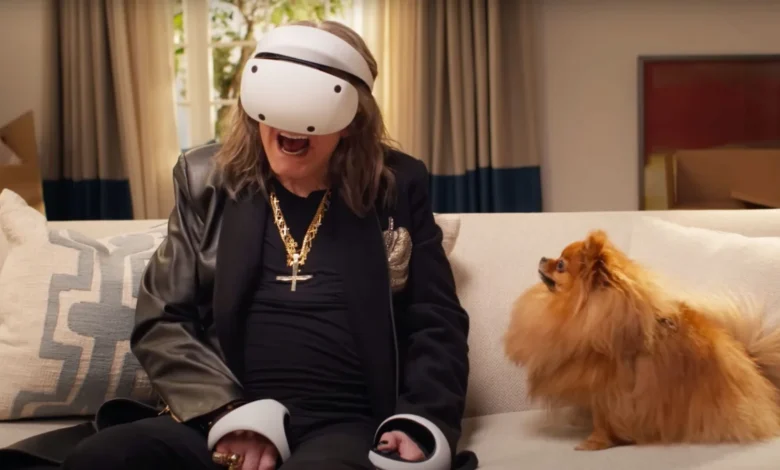
While Osbourne himself has occasionally embraced technology—appearing in high-profile advertisements for Sony’s PSVR2—his core message remains one of balance. Technology can be a tool for immersion and distribution, but it should not be the architect of the soul. As the industry navigates the "AI in Focus" era, the ability to leave "breathing room" for human texture will remain the distinguishing factor between content that is merely consumed and art that is truly felt.
In conclusion, the anniversary of these reflections serves as a timely prompt for the creative community. The "fucking air" does not always need to be ironed. Sometimes, the most professional thing a creator can do is leave the flaws in, ensuring that the work remains a reflection of the human experience rather than a calculation of an algorithm. Osbourne’s legacy, much like the music of Randy Rhoads, continues to resonate not because it was perfect, but because it was real.