Victoria Yakusha Studio Unveils Sculptural Monochromatic Interior for Guzema US Flagship Boutique in SoHo


The intersection of contemporary architecture and traditional craftsmanship has yielded a striking new landmark on Wooster Street in New York City’s vibrant SoHo district. Spanning 1,100 square feet (102 square meters), the newly inaugurated flagship boutique for the Ukrainian fine jewelry brand Guzema represents a masterclass in minimalist design, spatial storytelling, and cross-cultural collaboration. Conceived by celebrated Ukrainian designer Victoria Yakusha and her multidisciplinary practice, Victoria Yakusha Studio, the interior eschews conventional retail tropes in favor of an intimate, contemplative environment that frames fine jewelry as a precious artifact waiting to be unearthed.
Main Facts and Spatial Layout

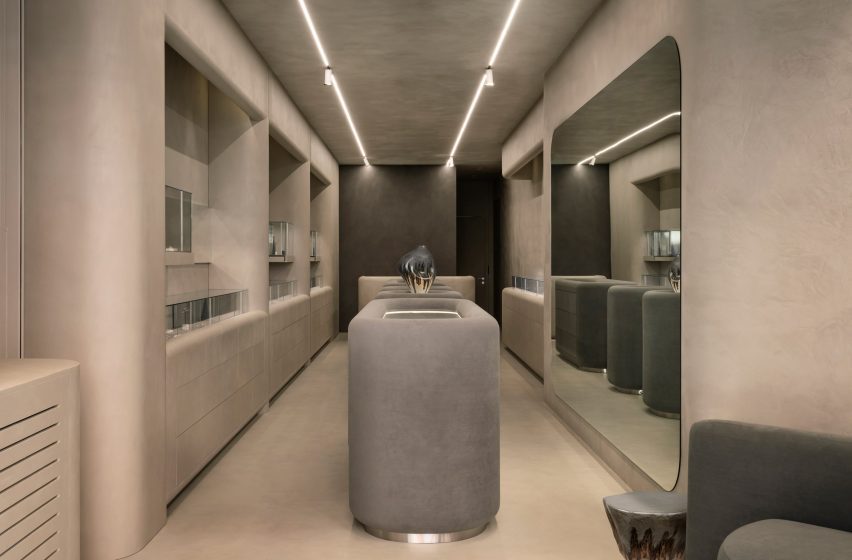
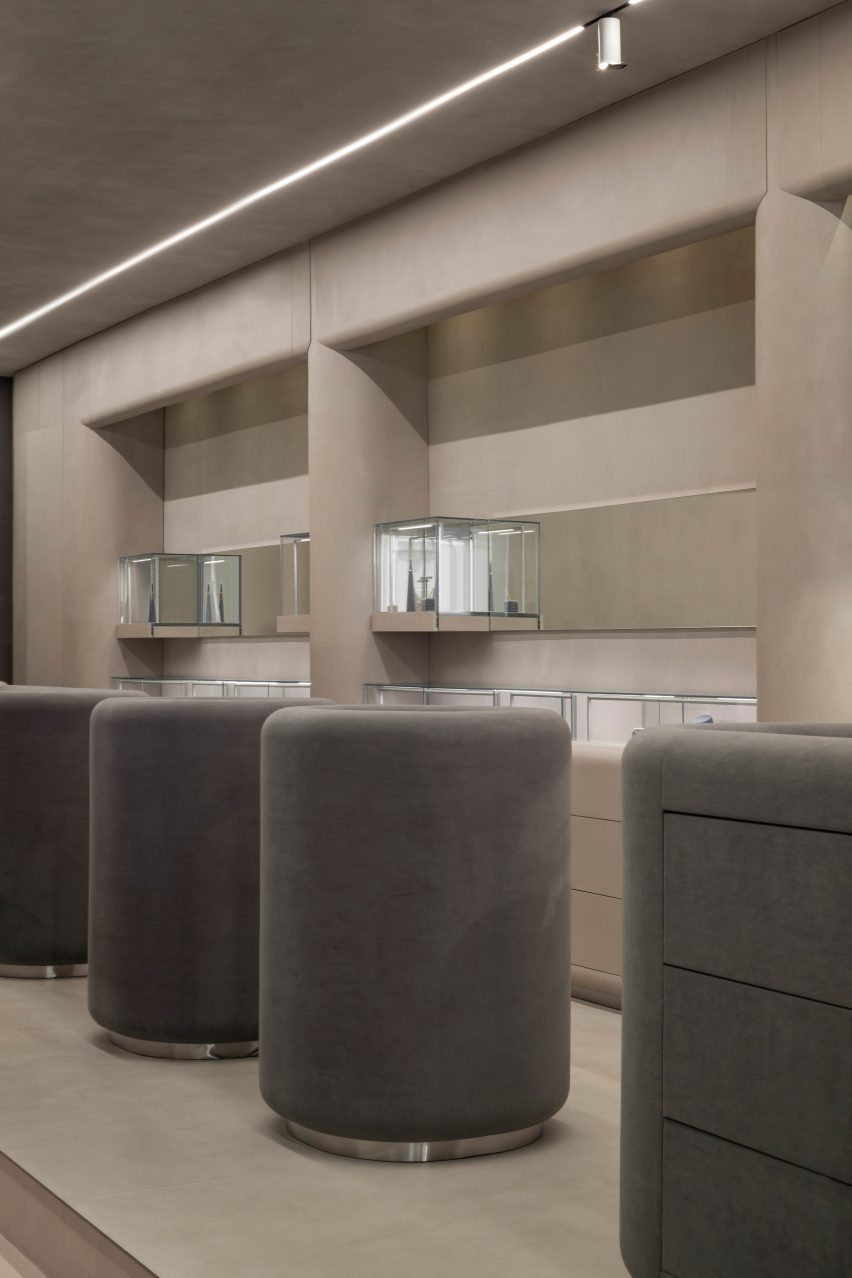
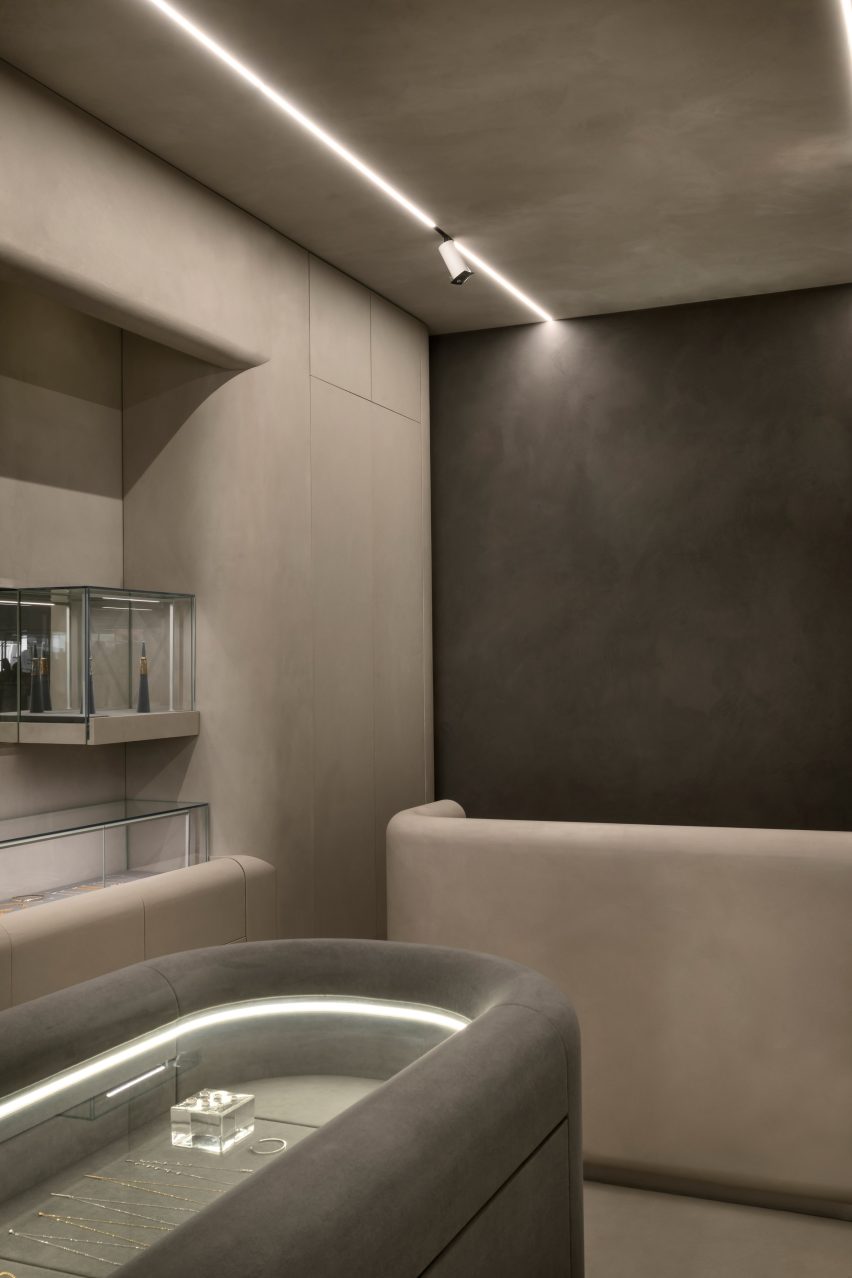
The architectural vision for Guzema’s first United States outpost draws heavily on organic forms, tactile surfaces, and a nearly monochromatic warm beige palette designed to foster a sense of serenity. Long and narrow in its footprint, the boutique guides visitors on a carefully curated journey. Products are discreetly housed within recessed wall niches and displayed along a central spine of monolithic vitrines.
Rather than utilizing sharp-edged, high-gloss display cases typical of luxury retail, Victoria Yakusha Studio crafted central islands that are upholstered in dove-grey suede and deliberately contoured to evoke the smooth, weather-worn appearance of river stones. This softness counterbalances the rigid geometry of the historic SoHo commercial building. The walls and ceiling are finished with mineral-toned plaster, creating a continuous, seamless envelope that blurs the boundaries between structural elements and display fixtures.
At the building’s facade, a street-facing window installation along Wooster Street introduces passersby to the brand’s aesthetic philosophy. Instead of traditional mannequins or acrylic risers, the display features a series of hand-sculpted white vessels with textured, organic skins and bowl-like apertures. These sculptural elements serve as unconventional pedestals for Guzema’s fine jewelry collections, aligning with the visual vocabulary of the Sonaih floor lamp produced by Faina, Yakusha’s independent furniture and lighting enterprise.

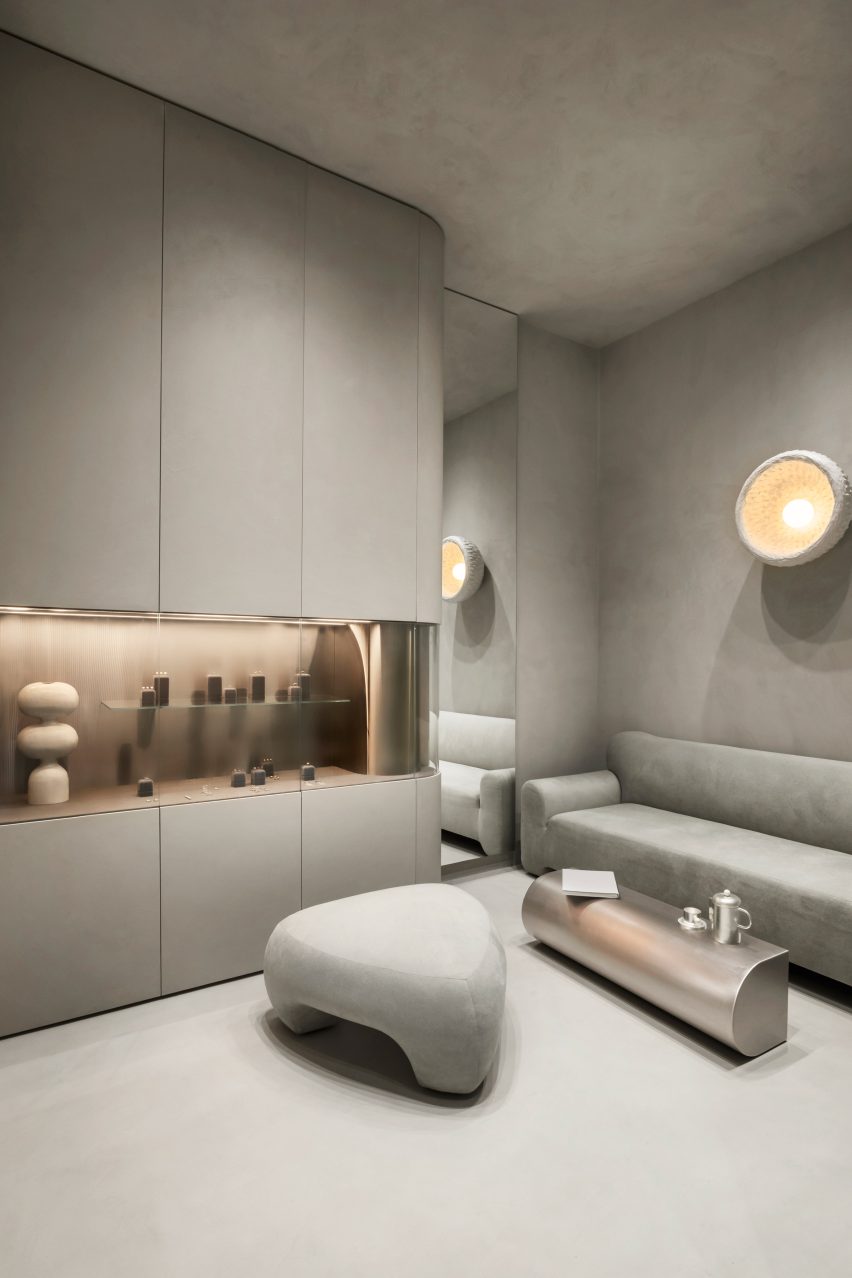
At the rear of the boutique lies a semi-private salon dedicated to individual consultations. Separated from the primary retail floor by a translucent glass-block partition, this intimate zone is furnished with collectible design pieces from the Faina collection, including a curved sofa, an ottoman, and sculptural wall sconces. A burnished-metal table anchors the space, complemented by intricate silver tableware designed by contemporary creator Natalia Criado.
Chronology and Design Genesis
The realization of the Guzema SoHo flagship represents the latest milestone in a rapidly expanding global footprint for both the jewelry brand and Victoria Yakusha Studio. The project began taking shape as Guzema sought to establish a permanent physical presence in the North American market, selecting New York City as the ideal launchpad for its international expansion.
Victoria Yakusha, a former fashion editor turned visionary architect and product designer, approached the commission through the lens of a sculptor rather than a traditional commercial designer. The design phase prioritized meticulous material sourcing, bespoke fabrication, and the integration of artisanal craftsmanship. The collaborative effort between Guzema and Yakusha Studio underscores a broader trend of Ukrainian creative talents exporting their distinctive design language to global cultural capitals.
Over the past decade, Yakusha has systematically built an international profile for her minimalist, heritage-infused aesthetic. Prior to the New York project, she established gallery showrooms for her Faina furniture line in Antwerp and Miami, and gained critical acclaim for commercial interiors such as the Istetyka restaurant in Kyiv, which similarly explores the tension between rough and smooth textures.
Supporting Data and Context
The opening of the Wooster Street boutique occurs against a complex geopolitical and economic backdrop. Since the escalation of the war in Ukraine in February 2022, Ukrainian creatives and entrepreneurs have faced unprecedented hurdles, yet many have intensified their efforts to promote national culture, design, and commerce on the international stage.
Yakusha herself has channeled the realities of the conflict into her creative output. In the wake of the 2022 invasion, she designed a dedicated furniture collection serving as an emotional homage to Ukrainian soil and subsequently proposed architectural initiatives, such as a museum dedicated to preserving the threatened cultural heritage of folk artist Maria Prymachenko in Bolotnya. The ability of brands like Guzema and designers like Yakusha to successfully execute high-profile international flagships highlights the resilience, adaptability, and enduring global demand for high-end Ukrainian craftsmanship.
Official Statements and Creative Philosophy
The conceptual framework underpinning the SoHo boutique relies heavily on the psychology of discovery. Rather than overwhelming the consumer with brightly lit inventory, the spatial choreography is designed to slow down the retail experience.
"My work here was closer to that of a sculptor," Victoria Yakusha noted, reflecting on the design process. "We didn’t want the feeling of traditional retail. We wanted something more intimate."
Elaborating on the window installations and product presentation methods, Yakusha emphasized the narrative weight of the physical elements. "We wanted the jewelry to feel discovered, not just displayed. That’s how we came to the idea of the installation. Each vessel is hand-sculpted, layer by layer. It’s an artwork in itself. It becomes part of the experience, a way of revealing something precious."
Broader Impact and Industry Implications
The debut of the Guzema SoHo boutique carries significant implications for both retail architecture and the international positioning of East European design talent. In an era where physical brick-and-mortar stores must offer experiential value far beyond simple inventory distribution to compete with e-commerce, the Yakusha-designed interior offers a compelling model. By prioritizing museum-grade curation, tactile materiality, and emotional resonance, the space transforms shopping into a contemplative artistic encounter.
Furthermore, the flagship serves as a vital commercial and cultural ambassador for Ukraine. By bringing together Guzema’s fine jewelry, Victoria Yakusha Studio’s spatial architecture, Faina’s collectible furnishings, and international designer collaborations under one roof in Manhattan, the project demonstrates that contemporary Ukrainian design is not merely surviving crisis, but actively defining the cutting edge of global luxury retail.