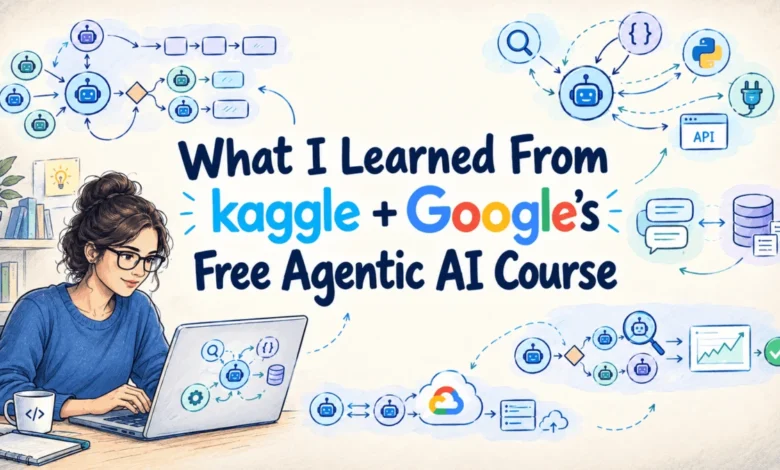
The rapid evolution of Large Language Models (LLMs) has transitioned from simple, stateless text generation to the development of sophisticated autonomous agents capable of reasoning, tool usage, and iterative problem-solving. To bridge the gap between theoretical understanding and practical deployment, Kaggle, in collaboration with Google, launched a comprehensive "5-Day AI Agents Intensive Course." Originally held as a live series from November 10 to 14, 2025, the curriculum has since been transitioned into a permanent, self-paced educational resource, providing developers with a structured pathway to mastering the Google Agent Development Kit (ADK).
The Shift from Prompting to Agentic Loops
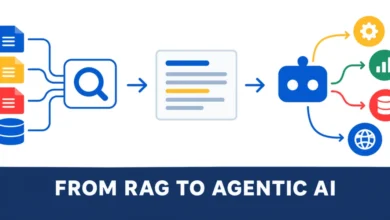
Traditional LLM interactions are characterized by a linear, one-shot paradigm: a user provides a prompt, and the model generates a response. This architecture, while effective for basic summarization or creative writing, lacks the autonomy required for complex workflows. Agentic AI introduces a fundamental architectural shift by implementing a feedback loop. In this model, the agent evaluates a task, selects an appropriate action, executes a tool, interprets the resulting output, and determines the subsequent course of action.
This transition introduces significant engineering challenges, including session state management, tool-selection accuracy, and the requirements for production-grade, non-notebook environments. The Kaggle and Google curriculum addresses these hurdles by providing a hands-on environment where students utilize Python and the ADK to build and scale functional agents.
Course Chronology and Technical Framework
The course is structured across five distinct modules, each designed to build upon the previous day’s lessons, moving from foundational architecture to professional deployment.
Day 1: Architectural Foundations
The program begins with the transition from prompt-to-action systems. Students learn that an ADK agent is composed of a discrete identity, a specific LLM, behavioral instructions, and a defined set of tools. A critical takeaway is the shift from single-agent systems to multi-agent architectures. As workloads increase in complexity, developers are encouraged to move away from monolithic agents toward specialized sub-agents. These can be organized via hierarchical parent-child relationships, sequential pipelines, or parallel branches, depending on the specific requirements of the application.
Day 2: Tool Integration and Best Practices
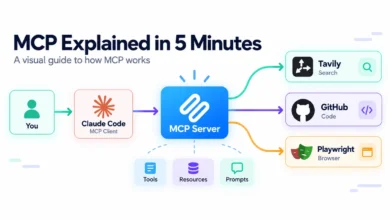
Agents are limited by their inherent training data unless equipped with external tools. The course explores four primary categories of integration: built-in model tools (such as Google Search), custom Python function wrappers, agent-to-agent delegation, and Model Context Protocol (MCP) implementations. Data shows that the efficacy of these tools is highly dependent on the quality of documentation provided within the code. By utilizing precise type hints, structured return values, and comprehensive docstrings, developers significantly reduce the frequency of model-induced execution errors.
Day 3: Memory and Context Management
One of the most persistent issues in agent development is the loss of state between interactions. The course categorizes memory into two tiers: short-term session memory, which manages the immediate conversation history, and long-term memory, which utilizes retrieval services to maintain factual consistency across sessions. The curriculum highlights the trade-offs between reactive and proactive retrieval, noting that while proactive retrieval provides immediate relevance, it increases latency and token consumption. Consequently, context engineering—the strategic curation of what data enters the model’s window—has become a core skill for maintaining cost-efficiency.
Day 4: Observability and Quality Assurance
Unlike traditional software, agentic systems are inherently non-deterministic. Because the same input may trigger different logical paths, standard unit testing is insufficient. The course advocates for "process-oriented evaluation," where developers track not only the final output but also the sequence of tool calls and logical steps. By implementing robust observability tools—logs, traces, and automated performance metrics—engineers can identify regressions early and debug failed paths that would otherwise remain hidden behind correct final answers.
Day 5: Scalability and Deployment
The final module addresses the transition from a local Jupyter notebook environment to production systems. This involves adopting the Agent2Agent (A2A) protocol, which allows disparate agents to communicate and share capabilities across different frameworks. Deployment strategies covered include the use of Vertex AI Agent Engine, CI/CD pipelines, and rigorous AgentOps practices to ensure reliability in live environments.
Supporting Data and Industry Context
The rise of agentic AI is reflected in recent industry adoption trends. According to various market analyses of enterprise AI integration, the shift from "Chatbot" to "Agent" has resulted in a 40% increase in task automation capability for complex workflows such as customer support resolution and data analysis. However, this growth has also highlighted the "Tool Hallucination" problem, where models struggle to select the correct function from a vast repository of options.
The Google ADK framework directly addresses these concerns by enforcing structured schemas and standardized communication protocols. Industry experts note that the standardization of agent communication—such as the Model Context Protocol (MCP)—is essential for the maturation of the AI ecosystem. Without such protocols, individual agents remain siloed, limiting their ability to function as part of a larger, enterprise-scale digital workforce.
Implications for the Developer Community
The implications of this training extend beyond mere skill acquisition. As organizations increasingly seek to automate complex, multi-step business processes, the ability to build and maintain agents will likely become a baseline requirement for software engineers. The emphasis on "observability" and "evaluation" in the Kaggle course signals a move toward a more rigorous, engineering-focused approach to AI, separating the hobbyist experimentation phase from mature, production-level development.
Furthermore, the integration of CI/CD (Continuous Integration/Continuous Deployment) into the agent development lifecycle represents a convergence of traditional DevOps with Machine Learning Operations (MLOps). By treating agents as services rather than static scripts, developers can manage version control, security patches, and performance monitoring with the same discipline applied to traditional backend microservices.
Official Perspectives and Future Outlook
While Google and Kaggle have not released specific enrollment numbers for the self-paced version of this course, the initial live sessions saw record engagement levels, indicating a high demand for structured, vendor-neutral educational materials in the agentic space. By open-sourcing the ADK and providing these instructional resources, Google is positioning its tools as the standard for enterprise agent orchestration.
The capstone project, which tasks students with building an end-to-end agent, serves as a litmus test for the industry’s readiness to adopt these technologies. As the community continues to experiment with these frameworks, the focus is expected to shift toward agent reliability, safety, and the development of standardized benchmarks for agent intelligence.
For developers seeking to remain competitive in the evolving landscape of artificial intelligence, mastering these core principles—architecture, memory, tool usage, and evaluation—is no longer optional. The Kaggle and Google intensive course provides a robust foundation for those looking to pivot from passive LLM usage to the design of active, intelligent, and scalable agentic systems. By focusing on the "how" of agent behavior, rather than just the "what," developers can move toward building solutions that are not only capable of generating text but also capable of delivering measurable, reliable business value.