The Latest Innovations in AI and Data Science Reshape Development Workflows and Operational Efficiency.


The mid-July 2026 period has seen a flurry of significant advancements and practical insights in the realms of Artificial Intelligence, Large Language Models (LLMs), and core data science practices, as highlighted by a series of recent publications. These developments underscore a critical industry-wide push towards enhanced efficiency, scalability, and developer productivity, offering tangible solutions to some of the most pressing challenges in modern software and AI engineering. From sophisticated architectural patterns in Python to cutting-edge strategies for LLM deployment and the burgeoning field of agentic AI, the innovations collectively paint a picture of a rapidly maturing technological landscape focused on practical implementation and robust operationalization.
Enhancing Python Development and Software Engineering for AI
A core theme emerging from recent discussions is the optimization of fundamental programming practices to support the complex and dynamic nature of AI development. On July 15, 2026, Kanwal Mehreen published an "Editor’s Pick" article advocating for the Registry Pattern in Python as a superior alternative to cumbersome if-else chains. This architectural shift addresses a long-standing issue in software extensibility, particularly pertinent in rapidly evolving AI pipelines. Traditional conditional logic, while seemingly straightforward, often violates the Open/Closed Principle (OCP), making systems brittle and difficult to modify as new functionalities or model variations are introduced. The Registry Pattern fundamentally transforms this by replacing rigid, hardcoded dispatch logic with a flexible, central lookup table. Components, such as different AI models, data transformers, or algorithm implementations, dynamically register themselves with this registry. This approach enables system behavior to be driven by external configuration rather than internal conditional statements, fostering highly maintainable, modular, and easily extensible codebases. For data scientists and machine learning engineers, adopting the Registry Pattern can drastically reduce the overhead associated with managing diverse model ensembles, A/B testing different algorithms, or integrating new data sources, thereby accelerating the development and deployment of complex AI systems. The ability to swap out components or add new ones with minimal code changes is invaluable in an field characterized by constant innovation and experimentation.
Complementing this focus on robust code architecture, the challenge of collaborative development in AI projects received a crucial update on July 17, 2026, with Shittu Olumide’s article on Git Worktrees for AI Development. The iterative and experimental nature of AI model training, hyperparameter tuning, and feature engineering often necessitates parallel development efforts. Historically, managing multiple concurrent experiments within a single Git repository could lead to significant friction, including file collisions, context switching overhead, and challenges in maintaining clean branch histories. Git worktrees provide an elegant solution by allowing developers to create multiple isolated working directories, all linked to the same underlying repository. Each worktree can be associated with a different branch, enabling AI agents or individual developers to operate simultaneously on distinct features, experiments, or bug fixes without interfering with each other’s progress. This infrastructure layer is particularly beneficial in AI development where long-running model training jobs might occupy one branch, while quick experimental changes are tested on another. The elimination of context loss and the reduced risk of merge conflicts significantly enhance developer productivity and streamline MLOps workflows, ensuring that rapid iteration does not come at the expense of code stability or team collaboration.
Further pushing the boundaries of AI-assisted coding, Shittu Olumide also explored two distinct but related concepts: Conductor for Gemini CLI (July 14, 2026) and Pi Coding Agents (July 16, 2026). Conductor introduces the paradigm of Context-Driven Development, directly tackling a common pain point in AI-generated code: the loss of contextual understanding across development sessions. AI coding agents, while powerful, often struggle to maintain a consistent grasp of project specifications, architectural decisions, and established coding patterns over time. Conductor addresses this by persisting critical project context—such as design documents, API specifications, and architectural constraints—directly within repository files. This ensures that coding agents can consistently generate accurate, compliant, and contextually appropriate code, even across multiple development sessions or when different agents are invoked. The implications are profound for enterprise development, promising reduced technical debt, improved code quality, and a higher degree of alignment between generated code and project requirements.
In a contrasting but equally significant development, Pi Coding Agents advocates for a minimalist architectural approach to AI agent design. This philosophy challenges the trend of building increasingly complex agents with extensive built-in functionalities and implicitly injected contexts. Pi Coding Agents argues that by explicitly documenting and omitting certain features, and by focusing on a leaner, more specialized design, developers can achieve more efficient and cost-effective agentic workflows. The core premise is that reducing inherent complexity can lead to clearer responsibilities, easier debugging, and lower operational costs, especially in resource-intensive AI environments. This perspective encourages developers to critically evaluate the necessity of every component within an AI agent, promoting a "less is more" approach that could lead to a new generation of highly optimized, purpose-built AI tools.
Optimizing Large Language Models (LLMs) for Production
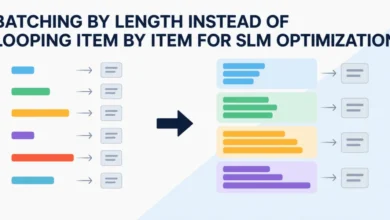
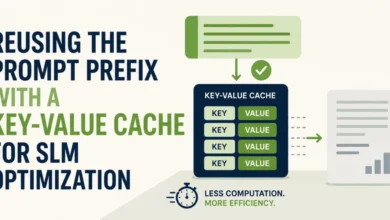
The practical deployment of Large Language Models remains a key area of focus, with significant attention paid to improving efficiency and reliability. On July 14, 2026, Kanwal Mehreen provided a comprehensive guide titled "12 Ways to Reduce LLM Latency and Inference Costs in Production." This article addresses one of the most critical barriers to the widespread, real-time application of LLMs: their substantial computational requirements and associated operational expenses. The strategies outlined are multifaceted, moving beyond simplistic solutions like aggressive batching, which can often introduce latency trade-offs. Key recommendations include meticulous optimization of token usage through sophisticated prompt engineering and efficient summarization techniques, ensuring only essential information is processed. Model routing, which involves directing specific tasks to smaller, specialized models rather than always relying on a single large general-purpose model, is emphasized for its ability to significantly reduce computational load. Furthermore, the article details the implementation of multi-layered caching strategies, including semantic caches for frequently asked queries and key-value caches for common responses, dramatically improving response times and reducing redundant computations. Strategic management of context budgets, often employing techniques like sliding windows or Retrieval Augmented Generation (RAG) principles, is highlighted as a superior alternative to simply increasing context window sizes, which can be computationally expensive. These combined approaches are crucial for making LLMs economically viable and performant for real-world production environments, enabling applications that demand low latency and high throughput.
Adding another layer of control and predictability to LLM outputs, Iván Palomares Carrascosa’s article on July 13, 2026, introduced Structured Language Model Generation with Outlines. A persistent challenge with LLMs is their inherent probabilistic nature, which can lead to outputs that are syntactically incorrect, unstructured, or do not conform to desired schemas (e.g., JSON, XML). This unpredictability hinders their integration into automated workflows and systems that require precise data formats. The Outlines library offers a groundbreaking solution by introducing deterministic certainty into LLM output generation. It achieves this by masking syntactically illegal tokens during the inference process, effectively guiding the LLM to produce strictly structured outputs. This means practitioners can reliably obtain outputs that adhere to specific constraints, such as a predefined JSON schema or a regular expression, significantly reducing the need for post-processing and validation. For developers building applications that rely on LLMs for data extraction, API calls, or code generation, Outlines provides a robust mechanism to ensure reliability and consistency, thereby unlocking new possibilities for integrating LLMs into mission-critical systems where output integrity is paramount.
Cultivating Practical Skills and Advancing Agentic AI
The acceleration of AI development necessitates a workforce equipped with practical, real-world skills and an understanding of emerging paradigms like agentic AI. Abid Ali Awan’s article on July 13, 2026, titled "5 Real-World SQL Projects to Build Your Data Portfolio," reinforces the enduring relevance of foundational data skills. Despite the hype surrounding advanced AI, SQL remains the bedrock of data manipulation, analysis, and management. This article offers aspiring and current data professionals a structured path to demonstrating their capabilities by tackling projects across diverse domains. These include customer churn prediction (vital for business retention), data warehousing (essential for robust analytics and reporting), sales analysis (driving revenue growth), banking segmentation (for personalized financial services), and healthcare data management (improving operational efficiency and patient outcomes). By engaging with such projects, individuals can showcase their ability to not only clean and model complex datasets but also to derive actionable business insights, bridging the gap between raw data and strategic decision-making. This practical approach to portfolio building is critical for entering and advancing in the competitive data science landscape.
The concept of autonomous AI agents continues to gain momentum, and Shittu Olumide’s article on July 15, 2026, "7 Python Frameworks for Orchestrating Local AI Agents," addresses the practicalities of their deployment. As the capabilities of AI agents expand, there’s a growing desire for greater control over their execution environment, often driven by concerns over data privacy, operational costs, and the need for offline functionality. This article surveys Python frameworks that provide the necessary orchestration layers for building, coordinating, and running AI agents directly on local infrastructure. Deploying agents locally offers significant advantages, including enhanced security due to reduced data egress, substantial cost savings by minimizing cloud computing expenses, and improved responsiveness for applications requiring low-latency interactions. These frameworks empower developers to create sophisticated, secure, and cost-effective intelligent automation solutions, democratizing access to agentic AI capabilities beyond large cloud providers.
Further supporting the burgeoning field of agentic AI, Nahla Davies provided "5 FREE Resources on Agentic AI" on July 17, 2026. As the interest in building sophisticated, autonomous AI systems grows, practitioners need more than just theoretical knowledge; they require hands-on experience and a structured learning path. This curated selection of resources guides developers beyond mere agent demos, offering pathways to integrate practical framework experience (such as with popular tools like LangChain or AutoGen), delve into the theoretical foundations of multi-agent systems, understand advanced orchestration patterns, and master essential evaluation techniques. These resources are invaluable for equipping the next generation of AI engineers with the skills needed to design, implement, and rigorously test robust and reliable agentic systems, moving the field closer to real-world deployment of truly autonomous AI.
Continuous Learning in the AI Era
Given the unprecedented pace of innovation in AI, continuous learning is not merely an advantage but a necessity for professionals. Vinod Chugani’s article on July 16, 2026, titled "10 YouTube Channels Keeping You Ahead in AI," serves as a vital guide for staying abreast of the latest developments. This curated selection of educational content provides comprehensive and high-quality insights across the entire spectrum of AI. Topics covered range from foundational machine learning theory and deep learning implementation techniques to in-depth paper analysis, which is crucial for understanding cutting-edge research. The channels also focus on practical application development for LLMs, including frameworks and best practices, and offer insightful tracking of industry trends. For busy professionals, these resources offer an accessible and engaging way to accelerate their AI knowledge, ensuring they remain competitive and informed in a rapidly evolving technological landscape.
Broader Implications and Future Outlook
The collective insights from these mid-July 2026 publications underscore a pivotal moment in the evolution of AI and data science. The industry is moving beyond foundational research to a phase characterized by the robust operationalization of AI technologies. The emphasis on architectural patterns like the Registry Pattern, alongside practical strategies for LLM cost reduction and structured output generation, reflects a growing maturity in software engineering practices tailored for AI. The rise of Git Worktrees and Context-Driven Development for AI agents highlights a critical need for developer productivity tools that can keep pace with the iterative and collaborative nature of AI projects. Furthermore, the focus on local agent orchestration and the availability of free, structured learning resources for agentic AI signal a democratization of advanced AI capabilities, empowering a broader range of developers and organizations to harness this transformative technology.
The consistent thread running through these innovations is the drive towards making AI more reliable, efficient, and accessible. As AI systems become more integrated into critical business processes, the demand for deterministic outputs, predictable performance, and cost-effective deployment will only intensify. These recent advancements provide a strong foundation for meeting these demands, paving the way for a future where AI is not just intelligent but also dependable, scalable, and seamlessly integrated into the fabric of everyday technology. The continuous flow of such practical, problem-solving content is indispensable for practitioners navigating this dynamic and exhilarating field.