Five Key Concepts Behind Agentic AI Every Engineer Must Understand for Production Success

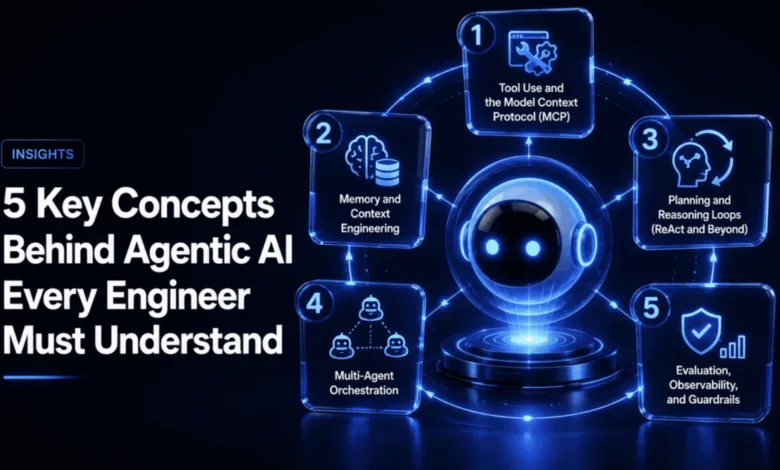
The transformative potential of agentic AI is rapidly shifting from theoretical promise to a critical component of enterprise digital strategy. While traditional chatbots merely provide information, agentic AI systems autonomously perform complex tasks, such as checking hotel availability, comparing prices, booking rooms, and sending confirmations, all on behalf of a user. This crucial leap from "telling" to "doing" underpins its growing prominence, moving agentic AI from a niche research topic to a central focus in nearly every engineering roadmap by 2026. However, the path to successful implementation is fraught with challenges; a staggering 88% of AI agents currently built fail to reach production. This high failure rate often stems not from deficiencies in the underlying models but from a lack of comprehensive understanding of the distinct engineering concepts that truly enable agentic systems to function reliably and at scale. This article delves into five fundamental pillars that define production-ready agentic AI: tool use, memory, planning and reasoning loops, multi-agent orchestration, and robust evaluation and observability.
Contextualizing the Agentic AI Revolution
The distinction between a static information retrieval system and a dynamic, autonomous agent marks a significant evolution in artificial intelligence. For years, AI applications largely served as sophisticated search engines or content generators. Users would query a system, receive a response, and then be responsible for the subsequent actions. Agentic AI, conversely, embodies a paradigm shift towards proactive intelligence, empowering machines to understand goals, formulate plans, execute actions through external tools, and adapt based on observations – effectively acting as digital delegates. This capability promises unprecedented levels of automation across industries, from customer service and data analysis to complex project management and scientific research.
The rapid ascent of agentic AI has been fueled by advancements in large language models (LLMs), which provide the core reasoning capabilities. Yet, the enterprise adoption landscape reveals a stark reality: while the "pitch" for agentic AI resonates universally, the engineering complexities involved are often underestimated. The term "agentic AI" itself has become an umbrella for several intertwined engineering disciplines. Misinterpreting or conflating these distinct ideas leads to agents that cannot retain context, fail to interact with necessary tools, or collapse under real-world traffic despite impressive demo performance. Understanding these foundational concepts is paramount for engineers aiming to bridge the gap between proof-of-concept and production deployment.
1. Enabling Action: The Rise of Standardized Tool Use
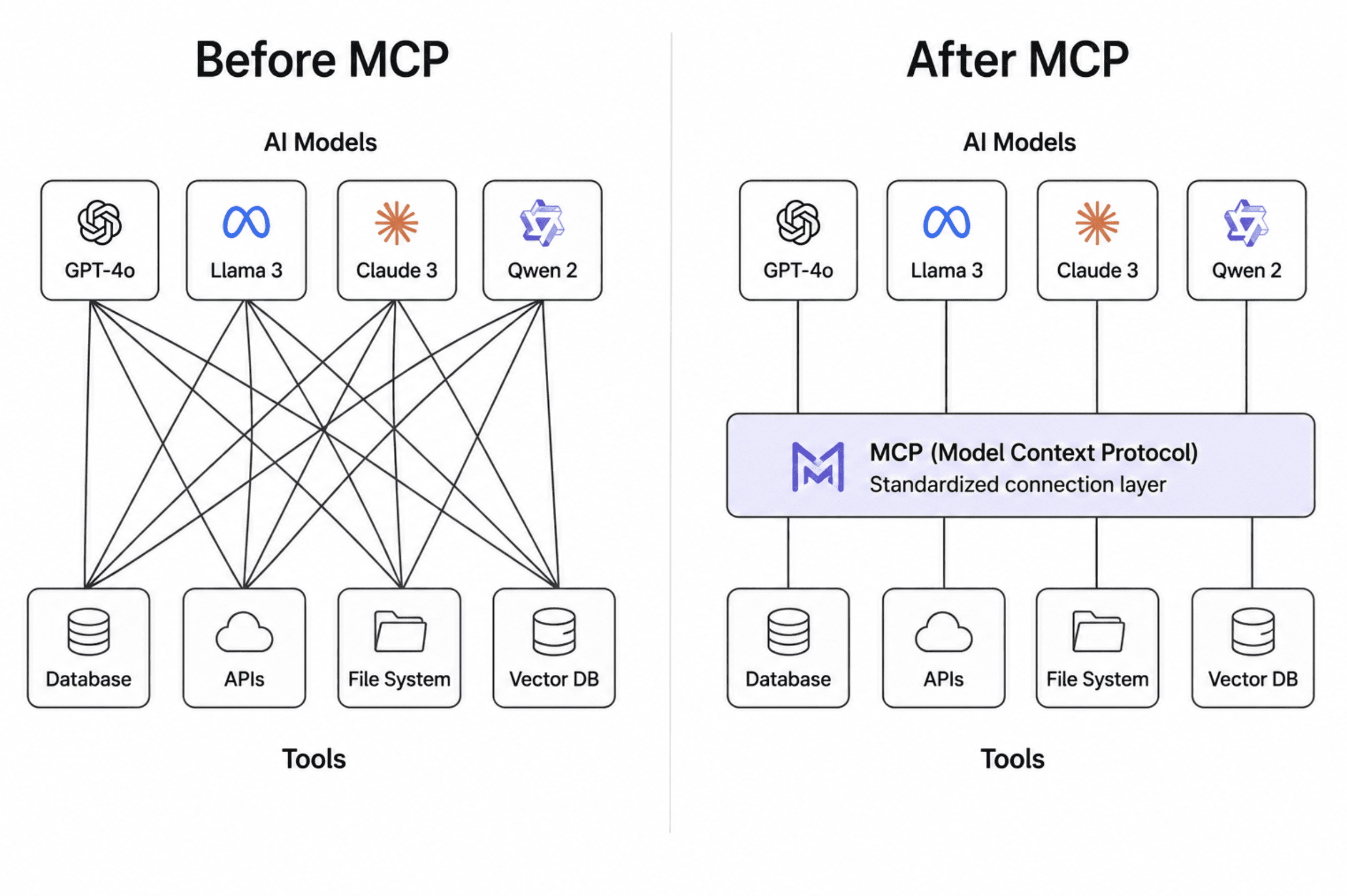
At its core, a large language model is a text generator. Its inherent capabilities are limited to processing and producing language. For an agent to "do something" in the real world – whether querying a database, invoking an API, reading a file, or sending an email – it requires a robust interface to external systems. This interface is universally known as "tool use." Historically, implementing tool use involved crafting custom integrations for every unique combination of AI model and external service. This approach led to a sprawling, brittle web of bespoke connections, where ten AI applications interacting with a hundred tools could necessitate thousands of fragile, one-off integrations, significantly impeding scalability and maintainability.
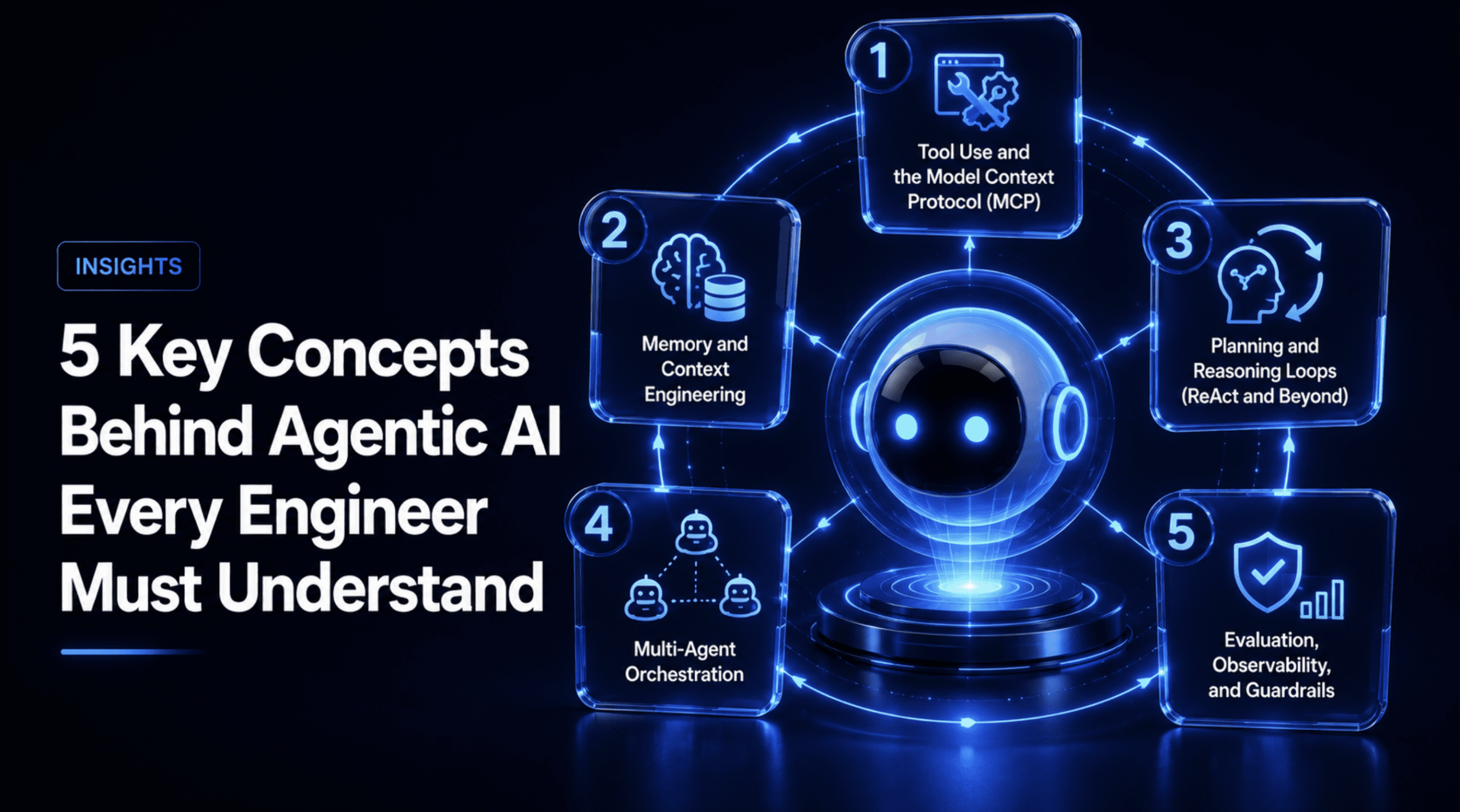
Recognizing this critical bottleneck, Anthropic introduced the Model Context Protocol (MCP) in November 2024. MCP emerged as a pivotal solution, standardizing the communication layer between LLMs and external tools. Its adoption trajectory has been nothing short of meteoric. By March 2026, the official SDKs for MCP were registering 97 million monthly downloads, a growth rate that took the widely adopted React npm package three years to achieve but MCP only sixteen months. This rapid proliferation underscored the industry’s desperate need for such a standard. In a significant move towards broader industry adoption and open governance, Anthropic donated MCP to the newly established Agentic AI Foundation under the Linux Foundation in December 2025. This initiative saw major players like OpenAI and Block join as co-founders, with AWS, Google, Microsoft, Cloudflare, and Bloomberg participating as supporting members. This collective endorsement solidified MCP’s status as shared infrastructure, immune to the whims of a single vendor.
For engineers, MCP’s value lies in its standardization. It enables a model to query any MCP-compliant server about its capabilities and then invoke its tools using a consistent JSON-RPC pattern, irrespective of the server’s builder. Clients discover available tools via the server’s capability manifest and interact through standard requests, eliminating the need to re-engineer core plumbing for each new integration. Consequently, connecting an agent to popular platforms like Slack, Notion, GitHub, or various databases often involves leveraging existing, published MCP servers. Resources such as the official MCP registry and community directories like PulseMCP serve as invaluable starting points, reducing the necessity for custom integration development. While MCP introduces a token overhead compared to direct API calls, making it less suitable for token-sensitive, high-throughput pipelines, its benefits become undeniable when proper OAuth handling, multi-tenant data isolation, or empowering non-engineers to integrate tools without writing SDKs are paramount.
2. Building Persistence: Advanced Memory and Context Engineering
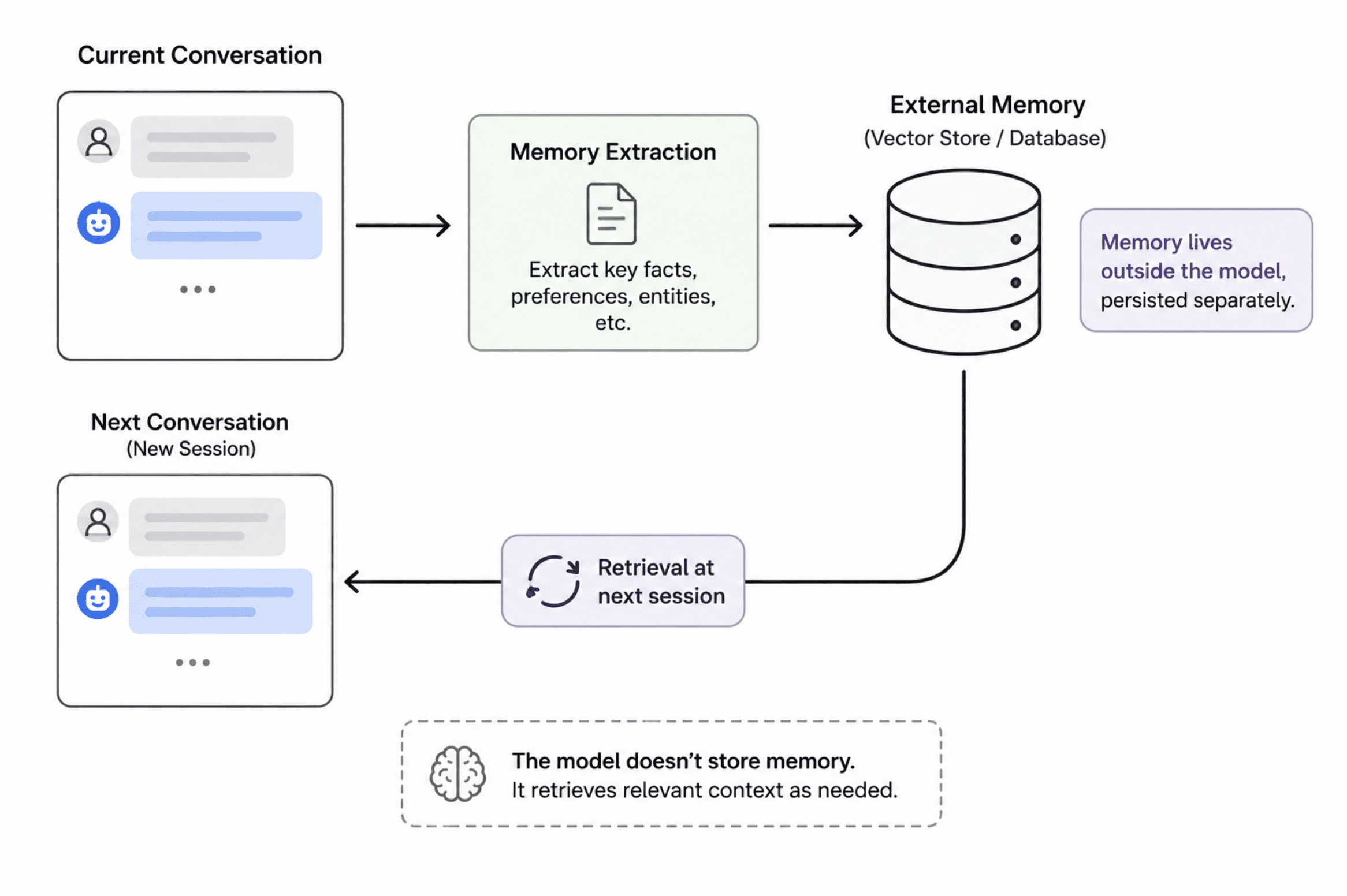
A fundamental characteristic of LLM calls is their stateless nature. Without explicit intervention, a model has no recollection of previous interactions, even those just minutes old. While this is acceptable for single query-response scenarios, it renders an agent useless for persistent tasks such as managing customer interactions across multiple sessions, conducting multi-day research, or overseeing projects spanning weeks. The inability to remember makes a seemingly intelligent agent functionally deficient.
This limitation has elevated memory from a mere afterthought to a distinct and critical architectural component in agentic systems. Three years ago, agent memory typically involved rudimentary stuffing of conversation history into the context window. Modern, serious systems have moved far beyond this. Memory is now architected as a separate layer, complete with its own benchmarks and sophisticated retrieval strategies. The mechanics involve a memory layer extracting salient facts from ongoing conversations, storing them in a vector database, and tagging them by user, session, and agent. When a new session begins, the system intelligently retrieves only the most relevant information using a combination of semantic similarity, keyword matching, and entity matching. This curated slice of information is then injected into the model’s context before it generates a response, creating the illusion of persistent memory.
Specialized tools like Mem0, Zep (built on the temporal knowledge graph Graphiti), and Letta have emerged as industry-standard starting points, replacing the need for teams to build memory solutions from scratch. Each offers distinct advantages: Mem0 provides a broad, user-friendly option for drop-in personalization, while Zep excels in temporal reasoning, crucial for queries like "how did this customer’s behavior change after the pricing update," by tracking facts with validity windows rather than just storing the most recent or similar entries.
Alongside memory, the term "context engineering" has largely supplanted "prompt engineering" in professional discourse. This shift reflects a deeper understanding that context quality, not sheer volume, is the true limiting factor for LLM agents. Most teams rarely fully utilize their models’ maximum context windows. The real challenge lies in the judicious selection, compression, and structured presentation of information that genuinely influences the model’s decisions, rather than indiscriminately dumping all available data. A larger context window, without a sophisticated retrieval strategy, merely provides more space for irrelevant information to dilute the agent’s focus and obscure critical details.
3. Autonomous Logic: Planning and Reasoning Loops
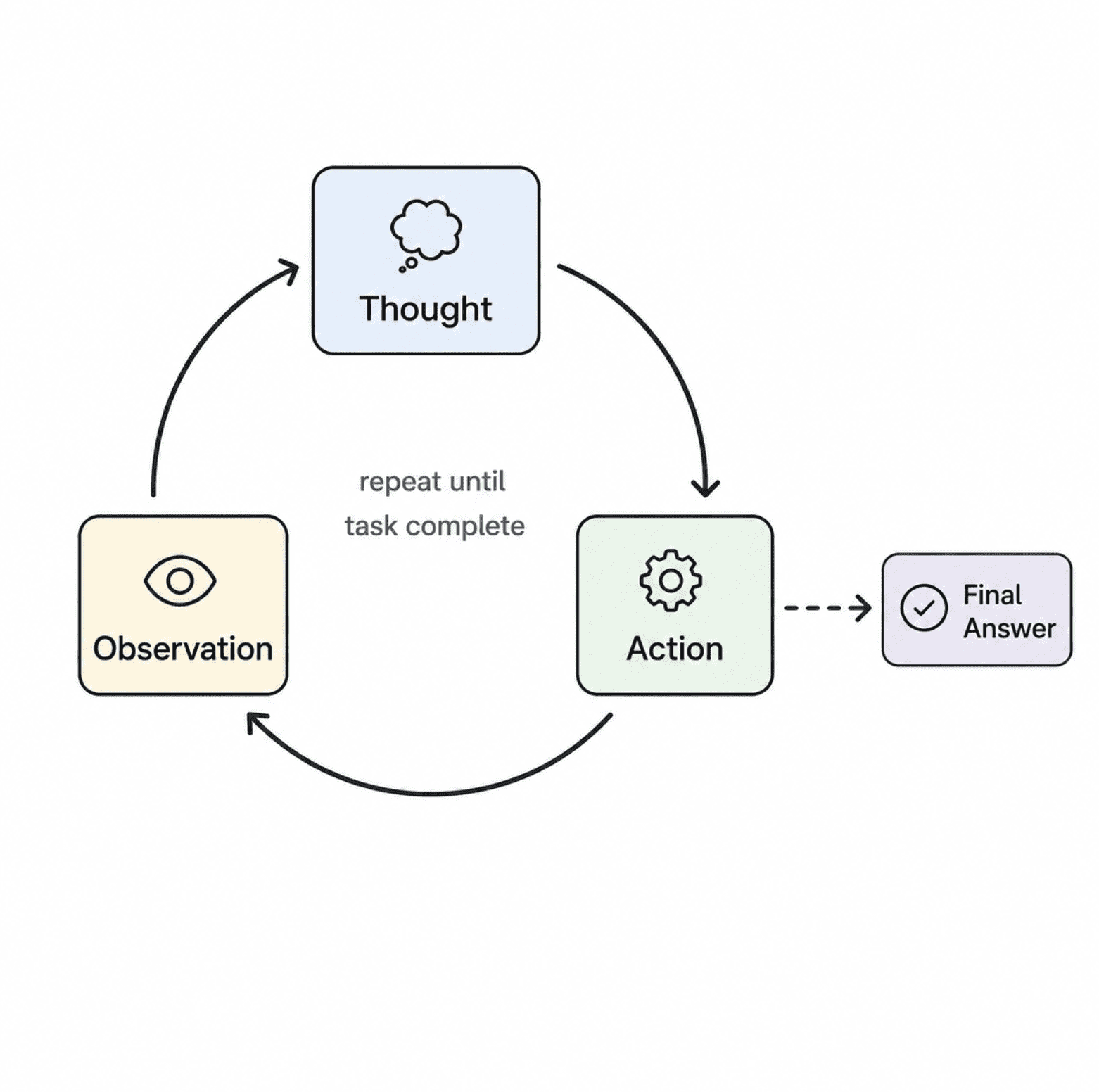
Unlike a chatbot that responds once and concludes, an agent must continuously decide, act, observe the outcome, and then decide again, often through dozens of iterative steps, without human intervention. This continuous loop forms the mechanical backbone distinguishing "AI that talks" from "AI that works." Nearly all modern agent frameworks are built upon variations of this core pattern, rooted in groundbreaking research.
The foundational pattern for agent autonomy emerged in late 2022 with the publication of "ReAct: Synergizing Reasoning and Acting in Language Models" by Google and Princeton researchers. ReAct proposed an elegant solution: interleaving reasoning steps with actions, rather than treating them as separate tasks. The structure is conceptually simple yet powerfully effective: the model generates a "thought," executes an "action" based on that thought, "observes" the result of the action, and then generates another "thought" informed by the observation, repeating this cycle until the task is complete. This iterative approach demonstrated significant performance improvements over pure imitation learning or reinforcement learning on benchmarks involving question answering and interactive decision-making, often requiring only a handful of examples to function effectively.
Since its inception, the core ReAct loop has remained influential, but the surrounding structure has evolved considerably. What began with techniques like chain-of-thought, ReAct-style reasoning, and few-shot prompting has matured into the broader discipline of context engineering. This encompasses designing the entire information environment around the model, extending far beyond merely crafting the initial prompt. Modern agent frameworks now integrate advanced features such as sophisticated retry logic for failed tool calls, self-correction mechanisms, and explicit task decomposition. This allows a high-level goal, like "research this market and summarize the competitive landscape," to be broken down into verifiable sub-steps, enhancing the agent’s ability to systematically achieve complex objectives.
However, it is within these planning and reasoning loops that reliability issues frequently emerge. An unchecked reasoning loop can rapidly consume tokens, become trapped in endless retries of a failed action, or deviate significantly from its original goal. Production trace data consistently reveals that a substantial portion of LLM call failures in agent systems are attributable to exceeded rate limits during these repeated, looping calls. This underscores a crucial point: the planning loop is not solely a conceptual reasoning construct but a piece of infrastructure that demands careful budgeting, monitoring, and robust error handling to prevent costly inefficiencies and system failures.
4. Scaling Intelligence: Multi-Agent Orchestration and Interoperability
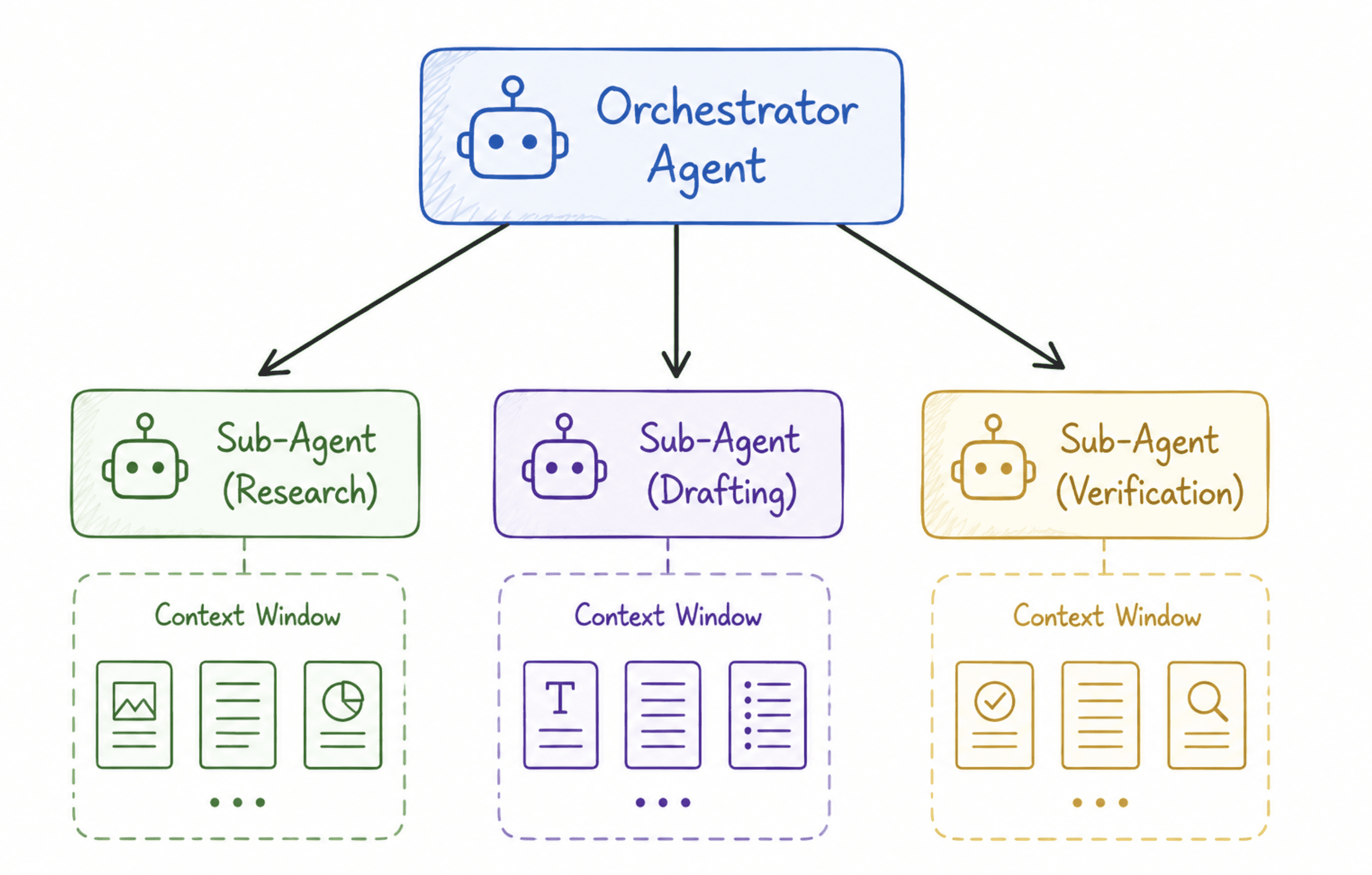
A single agent, constrained by a single context window, possesses inherent limitations. Tasking it with an entire codebase, an exhaustive research brief, and a comprehensive set of business rules simultaneously can lead to information overload, where critical details, particularly those embedded within vast amounts of context, are easily overlooked. The prevailing solution in 2026 for overcoming this ceiling is not simply a larger, more powerful model, but rather the strategic division of labor across multiple specialized agents, each operating with its own focused context, all coordinated by a higher-level orchestrator.
This architectural pattern typically involves an "orchestrator agent" that manages and coordinates several "sub-agents." Each sub-agent is assigned a dedicated context and specializes in a specific aspect of the task, working in parallel. This distributed approach prevents any single agent from attempting to process and retain all information concurrently. The benefits are not merely theoretical; Fountain, a prominent hiring platform, successfully implemented hierarchical multi-agent orchestration to achieve a 50% faster candidate screening process and 40% quicker onboarding. This resulted in one customer cutting their staffing time from weeks to under 72 hours, demonstrating tangible gains in efficiency and speed.
The landscape for building multi-agent systems has matured, offering several well-defined frameworks. LangGraph stands out for its steep learning curve but provides the highest degree of control and mature production readiness, featuring built-in checkpointing and explicit state management. CrewAI offers an easier entry point, structuring multi-agent workflows around distinct roles and tasks, making it an intuitive choice for scenarios where work naturally divides into specialist functions. AutoGen, while leading in research and academic applications with its flexible conversational patterns between agents, has seen slower production adoption compared to its counterparts. The optimal framework choice hinges on a team’s specific needs, balancing between granular control and rapid prototyping capabilities.
Complementing multi-agent orchestration is the critical challenge of interoperability – enabling agents built on different frameworks or platforms to communicate and collaborate. Google addressed this with the introduction of the Agent2Agent (A2A) protocol in April 2025, now an open-source project under the Linux Foundation. While MCP standardizes how an agent interacts with external tools, A2A standardizes how agents communicate with each other. It allows agents to discover each other’s capabilities and collaborate on tasks without exposing their internal memory or intricate logic. These two protocols, designed to be complementary rather than competitive, are increasingly expected to be found together in the architectural blueprints of sophisticated agentic systems by mid-2026, collectively fostering a more integrated and collaborative AI ecosystem.
5. Ensuring Reliability: Evaluation, Observability, and Guardrails
The final, and arguably most crucial, concept determines whether all the preceding efforts translate into deployable, valuable systems. This is the realm of evaluation, observability, and guardrails – often the most underinvested areas due to their perceived lack of excitement during the initial build phase. Yet, the statistics unequivocally highlight their importance: while 88% of AI agents fail to reach production, the successful 12% yield an average return on investment (ROI) of 171%. This substantial gap underscores that engineering discipline in these areas is often the decisive factor between a quietly shelved project and a significant competitive advantage.
Effective discipline begins with comprehensive tracing, which provides an immutable record of an agent’s entire execution path. This includes every step taken, every tool called, every observation made, and precisely where errors occurred. LangSmith, often paired with LangGraph, has emerged as a popular choice for framework-agnostic tracing and systematic debugging in production environments, with similar tooling available across other major frameworks. Without robust tracing, debugging a misbehaving agent in production devolves into guesswork, lacking any factual record of the reasoning or actions that led to an undesirable outcome.
Evaluation forms the second, distinct half of this concept. While tracing reveals "what happened," evaluation determines "whether it was good." Modern tooling in this space, such as Microsoft’s rubric evaluators, can automatically generate context-specific evaluation criteria for an agent, then score its performance against weighted dimensions to provide a nuanced quality assessment beyond a simple pass/fail. The industry is also converging on standardized placement of safety checks within an agent’s lifecycle. An emerging approach defines five key validation checkpoints: input, the model’s own reasoning, internal state, tool execution, and final output. These checks are increasingly expressed as portable, versionable policies rather than fragmented, custom code, ensuring consistency and auditability.
These tools and processes do not replace human judgment but rather intelligently direct it to areas requiring attention. Gartner has predicted that over 40% of agentic AI projects will face cancellation by the end of 2027, with escalating costs, unclear business value, and inadequate risk controls cited as primary drivers. Each of these failure modes is precisely what robust evaluation and observability frameworks are designed to detect and address early, transforming potential project cancellations into manageable, fixable bugs.
Broader Implications and Strategic Deployment
The successful deployment of agentic AI hinges on the synergistic integration of these five core concepts. An agent equipped with excellent tool access but lacking memory will forget every lesson learned. One with a sophisticated reasoning loop but no orchestration will quickly hit a scalability wall when confronted with tasks too large for a single context window. And an agent combining all these capabilities but lacking an evaluation layer remains a black box, offering no assurance of its behavior in production. The engineers extracting genuine value from agentic AI in 2026 are not those who chase the flashiest frameworks, but rather those who deeply understand how tool use, memory, planning, orchestration, and evaluation interlock to form a coherent, resilient system.
For organizations embarking on their agentic AI journey, a strategic, phased approach is recommended. Rather than attempting to master all five concepts simultaneously, start with a well-scoped task. Implement a single agent, ensuring it has robust tool access via protocols like MCP and a foundational memory layer. Closely observe its reasoning and behavior across several real-world runs. Only then, once a single agent genuinely struggles with the task’s scope, should multi-agent orchestration be considered. Crucially, evaluation and observability should be integrated from day one, not belatedly bolted on after a critical failure. This methodical approach, prioritizing foundational stability and continuous assessment over premature complexity, is the defining factor separating the agentic AI projects that successfully reach production from the overwhelming majority that do not.
Shittu Olumide is a software engineer and technical writer passionate about leveraging cutting-edge technologies to craft compelling narratives, with a keen eye for detail and a knack for simplifying complex concepts. You can also find Shittu on Twitter.