Automated Intelligent Document Processing System Revolutionizes Irish FOI Requests on AWS.


A groundbreaking fully automated Intelligent Document Processing (IDP) system has been successfully deployed in the cloud on Amazon Web Services (AWS), significantly streamlining the handling of Freedom of Information (FOI) requests from Irish citizens. This innovative system, developed for a major insurance claims database, processes inquiries from individuals seeking to ascertain if their personal details, such as name and address, are recorded within the extensive database maintained by the employer. The implementation has yielded an approximate 90% increase in efficiency compared to the previous manual processing methods, marking a significant leap forward in operational capability and regulatory compliance.
Background: The Imperative for Automation in FOI Requests
In an era of increasing data privacy awareness and stringent regulatory frameworks like the General Data Protection Regulation (GDPR) in the European Union and Ireland’s Data Protection Act 2018, organizations are under immense pressure to respond accurately and efficiently to data subject access requests, including FOI inquiries. Manual processing of such requests, often involving the review of numerous documents and disparate data sources, is inherently time-consuming, error-prone, and resource-intensive. For an organization managing a large insurance claims database, the volume and complexity of these requests can quickly overwhelm traditional manual workflows, leading to delays, increased operational costs, and potential non-compliance risks.

The previous manual system required substantial human intervention, from opening emails and identifying relevant attachments to manually extracting data and cross-referencing information. This process was not only slow but also prone to inconsistencies, particularly when dealing with varying document formats and image qualities. The need for a scalable, reliable, and highly efficient solution became paramount to meet both regulatory obligations and citizen expectations for timely responses. The new IDP system addresses these challenges head-on by leveraging advanced cloud technologies and artificial intelligence (AI) capabilities to automate the entire workflow.
A Cloud-Native Approach: Leveraging AWS for Scalable IDP
The core of this transformative IDP system is its cloud-native architecture built entirely on AWS. This approach provides inherent benefits in terms of scalability, reliability, and access to a comprehensive suite of managed services, including those for artificial intelligence and machine learning (AI/ML). The developer opted for a serverless design, utilizing AWS Lambda functions for processing, AWS Step Functions for orchestration, and Amazon S3 for secure, durable storage. This choice minimizes operational overhead, allowing the organization to focus on business logic rather than infrastructure management.

The high-level workflow of the system is designed to handle email-based requests containing document attachments. Although the production system integrates with corporate Outlook accounts, a simplified demonstration uses a personal Gmail account to illustrate the core functionalities. The primary goal is to extract specific Personally Identifiable Information (PII) from these attachments, including Document Type, First Name, Last Name, Date of Birth, and Address.
Key AWS Services Powering the IDP Workflow
Several AWS services work in concert to deliver this automated solution:

- Amazon Simple Storage Service (S3): Provides highly durable, scalable, and secure object storage for all incoming documents, extracted text, and final results.
- AWS Lambda: Executes serverless code functions, acting as the computational backbone for email ingestion, text extraction, and PII classification.
- Amazon Textract: An AI service that automatically extracts text and data from scanned documents, including images and PDFs, essential for converting document images into machine-readable text.
- Amazon Bedrock (with Anthropic Claude Sonnet): A fully managed service that makes foundation models from leading AI companies available through an API. In this system, Claude Sonnet 4.6 is used for advanced natural language processing, document classification, and precise PII extraction.
- AWS Step Functions: Orchestrates the multi-step workflow, ensuring reliable execution, error handling, and state management across different Lambda functions.
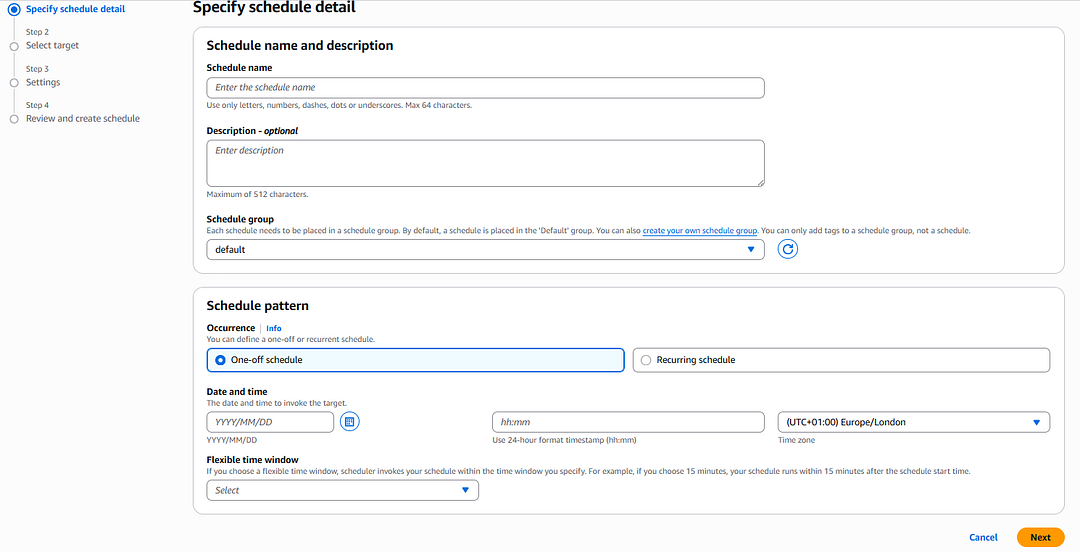
- Amazon EventBridge Scheduler: Initiates the entire IDP workflow on a predefined schedule, typically daily, to process new incoming requests.
- AWS Secrets Manager: Securely stores sensitive credentials, such as OAuth tokens for email access, protecting them from unauthorized access.
- AWS Identity and Access Management (IAM): Manages permissions and access controls for all AWS resources, ensuring that each component has only the necessary privileges.
Implementation Chronology: A Step-by-Step Breakdown
The development and deployment of the IDP system followed a structured approach, beginning with secure credential management and culminating in a fully automated, scheduled workflow.
-
Secure Credential Storage with AWS Secrets Manager:
The initial critical step involved securely storing the OAuth credentials required to access the email account. For Gmail, this process entails configuring API access to obtain client IDs, client secrets, and refresh tokens. These sensitive JSON credentials are then encrypted and stored within AWS Secrets Manager, ensuring they are not hardcoded into application logic and are accessible only to authorized AWS services (e.g., Lambda functions) via IAM roles. This practice significantly enhances the security posture of the system.
-
Setting Up S3 Buckets for Data Segregation:
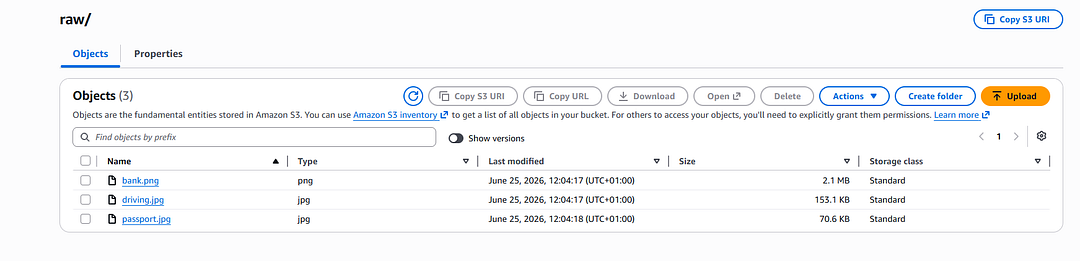
A dedicated S3 bucket was configured with five distinct folders to manage the data lifecycle efficiently:raw/: Stores the original image attachments ingested from emails.textract/: Holds the JSON output from Amazon Textract, containing the extracted raw text and metadata.results/: Stores the final processed results, including document classification and extracted PII.errors/: Captures documents or processing events that encountered errors.archive/: For long-term storage of processed documents or historical data.
This structured approach ensures data integrity, facilitates auditing, and supports potential reprocessing or analysis.
-
Developing Core Processing Logic with AWS Lambda Functions:
Three primary Lambda functions were developed, each responsible for a specific stage of the document processing pipeline:-
ingest_email_imageLambda: This function acts as the entry point, polling the configured email label (e.g., "DocumentProcessing" in Gmail) for new messages. It validates each email to ensure it contains exactly one attachment, specifically a JPEG or PNG image. Valid images are then saved to theraw/folder in S3, while invalid or duplicate attachments are logged for separate review. This Lambda utilizes environment variables for bucket names, Gmail label, Secrets Manager ARN, and processing limits (e.g.,MAX_IMAGE_BYTES,MAX_MESSAGES_PER_RUN).
-
extract_textLambda: Taking inputs from theraw/S3 folder, this Lambda invokes Amazon Textract’s synchronous document text detection API. Textract’s powerful optical character recognition (OCR) capabilities convert the image-based documents into structured text. The extracted text, along with individual lines, confidence scores, and source metadata, is then saved as a JSON file in thetextract/S3 folder. This step is crucial for transforming unstructured image data into a format suitable for AI-driven analysis, especially beneficial for documents with complex layouts or even handwritten components, as was the case in the full production system. -
classify_and_extract_piiLambda: This is the intelligence hub of the system. It takes the JSON text output from Textract and sends it to Amazon Bedrock, specifically leveraging the Anthropic Claude Sonnet 4.6 model. The core task is to classify the document type (e.g., passport, driving license, bank statement) and accurately extract the required PII (First Name, Last Name, Date of Birth, Address). The success of this step heavily relies on a well-crafted prompt passed to the Claude Sonnet model, guiding it to identify and format the desired information. The final classification and extracted PII are then stored as a JSON result file in theresults/S3 folder. This Lambda also uses environment variables for the Bedrock model ID, bucket name, and input character limits.
-
-
Workflow Orchestration with AWS Step Functions:
To manage the sequence and dependencies of these Lambda functions, AWS Step Functions were employed. Step Functions provide a visual workflow designer and a robust execution engine based on the Amazon States Language (ASL). This orchestration tool is critical for building resilient pipelines, offering built-in retry mechanisms, error handling, and timeout management, which are vital for a production-grade system. Instead of simply daisy-chaining Lambdas in code, Step Functions provide a declarative way to define complex workflows, including parallel processing and conditional logic. The visual representation of the workflow within the AWS console also aids in monitoring and debugging.
-
Scheduled Execution with Amazon EventBridge Scheduler:
To automate the initiation of the IDP workflow, Amazon EventBridge Scheduler was configured. This service allows for the creation of cron-based timing events that can trigger other AWS services. In this case, a schedule was set to invoke the Step Function daily, typically at 11:55 PM, to process all emails received throughout the day. This ensures a consistent and automated processing cycle without manual intervention, completing the end-to-end automation of the system.
Demonstrated Efficiency and Output Accuracy
The system’s effectiveness was validated using three artificially generated, yet realistic, images of a passport, a driver’s license, and a bank statement. The outputs from the classify_and_extract_pii Lambda demonstrated accurate document classification and precise PII extraction:
- Bank Statement: Correctly classified as
bank_statementand extracted "John Smith" as the name and "11 The High Street, NewTown, NT1 3WE" as the address. - Passport: Identified as
passportand extracted "AVERY EXAMPLE" for the name, "1991-08-30" for the date of birth, and "14 Example Lane, Testford, TE1 2ST" for the address. - Driver’s Licence: Classified as
driving_licenceand also accurately extracted "AVERY EXAMPLE," "1991-08-30," and "14 Example Lane, Testford, TE1 2ST."
These results confirm the system’s capability to process diverse document types and extract critical PII with high accuracy. The reported 90% efficiency gain over the manual system translates directly into substantial cost savings, faster response times for citizens, and a reduced workload for human operators, who can now focus on exception handling and value-added tasks.
Towards a Production-Ready Enterprise Solution
While the demonstrated system provides a robust framework, scaling it to a full production environment for a large enterprise necessitates additional considerations:

- Expanded Document Types and Complexity: The system must be capable of processing a wider array of document types (e.g., various utility bills, government letters, diverse insurance documents) and handle more complex inputs, including multi-page PDFs, documents with mixed content, and potentially handwritten sections. This would likely involve more sophisticated Textract features (e.g.,
ANALYZE_DOCUMENTfor forms and tables) and a more elaborate Bedrock prompt engineering. - Robust Error Handling and Retries: While Step Functions offer basic error handling, a production system requires comprehensive logging, alerting mechanisms (e.g., AWS CloudWatch Alarms, Amazon SNS notifications), and potentially human-in-the-loop (HIL) intervention for documents that fail automated processing. The original system included a HIL process for final cross-checks.
- Enhanced Security and Compliance: Beyond Secrets Manager, stricter data encryption at rest and in transit (AWS KMS), network isolation (AWS VPC), and regular security audits are essential. Compliance with specific industry regulations (e.g., financial services, healthcare) would dictate further security controls.
- Scalability and Performance Optimization: Monitoring system performance (e.g., Lambda execution times, Textract latency, Bedrock token usage) and optimizing resource allocation are crucial for handling fluctuating request volumes. Implementing concurrent processing for multiple emails or documents can further enhance throughput.
- Auditability and Reporting: A production system would require detailed audit trails for every processed document, tracking who accessed what information and when. Comprehensive reporting on processing times, accuracy rates, and error frequencies is vital for operational insights and regulatory compliance.
- User Interface for HIL and Management: A front-end application, possibly built with AWS Amplify or a similar service, would be necessary for human operators to review flagged documents, correct extraction errors, and manage the overall workflow.
- Integration with Downstream Systems: The extracted PII and classification results would need to be integrated with core enterprise systems, such as customer relationship management (CRM) platforms, claims management systems, or data warehouses, to facilitate further processing or record updates.
- Cost Management: Continuous monitoring of AWS service usage and costs is imperative, especially with AI/ML services like Textract and Bedrock, which can incur costs based on usage.
Broader Implications and Future Outlook
This successful deployment of an automated IDP system on AWS highlights the transformative potential of cloud-native AI/ML solutions in addressing critical business and regulatory challenges. The 90% efficiency gain is not merely an operational metric; it represents a fundamental shift in how organizations can manage vast quantities of unstructured data, particularly in highly regulated sectors.
The adoption of services like Amazon Textract and Amazon Bedrock empowers organizations to move beyond traditional rule-based automation to intelligent automation, where AI models learn to understand and interpret complex documents. This capability is increasingly vital as the volume of digital information continues to grow exponentially, and the demand for rapid, accurate data processing intensifies.
For Irish citizens, this system means faster and more reliable responses to their FOI requests, enhancing transparency and trust. For the insurance sector, it demonstrates a pathway to reducing administrative burdens, improving compliance postures, and freeing up human capital for more strategic tasks. The modular, serverless architecture also positions the system for continuous evolution, allowing for the integration of new AI models or processing capabilities as they emerge.
The project underscores the strategic value of embracing cloud platforms for digital transformation, enabling enterprises to build agile, scalable, and intelligent solutions that were once prohibitively complex or expensive to implement. As AI technologies continue to mature, the scope for automated document processing will only expand, making systems like this a standard rather than an exception in data-intensive industries worldwide.