Python Ecosystem Updates: Security Advancements, Performance Tooling, and Infrastructure Evolution

The landscape of the Python programming language is undergoing a period of rapid professionalization and technical refinement as the community pivots toward stronger supply chain security, improved runtime performance, and the integration of sophisticated AI-driven workflows. As of late 2026, the Python Software Foundation (PSF) and the broader developer ecosystem are addressing the challenges of scale and security, marking a shift from grassroots utility to institutional-grade software engineering.
Strengthening the Supply Chain: Security at the Core
The security of the Python ecosystem has taken center stage, necessitated by the increasing reliance on open-source packages in mission-critical infrastructure. A significant development in this sector is the ongoing collaboration between the PSF and security experts to harden the language’s supply chain. Seth Larson, serving as the PSF’s Security Developer in Residence, has been at the forefront of this initiative. His recent discussions highlight a strategic move toward automated defense mechanisms, provenance tracking, and the mitigation of "dependency hell."
This security push is mirrored by administrative changes at the PyPI (Python Package Index) level. Recently, PyPI implemented a 128-character limit on version strings. While seemingly a minor technical constraint, the change reflects a broader effort to optimize index performance and ensure predictable rendering across the millions of packages hosted on the platform. Data suggests that across approximately 10 million historical releases, only two instances exceeded this threshold, rendering the change a proactive rather than reactive measure to ensure long-term platform stability.
Furthermore, the PSF has successfully restored its historical wikis after a period of dormancy. In February 2026, the PSF, Python, and Jython wikis were transitioned to a read-only state following sustained automated traffic and security vulnerabilities rooted in aging infrastructure. The recent relaunch signifies a successful remediation effort, ensuring that institutional knowledge remains accessible while protected by modern security protocols.
Performance Optimization and Language Evolution
As Python continues to dominate the data science and AI sectors, performance remains a perennial concern. The release of Python 3.15.1, 3.14.9, and 3.13.17 demonstrates the project’s commitment to incremental improvements. Notably, the introduction of the profiling module in Python 3.15 provides developers with a native, standardized approach to performance monitoring, effectively consolidating various disparate tools into a cohesive framework.
The community is also witnessing a shift in how developers handle concurrency and data processing. The continued emphasis on itertools for memory-efficient pipelines serves as a cornerstone for developers working with large-scale datasets, such as stock market analysis or complex relay simulations. Simultaneously, the integration of tools like uv and ty is signaling a move toward more unified developer environments. By enabling first-class support for scripts via the command-line interface and integrated development environments (IDEs), these tools are reducing the friction traditionally associated with Python environment management.
However, not all technical proposals see the finish line. The withdrawal of PEP 836, which sought to bring a supported Just-In-Time (JIT) compiler to CPython, illustrates the complexity of balancing performance gains with the maintainability of the language’s core. Despite this withdrawal, the discourse surrounding JIT implementation has provided valuable insights into the constraints of the CPython runtime, potentially informing future performance-oriented PEPs.
The Rise of AI-Integrated Development
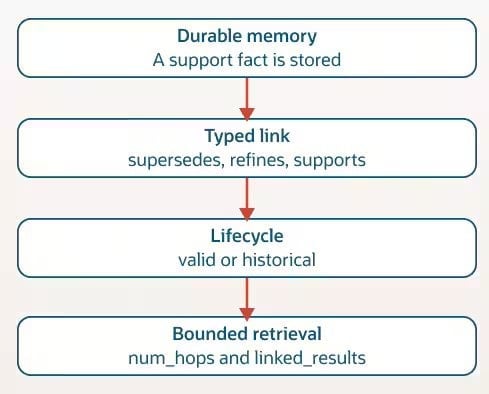
The intersection of Python and artificial intelligence has evolved beyond simple library usage to the creation of autonomous agents. A major theme in the current development cycle is the management of "memory" in AI agents. As agents become more complex, the ability to maintain state while allowing for user-initiated corrections is vital. Current research from entities like Oracle highlights the importance of linking historical memory with current preferences, allowing vector search engines to distinguish between legacy and active data points.
This shift toward agentic workflows has also spurred the development of specialized middleware. Tools like Zyte’s MCP (Model Context Protocol) have emerged to solve the persistent issue of "blocking" when AI agents attempt to access web content. By providing rendered pages and structured data directly to the agent, these tools are removing the overhead of parsing unstructured markup, thereby increasing the reliability of agent-based web scraping and information retrieval.
Moreover, the pedagogical landscape is shifting to accommodate these tools. Tutorials on utilizing "Claude Code" skills for documentation and the application of LangGraph for building stateful agents represent a maturation of the AI-Python stack. Developers are no longer just calling APIs; they are architecting state-aware systems that require rigorous documentation and structured logic.
Community Governance and Maintenance
The sustainability of the Python ecosystem rests on the shoulders of its maintainers. The recent Q3 2026 announcement of PSF Fellow Members underscores the organization’s reliance on community contributions to manage the vast, distributed nature of the Python ecosystem. This governance is critical, particularly when maintainers must decide which legacy versions of software to support.

Matthias Kestenholz, a prominent maintainer of several Django and Python packages, recently highlighted the methodology behind version support. His approach reflects the broader challenge faced by the community: balancing the need for innovation (new features) against the need for stability (long-term support for legacy environments). This tension is further evident in the Django Software Foundation’s ongoing quarterly contributor outreach, which seeks to align community feedback with the development of new features, ensuring that the framework remains responsive to the needs of its massive user base.
Broader Implications and Future Outlook
The current trajectory of the Python ecosystem suggests three primary trends for the coming years:
- Security by Default: The era of "move fast and break things" in open source is being replaced by a model that prioritizes supply chain integrity. Projects like PEP 850 (Wheel Variants) are expected to further define how providers and consumers interact, creating a more secure distribution pipeline.
- Toolchain Convergence: The success of projects like
uvsuggests that the fragmented world of Python package management is moving toward a more standardized, high-performance future. Developers are increasingly favoring tools that provide unified interfaces for building, testing, and deploying. - Autonomous Systems Architecture: As developers move from simple scripts to complex agents, the focus is shifting toward architectural patterns that handle state, memory, and observability. The emphasis on module profiling and structured data access is a direct response to the need for more robust, production-ready AI applications.
As Python enters this new phase, the synergy between the PSF’s formal oversight and the community’s rapid prototyping remains the language’s greatest asset. While challenges—such as the inherent performance limitations of a dynamic language and the ever-growing surface area for security threats—persist, the current technical roadmap is demonstrably focused on professional-grade solutions.
For the individual developer, these changes imply a need for continuous upskilling. Proficiency in modern deployment tools, an understanding of supply chain security best practices, and the ability to integrate stateful AI agents into traditional workflows are quickly becoming the new baseline for professional Python engineering. The ecosystem is not merely growing; it is hardening, ensuring that Python remains the bedrock of modern software development for the foreseeable future.
Related posts: