The landscape of artificial intelligence development has shifted significantly, moving away from static, single-turn query responses toward dynamic, autonomous systems capable of executing multi-step workflows. As of early 2025, the release of the OpenAI Agents SDK has democratized the creation of these agents, abstracting the complex underlying infrastructure—such as tool-calling loops and state management—into a streamlined development framework. This technological evolution marks a departure from traditional Large Language Model (LLM) implementations, where the interaction flow was strictly limited to a linear prompt-to-response paradigm.
The Architectural Evolution of AI Agents
In a standard LLM application, the process is transactional: a user provides a prompt, the model processes the input, and it returns a final textual output. This interaction terminates upon the completion of the response. Conversely, an AI agent functions through an iterative loop. It possesses the capability to reason about a task, determine if external information or specific computational actions are required, execute those actions via defined tools, and refine its output based on the results.
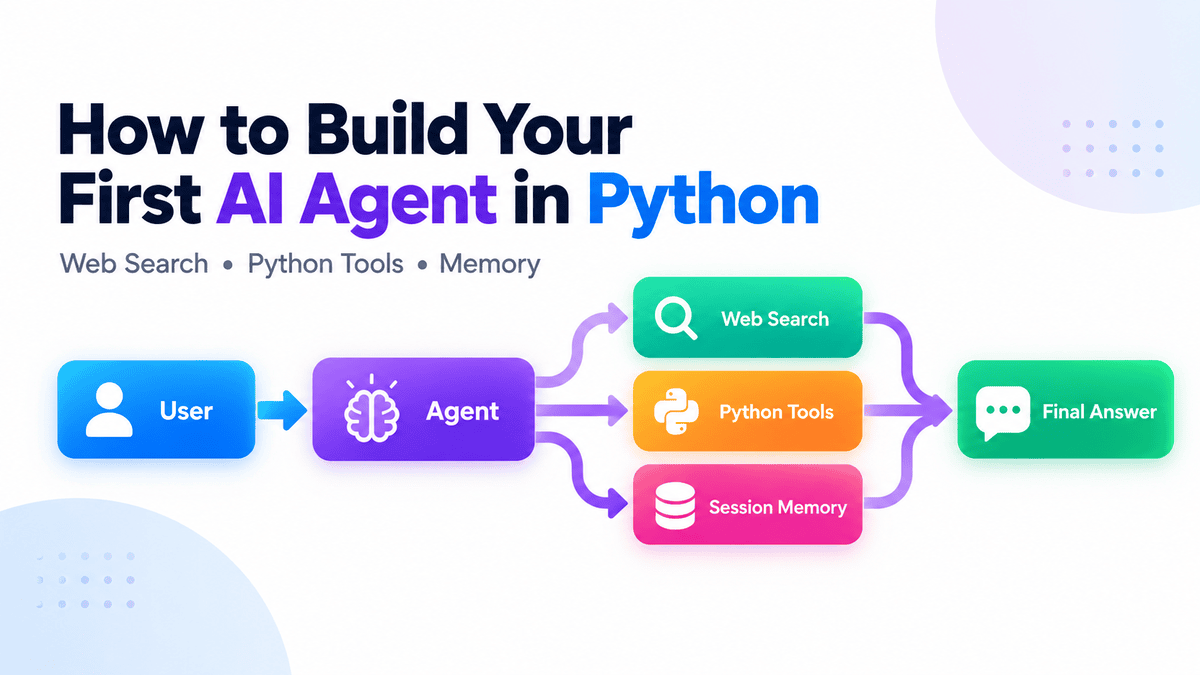
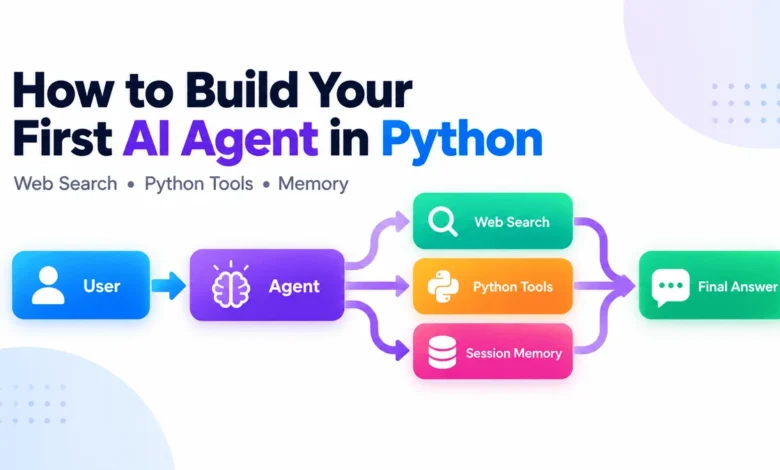
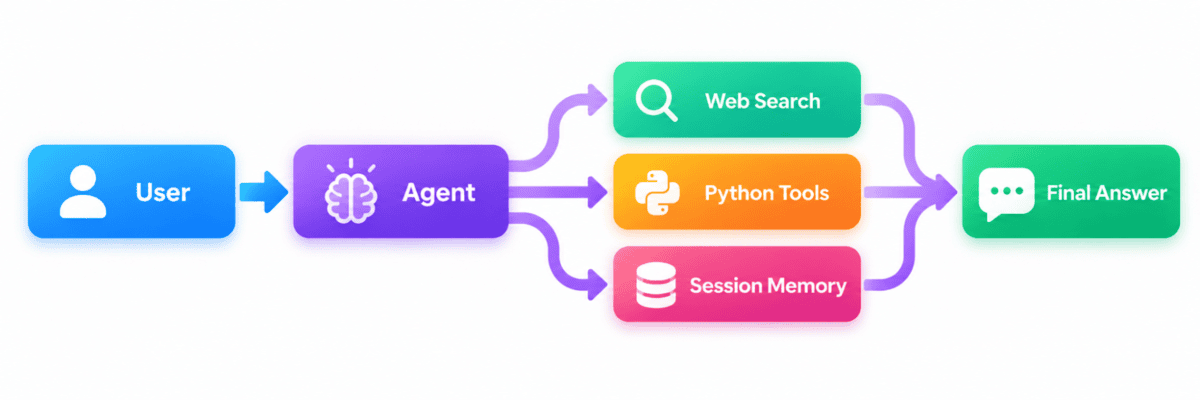
The OpenAI Agents SDK provides a robust Runner mechanism that facilitates this orchestration. The SDK manages the handshake between the LLM and the integrated tools, ensuring that if an agent requires real-time data from a web search or a complex calculation from a Python function, the workflow pauses, executes the task, feeds the results back to the model, and proceeds until the objective is satisfied. This capability for multi-step reasoning and tool integration represents the current frontier in practical AI application development.
Establishing the Development Environment
The transition to building agentic workflows begins with setting up a clean, modular Python environment. Modern dependency management tools, such as uv, have become the industry standard for ensuring reproducible builds. By initializing a project and installing the openai-agents package, developers can establish the foundational layer required for agentic logic.
The prerequisite for any such project is the secure configuration of environment variables, specifically the OPENAI_API_KEY. This key acts as the authentication token for the underlying model infrastructure. Once the environment is secured, the developer can initiate an agent by defining its persona, operational instructions, and a set of tools.

Implementation of Research and Calculation Tools
A primary advantage of the current SDK architecture is its reliance on Python decorators to expose functions as agent-accessible tools. By using the @tool decorator, a developer can define a specific function—such as a cost calculation algorithm—and the SDK automatically parses the function’s signature, type hints, and docstrings to generate a schema that the LLM can interpret.
For instance, consider an agent designed to handle procurement inquiries. By granting it access to a calculate_total function, the agent can parse natural language input such as, "I need 14 units at $2.49 each," and perform the arithmetic autonomously. This eliminates the need for the developer to write brittle regex patterns or complex logic to extract variables; the model manages the extraction and the execution seamlessly.
Persistent Memory and Session Management
A significant limitation in early LLM deployments was the "stateless" nature of interactions. Each query was treated as an isolated event, forcing users to repeat context. The integration of session management—utilizing backends such as SQLite, Redis, or MongoDB—enables agents to maintain a historical record of conversations.

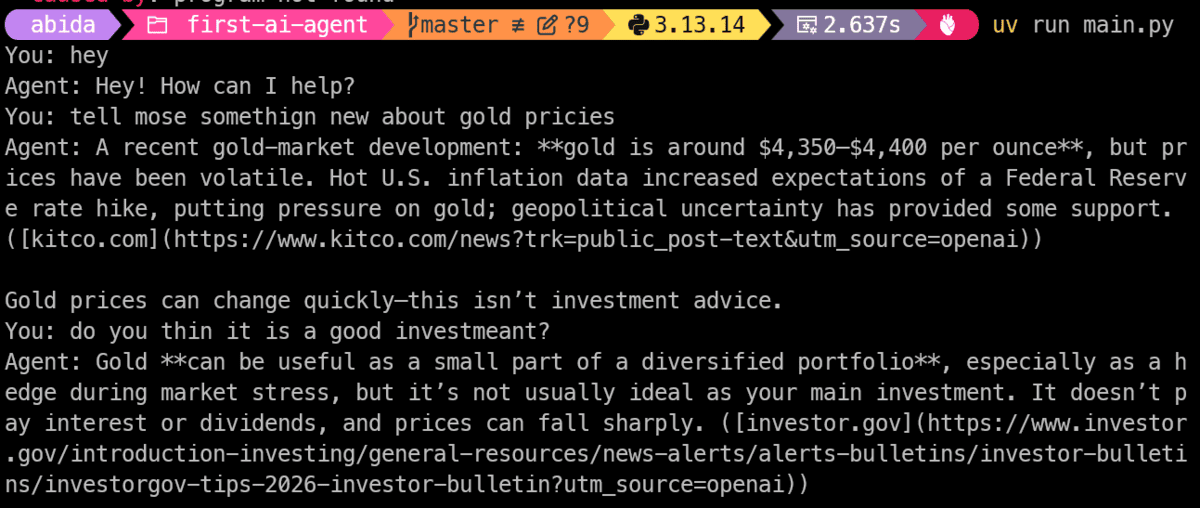
In a production environment, this persistence is vital. By initializing an SQLiteSession, an agent can reference previous parts of a dialogue, allowing it to understand follow-up questions such as "What is the latest version of that software?" after an initial discussion about Python updates. This statefulness is achieved by persisting the interaction history into a local database file, which remains accessible even after the application process is terminated and restarted.
Timeline of Agentic Development
The progression of this technology has been rapid. Historically, developers were required to manually implement "ReAct" (Reasoning + Acting) patterns, which involved writing complex loops to handle model outputs, parsing them for function calls, executing those calls, and re-prompting the model with the result.
- Pre-2023: Developers relied on basic API calls with no native tool-calling, requiring heavy custom infrastructure.
- 2023: Introduction of Function Calling by major model providers, which began the shift toward structured output.
- 2024: The emergence of specialized agent frameworks that automated the "loop" logic, significantly lowering the barrier to entry.
- 2025: The release of official SDKs, such as the OpenAI Agents SDK, providing high-level abstractions for memory, tools, and tracing, allowing for rapid deployment of complex agents.
Data-Driven Analysis of Agent Performance
While the ease of building these agents has increased, the complexity of debugging them has also evolved. When an agent fails to arrive at the correct conclusion, the issue is rarely a simple syntax error; it is often a failure in the reasoning chain or an incorrect tool selection.
To mitigate this, the SDK incorporates built-in tracing. According to internal documentation and developer feedback, tracing provides a granular view of every "thought" the agent has, every tool it attempts to invoke, and the specific inputs and outputs of those invocations. By inspecting these logs in the developer dashboard, teams can perform a root-cause analysis of agent behavior. If an agent consistently fails to use a tool, the data may reveal that the tool’s docstring is insufficiently descriptive, prompting an iterative improvement in the agent’s instructions.
Broader Implications and Future Outlook
The industry-wide move toward agentic workflows suggests a shift in how enterprise software will be constructed. We are moving from a world of "software-as-a-service" (SaaS) to "agentic-as-a-service" (AaaS). Organizations are increasingly replacing static dashboards with conversational interfaces that can query databases, perform real-time web searches, and execute business logic on behalf of the user.
However, this transition brings with it significant security and compliance considerations. As agents are granted the ability to call external APIs and perform calculations, guardrails must be established to prevent unauthorized actions. Current best practices involve the implementation of "human-in-the-loop" verification for sensitive tasks and the use of scoped API permissions to limit the blast radius of any individual agent.
Conclusion
The development of AI agents has moved from a niche area of AI research into the mainstream of Python development. By leveraging SDKs that handle the heavy lifting of orchestration, state management, and tool execution, developers can focus on the business logic and the quality of the instructions provided to the agent.
The fundamental pattern—defining a persona, providing a toolset, and managing persistent state—is likely to remain the bedrock of agent development for the foreseeable future. As the ecosystem matures, we can expect to see an increase in the complexity of supported tools, including better integration with local file systems, secure authentication with third-party enterprise platforms, and more sophisticated methods for handling long-term memory. For developers looking to remain relevant in this evolving field, the focus should not be on the underlying infrastructure, which is being increasingly commoditized, but on the design of effective agentic workflows that solve tangible, real-world problems. The era of the autonomous agent has arrived, and the tools required to harness this power are now within reach of any developer with a terminal and a Python environment.