The Evolution of Agentic AI Architecture by Mid-2026: From Orchestrated Loops to Standardized Swarms and Memory Graphs

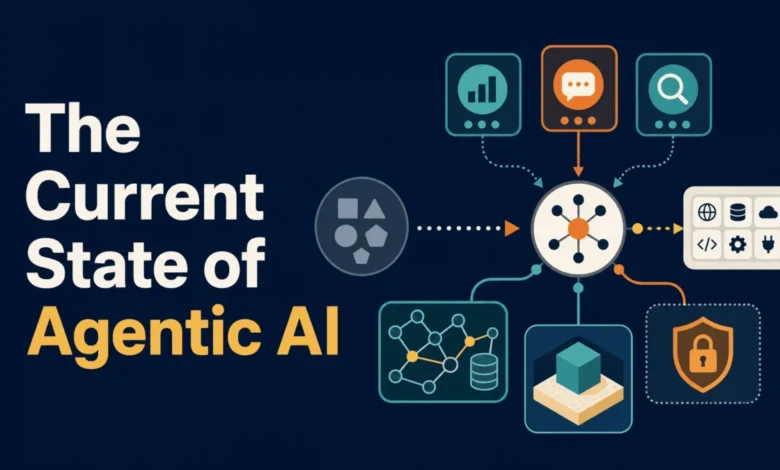
Mid-2026 marks a pivotal juncture in the development of agentic AI, characterized by a profound architectural transformation that has moved beyond the rudimentary, hand-crafted orchestration loops of previous years. The industry has witnessed a decisive shift towards native reasoning capabilities within foundation models, the widespread adoption of multi-agent swarms leveraging a microservices paradigm, and the critical standardization of tool protocols through initiatives like the Model Context Protocol (MCP). This evolution reflects a maturing engineering discipline, prioritizing resilience, specialization, and scalable security over monolithic, brute-force approaches.
A Chronology of Architectural Shifts
The journey to mid-2026 has been rapid and iterative. Just a year prior, in mid-2025, the dominant approach to building AI agents relied heavily on external orchestration frameworks. Engineers meticulously crafted intricate ReAct (Reasoning and Acting) loops, often grappling with brittle prompt chains designed to coerce single, large language models (LLMs) into simultaneously managing planning, tool execution, and context. This "brute-force orchestration" era, while foundational, proved increasingly cumbersome as AI applications scaled and diversified. The limitations were evident: high latency due to sequential external loops, significant token overhead from repeated context re-injection, and a challenging debugging landscape where failures were often opaque and difficult to isolate within complex prompt logic.
By late 2025 and early 2026, the first signs of this architectural paradigm shift began to solidify. Foundation model developers, responding to market demands for more autonomous and efficient agents, started integrating what was colloquially termed "System 2" thinking directly into their models’ architectures. This meant models gained the intrinsic ability to generate hidden reasoning tokens, explore multiple solution branches internally, and self-correct errors before producing a final output. This internal deliberation dramatically reduced the reliance on external reflection loops, freeing up engineering resources.
Concurrently, the recognition that a single, all-encompassing agent was becoming an anti-pattern led to the rapid proliferation of multi-agent architectures. Drawing parallels with software engineering’s shift from monolithic applications to microservices, AI developers began designing "agent swarms" – collections of smaller, highly specialized agents designed to communicate and collaborate. This decentralization promised greater scalability, fault tolerance, and resource optimization.
The final, crucial piece of the puzzle, the standardization of inter-agent and agent-tool communication, gained significant traction throughout late 2025 and into 2026. The Model Context Protocol (MCP) emerged as a leading open standard, addressing the long-standing challenge of seamlessly integrating AI agents with diverse real-world systems and data sources without custom API wrappers for every interaction. This three-pronged evolution – native reasoning, multi-agent swarms, and protocol standardization – has fundamentally redefined the landscape of agentic AI systems in production today.
The Demise of Orchestrated Loops: Native Reasoning Takes Center Stage
One of the most profound shifts has occurred at the very core of how AI agents "think." The prior generation of agentic systems, often built using frameworks like LangChain or LlamaIndex, simulated cognitive processes such as planning, execution, and reflection through external code. These patterns, like Plan-and-Execute or Reflexion, involved developers coding explicit steps to force a model to think sequentially, critique its own output, and iterate.
Today, foundation models are increasingly handling test-time compute natively. Advanced models released in late 2025 and early 2026, such as CognitoMind-7B or MetaReasoning-12.5, demonstrate significant internal deliberation capabilities. Benchmarking data from Q1 2026 indicates that models with integrated native reasoning can reduce overall task latency by an average of 30-40% compared to externally orchestrated systems for complex multi-step tasks, largely by eliminating redundant prompt calls and context re-injection. Furthermore, internal analyses by leading AI research labs show a 25-35% reduction in token consumption for tasks involving iterative refinement, as models no longer need to explicitly output intermediate thought processes to an external orchestrator.
This integration means that the heavy scaffolding previously built to simulate reflection or step-by-step planning is becoming redundant. As a result, the role of the AI engineer has shifted. Instead of meticulously hand-crafting complex reasoning loops, engineers now focus on designing the broader infrastructure: routing mechanisms, robust state management, and secure environment execution for agents. The agent’s core cognitive loop is largely managed by the model itself, allowing developers to allocate their efforts to more high-level system design and decomposition of work. "The era of prompting agents into ‘thinking’ is giving way to designing environments where specialized agents can ‘act’ intelligently," states Dr. Anya Sharma, lead architect at Synthetica Labs, in a recent industry whitepaper. "It’s a move from micro-management to macro-orchestration."
Building Agent Swarms: The Microservices Paradigm for AI
With the cognitive burden lifted from external orchestration, engineering energy has been redirected towards decomposing complex tasks across multiple specialized agents. This move aligns closely with the established software engineering principle of microservices, where large, monolithic applications are broken down into smaller, independently deployable services.
The argument, popularized in articles like "Beyond Giant Models: Why AI Orchestration is the New Architecture" (KDNuggets, Q4 2025), is straightforward: attaching dozens of tools and responsibilities to a single large model creates a significant bottleneck, akin to a single server trying to handle all requests in a large enterprise. This monolithic approach leads to larger context windows, higher inference costs, slower response times, and increased fragility.
By mid-2026, a growing number of production teams have transitioned to agentic swarms – collections of smaller, highly specialized agents that communicate and collaborate via standardized protocols. Instead of a single "super-agent" with 50 tools, a typical enterprise deployment might feature:
- A Triage Agent: Responsible for initial request parsing and routing.
- Data Fetcher Agents: Specialized in interacting with specific databases (e.g., PostgreSQL, MongoDB), APIs, or data warehouses, often with read-only permissions.
- Data Analyst Agents: Equipped with sandboxed environments for data manipulation and analysis using tools like Python’s pandas or R.
- Reporting Agents: Focused on synthesizing information and generating user-facing reports or visualizations.
- Memory Agents: Asynchronously updating and querying a shared knowledge base.
This decomposition, while appearing to shift complexity, fundamentally transforms it into something manageable, testable, and replaceable. Each agent can be developed, tested, and deployed independently. If a data fetching agent fails, it doesn’t necessarily bring down the entire system, and its specific logic can be iterated upon without affecting other components. Moreover, this allows for strategic resource allocation: cheaper, faster small language models (SLMs) or specialized models (e.g., Qwen3, Mistral Tiny) can be used for individual nodes requiring less complex reasoning, reserving larger, more capable models for routing, synthesis, or highly nuanced tasks.
Leading frameworks like the OpenAI Agents SDK and LangGraph Swarm have emerged to facilitate the development and deployment of these multi-agent architectures. These frameworks provide primitives for defining agents, managing communication channels, and orchestrating handoffs, often using explicit TransferCommand mechanisms. This approach ensures that individual agents remain stateless per call, maintaining lean context windows, while the overall system achieves statefulness through inter-agent communication and shared context passed during handoffs. A recent survey of enterprise AI deployments in Q2 2026 revealed that over 60% of new agentic systems were built using a multi-agent swarm architecture, a significant increase from less than 15% in Q2 2025.
The Standardization of Agency: Model Context Protocol (MCP)
The shift to multi-agent swarms necessitated a robust and standardized method for agents to interact with each other and with external systems. Historically, integrating an AI agent with an API involved tedious, custom development: writing bespoke JSON schemas, managing HTTP requests, and debugging arbitrary parsing errors. Each new integration often meant reinventing the wheel.
The Model Context Protocol (MCP) has emerged as a critical open standard, revolutionizing tool calling and external system integration. Launched by a consortium of major AI labs and tech companies in late 2025, MCP acts as a universal adapter between AI models and local or remote data sources, services, and environments.
Key advancements facilitated by MCP:
- Decoupling Credentials and Execution: Instead of hardcoding API keys directly into an agent’s environment, agents connect to an isolated MCP server. This server handles credential management securely and executes API calls on behalf of the agent, creating a crucial separation of concerns. This significantly enhances security and simplifies deployment.
- Automated Tool Exposure: MCP servers automatically expose available tools and resources in a standardized, machine-readable format. This eliminates the need for engineers to write custom JSON schemas for every tool; the MCP server handles the translation and presentation, making new integrations far quicker and less error-prone.
- Unified Communication Layer: MCP provides a common language for tool descriptions, invocation, and response parsing, regardless of the underlying API technology (REST, GraphQL, gRPC, databases). This interoperability is foundational for complex agent swarms that need to interact with a diverse ecosystem of enterprise systems.
The adoption of MCP has been rapid. By mid-2026, major cloud providers and enterprise software vendors offer pre-built MCP servers for common services like GitHub, Slack, Salesforce, and various SQL databases. This means a developer can "plug in" a pre-configured GitHub MCP server and a PostgreSQL MCP server into their agent swarm, and agents can immediately discover and utilize these tools without requiring custom API wrappers. This has reduced integration time for complex enterprise applications by an estimated 70% in early adopter case studies. While careful credential management and access control on the MCP server side remain paramount, the integration surface for AI engineers has shrunk dramatically, accelerating deployment cycles and fostering a more robust, interconnected agent ecosystem.
Continuous Learning via Memory Graphs: Towards Persistent Intelligence
A longstanding promise of agentic AI – the ability for agents to learn from their own execution history and adapt over time – is now moving into production through the implementation of memory graphs. This represents a critical step towards systems that compound knowledge without requiring continuous human intervention or model fine-tuning.
The core principle here is the distinction between per-call statelessness and system-level memory. Individual agents within a swarm typically remain stateless per invocation, which helps keep context windows lean and inference costs manageable. However, the system as a whole maintains persistent memory, often leveraging graph databases like Neo4j, ArangoDB, or managed cloud graph services. These memory graphs are injected into an agent’s context pipeline when relevant, providing historical knowledge and long-term understanding.
The mechanism often involves a specialized Memory Agent that operates asynchronously in the background. Its sole responsibility is to monitor the main swarm’s task execution trajectories, extract salient facts, identify key relationships, and update the graph database.
Here’s a typical workflow:
- Task Execution: A user initiates a complex task for the agent swarm (e.g., "Analyze Q2 sales data and suggest marketing strategies for underperforming products").
- Swarm Operation: The Triage agent routes to Data Fetcher, which queries sales databases. Data Analyst processes the data, identifying trends and underperforming products. A Strategy Agent then formulates recommendations.
- Memory Agent Observation: Simultaneously, the Memory Agent observes the entire interaction, including the initial query, intermediate steps, tool calls, and final output.
- Fact Extraction and Graph Update: The Memory Agent extracts key entities (e.g., "Q2 sales data," "product X," "marketing strategy"), relationships (e.g., "product X had low sales in Q2," "strategy Y is relevant for low sales"), and outcomes. It then updates the graph database, creating new nodes and edges or reinforcing existing ones.
- Future Context Retrieval: When a similar or related query arises later (e.g., "What strategies worked for product X last quarter?"), the Triage agent or a dedicated Context Agent queries the memory graph. Relevant past experiences, insights, and successful strategies are retrieved and injected into the current agent’s context, allowing it to provide more informed, personalized, and efficient responses.
This architecture shifts the focus from traditional prompt engineering to "context engineering." The system effectively "remembers" and learns from its experiences, improving its performance and knowledge base over time without explicit model retraining. Early deployments of memory-augmented agent swarms in customer support and data analysis roles have shown a 15-20% improvement in task completion efficiency and a significant reduction in repetitive information fetching.
Security: The Expanded Swarm Attack Surface and Emerging Defenses
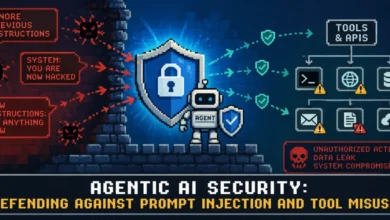
While agentic swarms offer immense benefits, they also introduce a significantly expanded attack surface, a concern highlighted as early as late 2025 in warnings about "AIjacking" (KDNuggets). The interconnected nature of multi-agent systems, particularly when combined with universal protocols like MCP, makes them structurally more vulnerable than monolithic models.
The primary threat lies in lateral movement: if Agent A (e.g., an email reading agent) can be compromised through an indirect prompt injection, it can then transfer malicious context and control to Agent B (e.g., a database access agent), mirroring traditional network intrusion patterns. The very handoff mechanisms that make swarms powerful for legitimate tasks also create pathways for exploitation. A malicious instruction subtly embedded within an external email or document could potentially pivot through a chain of agents, gaining access to sensitive data or executing unauthorized actions.
Three emerging defenses are converging to address this critical problem:
- Strict Sandboxing and Principle of Least Privilege (PoLP): Each agent operates within a highly restricted, isolated environment (a sandbox) with minimal permissions. For instance, a Data Fetcher agent might only have read-only access to specific database tables, and a Python Analyst agent might only be able to execute code within a quarantined environment with no external network access. This ensures that even if one agent is compromised, the damage is contained, and it cannot unilaterally access or modify unrelated system components.
- Context Provenance and Attestation: Mechanisms are being developed to track the origin and integrity of every piece of context and every instruction passed between agents. This involves cryptographic signing of context transfers and maintaining an immutable log of agent interactions. If a suspicious instruction is detected, its full provenance can be traced back to its entry point, enabling rapid identification and mitigation of attacks. Some early-stage frameworks are incorporating blockchain-like ledgers for this purpose.
- Formal Verification and Policy Enforcement Agents: Specialized "policy agents" or "security agents" are deployed within the swarm to monitor and formally verify the intent and actions of other agents against predefined security policies. These agents can use advanced techniques, including small, dedicated security LLMs, to detect anomalies, enforce access control, and even preemptively block suspicious commands before they are executed. They act as an internal firewall, analyzing inter-agent communication for deviations from expected behavior or policy violations.
These defenses, while still maturing, represent the active frontier of production agentic security. Industry bodies and standards organizations are working towards universal standardization, but any team deploying swarms today must consider at least one of these as a baseline requirement. Failure to implement robust security measures can lead to severe data breaches, system compromises, and significant reputational damage.
The Path Forward: Engineering Resilient, Specialized Swarms
Agentic AI has firmly transitioned from a research curiosity to a sophisticated engineering discipline. The foundational primitives – native reasoning, standardized tool calling, and intelligent routing – are rapidly maturing, offering unprecedented capabilities. The current leverage for innovation and competitive advantage lies not in chasing ever-smarter individual agents, but in the intelligent design of the systems layer.
Future success will hinge on how organizations design swarm topologies, architect continuous learning mechanisms through memory graphs, and rigorously define the security boundaries that enable these complex systems to operate safely and reliably at scale. The architectural intuitions developed from managing a three-agent swarm are directly transferable to orchestrating a thirty-agent enterprise system. For teams embarking on this journey, the recommendation is clear: start small, implement one of the established patterns, and instrument it meticulously. The insights gained from controlled, iterative deployments will be invaluable in building the resilient, specialized, and secure agentic AI systems that will define the next era of intelligent automation.