OpenAI GPT-6 Sol and GPT-6 Luna Launch on Amazon Bedrock to Expand Enterprise AI Deployment Options

The enterprise artificial intelligence landscape shifted significantly today as Amazon Web Services announced the general availability of OpenAI’s GPT-6 Sol and GPT-6 Luna models on Amazon Bedrock. This release marks the next phase in the ongoing expansion of the GPT-6 model family within cloud-hosted enterprise environments, following the earlier rollout of the flagship GPT-6 Astra model. By introducing models tailored specifically for mid-tier operational complexity and high-volume, cost-sensitive automation, AWS and OpenAI aim to provide organizations with granular control over the balance between computational intelligence and operating expenditures.
Background and Context of the Release
The evolution of enterprise generative AI has moved rapidly past the initial phase of generalized experimentation. In the early stages of large language model adoption, organizations primarily evaluated systems based on maximum intellectual capability—measuring success through complex coding benchmarks and advanced reasoning challenges. However, as AI deployments scaled from isolated pilot programs into core operational workflows, enterprises encountered a severe economic friction point: applying maximum-intelligence models to every routine, repetitive task quickly became cost-prohibitive.
To address this challenge, model developers and cloud providers have pivoted toward tiered architectures. This strategy allows engineering teams to deploy different grades of intelligence depending on the specific requirements of a workflow step. The introduction of GPT-6 Astra established the high-water mark for the GPT-6 architecture, catering to deeply complex, multi-layered research and development projects where absolute output quality supersedes financial cost. Yet, recurring tasks—such as continuous software integration, automated code refactoring, document classification, and customer query routing—demand a different economic calculus.
The arrival of GPT-6 Sol and GPT-6 Luna on Amazon Bedrock directly targets this operational middle and bottom tiers. Running on Amazon Bedrock’s high-performance inference engine, the new models are engineered to deliver lower API pricing relative to their GPT-5.6 predecessors while maintaining strict adherence to enterprise security, compliance, and scalability requirements.
Technical Capabilities: GPT-6 Sol and GPT-6 Luna
The two newly released models serve distinct functions within production environments, structured around specific workload demands.
GPT-6 Sol is engineered for demanding, recurring tasks throughout the software development lifecycle and operational pipelines. Its capabilities extend beyond simple text generation into functional execution, including feature implementation, complex code debugging, codebase refactoring, code review, and multi-step data analysis across disparate software tools. According to internal benchmarks released by OpenAI, GPT-6 Sol demonstrates significant improvements over its predecessor, the GPT-5.6 Sol. Notably, the model achieves a substantial reduction in factual errors—making approximately half as many factual mistakes as the previous generation. Furthermore, enhanced reporting and clarity in its operational outputs enable engineering teams to verify model decisions more efficiently, identifying reasoning gaps and determining where human oversight remains essential.
GPT-6 Luna, conversely, is optimized for high-volume, repetitive tasks where fractional differences in latency and token costs multiply rapidly across millions of daily requests. Designed for document extraction, large-scale content summarization, input classification, and automated routing, GPT-6 Luna makes high-frequency AI integration economically viable. OpenAI has also refined the factual reliability of the Luna variant and incorporated adjustable reasoning effort controls, allowing developers to dynamically calibrate responsiveness, accuracy, and cost on a per-request basis.
Architectural Integration and Prompt Caching
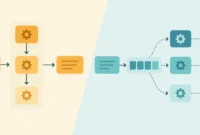
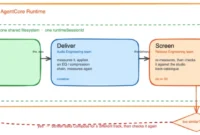
A critical engineering challenge in modern application design is preventing context degradation when routing requests across multiple models. Complex enterprise workflows often require a sequential pipeline—for example, utilizing GPT-6 Luna to classify an incoming support ticket, escalating complex cases to GPT-6 Sol for technical investigation, and invoking GPT-6 Astra when deep logical synthesis is required.
Repeatedly processing large system prompts, reference manuals, tool definitions, and policy guidelines across these stages introduces latency and inflates token consumption. To mitigate this inefficiency, both GPT-6 Sol and GPT-6 Luna support explicit prompt caching on Amazon Bedrock. By marking static context for reuse, developers can ensure that subsequent API calls process only the new input data. This feature significantly enhances performance for coding assistants that continuously reference static repository guidelines, compliance-driven applications grounded in fixed corporate policies, and automated document processing pipelines.
Infrastructure, Security, and Data Governance
As regulatory scrutiny over enterprise data privacy intensifies, cloud-based AI deployment relies heavily on robust security frameworks. Amazon Bedrock provides an isolated infrastructure layer designed to ensure that enterprise interactions with GPT-6 Sol and GPT-6 Luna meet stringent compliance standards.
Organizations can govern model access centrally via AWS Identity and Access Management (IAM) policies, while maintaining comprehensive audit logs of every model invocation through AWS CloudTrail. To prevent data exposure across public networks, virtual private cloud (VPC) endpoints powered by AWS PrivateLink keep all traffic strictly within internal network boundaries. Furthermore, inference operations execute on hardware-isolated infrastructure featuring zero-operator access, ensuring that even AWS personnel cannot access customer prompts or completions during runtime.
Data governance policies associated with the rollout specify that customer inference data is not utilized for underlying model training. Deploying GPT-6 Sol and GPT-6 Luna does not require organizations to opt into data-sharing agreements with OpenAI. For automated abuse detection, traffic flagged by security classifiers is retained by AWS for up to 30 days for programmatic review, though qualifying enterprise accounts may request zero data retention options through their dedicated AWS account teams.
Industry Implications and Future Outlook
The general availability of GPT-6 Sol and GPT-6 Luna on Amazon Bedrock reflects a maturing cloud AI market where cost optimization and operational predictability are paramount. By decoupling intelligence tiers from infrastructure constraints, enterprises are increasingly able to transition generative AI from auxiliary tooling into mission-critical production systems.
Industry analysts note that tiered model availability reduces the financial barriers to entry for comprehensive AI automation. As organizations build multi-model pipelines that dynamically balance cost and capability, the total cost of ownership for enterprise AI is expected to decrease significantly throughout the upcoming fiscal year.
Availability and Getting Started
GPT-6 Sol and GPT-6 Luna are generally available today. Developers and enterprise architects can access the models directly through the Amazon Bedrock console or programmatically via supported Amazon Bedrock APIs across designated AWS Regions. Comprehensive documentation detailing regional endpoints, pricing structures, inference profiles, and technical specifications is currently maintained within the official Amazon Bedrock documentation portal.