The Death of the Button: Why the Web is Shifting from Complex Interfaces to Intent-Driven AI

The digital landscape is undergoing a profound paradigm shift, moving rapidly away from the traditional menus, multi-step forms, and endless clicking that have defined software interaction for decades. For UX designers, product managers, and software engineers alike, this evolution demands a fundamental re-evaluation of their roles. Rather than focusing on crafting visible interfaces, the modern objective is to guide transparent, intent-driven artificial intelligence experiences that prioritize human goals over software management.
Since the commercialization of the Graphical User Interface (GUI) through pioneering systems like the Xerox Star and its subsequent popularization by the original Apple Macintosh, software has relied heavily on point-and-click mechanics. For generations, accomplishing everyday tasks online—such as booking travel, purchasing retail goods, or researching medical symptoms—has required users to navigate a labyrinth of digital barriers. Individuals routinely deal with range sliders, multi-page checkouts, cookie consent pop-ups, and dozens of open browser tabs simply to cross-reference basic information. Consequently, consumers have grown accustomed to spending an excessive amount of time managing software rather than achieving their core objectives.

This long-standing digital contract is now actively changing. Propelled by significant leaps in artificial intelligence and large language models (LLMs), a new wave of web tools is championing a revolutionary philosophy: Intent-Driven Design. Instead of demanding that users learn complex layouts and click through elaborate sales funnels, these modern platforms operate by capturing high-level human goals and quietly executing the necessary background labor.
Tracing the Evolution: From Graphical Interfaces to Invisible Design
To understand the current trajectory of web design, industry analysts must examine the friction that has been accepted as standard practice since the 1980s. The traditional GUI established a computing relationship where the computer acts as a passive container of data while the human functions as the manual orchestrator. Users must continuously input parameters, interpret raw system outputs, and execute micro-steps sequentially.
This dynamic builds upon foundational concepts in human-computer interaction (HCI), most notably Golden Krishna’s thesis presented in The Best Interface Is No Interface and Don Norman’s enduring principles of human-centered design. The central argument posits that the ultimate goal of contemporary web design is no longer to build increasingly ornate buttons or flashy animations, but to streamline experiences to the point where the interface recedes entirely.
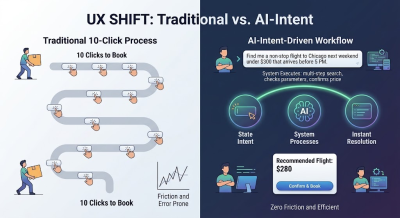
The inefficiency of the traditional "10-click process" is most evident in everyday consumer transactions. For instance, booking a flight online traditionally requires specifying dates, sorting through multiple airline filters, checking baggage fees, entering seating preferences, and navigating through various promotional add-ons before reaching payment. Intent-driven design flips this model on its head. By asking a single, outcome-oriented question—such as what the user is trying to accomplish—the software can process a complex command like "Find me a non-stop flight to Chicago next weekend under $300 arriving before 5 PM," execute the multi-step search behind the scenes, and present a single, actionable resolution.
Current Industry Implementations and Platform Examples
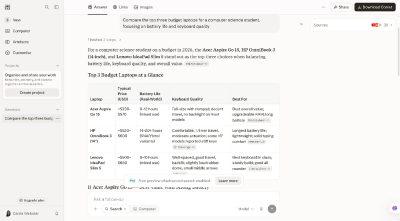
This shift is not merely a theoretical prediction for the distant future; it is actively reshaping consumer software today. Several prominent platforms have already begun replacing traditional buttons with intent-based execution.
Perplexity AI exemplifies this transformation within the search sector. Traditional search engines historically functioned as digital directories, rewarding queries with a page of blue links and leaving the manual synthesis of information to the user. Perplexity and similar AI-native search engines synthesize data across multiple sources instantly, bypassing the need to open numerous tabs or navigate heavy ad displays to find a coherent answer.
In the realm of web development and design, tools like Vercel v0 are redefining how digital products are built. For years, web creation demanded meticulous manual labor within platforms like Figma or traditional content management systems, requiring designers to draw rectangles, define hexadecimal color codes, and write custom CSS. Generative interfaces now allow creators to input high-level descriptive intents, instantly rendering functional UI components and code architecture on the fly.
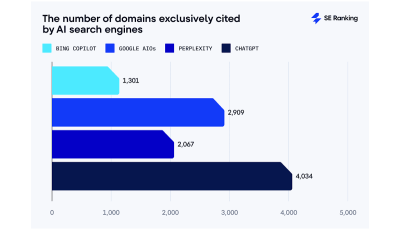
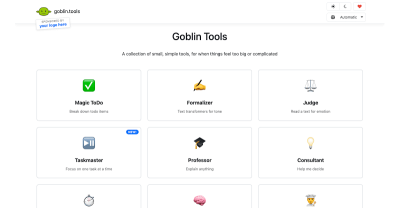
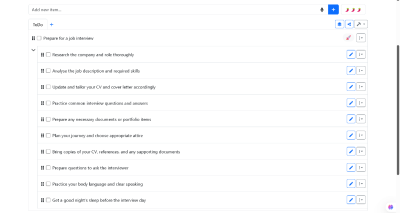
Similarly, accessibility-focused platforms like Goblin.tools utilize single-page AI suites to dismantle overwhelming tasks for users, particularly those who are neurodivergent. Rather than forcing individuals to manually construct Kanban boards, assign micro-deadlines, and organize complex project hierarchies, these tools ingest raw, unstructured thoughts and automatically output structured, manageable step-by-step checklists.
Core Pillars of Intent-Driven Web Design
When designers strip away traditional sidebars, persistent navigation bars, and rigid forms, maintaining usability requires adherence to new structural pillars. Industry research from organizations like the Nielsen Norman Group highlights three foundational shifts in modern software architecture:
- High-Level Goals Over Micro-Actions: Rather than waiting for explicit button clicks, ambient and contextual systems leverage environmental metadata—such as device state, location, and historical interaction habits—to anticipate needs and execute proactive workflows.
- Generative UI: Moving away from static layouts where every user sees the exact same interface, generative design renders components dynamically based on real-time user intent. Once a specific micro-task is completed, the custom UI element dissolves to reduce cognitive load.
- Autonomous Execution with Reversibility: Traditional software relies heavily on intrusive confirmation dialogs and error prevention modals. Intent-driven systems adapt classic usability heuristics by prioritizing frictionless rollback mechanisms, such as prominent "Undo" functions, natural language revision prompts, and transparent audit logs over constant interruption.
Risks, Challenges, and the Illusion of Control
Despite the undeniable efficiency of removing digital friction, transitioning to intent-driven design introduces significant ethical and technical challenges for product teams.
Chief among these concerns is the "Illusion of Control." When software begins making autonomous decisions on behalf of the user, experiences can quickly transition from helpful to invasive. Academic groups, such as the Stanford Human-Computer Interaction Laboratory, emphasize that automation must maintain strict boundaries. Product designers are tasked with balancing routine task execution with mandatory human confirmations for high-stakes actions, such as financial transactions, publishing public records, or modifying privacy configurations.
Additionally, the "Black Box Problem" complicates troubleshooting. In a conventional user interface, unexpected outcomes can usually be traced back to a specific incorrect filter or misclicked checkbox. With intent-driven systems, opacity can breed user distrust. To counter this, frameworks such as the Google People + AI Research (PAIR) Guidebook advocate for transparent feedback loops. Systems must explicitly state their real-time interpretation of a user’s prompt—such as displaying the exact search parameters being executed—allowing users to calibrate trust and correct misinterpretations immediately.
Implications for the Future of UX Design
For UX professionals, adapting to this era requires shifting competencies away from the creation of static wireframes and toward the orchestration of dynamic, generative systems. Mastery over ambient feedback mechanisms, inline prompt engineering, and transparent AI status indicators will define the next generation of digital product standards.
Ultimately, the digital industry is moving away from engagement metrics that historically incentivized maximizing "time spent in app," click-through rates, and artificial page-view inflation. Aligned with the Humane Technology movement and the principles outlined in The Best Interface Is No Interface, the modern benchmark for software success is shifting. Digital products will no longer be judged by the visual complexity of their interfaces, but by their ability to solve human problems efficiently and vanish gracefully into the background. The future of the web is not defined by more interaction, but by seamless, invisible completion.