Choosing the Right Vector Store for Amazon Bedrock Knowledge Bases: A Comprehensive Performance, Cost, and Architecture Guide

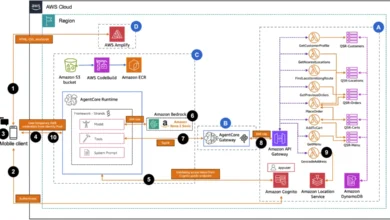
When engineering advanced Retrieval-Augmented Generation (RAG) solutions with Amazon Bedrock Knowledge Bases, selecting the foundational vector store is a critical architectural decision that directly dictates both operational performance and long-term financial expenditure. Amazon Bedrock Knowledge Bases offers developers two distinct deployment pathways: a fully managed experience and a customer-managed paradigm where organizations retain granular control over their underlying vector backends. Focusing specifically on the customer-managed path, technical architects must weigh the distinct capabilities of three core supported backends—Amazon OpenSearch Service, Amazon Aurora PostgreSQL equipped with the pgvector extension, and Amazon S3 Vectors—across diverse, production-grade RAG use cases.
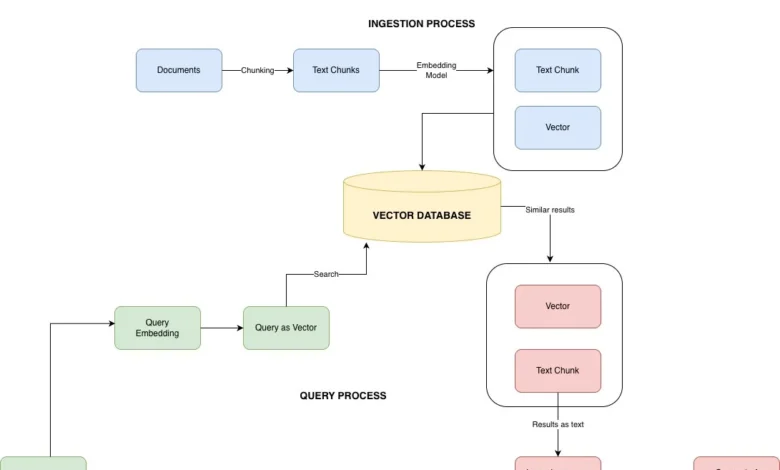
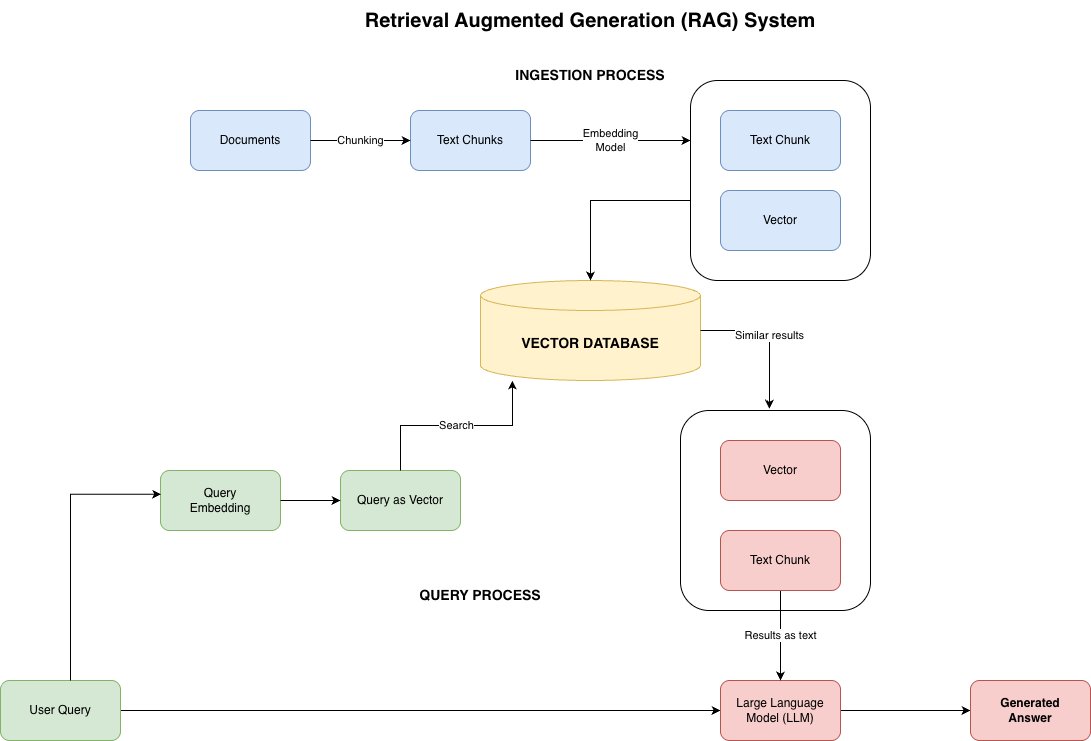
The strategic importance of vector datastores within modern generative artificial intelligence cannot be overstated. Traditional information retrieval systems have long relied on rigid keyword matching, which frequently fails when user queries use synonyms, contextual phrasing, or abstract conceptualizations. RAG architectures solve this fundamental limitation by bridging the profound generative power of large language models (LLMs) with semantic information retrieval systems. Under this paradigm, unstructured source documents are pre-processed, segmented into manageable text chunks, and translated into mathematical vector embeddings via dedicated embedding models. These high-dimensional vectors capture the underlying semantic meaning of the text. When a user submits an inquiry, the query is similarly transformed into a vector embedding. The vector database then performs an approximate nearest neighbor (ANN) similarity search, extracting the top semantic chunks to enrich the original prompt. This retrieved context is subsequently supplied to the LLM, enabling the generation of precise, contextually rich, and up-to-date responses.
Technical Foundations and Architectural Backends
To accommodate varied corporate ecosystems and workload profiles, Amazon Bedrock Knowledge Bases supports three primary customer-managed vector store engines, each optimized for distinct performance and storage characteristics.
Amazon OpenSearch Service has established itself as an enterprise standard for high-speed, low-latency search applications. Operating natively with data retained in high-performance memory structures, OpenSearch supports high-dimensional vector embeddings across both managed cluster configurations and serverless deployments. Crucially, it incorporates advanced capabilities such as k-NN (k-nearest neighbors) search and hybrid search algorithms that seamlessly synthesize lexical keyword matching with vector-based semantic retrieval.
For organizations deeply embedded in relational database ecosystems, Amazon Aurora PostgreSQL with pgvector bridges traditional relational data management and advanced AI vector workloads. By extending Aurora PostgreSQL with the pgvector capability, enterprises can leverage robust indexing methods such as HNSW (Hierarchical Navigable Small World) and IVFFlat (Inverted File with Flat compression). This backend supports diverse distance metrics, including L2 distance, cosine similarity, and inner product calculations, while handling vectors up to 2,000 dimensions in single precision.
Complementing these computational engines is Amazon S3 Vectors, a native object storage capability engineered specifically for cost-effective storage and retrieval of vector embeddings at massive scale. By removing the need for dedicated, always-on indexing clusters, Amazon S3 Vectors delivers sub-second query performance for similarity searches while slashing vector storage expenditures by up to 90 percent compared to traditional, memory-intensive vector databases.
Case Study Analysis: Product Catalog Search and OpenSearch Optimization
To understand how these backends perform under real-world operational constraints, industry benchmarks reveal distinct operational profiles across three primary RAG patterns. The first scenario involves large-scale ecommerce product catalog search. Digital retail platforms continually struggle to connect buyers with precise inventory items among millions of catalog listings, demanding sub-millisecond latency and the ability to process thousands of concurrent queries during peak retail events.
For high-throughput product searches, Amazon OpenSearch Serverless emerges as an optimal architectural fit. Its hybrid search functionality combines semantic understanding with traditional BM25 keyword matching, ensuring that exact part numbers, model codes, and descriptive search terms are never missed. Furthermore, OpenSearch Serverless maintains query latency in the low milliseconds range while offering built-in support for complex filtering and faceted navigation—essential for sorting results by price, brand, or specification.
Extensive performance testing using the Amazon "Shopping Queries Data Set" (ESCI)—comprising over 1.21 million unique products and 97,345 judged queries—demonstrates the viability of various indexing configurations. Benchmarks analyzing embedding dimensions (1024, 512, and 256) paired with data types (float versus binary) illustrate critical trade-offs between retrieval quality, measured via NDCG@10 (Normalized Discounted Cumulative Gain), and in-memory index footprints.
While baseline 1024-float configurations yielded an NDCG@10 score of 0.3627 with a server-side p50 latency of 31 milliseconds and an index footprint of 5.34 GiB, optimizations such as 1024-binary configurations drastically compressed the in-memory footprint down to 0.40 GiB while accelerating p50 latency to 22 milliseconds. Crucially, the implementation of hybrid search—weighting semantic search at 0.7 and lexical search at 0.3—provided a consistent quality lift, improving NDCG by 6.0 percent across both float and binary datasets. Notably, a 1024-binary hybrid configuration achieved an NDCG of 0.3658, outperforming the pure semantic 1024-float baseline while consuming approximately thirteen times less memory.
Scaling Deep Research Agents with Amazon S3 Vectors
A second major paradigm shift in generative AI involves the rise of deep research agents. Unlike traditional RAG applications that execute a single retrieval-generation cycle, deep research agents execute multi-turn, autonomous investigations through dynamic reasoning, iterative planning, and continuous information retrieval over extended periods. These systems willingly tolerate higher query latencies in exchange for exhaustive, comprehensive synthesis, making cost-efficiency and elastic scalability paramount over raw microsecond response times.
Operating over corpora comprising tens or hundreds of millions of embeddings, deep research workflows find their ideal pairing in Amazon S3 Vectors. Designed for massive scale without complex infrastructure provisioning, S3 Vectors supports elastic scaling across millions of vectors per index. Empirical benchmarking utilizing subsets of English Wikipedia scaled from 5,000 to over 1,000,000 vector entries using Amazon Titan Text Embedding v2 (1024 dimensions) demonstrated remarkably stable sub-linear performance scaling. Median (p50) query latency for retrieving the top 50 most similar vectors remained under 300 milliseconds even when indexing over one million complex text chunks.
For research teams requiring advanced analytical filtering, Amazon S3 Vectors maintains integration flexibility with Amazon OpenSearch Service. Organizations can cost-effectively house their foundational corpus inside S3 while selectively promoting high-priority, performance-critical vectors to OpenSearch collections to support real-time user-facing dashboards.
Conversational RAG Chatbots and Relational Flexibility with Aurora PostgreSQL
The third primary architectural pattern centers on customer-facing conversational RAG chatbots. These systems require a delicate equilibrium between response speed, contextual accuracy, and integration with existing enterprise data repositories. When customer support knowledge bases contain domain-specific terminology that diverges from standard linguistic phrasing, retrieval systems must offer tunable indexing strategies.
Amazon Aurora PostgreSQL with pgvector fulfills this role by providing a balanced performance profile, delivering query latencies hovering around 30 to 35 milliseconds (p50) while operating within familiar relational database management frameworks. Comparative evaluations between HNSW and IVFFlat index structures across book summary knowledge bases illustrate that HNSW indexing offers superior query performance and stability at scale, while IVFFlat presents alternative memory-saving trade-offs for rapidly changing datasets. The ability to perform rapid A/B testing of indexing algorithms directly inside a managed relational engine provides development teams with unmatched operational agility.
Strategic Selection Guidance and Future Implications
Selecting the appropriate vector store backend for Amazon Bedrock Knowledge Bases ultimately mandates a systematic profiling of organizational requirements. Architects must evaluate three core variables: application latency tolerance, concurrency patterns, and budgetary constraints.
For real-time search applications demanding sub-50ms responses and robust hybrid search, Amazon OpenSearch Service represents the premier choice. For conversational AI interfaces requiring a balance of relational data integration and sub-100ms response times, Amazon Aurora PostgreSQL with pgvector provides a proven, flexible foundation. Meanwhile, for large-scale background processing and autonomous research agents where cost optimization and massive storage capacity supersede microsecond latency demands, Amazon S3 Vectors delivers unmatched economics by cutting storage expenses by up to 90 percent.
As enterprise generative AI deployments mature beyond isolated proofs-of-concept into mission-critical production systems, hybrid and tiered architectural patterns are rapidly becoming the industry standard. By strategically combining Amazon S3 Vectors for economical, bulk document retention with high-performance engines like Amazon OpenSearch Service and Amazon Aurora for active query execution, organizations can successfully reconcile the trilemma of scale, speed, and financial sustainability in their artificial intelligence roadmaps.