Unlocking Visual Data: TwelveLabs Marengo Embed 3.0 Integrates into Amazon Bedrock Knowledge Bases to Revolutionize Multimodal Search

The enterprise search landscape has long faced a persistent blind spot: video and multimedia assets. While organizations could easily index, query, and retrieve vast quantities of text documents using semantic search engines, extracting meaningful insights from hours of raw footage required building cumbersome, expensive, and fragile technical pipelines. Today, Amazon Web Services (AWS) has fundamentally changed this paradigm by announcing the general availability of TwelveLabs Marengo Embed 3.0 as a native embedding model within Amazon Bedrock Knowledge Bases. This strategic integration promises to eliminate the friction traditionally associated with video intelligence, offering organizations across media, sports analytics, education, security, and retail a fully managed, natural language interface to query their video, audio, and image libraries.
The Complex History of Video Retrieval
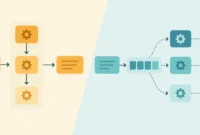
For decades, retrieving specific moments from visual media archives was an arduous manual process. Archivists, broadcast producers, and security personnel relied on meticulous time-code logging or rudimentary metadata tagging. With the advent of machine learning, organizations attempted to bridge the gap by stitching together complex, multi-vendor pipelines. A typical legacy architecture required transcription services to convert speech to text, frame-extraction scripts to capture visual scenes, specialized computer vision models to detect objects or actions, custom embedding models to vectorize the disparate data types, vector databases to store the high-dimensional outputs, and intricate synchronization logic to tie everything together.
This fragmented approach introduced significant latency, high maintenance overhead, and steep infrastructure costs. Moreover, text-only transcripts often missed crucial visual context—such as a player scoring a goal without commentary, or a security breach occurring silently in a dimly lit corridor. The introduction of multimodal embedding models in recent years began to solve the technical puzzle by mapping text, video, and audio into a unified vector space, but deploying and scaling these models still demanded considerable engineering expertise.
The Technical Mechanics of Marengo Embed 3.0
TwelveLabs Marengo Embed 3.0 represents a significant leap forward in multimodal artificial intelligence. As an advanced embedding model, it is engineered to jointly encode video frames, audio tracks, images, and text into a remarkably compact and storage-efficient 512-dimensional vector space. By processing these modalities simultaneously rather than treating them as isolated silos, the model captures complex cross-modal relationships, allowing a simple natural language text query—such as "show me the penalty kick in the second half"—to accurately retrieve the exact visual and auditory segment from hours of footage.
When integrated into Amazon Bedrock Knowledge Bases—a fully managed Retrieval-Augmented Generation (RAG) service—Marengo Embed 3.0 operates within a robust, end-to-end ecosystem. Amazon Bedrock Knowledge Bases natively handle data ingestion, chunking, storage, re-ranking, and retrieval, supporting standard video formats like MP4 and MOV, image files such as JPEG and PNG, and standalone audio tracks. Furthermore, native connectors enable seamless ingestion from popular enterprise repositories, including Amazon Simple Storage Service (Amazon S3), SharePoint, and Confluence.
Streamlining the Deployment Workflow
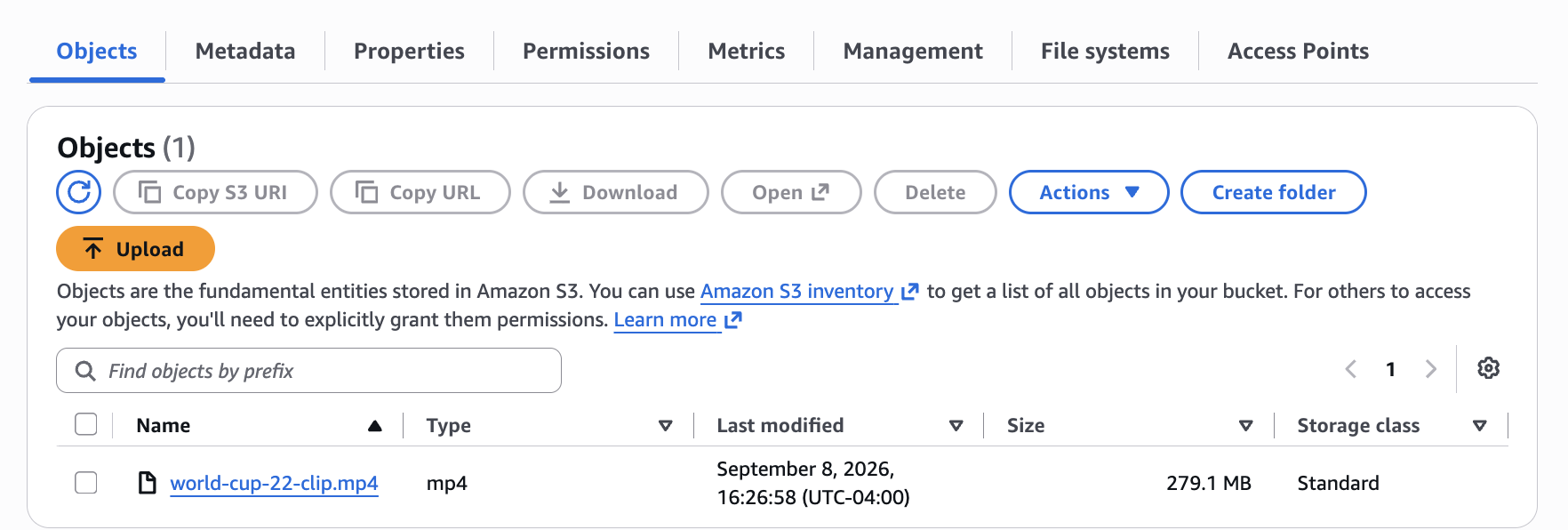
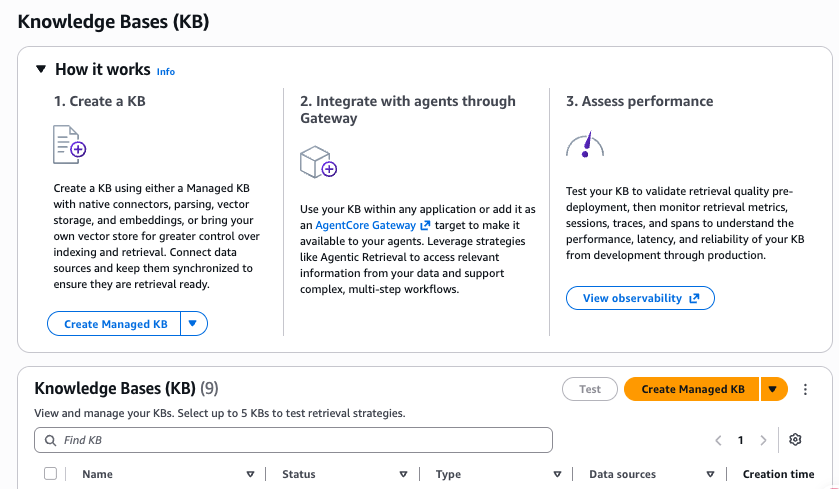
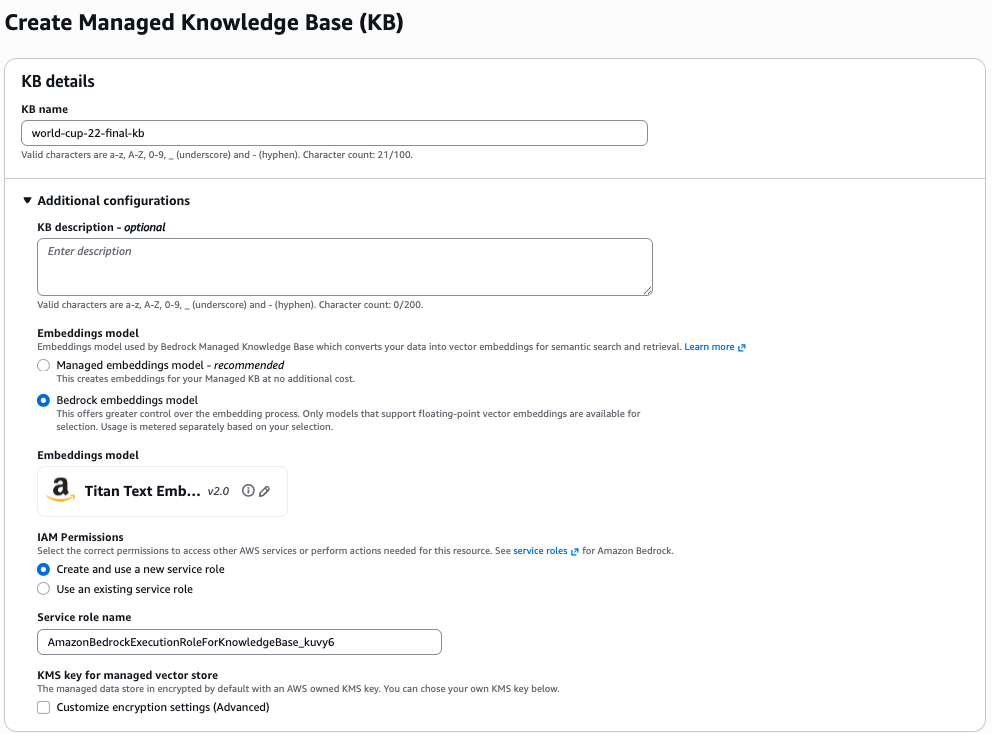
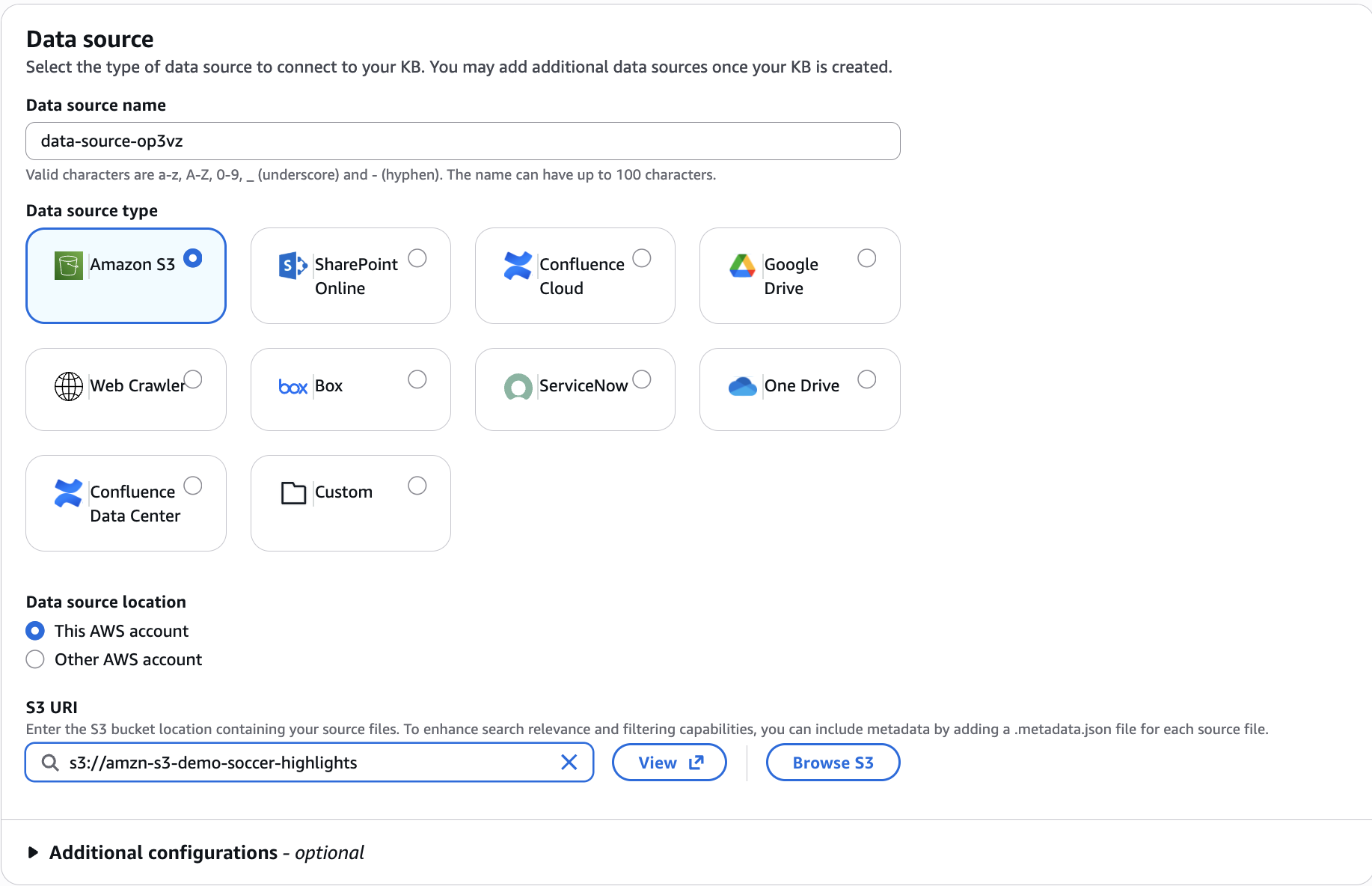
The deployment of a multimodal knowledge base powered by Marengo 3.0 has been engineered for simplicity within the Amazon Bedrock console. Administrators can initialize a Managed Knowledge Base (Managed MKB) by pointing the service to an Amazon S3 bucket containing raw media assets. Unlike legacy architectures, no laborious pre-processing is required; the managed service automatically oversees segmentation, frame sampling, and audio transcription internally.
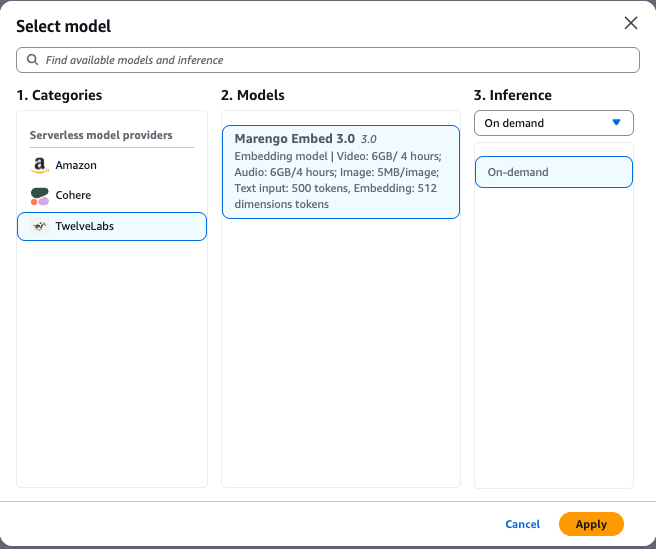
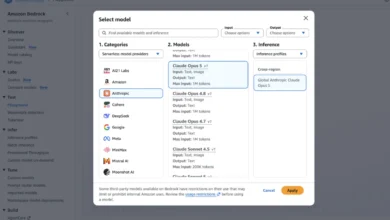
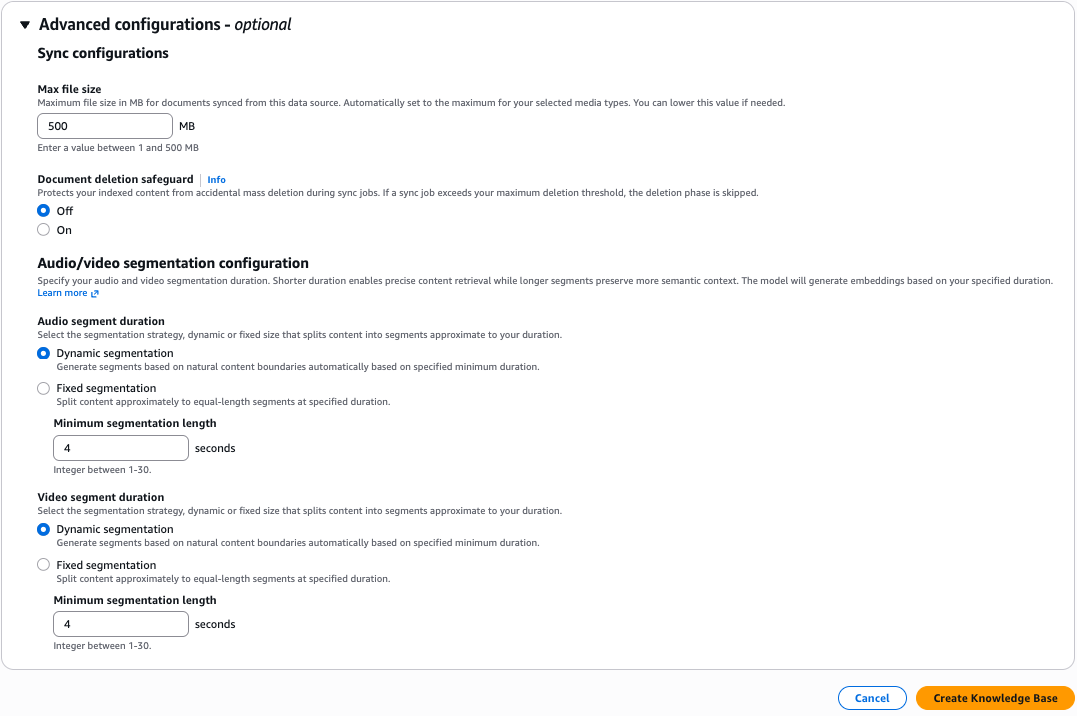
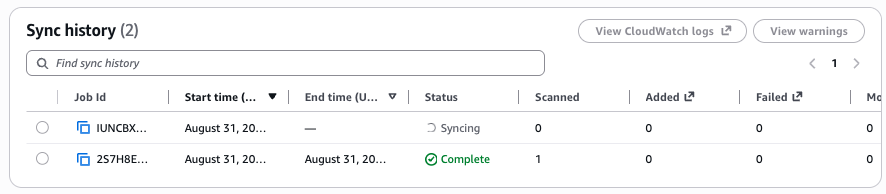
During configuration, users simply select TwelveLabs Marengo Embed 3.0 as the underlying embedding model from the advanced settings menu. Administrators can fine-tune advanced parameters, such as defining specific audio and video segmentation durations—with a default setting of four seconds per segment—to optimize retrieval granularity. Once the data source is specified, initiating a synchronization job prompts the system to extract frames, transcribe speech, generate Marengo 3.0 vector embeddings for each segment, and index the data automatically.
Testing and Application Integration
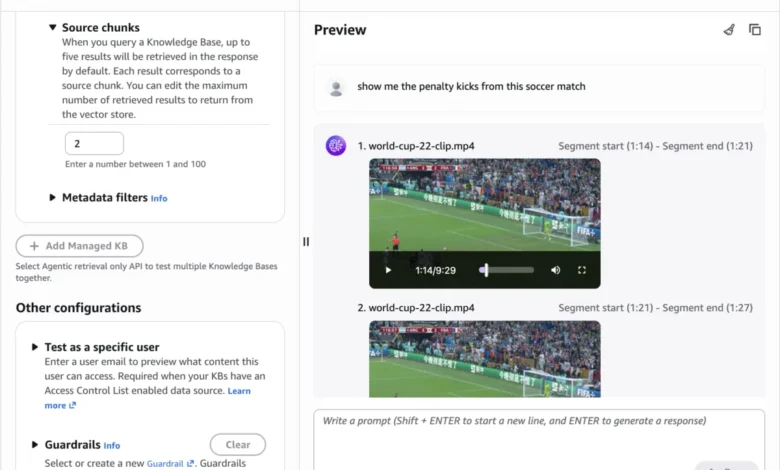
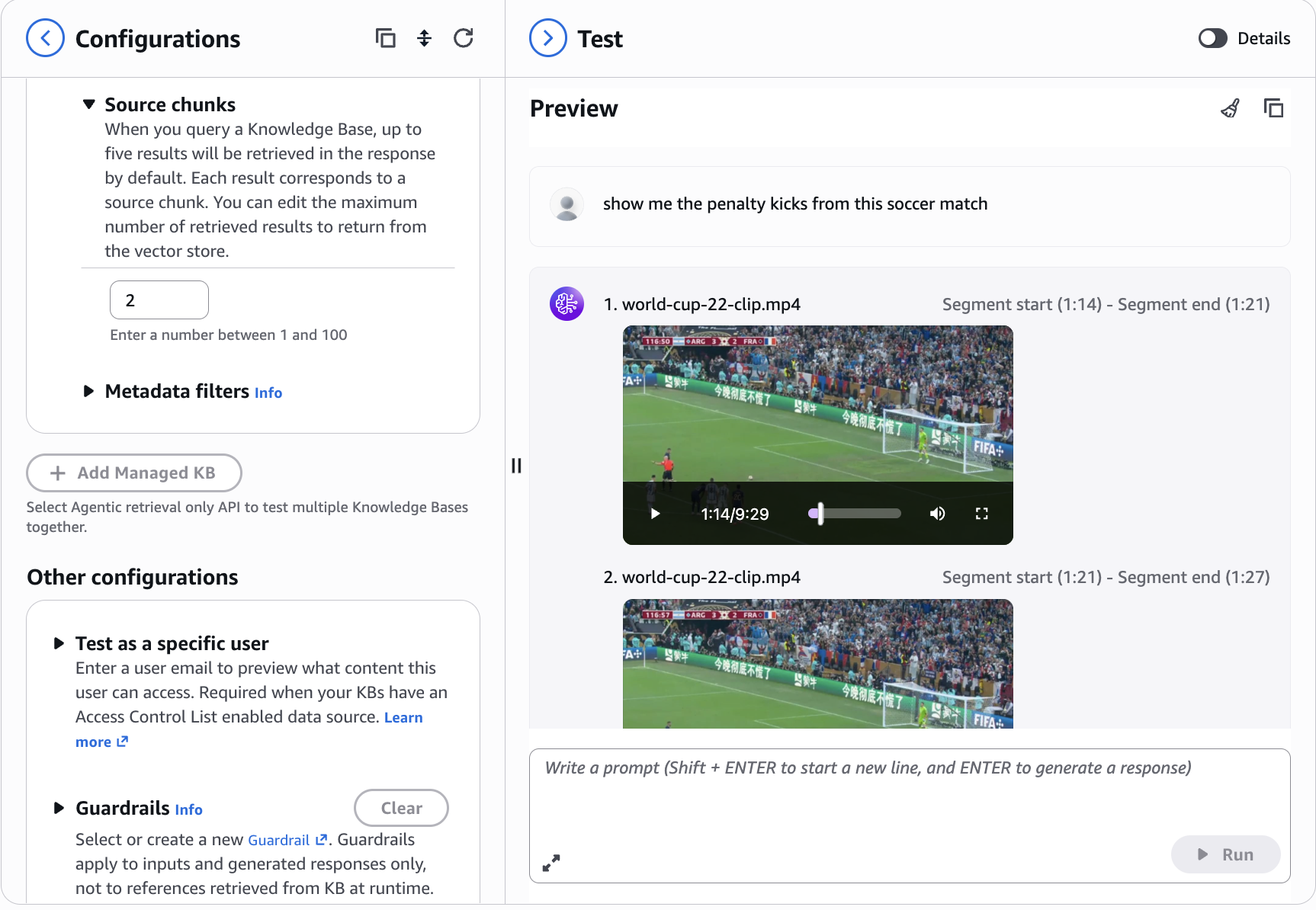
To validate ingestion and indexing, administrators can utilize the built-in testing interface within the Amazon Bedrock console. By executing natural language queries—for instance, analyzing a 10-minute archival clip of the 2022 FIFA World Cup final—operators can retrieve ranked semantic search results complete with granular metadata. The output provides precise chunk start and end times, source URIs, and embedding types, enabling direct video playback and verification of the matched timeline.
For downstream application development, engineers can leverage the Amazon Bedrock Retrieve API via the Boto SDK or integrate the knowledge base as an Amazon Bedrock Gateway target within Amazon Bedrock AgentCore. This capability empowers developers to embed intelligent video search directly into custom enterprise applications, customer support portals, and automated content moderation workflows without managing underlying vector infrastructure.
Broader Industry Implications and Commercial Impact
The commercial implications of bringing native multimodal retrieval to Amazon Bedrock span a wide array of vertical industries. In the media and entertainment sector, broadcast networks can instantly comb through decades of archival footage to produce retrospective packages or verify licensing rights. Sports analytics firms can query specific tactical formations, fouls, or scoring plays across entire tournament seasons in a fraction of the time previously required.
In the education sector, academic institutions can index lecture recordings, allowing students to search for exact conceptual explanations across semester-long curricula using natural language queries. Security and surveillance operations can rapidly parse through massive volumes of CCTV footage to locate specific incidents, suspicious behaviors, or anomalous events without manually reviewing continuous video feeds. Similarly, retail enterprises can analyze customer interaction videos and in-store footage to optimize merchandising strategies and monitor compliance.
Availability, Pricing, and Strategic Outlook
Managed Knowledge Bases for Amazon Bedrock with Marengo Embed 3.0 is initially available in key AWS cloud regions, specifically US East (N. Virginia) (us-east-1) and EU West (Ireland) (eu-west-1). Pricing for the service aligns with consumption-based enterprise models: organizations pay only for the storage and retrieval volumes they utilize, while embeddings generation is billed at standard Amazon Bedrock model invocation rates.
Industry analysts view this integration as a watershed moment for enterprise generative AI. By abstracting away the complex engineering pipelines that previously hindered video search adoption, AWS and TwelveLabs have lowered the barrier to entry for multimodal intelligence. As enterprises increasingly transition from text-centric AI applications to immersive, multi-sensory digital ecosystems, tools like Marengo Embed 3.0 on Amazon Bedrock establish a scalable foundation for the next generation of enterprise search and knowledge management.