Status Audio Pro X GoldenSound Edition Elevates Wireless Audio Fidelity Through Professional Engineering Collaboration

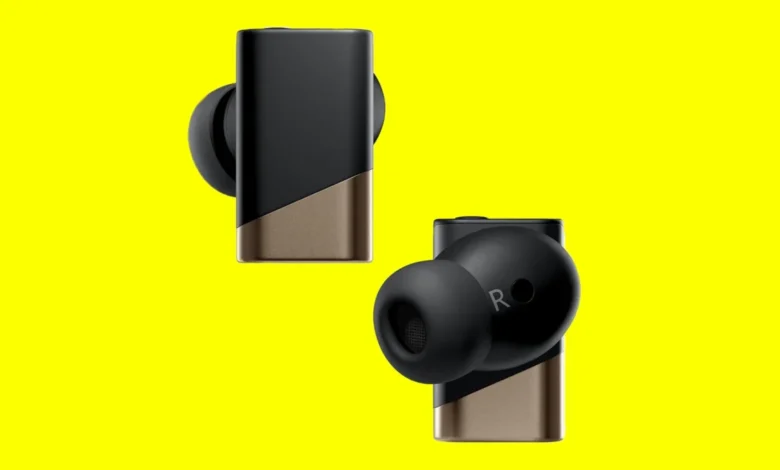
In an industry currently dominated by consumer-grade wireless earbuds that frequently prioritize aggressive active noise cancellation (ANC) and DSP-heavy sound profiles over neutral audio fidelity, the Status Audio Pro X has carved out a distinct niche. By placing hardware performance and acoustic architecture at the forefront, the manufacturer successfully challenged the status quo. Now, the company has announced a significant evolution of this platform: the Status Audio Pro X GoldenSound Edition. This new iteration represents a strategic collaboration with prominent audio engineer Cameron "GoldenSound" Oatley, shifting the focus from customizable consumer EQ toward a precision-tuned, studio-grade listening experience.
The Evolution of the Pro X Platform
The trajectory of the Status Audio Pro X began with the objective of bridging the gap between high-fidelity wired monitors and the convenience of Bluetooth connectivity. When Status Audio first launched the Pro X, the market was saturated with products that utilized "V-shaped" sound signatures—boosting bass and treble frequencies to mask mediocre driver quality. Status Audio opted for a more sophisticated triple-driver architecture, incorporating a 12mm dynamic driver dedicated to sub-bass frequencies, paired with dual Knowles-balanced armatures tasked with reproducing midrange and high-frequency content.
This hardware foundation allowed for an impressive degree of instrument separation. However, the release of the GoldenSound Edition marks a transition from "hardware-capable" to "acoustically-calibrated." By integrating a locked, expert-tuned profile into the existing infrastructure, the brand is signaling a move toward catering to audiophiles who require a more natural, balanced timbre without the need for manual equalization adjustments.
Engineering Precision and the Brühl & Kjær 5128 Standard
The central technical achievement of the GoldenSound Edition is the implementation of a tuning profile developed using the Brühl & Kjær (B&K) 5128 head and torso simulator. In the realm of acoustic engineering, the B&K 5128 is considered the gold standard for high-fidelity audio testing. Unlike older industry-standard simulators, the 5128 provides a more accurate representation of the human ear canal and pinna, allowing engineers to account for the way sound waves interact with human anatomy before reaching the eardrum.
Cameron "GoldenSound" Oatley utilized this hardware to refine the Pro X’s frequency response. The goal was to mitigate the harshness often found in mobile audio and to solve the common issue of "mid-range suck-out," where instruments like vocals and guitars lose their presence in a dense mix. The resulting profile offers a smoother treble roll-off and improved mid-range cohesion. This produces a soundstage that is more acoustic-friendly and realistic, providing a sense of depth that is rarely achieved in wireless form factors.
Chronology of Development and Market Positioning
Status Audio’s approach to this release reflects a broader industry trend of "pro-sumer" collaboration. The timeline of this product can be categorized as follows:
- Initial Pro X Launch: The base model introduced the triple-driver configuration to the market, establishing a baseline of high performance for wireless buds.
- EQ Customization Phase: The introduction of the companion mobile application allowed users to adjust their sound profiles, acknowledging that personal preference varies.
- The Collaboration Initiative: Recognizing the limits of user-led EQ, Status Audio sought out expert input to define an "ideal" reference sound.
- GoldenSound Edition Release: The current phase, characterized by the inclusion of a proprietary, locked-in signature profile that represents a definitive standard of quality.
This chronology demonstrates a clear roadmap: hardware mastery followed by software customization, and finally, expert-level calibration. By allowing users to switch between the original signature tuning and the new GoldenSound profile via the dedicated app, the manufacturer maintains the versatility of the original product while providing an "expert-approved" listening mode.
Comparative Technical Analysis
To understand the implications of the GoldenSound Edition, one must analyze how the triple-driver configuration interacts with the new tuning. The 12mm dynamic driver provides a robust, low-distortion sub-bass foundation. In standard consumer earbuds, this driver is often pushed to create a "muddy" bass response. In the GoldenSound profile, however, the crossover points—the frequency at which the dynamic driver hands off the signal to the balanced armatures—have been precisely adjusted to ensure that the bass remains tight and rhythmic, rather than boomy.
The Knowles-balanced armatures, which excel in transient response, are tasked with the delicate high-end detail. The refined tuning reduces the peaky nature of these armatures, preventing ear fatigue during extended listening sessions. This combination addresses a long-standing complaint among audiophiles: that wireless Bluetooth headphones are inherently limited by their digital-to-analog conversion and compression, resulting in a "digital" or "processed" sound. By tuning for a natural, speaker-like timbre, the GoldenSound Edition attempts to overcome these perceived limitations.
Aesthetic and Design Considerations
Beyond the internal engineering, the product reflects a shift in market identity. The aesthetic design features a matte black and matte gold finish, moving away from the purely utilitarian look of many ANC-focused competitors. The charging case—a component often overlooked by manufacturers—features a matte gold lid stamped with both the Status Audio and GoldenSound logos, positioning the product as a premium accessory rather than a disposable electronic gadget.
Broader Impact on the Wireless Audio Market
The release of the GoldenSound Edition has significant implications for the competitive landscape of wireless earbuds. For years, the market has been driven by feature wars—specifically, which brand can offer the most effective Active Noise Cancellation or the longest battery life. While these features are essential for commuting and travel, they have historically come at the expense of pure audio quality.
By successfully marketing a product based on its acoustic signature and engineering pedigree, Status Audio is challenging the industry’s current priorities. This development suggests a growing demand among consumers for "reference" audio products that can be used on the go. If the GoldenSound Edition achieves commercial success, it is likely that other manufacturers will follow suit, pivoting from purely technical specifications (like Bluetooth version or ANC decibel reduction) to emphasizing collaborative tuning and professional-grade audio standards.
Implications for Future Hardware Design
The use of the B&K 5128 simulator as a marketing and engineering focal point is particularly noteworthy. It highlights the increasing sophistication of the consumer base. As users become more educated about audio terminology—such as timbre, soundstage, and frequency response—manufacturers are compelled to provide more transparent data regarding how their products are developed.
Furthermore, the dual-profile approach (allowing users to toggle between the original and the GoldenSound profiles) provides a "best-of-both-worlds" scenario. It offers the flexibility for casual listeners to enjoy a more punchy, V-shaped sound while providing a "reference" mode for critical listening. This hybrid software approach may become the new standard for flagship earbuds, as it avoids the need for users to perform complex manual EQ adjustments that can often introduce distortion if not handled correctly.
Conclusion
The Status Audio Pro X GoldenSound Edition serves as a case study in the intersection of professional audio engineering and consumer technology. By leveraging the triple-driver architecture of the original Pro X and applying the meticulous tuning standards of Cameron Oatley, Status Audio has produced a device that occupies a unique space in the current market. As the industry continues to mature, the focus on "what" a device sounds like, rather than just "what it can do," will likely become the defining metric for success. For now, the GoldenSound Edition stands as a benchmark for those seeking high-fidelity audio performance in a wireless form factor, proving that the constraints of Bluetooth connectivity can be navigated with the right application of acoustic science.