The contemporary art world is witnessing a significant revival of traditional mediums, led by creators who blend disparate cultural influences to forge entirely new aesthetic languages. Among the most prominent figures in this movement is Will Thompson, known to the digital art community as @The300ChickenNuggets. A Georgia-based artist whose professional trajectory shifted from the rigorous halls of legal academia to the meticulous world of ink illustration, Thompson has pioneered a style he describes as Southern American Sumi-e. This technique, which marries the philosophical depth of Japanese ink painting with the dark, narrative-driven sensibilities of the American South and science fiction, represents a unique intersection of discipline, neurodivergent creativity, and technical precision.
The Genesis of Southern American Sumi-e
To understand Thompson’s work, one must first look at the traditions he synthesizes. Sumi-e, or Suibokuga, is a traditional East Asian ink wash painting style that dates back centuries, rooted in the philosophy of capturing the "spirit" of a subject rather than a mere photographic likeness. Historically, it relies on the "Four Treasures"—the ink stick, the ink stone, the brush, and the paper. Thompson takes these ancient principles and recontextualizes them through a Western lens, specifically one informed by the atmospheric "Southern Gothic" aesthetic of the United States.
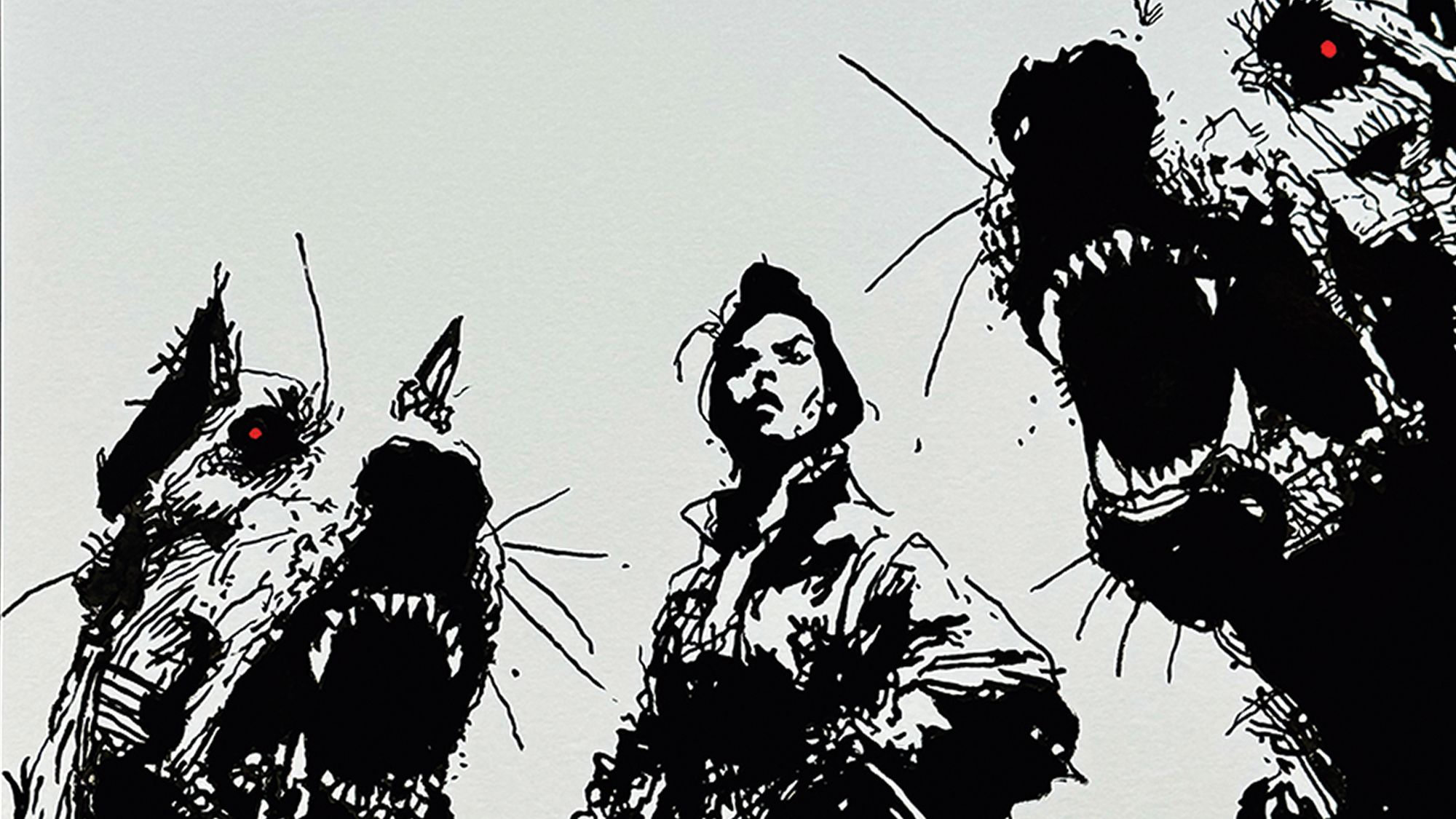
His choice of materials is a testament to this hybridity. While traditional Sumi-e often utilizes rice paper or washi, Thompson employs Bristol vellum—a heavy, high-quality paper known for its slight tooth and durability. This surface allows for the high-contrast, detail-driven line work that characterizes his style. To achieve his signature depths, he utilizes a combination of traditional sumi ink and Diamine ink. Diamine, a United Kingdom-based manufacturer established in 1864, is renowned for its fountain pen inks that offer high saturation and a wide spectrum of undertones. By layering these inks, Thompson achieves a "uniquely dark and encapsulating" effect, where shadows seem to vibrate with hidden colors and textures.
A Career Pivot: From Law to the Inkwell
Thompson’s journey to the forefront of the ink art scene is as unconventional as his style. Hailing from Georgia, he initially pursued a career in law, a field defined by rigid structures, logical progression, and intense attention to detail. However, the creative impulse eventually outweighed the demands of the courtroom. This transition from law to art is not merely a change in profession but a redirection of the same focused energy required for legal scholarship into the "minute ticks and lines" of his drawings.
The discipline required for legal research appears to have translated into what Thompson calls his "Self-Creating Prophecy" approach. This philosophy describes a piece that evolves organically through the accumulation of thousands of tiny marks. It is a process of growth rather than construction, where the final image is "grown" into a piece of definitive depth and shadow. This method allows him to balance the spontaneous, sometimes chaotic energy of what he describes as "ADHD-fueled creativity" with the meticulous demands of professional illustration. For Thompson, the act of drawing serves as both a creative outlet and a cognitive anchor, allowing him to harness hyper-focus to create works of staggering complexity.
Analyzing the Portfolio: A Study in Cosmic and Natural Horror
The four works recently showcased by Thompson provide a roadmap of his thematic interests, ranging from the vastness of space-time to the visceral reality of the hunt.
Space-time Mage
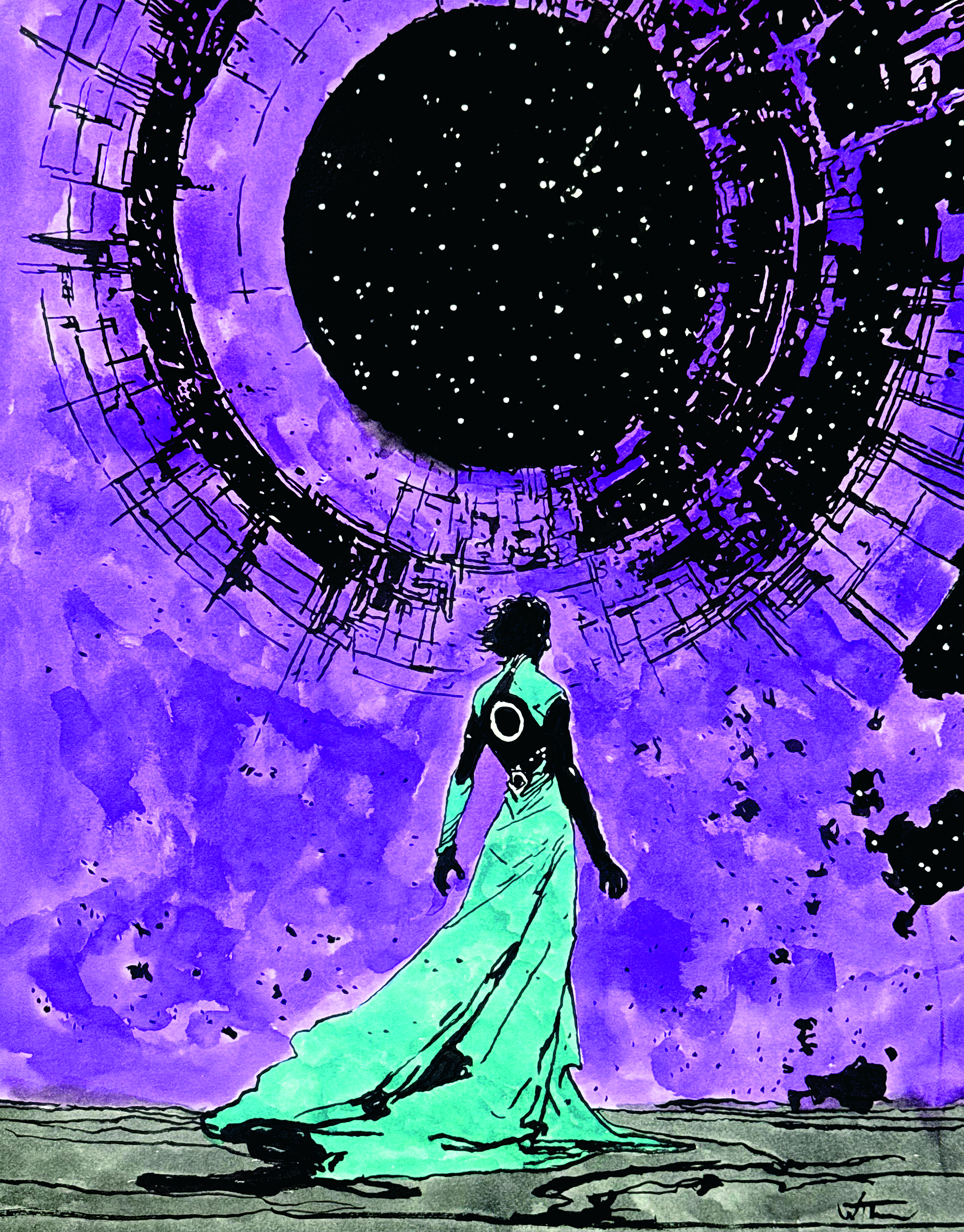
In this piece, Thompson explores the intersection of the mystical and the scientific. The central figure, a solitary mage, is depicted in a state of total immersion within the cosmos. Thompson describes the figure as "cloaked in teal against a violent purple void," highlighting his use of Diamine inks to provide tonal variety within a dark palette. The mage represents a bridge between ancient wisdom and future exploration, standing "fearless and utterly consumed by what lies beyond." This work reflects the influence of science fiction on Thompson’s imagination, suggesting a universe that is both beautiful and terrifyingly indifferent to human existence.
Prey
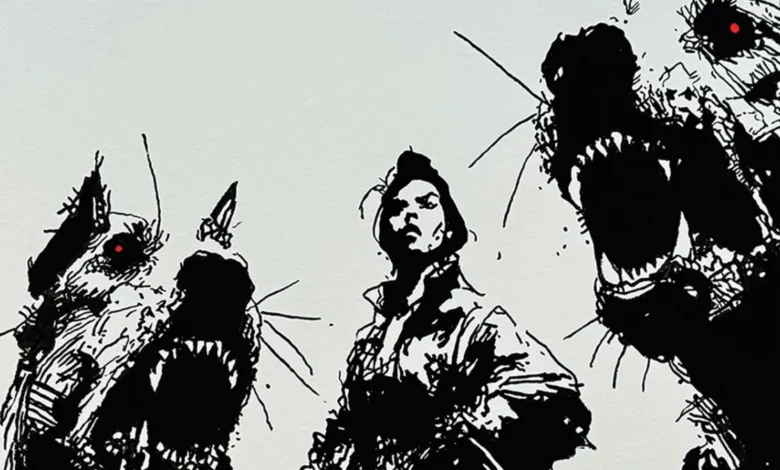
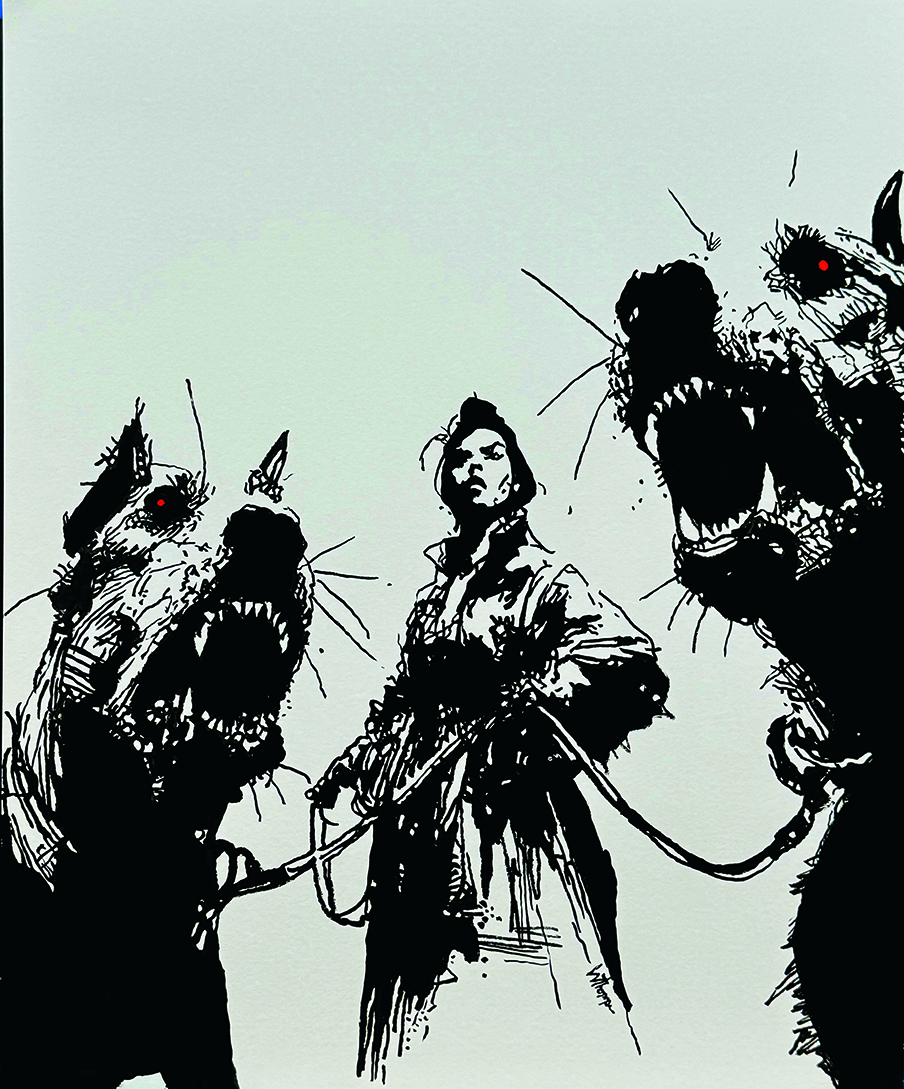
"Prey" shifts the focus from the cosmic to the terrestrial and mythological. The narrative described by Thompson is one of inevitability: "She doesn’t chase; she arrives." Accompanied by two beasts with burning red eyes, the central figure embodies the concept of a predator that has already transcended the act of the hunt. The piece utilizes heavy shadows to create a sense of impending doom, where the subject in front of the huntress has "already run out of time." The use of fine brush strokes to create the texture of fur and the glint of light in the eyes showcases Thompson’s ability to create atmosphere through minimalist color and maximalist detail.
Darkest Dungeon
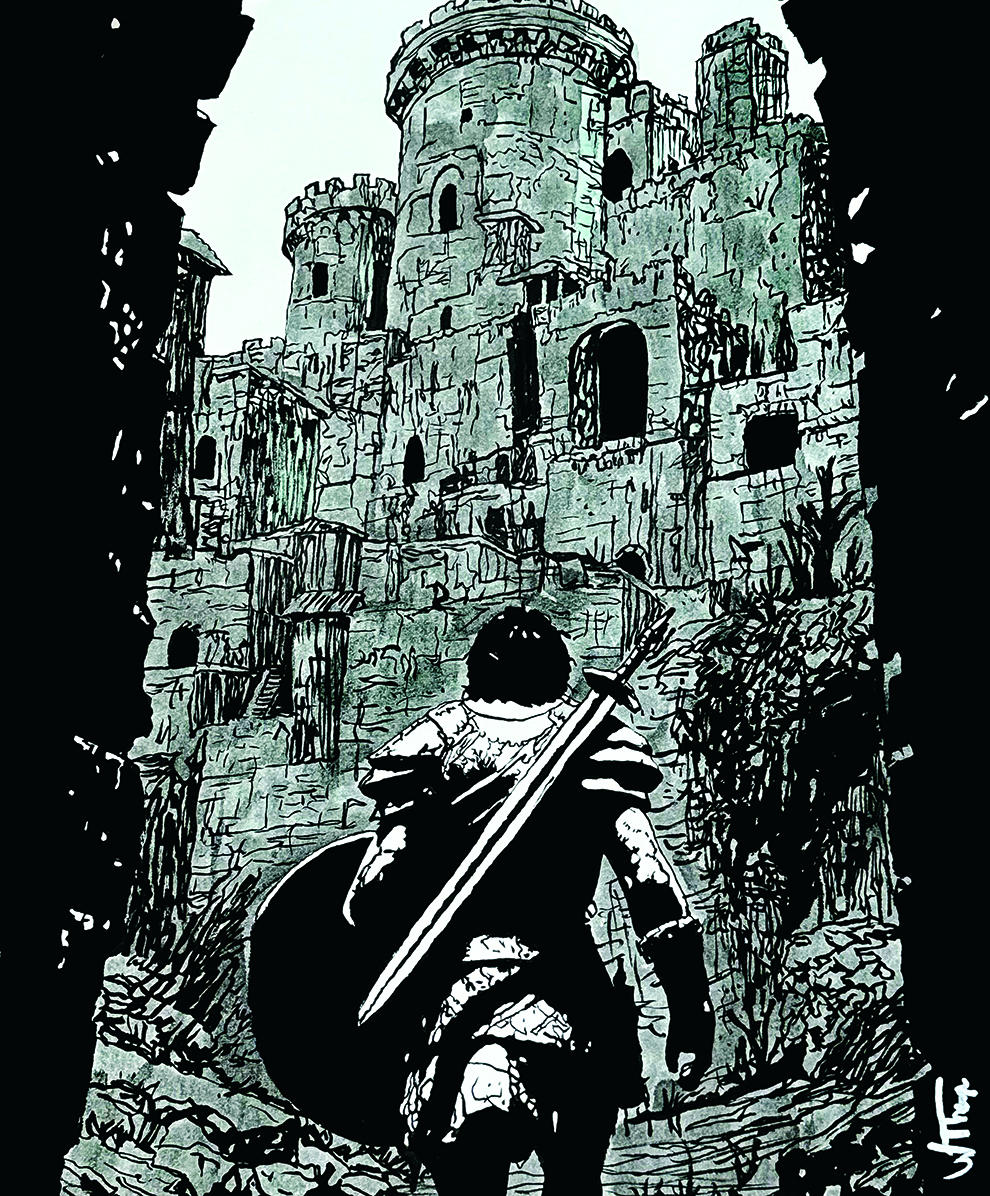
Evoking the grimdark aesthetic of classic fantasy and modern gaming, "Darkest Dungeon" depicts a lone warrior standing before a crumbling, monolithic fortress. The architecture itself is a character in the piece—every "crumbling stone a warning." Thompson’s mastery of shadow is most evident here, as the warrior is "consumed" by the environment, yet the piece remains an "act of defiance." The interplay between the massive scale of the ruins and the singular determination of the warrior highlights the "Southern American" aspect of his style—the sense of history, decay, and the stubborn persistence of life.
Malfeasance
The final piece, "Malfeasance," is an explosion of aggressive energy. Unlike the calculated arrival in "Prey," the character of Malfeasance "erupts" with a "singular purpose of absolute destruction." The visual language here is dominated by sharp angles, horns, and burning eyes. It serves as a contrast to his more contemplative works, proving that his Southern American Sumi-e style is as capable of depicting violent motion as it is of depicting silent, cosmic awe.
Technical Analysis and Supporting Data
The rise of artists like Thompson coincides with a broader market trend toward high-quality, physical collectibles in an era of digital saturation. According to industry reports from 2023 and 2024, there has been a 15% increase in the sales of traditional art supplies among young professionals, many of whom cite "digital fatigue" as a primary motivator. Furthermore, the "Inktober" movement and the popularity of dark fantasy illustration on platforms like Instagram and Patreon have created a sustainable ecosystem for artists who specialize in niche, high-detail techniques.
Thompson’s use of Bristol vellum is also a calculated technical choice. Vellum surfaces have a "rating" for smoothness; the slight texture allows for better ink adhesion than ultra-smooth surfaces, preventing the "feathering" that can occur with high-saturation inks like Diamine. This technical knowledge is a hallmark of the professional illustrator, ensuring that the "minute ticks" remain crisp and do not bleed into one another, preserving the "definitive depth" of the shadows.
The Impact of Neurodivergence on Modern Illustration
Thompson’s open discussion regarding his "ADHD-fueled creativity" contributes to a growing dialogue within the arts community about neurodivergence. Recent psychological studies suggest a strong correlation between ADHD and "divergent thinking"—the ability to generate a multitude of unique solutions or ideas. In the context of Thompson’s work, this manifests as the ability to maintain interest in the repetitive, meditative process of stippling and fine-line work while simultaneously allowing the broader composition to evolve spontaneously.
This "Self-Creating Prophecy" method is a form of "flow state" that many neurodivergent artists use to manage executive function. By allowing the piece to "grow" rather than following a rigid pre-planned sketch, the artist remains engaged with the work in a state of constant discovery. This authenticity resonates with audiences, who can sense the organic evolution of the piece in the final product.
Broader Implications and the Future of Traditional Media
The success of Will Thompson’s work suggests a healthy future for traditional media within the global art market. As artificial intelligence continues to proliferate in the commercial art space, the value of "hand-crafted" detail and the unique "errors" or "spontaneity" of physical ink work are becoming increasingly prized by collectors and publishers. Thompson’s work, originally featured in ImagineFX—a leading publication for digital and traditional artists—serves as a bridge between these two worlds.
His "Southern American Sumi-e" is more than a personal style; it is a case study in cultural and professional synthesis. By bringing the discipline of law, the philosophy of the East, and the atmospheric weight of the American South to the drawing board, Thompson has carved out a space that is entirely his own. As he continues to explore the realms of science fiction and the natural world, his work stands as a reminder that the most compelling innovations often come from the most unexpected combinations of tradition and personal experience.
For aspiring artists and enthusiasts, Thompson’s trajectory offers a clear message: the path to a unique creative voice often requires looking backward at ancient traditions while looking forward into the "violent purple voids" of the imagination. Through the meticulous application of ink on paper, @The300ChickenNuggets continues to prove that even in a digital age, the stroke of a brush remains one of the most powerful tools for exploring the human condition.