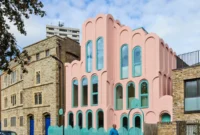
Ciel de Lit: Space Popular Transforms the Hermès London Maison into a Quilted Surrealist Dreamscape


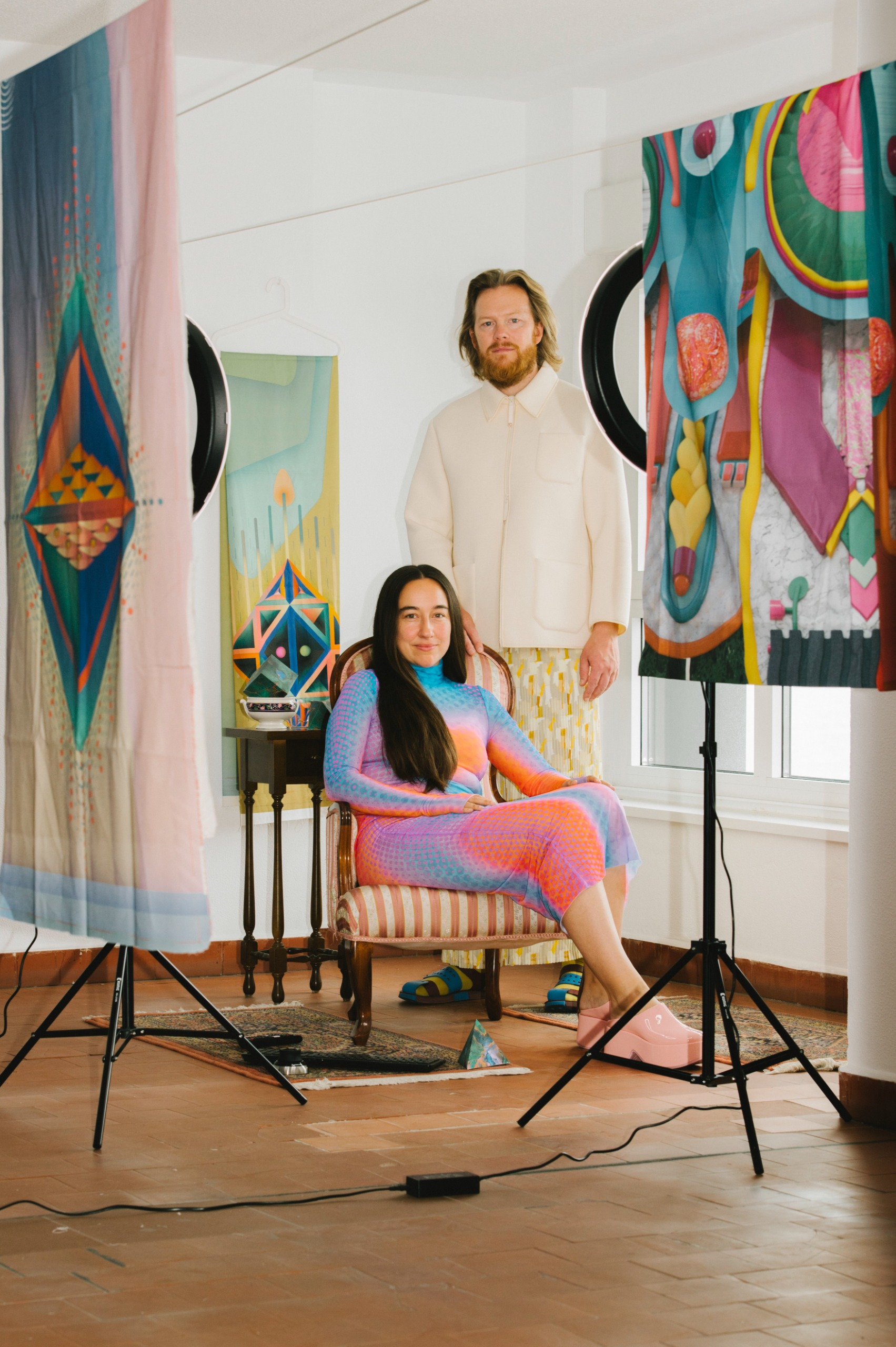
This autumn, the prestigious Hermès Maison at 166 New Bond Street in London has undergone a radical architectural metamorphosis. The brand’s iconic six arched windows, which serve as a cultural landmark in the heart of the city’s luxury district, are now home to a sprawling, soft-sculpture installation titled Ciel de Lit. Designed by the visionary architectural duo Space Popular—comprising Lara Lesmes and Fredrik Hellberg—the installation represents a sophisticated interplay between historical Georgian architectural reverence and the cutting-edge, textile-driven design philosophy that has come to define the architects’ recent practice.
A Masterclass in Textile Architecture
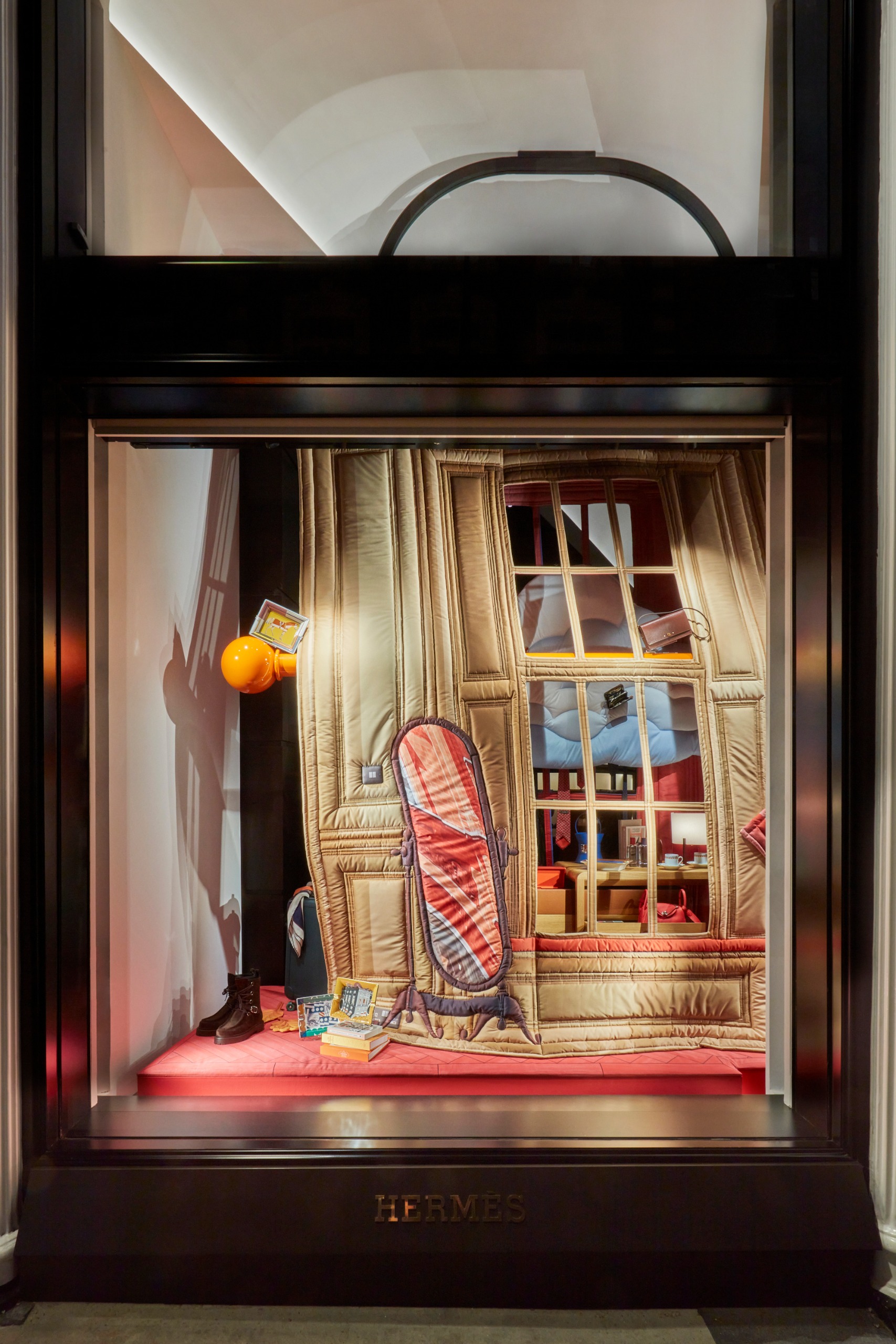
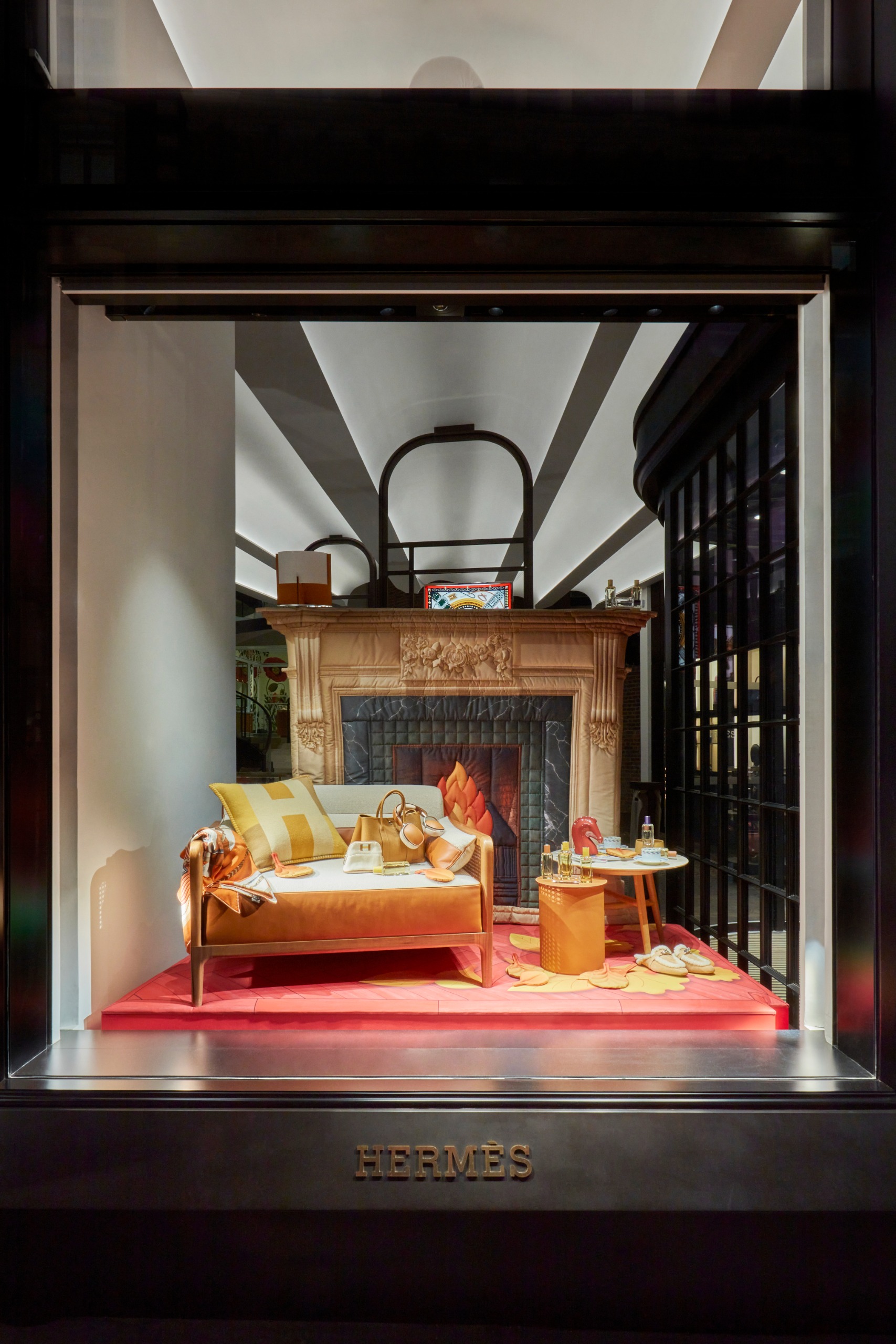
The installation occupies all six windows, creating a cohesive, immersive narrative that invites pedestrians to pause and peer into a dreamlike, quilted drawing room. The design utilizes a bespoke blend of cotton and silk, rendered in a palette of warm, toasted hues that evoke the hearths and interiors of London’s historic townhouses. The choice of material is deliberate; for Space Popular, textiles are the ultimate humanizing element in architecture. By wrapping the rigid, structured windows in soft, quilted surfaces, the duo creates a sensory contrast that bridges the gap between the building’s solid materiality and the fluidity of imagined, virtual worlds.
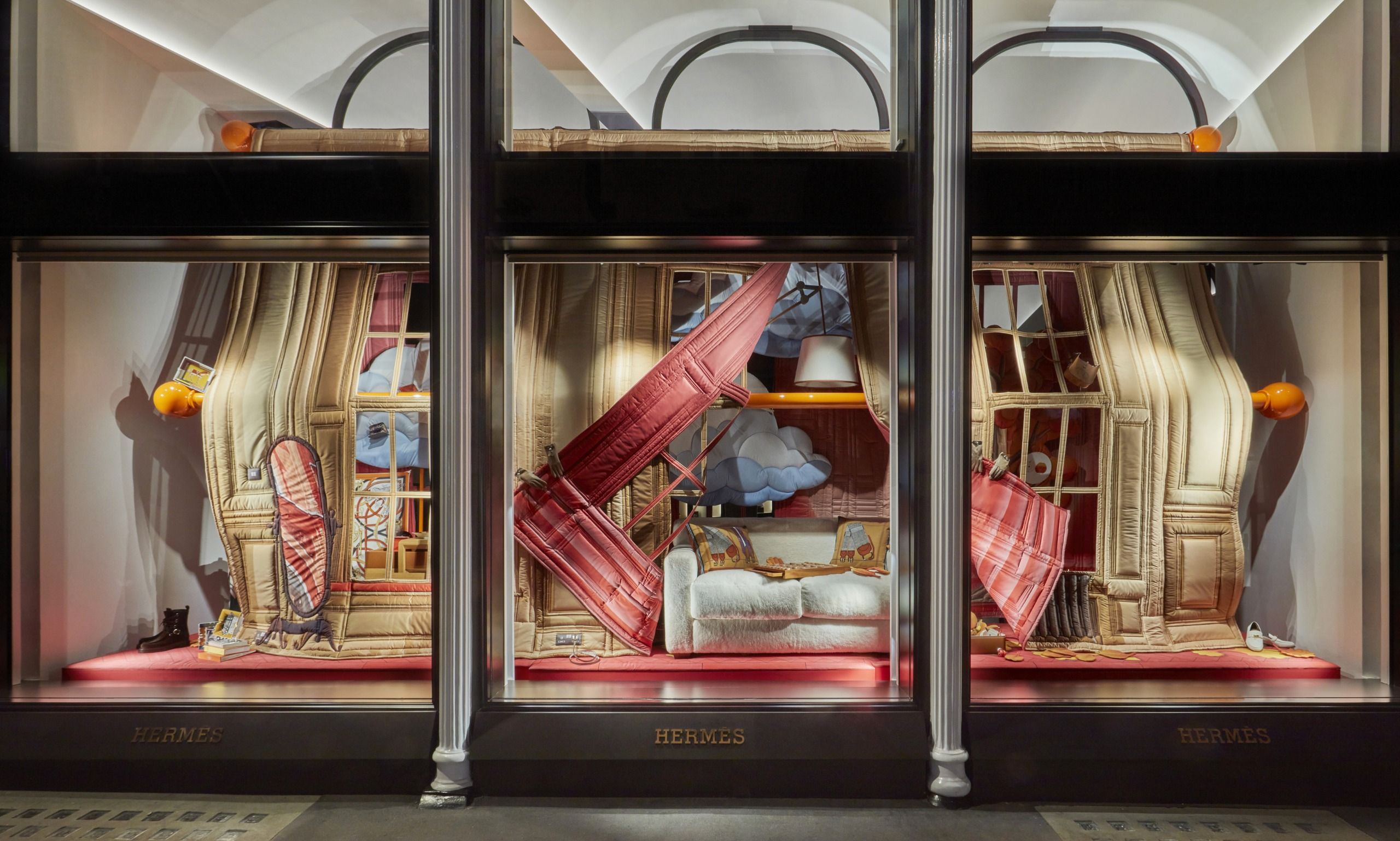
The sheer scale of the project is significant. In collaboration with London-based craft specialist Andy Knight, the architects incorporated nearly 500 individual quilted pieces into the display. This represents the largest textile-focused endeavor in the studio’s decade-long history. The complexity of the work is evident in the stitching, which displays a level of precision that borders on the obsessive, ensuring that every edge and ornament aligns perfectly within the overarching architectural vision.
The Evolution of the Hermès Window Display
The tradition of the Hermès window display is one of the most storied in the luxury sector. For decades, these windows have functioned as miniature theaters, blending the art of visual merchandising with avant-garde installation art. The standard for this craft was established largely by the late Leila Menchari, a Tunisian designer and decorator who oversaw the displays at the Faubourg Saint-Honoré store from 1978 to 2013. Menchari’s tenure transformed the shop window from a mere sales tool into a destination for artistic contemplation, characterized by rich textures, surreal themes, and theatrical storytelling.
Following in this tradition, the current collaboration with Space Popular aligns with the Hermès 2026 global creative theme, "Venture Beyond." This theme encourages artists and architects to push the boundaries of their respective mediums, a challenge that Lesmes and Hellberg have embraced by integrating virtual-world logic into physical, traditional craftsmanship. The London Maison itself, which spans six interconnected buildings and 55 uniquely designed rooms, serves as a backdrop that demands a dialogue between the interior’s established aesthetic and the exterior’s seasonal transformation.
Surrealism and Technical Precision
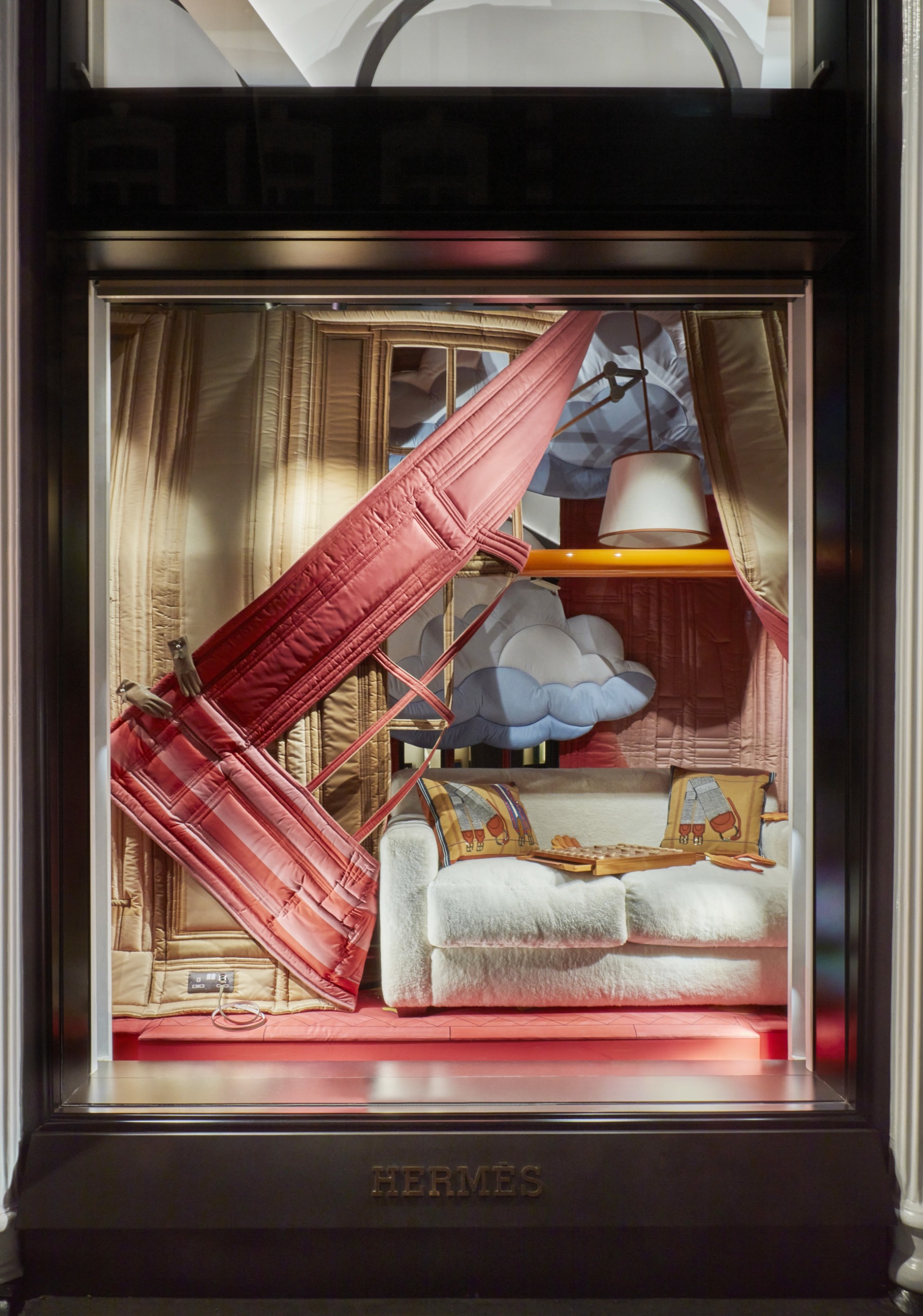
The title of the installation, Ciel de Lit, translates to "bed canopy," a nod to the intimate, enclosed nature of the display. Within these quilted tableaux, the viewer encounters a series of surrealist vignettes: sash windows that appear to be floating into soft, fabric clouds; a roaring fireplace rendered in stitched textiles; and doors left slightly ajar to suggest dimensions beyond the visible.
The humor embedded in the installation serves to ground the high-concept design in a relatable, playful experience. Floating Hermès gloves appear to manipulate the curtains, a silk scarf rests upon a miniature easel, and a leather belt is seamlessly integrated into a stitched socket. These details highlight the contrast between the "soft" world of the quilts and the "hard" reality of the luxury goods on display. As Fredrik Hellberg notes, the goal is to induce a "double-take," forcing the observer to reconcile the visual trickery with the tangible quality of the craftsmanship.
Curation and Interior Integration
The curation of the objects within the window is a testament to the collaboration between the studio and the Hermès team. The architects selected items from the house’s Home collection that harmonize with the quilted environment, including the iconic Pippa stool, originally designed in 1983 by Peter Coles and Rena Dumas. The inclusion of the stool is particularly poignant, as Rena Dumas Architecture Intérieure (RDAI) is the firm responsible for the interior vision of Hermès stores worldwide and the original design of the London Maison.
Other notable pieces featured in the display include a luxurious sofa re-edition by Jean-Michel Frank, the Les Trotteuses d’Hermès occasional table, and the Pantographe arc floor lamp. By placing these high-end, static pieces within a shifting, dreamlike, fabric-based environment, the display elevates the furniture from domestic utility to artistic prop.
Architectural Context and Urban Impact
The location of the display on New Bond Street is central to its impact. As one of the world’s busiest luxury retail thoroughfares, the street provides a unique, high-velocity environment where the "shiny speed" of black cabs and the bustle of urban life create a stark juxtaposition to the stillness of the quilted windows. When viewed from the street, the windows act as a mirror, reflecting the city’s movement back onto the installation, effectively pulling the outside world into the surreal interior of the Maison.
This engagement with the public is a cornerstone of Space Popular’s philosophy. Despite their high-level architectural credentials and interest in theoretical "virtual worlds," the duo maintains a commitment to accessibility. As Hellberg remarked, the studio’s name is a deliberate statement of intent: they are fundamentally interested in the public’s response to their work. The installation is not designed for an elite gallery audience, but for the broad, transient population of Londoners who pass the building daily.
Analytical Implications for Retail Design
The success of the Ciel de Lit installation offers several implications for the future of luxury retail design. First, it highlights the shift toward "experiential architecture," where the physical shop is no longer just a place of transaction but a vessel for storytelling. In an era dominated by digital e-commerce, the ability of a physical space to evoke curiosity—to make the viewer "widen their mind"—is a powerful differentiator.
Second, the collaboration demonstrates the value of cross-disciplinary partnerships. By inviting architects who specialize in virtual and theoretical space to work with traditional textile artisans, Hermès has created a hybrid aesthetic that feels both nostalgic and futuristic. The use of quilting, a technique that spans millennia and cultures, provides a sense of comfort and human touch that resonates deeply in a post-digital climate.
Finally, the installation reinforces the importance of long-term brand legacy. By acknowledging the influence of figures like Leila Menchari and the work of previous collaborators like Wang & Söderström, Hermès frames its current displays as part of a continuous, living history. This institutional memory adds a layer of authenticity that is difficult for competitors to replicate.
Conclusion and Future Outlook
The Ciel de Lit installation by Space Popular will remain on display at the Hermès London Maison until 30 October 2026. As the city moves through the seasons, the windows will continue to offer a sanctuary of soft, quilted, and surrealist comfort to the bustling streets of Mayfair.
The project stands as a benchmark for contemporary window dressing, illustrating how a brand can successfully navigate the tension between heritage and innovation. By transforming its public-facing windows into a "magical village" of imagination, Hermès has ensured that its London flagship remains not just a store, but a vital, evolving piece of the city’s architectural and cultural fabric. Through the meticulous work of Lesmes and Hellberg, the installation serves as a reminder that even in the most fast-paced, high-end retail environments, there is always room for the quiet, slow, and precise magic of craft.
Related posts: