Transport for London under fire following appearance of inflammatory and ambiguous public safety advertisement

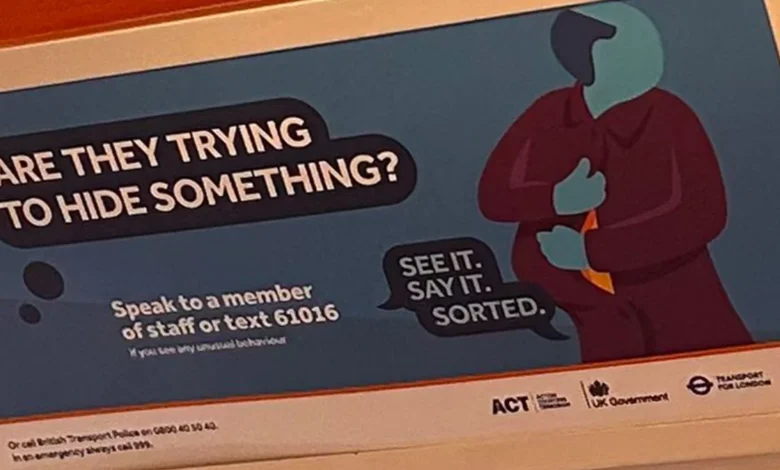
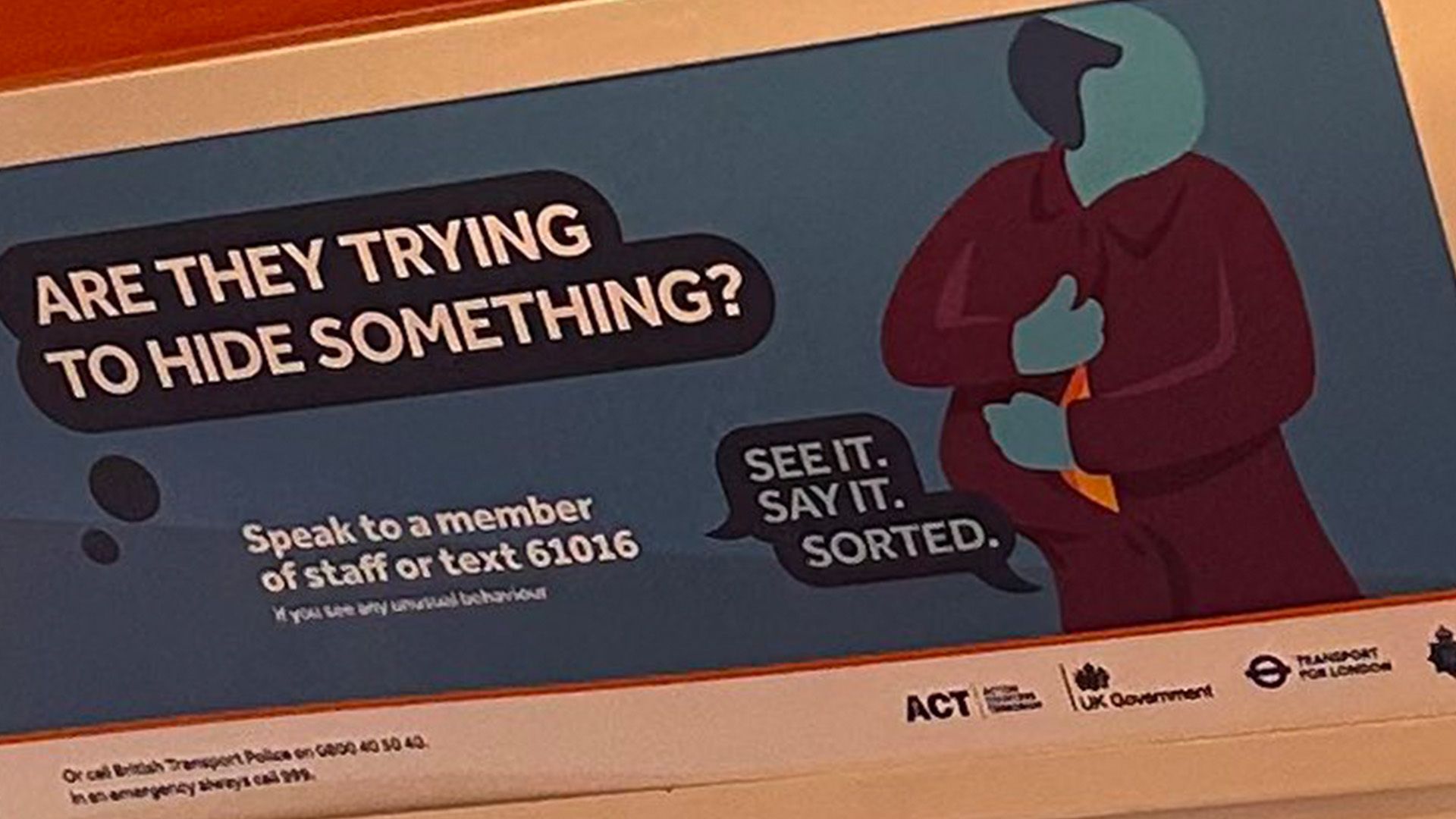
Transport for London (TfL) has found itself at the center of a burgeoning public relations crisis after an inflammatory and visually ambiguous poster appeared across its network, triggering widespread accusations of prejudice and sparking a fierce debate regarding the efficacy of modern minimalist design in public communication. The incident, which surfaced in late October 2026, centers on a controversial advertisement featuring the provocative text, "Are they trying to hide something?" paired with an abstract, stylized figure that many commuters interpreted as a woman wearing a hijab.
The resulting backlash has forced the transport authority to launch an urgent investigation, even as the incident highlights a growing tension between the use of abstract, corporate-friendly art styles and the potential for unintended, harmful messaging when applied to sensitive public safety discourse.
Chronology of the Incident
The controversy erupted on October 25, 2026, when images of the poster began circulating rapidly on social media platform X. Commuters reported seeing the advertisement displayed within London Underground carriages, leading to immediate public outcry. The imagery, rendered in the "Corporate Memphis" style—characterized by flat, featureless, and often anatomically exaggerated proportions—was intended to depict a man looking over his shoulder. However, the lack of distinct facial features or clear defining characteristics led many observers to misinterpret the illustration as a woman in a hijab, creating an inadvertent link between the text "Are they trying to hide something?" and a specific religious demographic.
By the afternoon of October 25, the digital discourse had reached a fever pitch. Users expressed shock at what they perceived to be an Islamophobic message sanctioned by a major public body. The discourse quickly moved from criticism of the message to a broader critique of design choices in public advertising, with many users noting that the ambiguity of the art style facilitated the inflammatory interpretation.
On October 26, the situation grew more complex. TfL issued a statement characterizing the posters as "unauthorised" and "flyposting," an illegal act of placing advertisements without permission. The organization stated it had instructed its media partners and contractors to conduct immediate inspections of the network to remove any such material. Furthermore, TfL confirmed it had reported the incident to the British Transport Police (BTP).
However, this explanation was met with significant skepticism. Observers pointed out that several news outlets had previously reported on similar, presumably authorized, campaigns featuring the same aesthetic, suggesting that the "flyposting" narrative might be a defensive strategy to distance the authority from a campaign that had unexpectedly backfired.
The Problem with Corporate Memphis
The incident has reignited a long-standing debate among design professionals regarding the ubiquity and utility of the "Corporate Memphis" art style. Originally popularized by major tech companies to convey a sense of inclusivity and friendliness through simplified, non-specific human forms, the style has become the standard for corporate communications and public service announcements (PSAs).
However, critics argue that the very elements that make the style "safe" for global brands—its lack of specific detail, neutral color palettes, and flattened perspective—can become a liability in contexts requiring nuance or clarity. By removing specific identifiers, the design often becomes a "Rorschach test," where the viewer projects their own biases or fears onto the blank, abstract figures. In the context of a PSA, where the goal is to provide clear, actionable information or warnings, this ambiguity can be disastrous.
Data from the design industry suggests that public trust in corporate messaging is at a decade-long low. When a government or public entity uses a style that feels disconnected from reality, the public is often more likely to view the message with suspicion. When that style also allows for the accidental reinforcement of harmful stereotypes, as was the case with the TfL poster, the reputational damage is compounded.
Official Responses and Institutional Accountability
The response from TfL has been characterized by a move toward legal distancing. By labeling the act as "flyposting," TfL is positioning itself as a victim of a coordinated effort to undermine its reputation. Under the UK’s Highways Act 1980 and local bylaws, the unauthorized display of advertisements is a criminal offense, often punishable by fines.
Despite these claims, the public remains unconvinced. The assertion that a sophisticated, professionally printed, and professionally installed campaign could be "flyposted" on a heavily monitored, secure transit network like the London Underground without internal knowledge has raised questions about the oversight of TfL’s third-party advertising partners. If the campaign was indeed sanctioned but later deemed "unauthorized" due to the backlash, it would suggest a failure in the approval process that governs what is deemed appropriate for public consumption.
The British Transport Police (BTP) have remained relatively quiet, confirming that they are aware of the reports, but have yet to provide a public timeline for their investigation into the source of the materials.
Broader Implications for Public Advertising
This incident serves as a significant case study for the risks inherent in modern advertising. The 2026 calendar year has already been marked by a series of high-profile "cancelled" or withdrawn advertisements, reflecting a heightened sensitivity among consumers to the messaging and visual language used by major institutions.
The primary takeaway for marketing professionals and public authorities is the necessity of cultural sensitivity testing. In an era where digital tools can easily create and distribute high-quality, professional-looking imagery, the barriers to entry for public discourse have lowered, but the stakes for institutional reputation have risen.
Furthermore, the "TfL incident" highlights the dangers of prioritizing a generic, "inoffensive" design style over clear, unambiguous communication. By attempting to avoid specific identifiers, the design team inadvertently created a vacuum that was filled by public anxiety and existing social tensions.
Moving Forward: The Need for Rigorous Vetting
As investigations continue, the long-term impact on TfL’s advertising policy remains to be seen. Industry experts suggest that the authority will likely implement more rigorous vetting processes for all third-party content, potentially including a mandatory review of the visual subtext of all campaign materials.
The incident also highlights a broader societal trend: the increasing role of the public in "fact-checking" and "aesthetic-checking" the institutions that serve them. In the past, such an ad might have gone unnoticed or been dismissed as an isolated error. Today, via social media, the public acts as a distributed auditor, capable of deconstructing the intent and impact of corporate messaging in real time.
For TfL, the challenge is now twofold: to identify the actual origin of the poster and to rebuild trust with a public that is increasingly wary of the messages it encounters on its daily commute. Whether this incident was a case of malicious external interference or an internal failure of communication, it stands as a stark warning to public bodies: when you strip away the humanity and detail from visual communication, you do not create a neutral space—you create a space for conflict.
The case of the TfL poster will undoubtedly be cited in future discussions regarding the intersection of design, ethics, and public safety for years to come, serving as a reminder that in the public sphere, design is never just aesthetic; it is a fundamental component of the social contract.