The Ultimate Practical Guide to Naming UI Components, Design Tokens, and Digital Products

The perennial adage in software engineering and design states that there are only two hard things in computer science: cache invalidation and naming things. Across the digital product landscape, the language utilized by multidisciplinary teams directly shapes their cognitive models and internal dialogue. This linguistic friction frequently manifests as pervasive confusion surrounding colors, iconography, user interface components, and core features. Consequently, teams continually struggle to establish coherent naming conventions for design tokens, cascading style sheet classes, and application variables.
When choosing identifiers, practitioners often swing between extremes. Names can be overly generic, obscuring the precise intent of the component, or conversely, overly specific, severely limiting flexibility and reusability. Resolving this tension requires a systematic examination of industry best practices, established taxonomies, and cross-discipline naming frameworks that bridge the communication gap between designers, developers, and product managers.

The Anatomy of Naming Friction in Cross-Functional Teams
Communication breakdowns in product development organizations frequently stem from dialectal fragmentation. Designers speak in visual abstractions, developers operate within programmatic hierarchies, product managers focus on business metrics, and end-users rely on functional terminology. When these groups attempt to collaborate without a unified lexicon, friction occurs.
Historical analyses of software delivery cycles indicate that low feature adoption rates are frequently rooted not in poor engineering, but in discoverability issues caused by ambiguous nomenclature. If a feature’s title fails to communicate its core value or align with the user’s mental model, adoption stalls. Establishing a standardized vocabulary reduces cognitive load, accelerates onboarding for new team members, and minimizes the technical debt associated with refactoring poorly named assets.
General Inspiration and Linguistic Expansion for Codebases
For practitioners seeking inspiration when naming HTML classes, CSS properties, or JavaScript functions, community-driven resources provide alternative perspectives. Tools such as Classnames, curated by Paul Robert Lloyd, offer thematically grouped lists of words designed to encourage creative thinking outside standard technical jargon.

Rather than relying on repetitive utility terms, these repositories provide thematic collections spanning nature, art, theater, music, architecture, fashion, and publishing. Terms categorized by behavior, likeness, order, and grouping help engineers construct semantic, highly readable codebases that remain maintainable over long lifecycles.
Standardizing Color Palettes and Color Token Taxonomies
Color management presents a persistent challenge in scalable design systems. Selecting intuitive, scalable identifiers for hundreds of color swatches requires more than basic hue descriptions. To address this, open repositories such as David Aerne’s color-names database aggregate over 30,000 unique color entries sourced from user contributions and historical references.
Accompanied by integrated color pickers and search utilities, these color inventories allow design systems engineers to assign evocative yet systematic names to primitive and semantic color tokens. By avoiding hardcoded hex values or fragile naming conventions like blue-light-5, teams can implement robust color scales that scale across multi-brand architectures.

Best Practices for Structuring Layers, Groups, and Components
Within design tools like Figma and Sketch, chaotic layer panels degrade productivity and complicate handoffs to engineering. Design system lead Javier Cuello has formalized comprehensive guidelines establishing that effective layer and group names must possess a logical structure, remain concise, convey distinct meaning, be universally understood across the team, and remain entirely independent of visual styling properties.
Adhering to strict do’s and don’ts prevents common pitfalls, such as appending generic labels like "Rectangle 4" or "Group Copy" to production assets. Structured naming conventions ensure that design files mirror the component architectures found in modern frontend frameworks like React, Vue, or Svelte.
Enterprise Scale: Developing Flexible Design Token Taxonomies
As organizations scale to support multi-brand, multi-platform ecosystems, the complexity of design token management multiplies exponentially. A notable industry case study involves the design systems team at Intuit—parent company to financial and productivity platforms including QuickBooks, TurboTax, Mailchimp, and Mint. Facing disparate brand requirements, the organization engineered a flexible design token taxonomy capable of serving as a foundational infrastructure across diverse product lines.

Detailed by design technologist Nate Baldwin, the initiative required auditing legacy token pain points and establishing strict criteria for a multi-tiered architecture. Building upon foundational token methodologies established by industry experts like Nathan Curtis, modern enterprise frameworks typically segment tokens into distinct tiers:
- Global or Primitive Tokens: Raw values representing color palettes, spacing scales, and typography sizes.
- Alias or Semantic Tokens: Contextual assignments mapping primitives to functional roles (e.g., background-color-interactive-primary).
- Component-Specific Tokens: Granular identifiers scoped strictly to individual UI patterns.
This layered approach ensures that sweeping brand refreshes can be executed programmatically by updating primitive mappings, leaving component architecture intact.
Benchmarking UI Component Names Through Design System Galleries
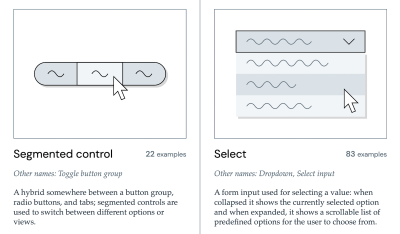
When defining new interface elements, benchmarking existing design systems prevents redundant reinvention. Iain Bean’s Component Gallery addresses this challenge by aggregating real-world examples and alternative naming conventions for over 50 standard UI components—ranging from accordions to visually hidden utility classes.

Supplementary resources, such as visual dictionaries like Name That UI, provide visual references that correlate colloquial user descriptions with standardized engineering nomenclature. By analyzing how mature design systems label common patterns, teams can align with established user expectations and reduce internal terminology disputes.
User-Centric Naming for New Product Features
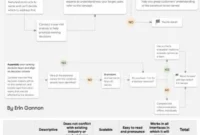
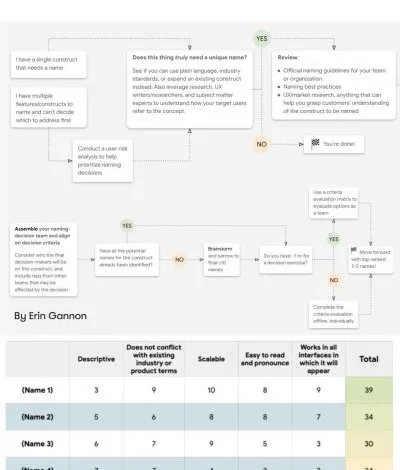
The nomenclature assigned to new software features directly dictates user discoverability and long-term engagement. UX strategist Erin Gannon emphasizes that feature adoption relies on a sequential journey: discovery, comprehension, trial, mastery, and integration into existing workflows.
Effective feature names must be rooted in user problems and jobs-to-be-done. Rather than using internal codenames or corporate jargon, product teams are advised to conduct user interviews, capture the exact vocabulary utilized by customers to describe their pain points, and reflect that language in the user interface.
Multi-Brand Architecture: The Vodafone UK Variables Taxonomy Map
Complex telecommunications and enterprise environments often require supporting multiple regional brands under a unified digital umbrella. The Vodafone UK Design System team addressed this challenge by publishing their comprehensive Variables Taxonomy Map within the Figma Community.
This taxonomy breaks down the anatomy and categorization of design tokens into a structured hierarchy of collections. By orchestrating connections from foundational brand primitives and semantic tokens down to page-level implementations, the system ensures complete transparency. Stakeholders across design and engineering can ascertain precisely where a token is utilized and what it represents based entirely on its systematic identifier.
Structured Tooling for Design Token Inventories
To operationalize token governance, tools such as Romina Kavcic’s Design Token Naming Guide and accompanying inventory spreadsheets provide actionable frameworks. These interactive builders allow teams to configure custom naming structures incorporating component categories, interactive states, and functional roles.

By maintaining a bird’s-eye view of design tokens via spreadsheet matrices, organizations can introduce new themes, brand modes, and accessibility variations without losing track of dependencies or breaking downstream applications.
Methodologies for Naming Digital Products and Services
At the highest level of abstraction, naming a standalone product or service carries significant brand equity and legal implications. Open-source guides such as Onym curate comprehensive methodologies for naming initiatives, spanning brainstorming techniques, trademark vetting procedures, linguistic etymologies, and risk mitigation strategies. Utilizing structured prompt frameworks helps product teams navigate the complex landscape of domain acquisition, cultural localization, and market positioning.
Strategic Implications and Industry Outlook
The cumulative impact of disciplined naming conventions extends far beyond aesthetic code cleanliness. Organizations that invest in robust taxonomies experience marked improvements in velocity, reduced onboarding times for technical staff, and enhanced accessibility compliance.

Conversely, neglecting nomenclature introduces systemic debt, forcing teams to waste valuable hours deciphering ambiguous variables and reconciling conflicting dialects across departments. By auditing legacy codebases, resolving naming conflicts proactively, and treating internal language as a core design asset, modern digital organizations can build more cohesive, maintainable, and user-centric software ecosystems.