Achieving Cross-Region Analytics with AWS Lake Formation Trusted Identity Propagation

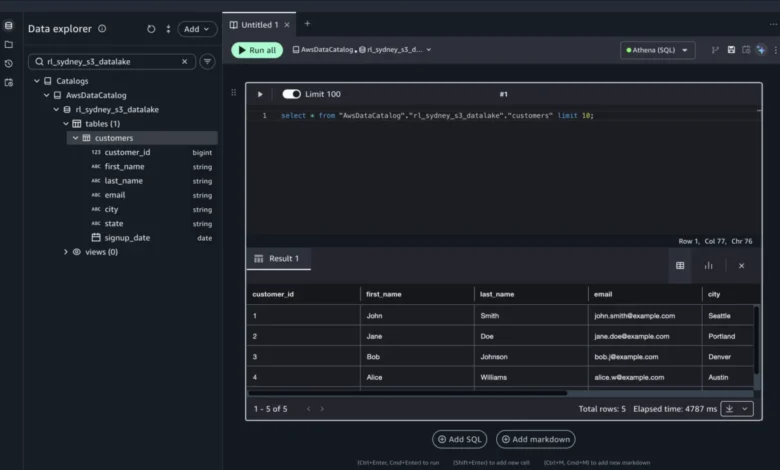
Organizations managing massive data estates often encounter a persistent architectural friction: the necessity to balance stringent, fine-grained access control with the requirement for granular, individual-level auditability. Traditionally, when data is shared across accounts and geographic regions on AWS, the transition often relied on shared IAM roles, which effectively masked the identity of the end user. This practice created a "blind spot" in security logs, where every query appeared to originate from a generic system role rather than the specific data analyst or scientist executing the command.
The introduction of cross-region support for AWS IAM Identity Center’s Trusted Identity Propagation (TIP) marks a significant evolution in how enterprises manage decentralized data access. By enabling identity propagation from the client application through the query engine to the storage layer, AWS has effectively bridged the gap between centralized governance and regionalized, high-performance data consumption.
The Evolution of Identity-Centric Security
In the modern cloud ecosystem, the challenge of data sovereignty and regional latency often forces companies to distribute their analytics workloads. For instance, a firm might centralize its "source of truth" data in an Asia Pacific (Sydney) hub while requiring its data science teams in South America (São Paulo) to query that data for local market insights.
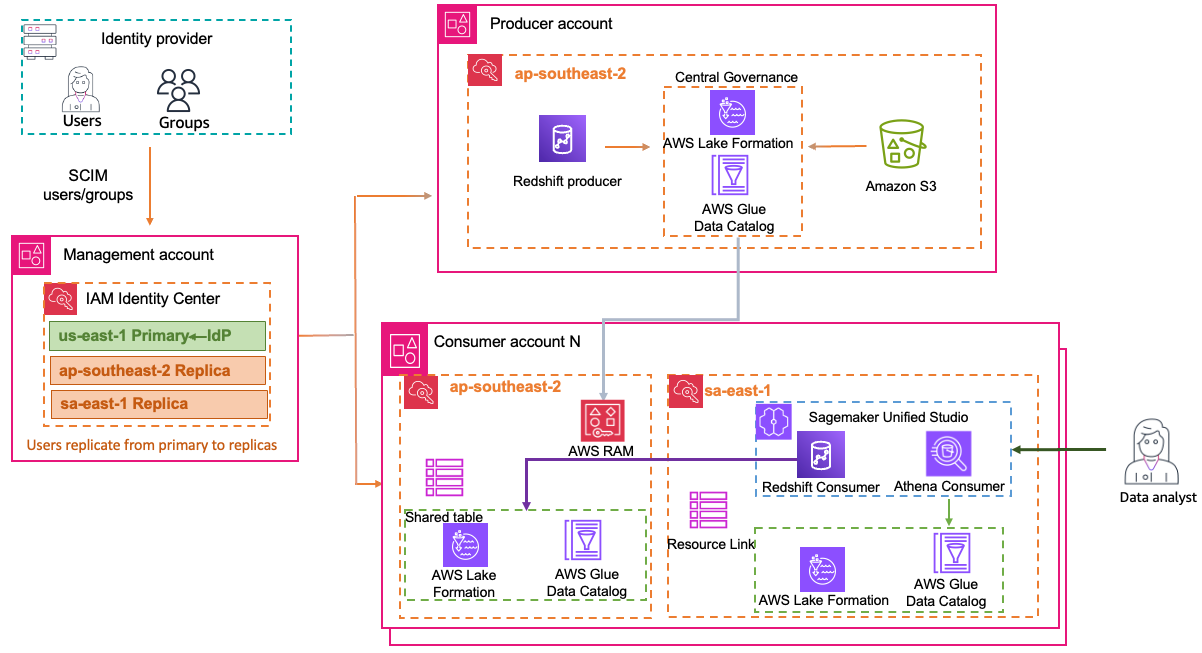
Previously, such cross-region operations often necessitated compromising on either security granularity or operational complexity. With the latest update to TIP, the IAM Identity Center replicates user identity objects—including users, groups, and session metadata—to designated AWS Regions. This ensures that when a user authenticates once via their corporate credentials, that identity is recognized and honored by services across the stack, regardless of the geographical boundary.
Architectural Framework and Operational Mechanics
The mechanics of this integration rely on four foundational AWS pillars. First, the IAM Identity Center serves as a singular, global identity plane. Second, Trusted Identity Propagation ensures that the user’s identity context remains attached to the query request throughout its lifecycle. Third, the use of System for Cross-domain Identity Management (SCIM) allows for seamless synchronization between corporate identity providers and AWS. Finally, AWS Resource Access Manager (RAM) facilitates the cross-account, cross-region sharing of metadata and resources.
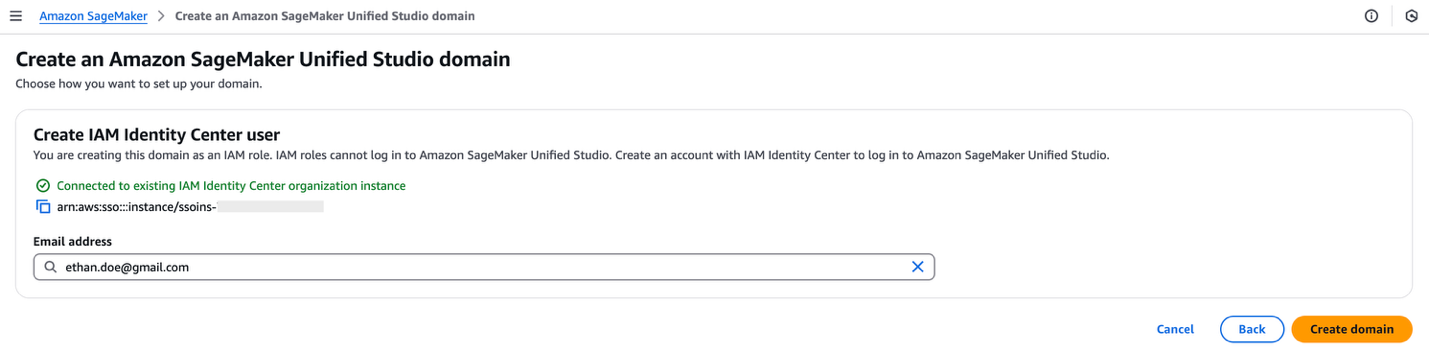
In practice, this architecture moves away from the traditional, restrictive reliance on static roles. When an analyst initiates a query in Amazon SageMaker Unified Studio, their specific user context is passed through to AWS Lake Formation. Lake Formation then evaluates the query based on the individual’s permissions defined in the central governance policy, rather than the permissions associated with an intermediary compute service role. This ensures that the audit logs generated in AWS CloudTrail capture the precise identity of the human operator, facilitating compliance with global data protection standards such as GDPR, HIPAA, and CCPA.
Case Study: A Tale of Two Regions
The operational implementation of this framework can be observed through two primary use cases, both emphasizing the "centralized catalog, localized query" paradigm.

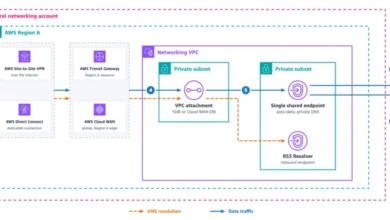
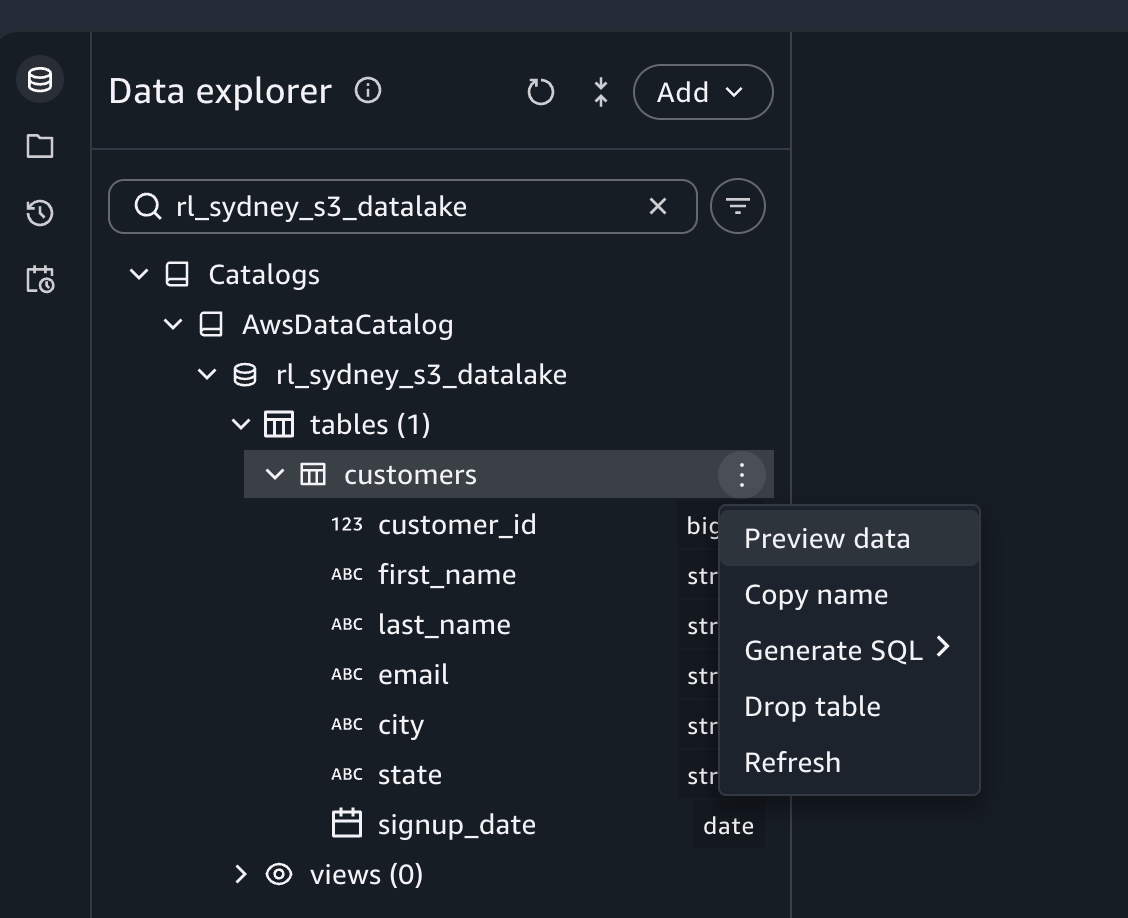
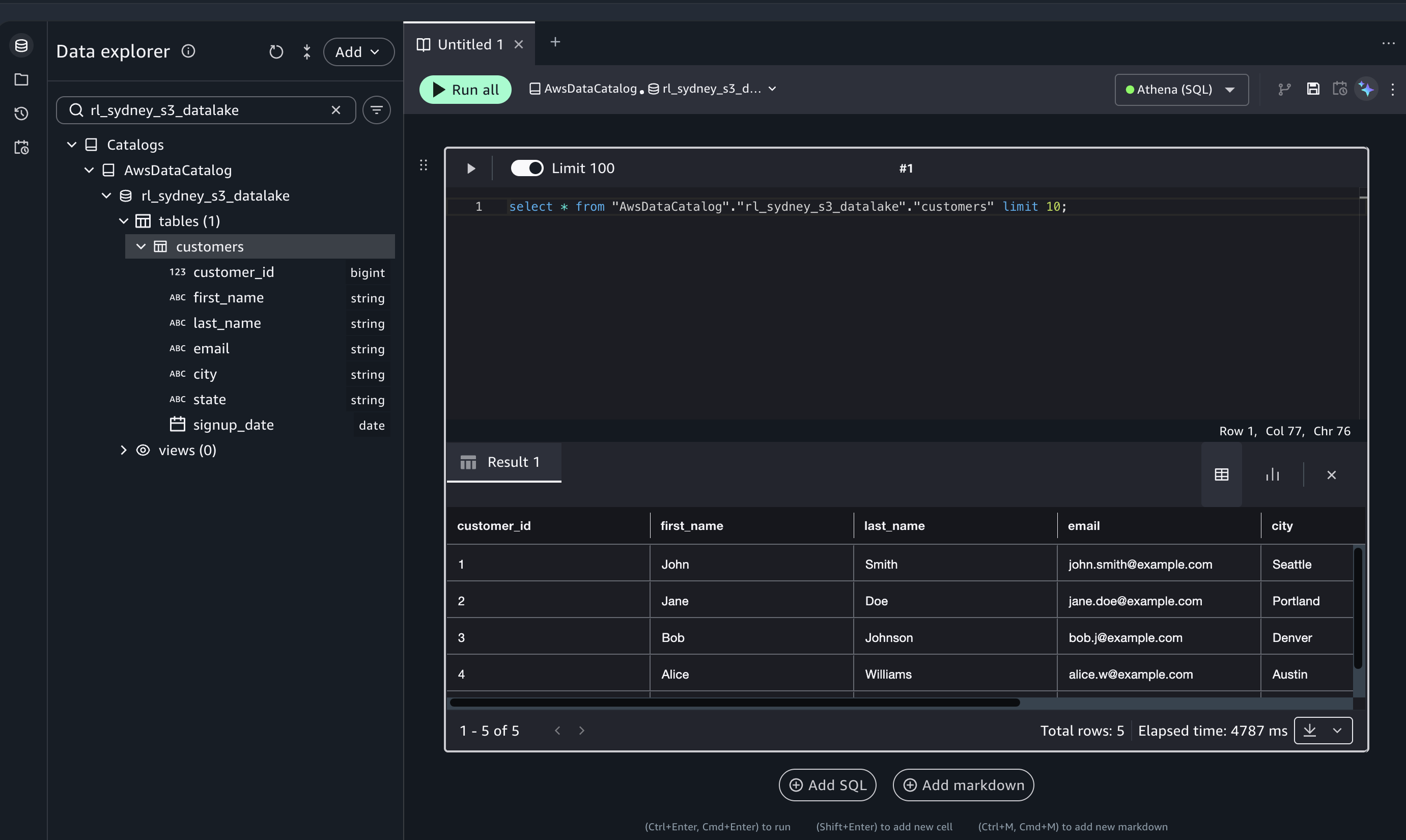
In the first scenario, Amazon S3 data is governed by Lake Formation in the Sydney (ap-southeast-2) region. A consumer in the São Paulo (sa-east-1) region accesses this data via Amazon Athena within SageMaker Unified Studio. The key innovation here is that the data and its catalog metadata remain stationary in the Sydney region. The consumer creates a resource link in the local region, which acts as a pointer to the remote, shared data. The query itself traverses the AWS network, but the authorization remains localized to the user’s specific access rights.
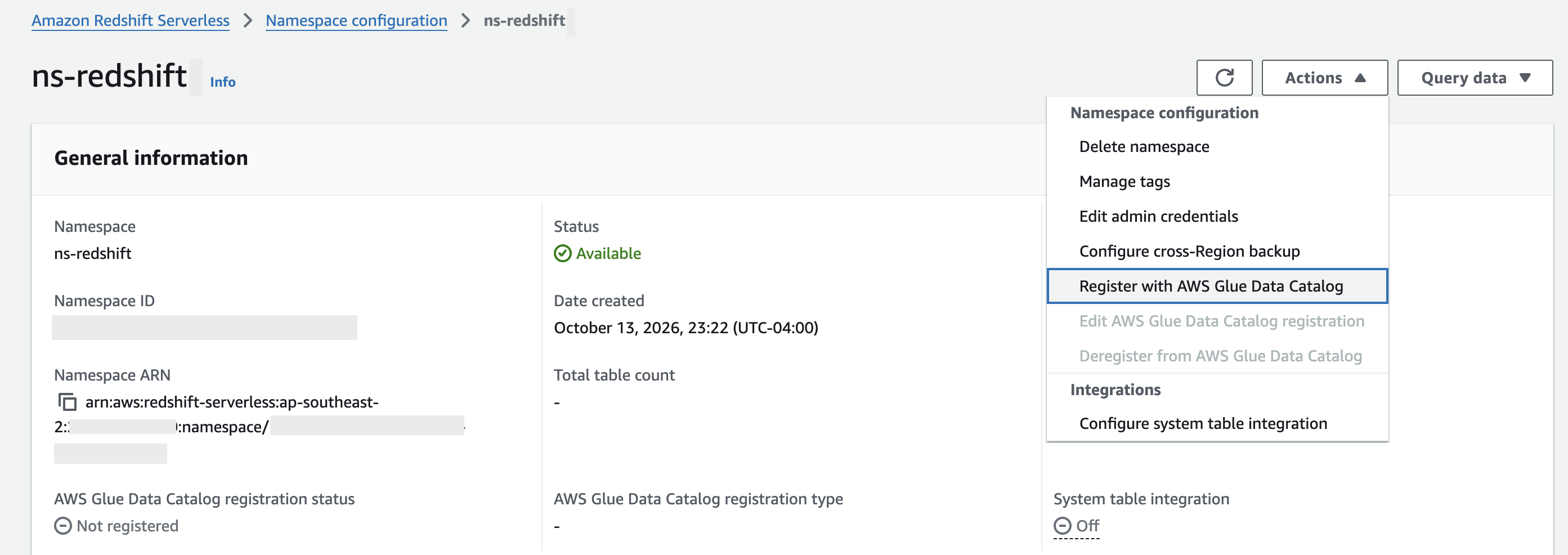
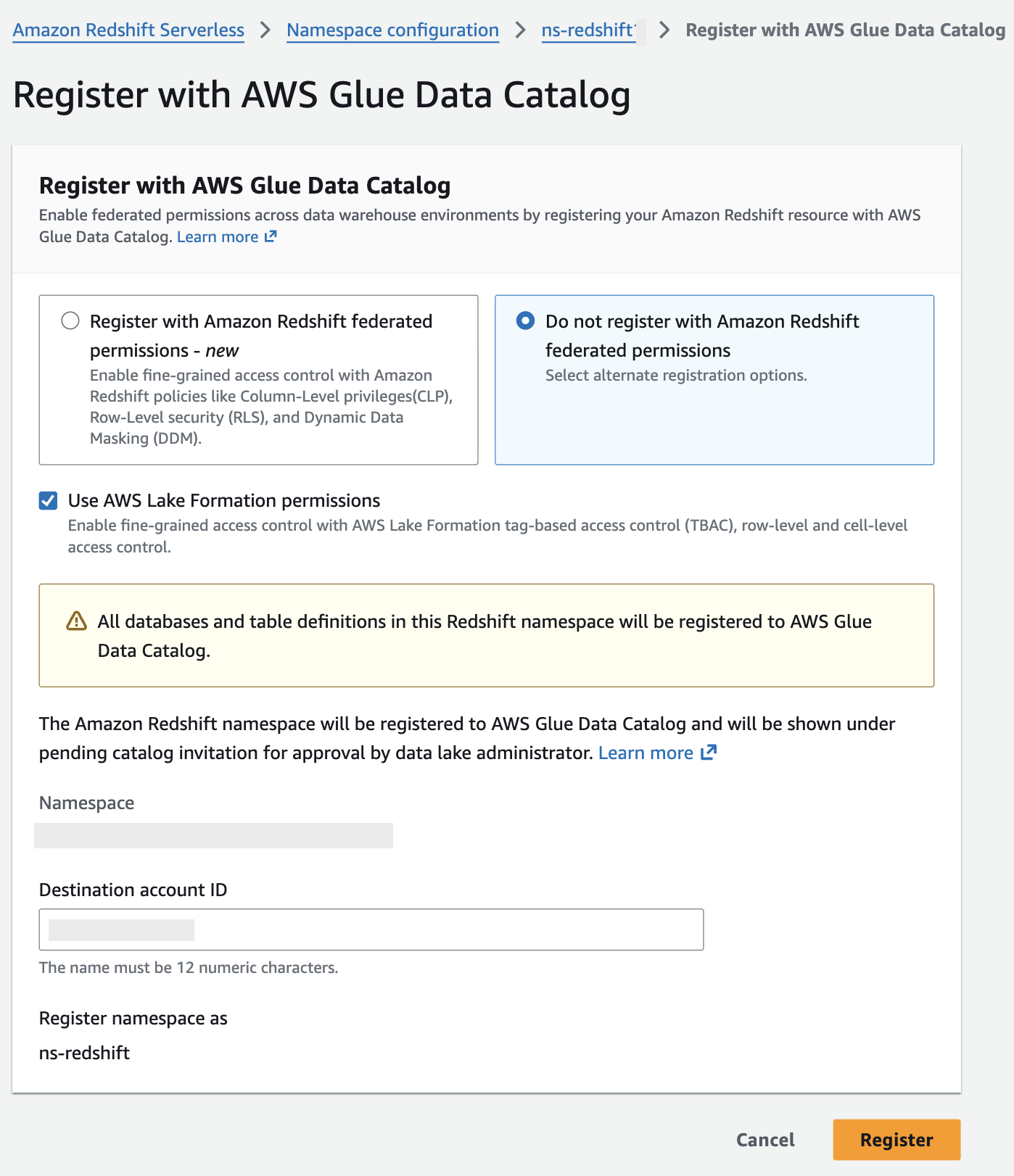
The second scenario focuses on Amazon Redshift Serverless. Here, data is shared through a datashare registered to the AWS Glue Data Catalog. By creating an external schema in the consumer account that points directly to the producer’s Glue catalog, users can query Redshift data across regions without the need for additional resource links. This approach is particularly effective for organizations that utilize Redshift as their primary high-performance analytical engine.
Data Governance and Compliance Implications
The implications for enterprise security teams are profound. By moving to an identity-aware architecture, the reliance on "shared secrets" or "broad-access roles" is drastically reduced.
- Least Privilege Enforcement: Because permissions are tied to the user, not the application, administrators can enforce column-level and row-level access controls with absolute precision.
- Audit Transparency: Every query operation is tied to a specific IAM Identity Center identity. If an unauthorized attempt to access sensitive data occurs, the audit trail points directly to the source, significantly reducing forensic investigation times.
- Reduced Operational Overhead: By automating the propagation of identities across regions, organizations eliminate the manual task of mapping and maintaining hundreds of regional IAM roles, which are prone to configuration drift and human error.
Industry Context and Strategic Direction
AWS’s move toward a more identity-centric analytics model arrives at a time when data gravity—the tendency for applications and services to be pulled toward the location of large data sets—is increasingly challenged by the need for global collaboration. Organizations are no longer willing to silo their data or their teams.
Statements from industry analysts suggest that the market is shifting away from perimeter-based security toward identity-based perimeters. By embedding identity at the query level, AWS is aligning its infrastructure services with this broader industry trend. This capability effectively turns the AWS network into an identity-aware fabric, enabling global enterprises to treat their data as a unified, governed asset, regardless of where that data resides or where the analysis is performed.
Implementation and Best Practices
For organizations looking to deploy this architecture, the prerequisite list is stringent but logical. The producer and consumer accounts must reside within the same AWS Organization, and they must share the same organization-level instance of the IAM Identity Center.
The configuration process requires careful handling of IAM trust policies. Notably, the introduction of the sts:SetContext permission is a critical, non-negotiable component of this update. Unlike the standard service-linked roles provided by Lake Formation, this custom configuration is essential for passing the user context through the service stack.
Furthermore, teams should prioritize a phased rollout. Begin by testing the federation of catalog metadata in a non-production environment. Ensure that the IAM Identity Center user groups are correctly mapped to the Lake Formation permissions before enabling cross-region querying. Once the foundation is set, the ability to add new consumer accounts becomes a highly repeatable process, allowing for rapid scaling of analytical capabilities across a global footprint.
Conclusion
The integration of Trusted Identity Propagation across AWS regions represents a major leap in cloud data governance. By decoupling the identity of the user from the compute role and enabling that identity to persist across geographic boundaries, AWS has provided a blueprint for secure, compliant, and efficient cross-region analytics.
As enterprises continue to navigate the complexities of global data distribution, tools that unify identity and governance—while maintaining the performance requirements of modern query engines—will become the standard for the modern data architecture. The move to a user-centric, identity-propagated model is not merely a feature update; it is a fundamental shift toward a more secure and transparent digital future.
Related posts: