Mastering Python Descriptors: Building Advanced Validated, Computed, and Lazily Loaded Attributes

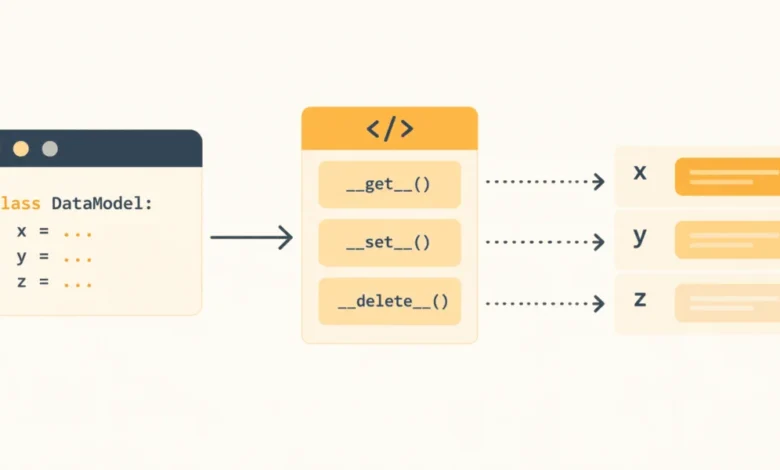
In the complex landscape of object-oriented programming, Python offers a sophisticated yet often underutilized mechanism known as the descriptor protocol. While many developers are accustomed to basic attribute access, descriptors represent the underlying architecture that powers advanced features in the Python language, such as properties, methods, static methods, and class methods. By implementing specific dunder methods—primarily __get__, __set__, and __delete__—a developer can gain granular control over how attributes are manipulated within a class. This capability is essential for creating robust, maintainable systems where data integrity and performance optimization are critical.
The Mechanism of Attribute Control
At its core, a descriptor is an object that defines the behavior of an attribute. When a class includes a descriptor, it offloads the responsibility of managing that attribute’s state to the descriptor instance rather than relying on the default behavior of the class instance’s __dict__. Since the introduction of the __set_name__ method in Python 3.6, descriptors have become significantly more intuitive, allowing them to automatically identify the attribute name they are assigned to, thereby preventing potential namespace collisions and reducing boilerplate code.
Historically, Python developers relied heavily on the @property decorator to implement getters and setters. While functional, this approach often leads to "code bloat," where a class becomes cluttered with repetitive logic if many attributes require validation or transformation. Descriptors offer a declarative alternative, enabling developers to encapsulate logic into reusable, standalone classes that can be applied across different data models.
Chronology and Evolution of the Protocol
The descriptor protocol has been a foundational element of Python since the release of version 2.2, which introduced the concept of new-style classes. Over the past two decades, its importance has grown alongside the complexity of Python-based applications. In the early days, descriptors were primarily used by language architects to implement built-in features. However, as the ecosystem matured, frameworks such as Django, SQLAlchemy, and Pydantic began leveraging descriptors to manage database schema mappings, data validation, and lazy-loading relationships.
The evolution of the protocol reached a significant milestone in 2016 with Python 3.6. The addition of __set_name__ effectively solved the problem of "context awareness," allowing a descriptor to know which class and attribute name it was bound to without requiring the developer to pass that information manually during instantiation. This change simplified the API for creating custom descriptors and encouraged a wider adoption of the pattern among library maintainers.
Practical Application: Validated Attributes
Data integrity is a paramount concern in modern software engineering. When building an application that handles user-provided data—such as a tourism management platform—developers must ensure that values conform to specific constraints. Using a descriptor for validation, such as a ValidatedRating class, allows for centralized enforcement.
class ValidatedRating:
    def __init__(self, min_val=1.0, max_val=5.0):
        self.min_val = min_val
        self.max_val = max_val

    def __set_name__(self, owner, name):
        self.public_name = name
        self.private_name = f"_name"

    def __get__(self, obj, objtype=None):
        if obj is None:
            return self
        return getattr(obj, self.private_name)

    def __set__(self, obj, value):
        if not isinstance(value, (int, float)):
            raise TypeError(f"self.public_name must be a number.")
        if not (self.min_val <= value <= self.max_val):
            raise ValueError(f"self.public_name must be between self.min_val and self.max_val.")
        setattr(obj, self.private_name, float(value))
By decoupling the validation logic from the main class, the code remains clean and testable. If the business rules for a "rating" change—for example, if the range is expanded—a developer only needs to modify the descriptor class rather than hunting for validation logic throughout the entire application.
Computed Attributes and Real-Time Transformation
Computed attributes represent a significant utility for data-driven applications. Often, an object may store raw data in one format—such as Japanese Yen (JPY)—but require that data to be represented in another, such as US Dollars (USD), based on fluctuating exchange rates. A computed attribute descriptor calculates the conversion on the fly.
Unlike standard attributes, computed attributes are typically read-only. Attempting to assign a value to a computed attribute should ideally raise an AttributeError, signaling to other developers that the value is derived and not stored directly. This pattern ensures that the internal state of the object remains consistent, preventing "source of truth" conflicts where the raw value and the computed value might fall out of sync.
Performance Optimization via Lazy Loading
In large-scale systems, fetching data from external sources, such as databases or high-latency APIs, can create significant performance bottlenecks. The "lazy loading" pattern is a common optimization technique where the data is only retrieved at the exact moment it is first accessed.
Using a descriptor, the first call to an attribute like itinerary triggers a heavy computation—such as a database query. Once the result is generated, the descriptor caches the value directly into the instance’s __dict__. Subsequent access to the attribute is then resolved instantly by the standard dictionary lookup, bypassing the heavy lifting of the initial method call. This is particularly effective for systems managing complex travel itineraries, where fetching detailed logistics for every item in a list would be prohibitively slow during initial object instantiation.
Broader Implications and Industry Impact
The widespread use of descriptors in professional-grade Python applications indicates a shift toward more declarative programming styles. By moving complex logic into descriptors, developers are creating code that is easier to maintain and audit.
From an industry perspective, the rise of "Type Hinting" and static analysis tools like mypy has further complemented the use of descriptors. When a descriptor is well-defined, static analyzers can better predict the types and behaviors of class attributes, leading to fewer runtime errors. Furthermore, the efficiency gains from lazy loading are critical for cloud-native applications, where minimizing compute time and database egress costs is essential for scalability.
Analyzing the "Japan Tourism" Case Study
To synthesize these concepts, consider a JapanTour class. By integrating the three descriptors discussed—ValidatedRating, ComputedUSDPrice, and LazyItinerary—the class maintains a sophisticated feature set with minimal boilerplate.
When a JapanTour object is initialized, the ValidatedRating descriptor immediately intercepts the assignment, ensuring that no object is created with an invalid rating. The ComputedUSDPrice descriptor ensures that pricing remains accurate, automatically reflecting changes if the underlying JPY value is updated. Finally, the LazyItinerary descriptor defers the heavy database simulation, ensuring that the application remains responsive even when handling large volumes of travel data.
Conclusion: The Future of Pythonic Data Management
Descriptors are not merely an academic exercise; they are a practical tool for building high-performance, resilient software. As Python continues to dominate the fields of data science and backend web development, the ability to manage attribute state through the descriptor protocol will remain a key differentiator for senior-level engineers.
While the learning curve for descriptors is steeper than that of simple functions or decorators, the long-term benefits in code modularity and performance optimization are substantial. By mastering these concepts, developers can move beyond basic scripting and into the realm of designing robust frameworks that are both efficient and easy to navigate. As the Python ecosystem evolves, the principles of the descriptor protocol will likely continue to underpin the next generation of library development, ensuring that data-heavy applications remain fast, reliable, and clean.
Related posts: