Benchmarking Generative AI Performance: A Comparative Analysis of Latency Cost and Integration Methodologies in Large Language Models

The landscape of generative artificial intelligence is currently defined by a high-stakes competition between foundational model providers, with performance metrics such as latency, cost-efficiency, and integration stability becoming the primary battlegrounds for enterprise adoption. Recent experimental data derived from large-scale natural language processing tasks has revealed significant discrepancies in the operational efficiency of flagship models, specifically comparing OpenAI’s GPT-5 series against Anthropic’s Claude Opus 4.8. These findings, based on the processing of a dataset comprising over 28,000 user-generated entries, suggest that while qualitative output remains largely comparable across top-tier models, the underlying infrastructure and delivery speeds vary by orders of magnitude.
The Methodology of Comparative Inference
The data was gathered through a rigorous implementation of automated content refinement. The test environment utilized a high-volume blog architecture that has accumulated approximately 28,000 comments over its operational lifespan. To address the varying quality of user-submitted text—often characterized by poor syntax and limited clarity—an AI-driven rewrite system was deployed. This system triggered three simultaneous API calls for each piece of content, utilizing OpenAI’s GPT-5, OpenAI’s GPT-5-mini, and Anthropic’s Claude Opus 4.8.
The objective of the experiment was twofold: first, to assess the qualitative parity of the models using human judgment as the final arbiter of clarity and tone; and second, to measure the technical overhead associated with each model’s response time and the financial implications of their respective token-pricing structures. The results indicate that while the "human eye" perceives only negligible differences in the stylistic quality of the rewrites, the technical performance tells a far more complex story of optimization and architectural efficiency.
Latency Discrepancies and the 10x Performance Gap
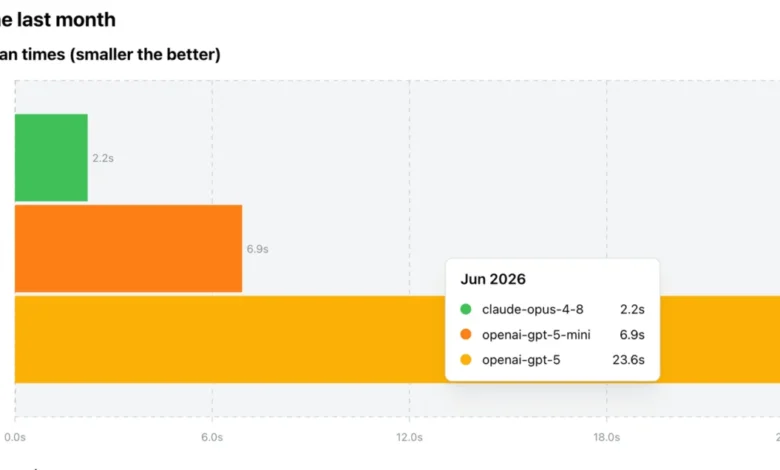
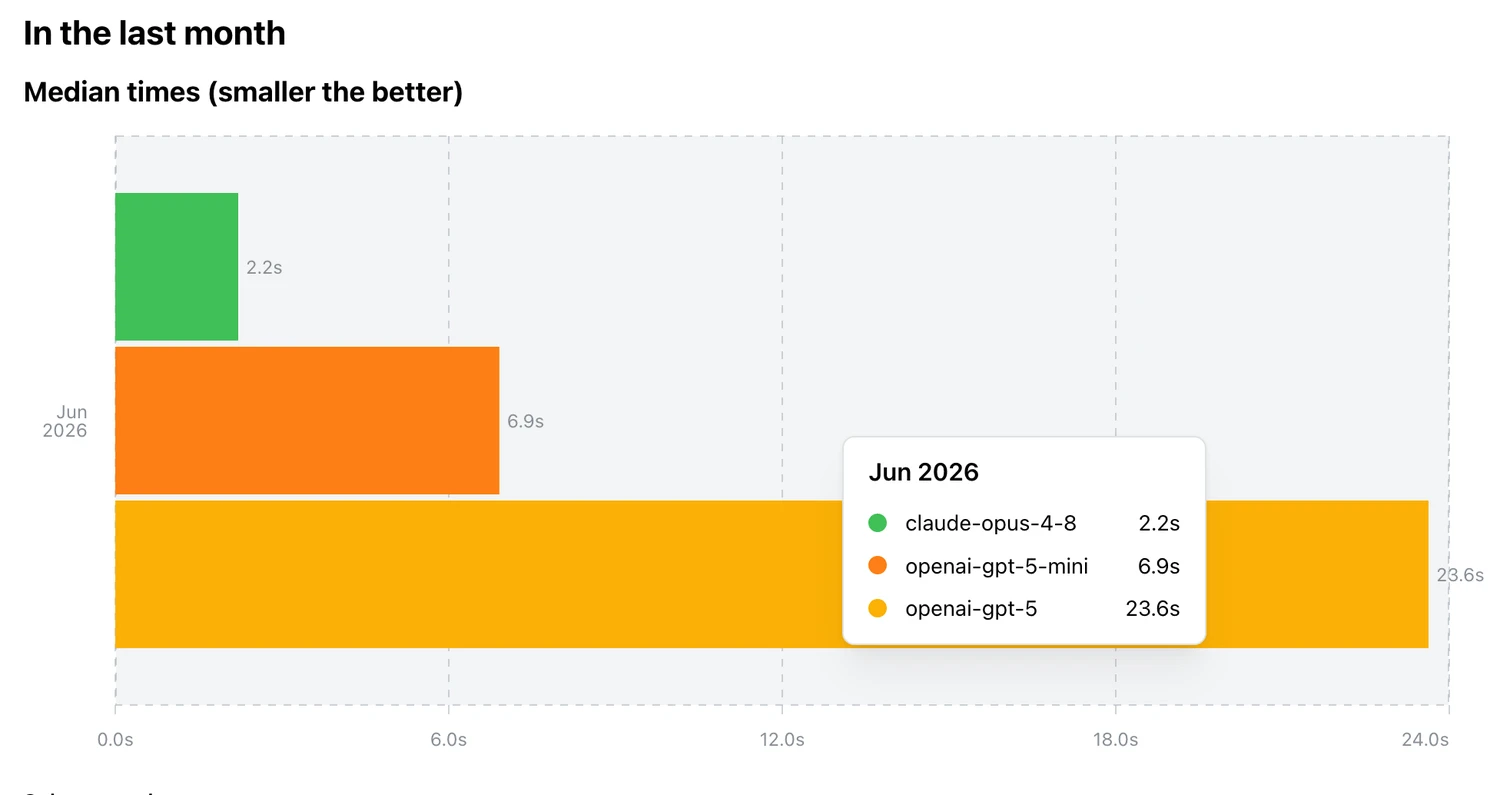
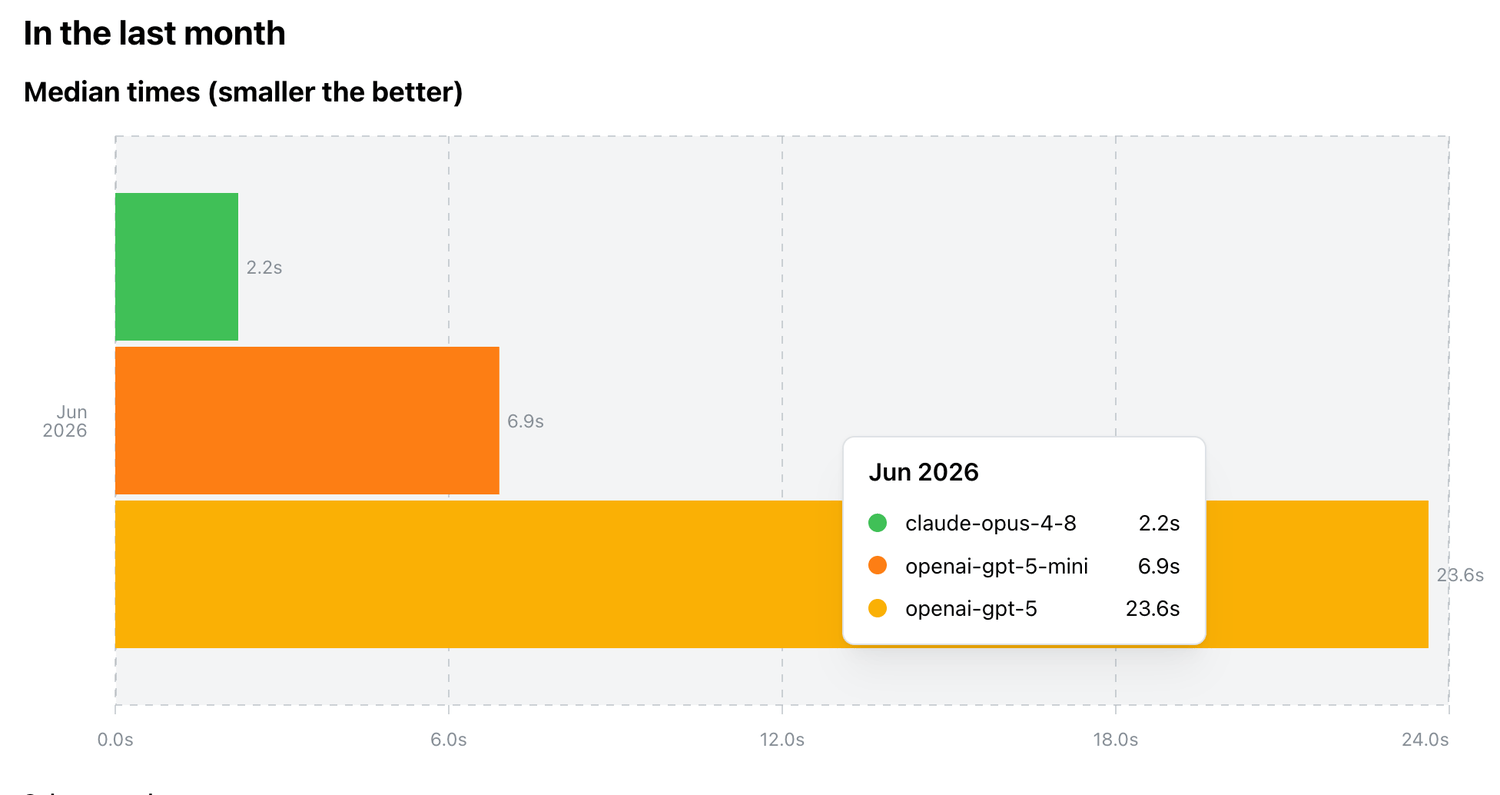
Perhaps the most striking revelation from the performance logs is the extreme latency associated with OpenAI’s flagship GPT-5 model. Despite its positioning as a premier frontier model, GPT-5 demonstrated a processing speed nearly ten times slower than that of Claude Opus 4.8. In the context of real-time or near-real-time applications, such a disparity is significant. A 10x increase in latency can disrupt user experience, increase the risk of connection timeouts, and necessitate more complex asynchronous processing architectures.
Industry analysts suggest that this latency may be a byproduct of the model’s sheer parameter scale or the specific "Mixture of Experts" (MoE) architecture utilized by OpenAI, which may require more intensive computational routing than Anthropic’s Claude 4.8 framework. While OpenAI has prioritized reasoning capabilities and broad-spectrum knowledge, the "time-to-first-token" and total inference duration remain a hurdle for developers seeking high-velocity output.
The Economics of the "Mini" Model Tiers
The experiment further highlighted the widening gap between standard flagship models and their "mini" counterparts. As of the current reporting period, the price of input tokens reflects a tiered strategy designed to segment users based on their budget and speed requirements. The data shows that the input token price for the GPT-5.4 variant stands at $2.50 per million tokens, whereas the GPT-5.4-mini is priced at a significantly lower $0.75 per million tokens.
This represents a more than three-fold (3.3x) difference in cost. For enterprises managing millions of daily interactions, the shift to a "mini" model represents a substantial reduction in operational expenditure (OpEx). However, the trade-off is not merely financial. The data confirms a significant "latency difference" between the mini and standard versions, with the mini models offering a much leaner, faster response cycle. This suggests that for tasks such as grammar correction or comment rewriting—where deep reasoning is less critical than linguistic fluency—the premium for the standard GPT-5 model may be difficult to justify.
Integration Methodologies: Native SDKs versus Abstraction Wrappers
A critical technical component of the study involved the evaluation of how these models are integrated into existing codebases. Traditionally, many developers have turned to abstraction libraries such as litellm to manage multiple AI providers through a unified interface. The logic behind using a wrapper is to simplify the code, allowing a single function call to interact with OpenAI, Anthropic, or Google models interchangeably.
However, comparative measurements between the native OpenAI Python SDK and the litellm wrapper revealed unexpected performance overhead. When measuring the total time from request initiation to response receipt, the native SDK consistently outperformed the abstraction layer. Specifically, the invocation using the native openai.OpenAI client was measurably faster than the litellm.completion method.
While the difference in a single call might be measured in milliseconds, the cumulative effect over thousands of requests is non-negligible. Technical observers note that every layer of abstraction introduces potential bottlenecks, including internal processing logic, translation of proprietary API parameters, and additional error-handling routines that may not be as optimized as the provider’s own library.
Security Implications and the Shift to Native Infrastructure
Beyond performance metrics, the experiment highlighted a growing trend in the developer community regarding security and supply chain integrity. The decision to move away from third-party wrappers like litellm in favor of native SDKs provided by Claude and OpenAI was driven largely by safety concerns.
The year has seen a rise in Common Vulnerabilities and Exposures (CVEs) associated with intermediary AI libraries. Because these wrappers often require access to highly sensitive API keys and act as a gateway for data transmission, any vulnerability within the wrapper can expose an organization’s entire AI infrastructure. By reverting to native SDKs, developers reduce their "attack surface," ensuring that they are only dependent on the security protocols of the model providers themselves. This "back-to-basics" approach in software architecture prioritizes stability and security over the convenience of a unified API.
Chronology of AI Integration Trends
The transition observed in this experiment reflects a broader timeline of generative AI adoption in the industry:
- Early 2023 (The Abstraction Phase): Rapid proliferation of tools like LangChain and LiteLLM as developers scrambled to integrate multiple emerging models without writing redundant code.
- Late 2023 (The Optimization Phase): Increasing awareness of latency issues. Developers began benchmarking "Time to First Token" (TTFT) as a critical KPI for user-facing applications.
- Early 2024 (The Mini-Model Revolution): Introduction of high-performance, low-cost models (e.g., GPT-4o-mini, Claude Haiku) which forced a re-evaluation of when to use flagship "frontier" models.
- Mid-2024 (The Security Hardening Phase): Following several high-profile CVEs in the AI ecosystem, a shift toward native SDKs and self-hosted abstraction layers became the standard for enterprise-grade security.
Broader Impact and Implications for the AI Market
The 10x latency gap between GPT-5 and Claude Opus 4.8 carries significant implications for the competitive standing of these tech giants. If OpenAI cannot bridge the speed gap, it risks losing market share in the "agentic" AI sector, where autonomous agents require rapid, iterative loops of communication to function effectively. Conversely, Anthropic’s ability to maintain high speeds while delivering "Opus-level" quality positions it as the preferred choice for real-time applications.
Furthermore, the pricing data suggests that the "token wars" are far from over. The 3x price difference between mini and standard models indicates a market that is becoming increasingly commoditized. As the quality gap between these tiers narrows, the "standard" models may eventually be reserved for only the most complex scientific and mathematical reasoning tasks, while the vast majority of web-based linguistic tasks migrate to the "mini" tier.
Conclusion
The findings from this large-scale analysis of 28,000 data points underscore a pivotal moment in AI development. For developers and enterprises, the choice of a model is no longer purely about which AI is "smarter." Instead, the decision-making matrix has expanded to include a sophisticated balance of latency, tokenomics, and the security of the integration layer.
As the industry moves forward, the preference for native SDKs over third-party wrappers is likely to intensify, driven by both the need for millisecond-level optimization and a stringent focus on cybersecurity. While GPT-5 remains a powerhouse of generative capability, its current latency profile and higher cost structure present clear opportunities for competitors like Anthropic to capture the efficiency-minded segment of the developer population. The data is clear: in the modern AI ecosystem, speed and security are becoming just as valuable as intelligence.