The landscape of artificial intelligence, machine learning, and data science is undergoing a rapid evolution, with July 2026 marking a period of significant innovation and refinement in methodologies and tools. Recent publications highlight a concerted effort across the industry to enhance software engineering principles, optimize large language models (LLMs), streamline AI agent development, and provide essential resources for professional growth. These developments collectively point towards a future where AI systems are not only more capable but also more efficient, reliable, and maintainable, driven by a blend of theoretical breakthroughs and practical engineering solutions. From architectural patterns that boost Python code extensibility to cutting-edge techniques for reducing LLM operational costs, the focus is squarely on moving AI from experimental stages to robust, production-ready applications. The emphasis on structured learning, practical project experience, and collaborative development tools underscores the industry’s commitment to fostering a skilled workforce capable of navigating these complex technological frontiers.
Modernizing Python Architecture: The Registry Pattern for Extensibility
A critical area of focus for developers is the architectural robustness of AI systems, particularly within Python, a language central to much of the AI ecosystem. One significant challenge addressed recently is the pervasive issue of long conditional chains, typically manifested as if-else or elif structures, which frequently hinder extensibility and violate fundamental software design principles. Kanwal Mehreen’s July 15, 2026, article, an Editor’s Pick, champions the adoption of the Registry Pattern as a superior alternative to these rigid conditional structures.
The problem with extensive if-else chains lies in their inherent brittleness. When new options, functionalities, or components are introduced into a system, these chains often necessitate direct modification, leading to increased complexity, potential for bugs, and difficulty in scaling. This directly contradicts the Open/Closed Principle, a cornerstone of object-oriented design, which states that software entities (classes, modules, functions, etc.) should be open for extension but closed for modification. In essence, adding new features should not require altering existing, working code.
The Registry Pattern offers an elegant solution by decentralizing dispatch logic. Instead of hardcoding conditional checks, components dynamically register themselves with a central lookup table or dictionary. When a particular operation is needed, the system simply queries this registry, retrieving the appropriate component or function based on a key (e.g., a string identifier). This approach transforms static, conditional logic into a dynamic, configuration-driven system. For instance, in an AI pipeline processing various data types, a new data processor can be added by simply registering it, without touching the core dispatch mechanism. This results in code that is significantly more maintainable, easily extensible, and less prone to errors when scaling or adapting to new requirements. Industry experts suggest that adopting such patterns is crucial for the long-term viability of complex AI projects, enabling rapid iteration and modular development, especially in fast-evolving fields like machine learning operations (MLOps). The shift reflects a growing maturity in AI software engineering, moving beyond mere algorithmic implementation to robust system design.
Cutting Edge Strategies for LLM Latency and Cost Reduction
The proliferation of large language models (LLMs) has brought unprecedented capabilities but also significant operational challenges, primarily concerning inference latency and computational costs. As LLMs move from research labs to production environments, optimizing their performance and efficiency becomes paramount for economic viability and user experience. Kanwal Mehreen, in another insightful piece published on July 14, 2026, outlined "12 Ways to Reduce LLM Latency and Inference Costs in Production," providing a comprehensive guide for practitioners.
The article underscores that relying solely on larger contexts or aggressive batching often falls short of optimal solutions. Instead, a multi-faceted approach is required. Key strategies include minimizing token usage, which directly impacts computational load and cost. This can involve optimizing prompt engineering, employing techniques like summarization or retrieval-augmented generation (RAG) to provide only necessary context, and using smaller, specialized models for specific sub-tasks. Model routing, another crucial technique, involves directing queries to the most appropriate and cost-effective LLM based on task complexity or domain. For example, simpler queries might go to smaller, faster models, while complex, nuanced requests are routed to larger, more capable ones.
Multi-layered caching strategies are also emphasized, storing frequently requested outputs or intermediate computations to avoid redundant inference calls. This could range from simple key-value caching of exact prompts to more sophisticated semantic caching. Furthermore, effective management of context budgets is highlighted as essential. Instead of always sending the maximum possible context, dynamically adjusting the context window based on the query’s needs can significantly reduce processing time and cost without sacrificing performance. The collective implication of these strategies is a substantial reduction in the total cost of ownership (TCO) for LLM-powered applications, making advanced AI more accessible and sustainable for businesses. According to recent industry reports, LLM inference costs can account for up to 80% of total operational expenses for AI-first companies, making these optimization techniques not just beneficial, but critical for survival and growth.
Building a Robust Data Portfolio: Real-World SQL Projects
For aspiring data professionals, demonstrating practical skills through a compelling portfolio is as crucial as academic qualifications. Abid Ali Awan’s article from July 13, 2026, titled "5 Real-World SQL Projects to Build Your Data Portfolio," offers concrete guidance on how to achieve this. The competitive nature of the data science and analytics job market demands more than theoretical knowledge; employers seek evidence of applied problem-solving abilities.
The article advocates for executing projects that span diverse domains, showcasing a versatile skill set. These domains include:
- Customer Churn Analysis: Applying SQL to identify patterns and predictors of customer attrition, demonstrating an understanding of business metrics and predictive analytics.
- Data Warehousing: Designing and implementing data schemas for analytical purposes, highlighting skills in data modeling, ETL processes, and database optimization.
- Sales Analysis: Utilizing SQL to uncover trends in sales data, perform segmentation, and evaluate marketing campaign effectiveness, showcasing business acumen and reporting capabilities.
- Banking Segmentation: Segmenting customer bases in financial institutions to tailor services or identify risk factors, demonstrating proficiency in advanced querying and analytical thinking.
- Healthcare Data Analysis: Working with complex medical datasets to derive insights into patient outcomes, resource allocation, or disease patterns, emphasizing data cleaning, ethical considerations, and domain-specific knowledge.
These projects collectively demonstrate a candidate’s ability to not only write efficient SQL queries but also to clean messy data, design robust data models, and, crucially, translate raw data into actionable business insights. This practical experience is often cited by hiring managers as the single most important factor distinguishing top candidates. The ability to articulate the business impact of data analysis is what truly elevates a portfolio from a collection of technical exercises to a testament of strategic value.
Streamlining AI Development Workflows with Git Worktrees
Collaborative development, particularly in the fast-paced realm of AI, presents unique challenges, especially when multiple agents or developers are working on the same codebase simultaneously. Shittu Olumide’s article on July 17, 2026, highlights "Git Worktrees for AI Development" as an essential infrastructure layer addressing these complexities.
Traditional Git workflows often involve frequent switching between branches, stashing changes, or maintaining multiple clones of a repository, which can be cumbersome and lead to context switching overhead or even accidental data loss. Git worktrees provide a more elegant solution by allowing developers to create multiple working directories, each linked to a different branch or commit, from a single repository. This means an AI developer can have several distinct projects or experiments running concurrently, each in its own isolated workspace, without interfering with others.
For AI development, where experiments often involve large datasets, custom environments, and complex model architectures, worktrees are particularly beneficial. They eliminate the risk of file collisions when different AI agents or human developers are modifying distinct parts of the code or data pipelines. More importantly, they prevent context loss, allowing developers to quickly switch between different experimental setups or feature branches without having to rebuild environments or reconfigure dependencies. This boosts productivity significantly, enabling parallel development and experimentation, which is crucial for the iterative nature of AI research and development. The rise of multi-agent AI systems further amplifies the need for such isolation, ensuring that each agent can operate within its designated environment without affecting others. Industry feedback suggests that teams adopting Git worktrees report faster iteration cycles and fewer integration issues.
Ensuring Reliability: Structured LLM Generation with ‘Outlines’
While LLMs have made remarkable strides in generating human-like text, ensuring their output adheres to specific, strict structures (like JSON, XML, or specific programmatic formats) remains a significant challenge. This unpredictability can be a major hurdle for integrating LLMs into robust, automated workflows, such as those involving API calls or data parsing. Iván Palomares Carrascosa’s article from July 13, 2026, introduces the "Outlines" library as a powerful tool for "Structured Language Model Generation."
The core innovation of Outlines lies in its ability to introduce deterministic certainty into LLM output by masking syntactically illegal tokens during the generation process. Traditional LLMs operate by predicting the next most probable token. Outlines intervenes in this process by applying a grammar or schema (e.g., a JSON schema, a regular expression, or a context-free grammar) to filter out any tokens that would lead to an invalid output structure at each step of generation. This means the LLM is guided to produce only outputs that conform to the specified format.
This capability is transformative for enterprise applications of LLMs. Developers can now reliably obtain strictly structured outputs, such as valid JSON objects for API interactions, YAML configurations, or even code snippets adhering to specific syntax rules. This dramatically reduces the need for post-processing parsing and validation, which is often brittle and error-prone. The enforcement of specific constraints during inference ensures that LLMs can be seamlessly integrated into software systems where data integrity and format consistency are non-negotiable. This advancement is a key step towards making LLMs not just powerful generative tools, but also dependable components within complex software architectures, bolstering their adoption in critical business processes.
Orchestrating Local AI Agents: A New Paradigm for Security and Cost-Efficiency
The burgeoning field of AI agents, capable of autonomous action and problem-solving, is driving innovation across various sectors. However, deploying and managing these agents, especially with concerns around data privacy, security, and operational costs, presents new complexities. Shittu Olumide’s article on July 15, 2026, addresses this with "7 Python Frameworks for Orchestrating Local AI Agents," advocating for a shift towards local infrastructure.
The traditional approach of relying heavily on cloud-based inference for AI agents can introduce significant costs due to API usage and data transfer, as well as potential security vulnerabilities when sensitive data is processed remotely. The frameworks highlighted in the article provide the necessary orchestration layers to build, coordinate, and run AI agents directly on local infrastructure, be it a developer’s machine, an on-premise server, or an edge device.
These Python frameworks enable developers to manage agent lifecycles, facilitate inter-agent communication, handle task scheduling, and ensure secure execution environments. By keeping operations local, organizations can gain tighter control over data privacy, comply with stricter regulatory requirements, and drastically reduce cloud computing expenses. This paradigm is particularly attractive for industries dealing with highly sensitive information, such as healthcare, finance, and defense, where data residency and control are paramount. The emergence of these local orchestration frameworks signifies a maturation of the AI agent ecosystem, providing practical pathways for deploying these intelligent systems in real-world, secure, and cost-effective scenarios. Experts predict a significant increase in decentralized AI deployments leveraging these types of local orchestration solutions over the next few years.
Context-Driven Development with Conductor for Gemini CLI
One of the persistent challenges in AI-assisted coding is maintaining consistent context for AI agents, ensuring they generate accurate and relevant code based on the overarching project specifications. Often, agents struggle with context loss across sessions or when dealing with large, complex codebases, leading to irrelevant suggestions or "hallucinations." Shittu Olumide’s July 14, 2026, article introduces "Conductor for Gemini CLI" as a solution, advocating for Context-Driven Development.
Conductor aims to resolve these context issues by persisting project specifications and architectural context directly within repository files. This means that instead of relying on ephemeral chat histories or limited prompt windows, the AI agent has access to a continuously updated, machine-readable representation of the project’s goals, constraints, design patterns, and existing codebase structure. This "single source of truth" resides alongside the code, making it accessible and consistent across all development sessions and for all agents interacting with the repository.
By enabling agents to draw upon this established project context, Conductor allows for the generation of significantly more accurate and compliant code. It helps prevent agents from diverging from the project’s established standards or attempting to implement features that conflict with the overall architecture. This approach not only boosts developer productivity by reducing the need for constant re-contextualization but also improves the quality and consistency of AI-generated code, making it more robust and easier to integrate. The implications are profound for agile development teams, where AI coding assistants can become truly integrated members, understanding and adhering to project-specific nuances without constant human oversight.
The Philosophy of Minimalism in AI Agent Design: Pi Coding Agents
In an era often characterized by feature bloat and increasingly complex software stacks, a counter-movement towards minimalism is gaining traction in AI agent development. Shittu Olumide’s article from July 16, 2026, delves into "Working with Pi Coding Agents," which advocates for a streamlined, minimalist architectural approach.
Pi Coding Agents’ philosophy centers on explicitly documenting the features it omits, arguing that reducing built-in complexity and injected context leads to more efficient and cost-effective agentic workflows. Many modern AI agent frameworks strive to provide a comprehensive suite of tools, integrations, and default behaviors, which can sometimes introduce unnecessary overhead, increase the learning curve, and limit flexibility for specific use cases.
By adopting a minimalist design, Pi Coding Agents suggests that developers gain greater control over their agent’s behavior and resource consumption. This approach encourages building only what is essential for a given task, thereby reducing the "surface area" for potential bugs, simplifying debugging, and lowering the computational footprint. In a world where AI inference costs are a major concern, leaner agents translate directly into more economical operations. This perspective sparks an important debate within the AI community: Is it better to have feature-rich frameworks that aim to cover all bases, or to embrace minimalist architectures that empower developers to build precisely tailored, highly efficient agents? The answer likely depends on the specific application, but Pi Coding Agents offers a compelling argument for the latter in scenarios where efficiency and cost-effectiveness are paramount.
Navigating the Agentic AI Landscape: Essential Free Resources
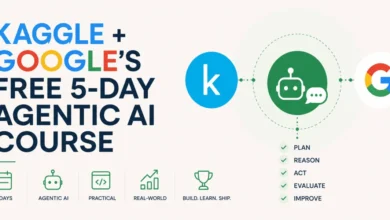
The rapid ascent of agentic AI necessitates accessible and structured learning pathways for practitioners eager to master this evolving domain. Nahla Davies’ article on July 17, 2026, "5 FREE Resources on Agentic AI," curates a vital set of materials designed to guide professionals beyond superficial demonstrations towards robust agent development.
The article emphasizes that moving beyond basic agent demos requires a foundational understanding across several key areas. The curated resources provide a structured path covering:
- Hands-on Framework Experience: Practical guides and tutorials for working with leading agentic AI frameworks, enabling direct application of concepts.
- Theoretical Foundations in Multi-Agent Systems: Understanding the principles of how multiple AI agents interact, cooperate, and compete to achieve complex goals. This includes topics like communication protocols, coordination mechanisms, and emergent behavior.
- Orchestration Patterns: Best practices for managing and coordinating the activities of multiple agents, ensuring efficient workflow, resource allocation, and task delegation.
- Essential Evaluation Techniques: Methods for assessing the performance, reliability, and safety of AI agents, moving beyond anecdotal observations to rigorous, data-driven validation.
The availability of high-quality free resources is crucial for democratizing access to cutting-edge AI knowledge, allowing a broader base of developers and researchers to contribute to the field. These resources often come from academic institutions, open-source projects, and community initiatives, underscoring the collaborative spirit driving AI innovation. For professionals, leveraging such structured learning paths is indispensable for acquiring the depth of knowledge required to build, deploy, and manage sophisticated agentic AI systems effectively. This sustained commitment to education is critical for addressing the growing demand for skilled AI practitioners.
Staying Ahead: Top YouTube Channels for AI Professionals
In a field as dynamic as artificial intelligence, continuous learning is not merely an advantage but a necessity. Vinod Chugani’s article from July 16, 2026, "10 YouTube Channels Keeping You Ahead in AI," provides a curated selection of resources for professionals seeking to stay abreast of the latest developments.
YouTube has emerged as a surprisingly robust platform for in-depth technical education, offering visual explanations and practical demonstrations that complement traditional learning methods. The channels highlighted by Chugani provide comprehensive, high-quality educational content spanning a wide array of critical AI topics:
- Machine Learning Theory: Explanations of fundamental algorithms, statistical concepts, and mathematical underpinnings.
- Deep Learning Implementation: Practical guides and coding tutorials for building and deploying neural networks using popular frameworks.
- Paper Analysis: Detailed breakdowns and discussions of cutting-edge research papers, making complex academic work accessible to a broader audience.
- LLM Application Development: Tutorials and best practices for building applications powered by large language models, including prompt engineering, fine-tuning, and integration strategies.
- Industry Trend Tracking: Analysis of market shifts, emerging technologies, and the broader economic and ethical implications of AI.
This curated list serves as an invaluable resource for accelerating professional AI knowledge, offering a flexible and accessible way to engage with new concepts and techniques. For busy professionals, these channels provide digestible content that can be consumed at their own pace, making lifelong learning in AI a more manageable endeavor. The rise of such informal learning channels underscores a broader shift in how technical knowledge is disseminated and acquired, complementing formal education with community-driven, expert-led content.
Conclusion: Navigating the Evolving AI and Data Science Landscape
The array of publications from July 2026 paints a vivid picture of an AI and data science landscape that is simultaneously advancing in capability and maturing in its engineering practices. The emphasis is clearly on building robust, efficient, and scalable systems, moving beyond initial experimental phases into reliable production deployments. From Python’s Registry Pattern enhancing code extensibility to Git Worktrees streamlining collaborative AI development, the focus on foundational software engineering principles is evident.
The challenges and opportunities presented by Large Language Models are being met with sophisticated optimization strategies, aiming to reduce latency and costs, alongside innovative libraries like ‘Outlines’ that ensure structured, reliable outputs. The burgeoning field of AI agents is also seeing significant advancements, with frameworks emerging for local orchestration that prioritize security and cost-effectiveness, and development methodologies like Conductor promoting context-driven coding. Even philosophical approaches like that of Pi Coding Agents are pushing for minimalist, efficient designs.
Crucially, the industry recognizes the need for continuous skill development, as highlighted by resources for building strong SQL portfolios and curated lists of educational YouTube channels. The provision of free, structured resources for Agentic AI further underscores a commitment to democratizing access to cutting-edge knowledge.
Collectively, these trends indicate a dynamic ecosystem where innovation is coupled with practicality. The future of AI and data science hinges on a blend of algorithmic brilliance and sound engineering, enabling professionals to build intelligent systems that are not only powerful but also maintainable, secure, and economically viable. For practitioners, adaptability and a commitment to lifelong learning remain the most critical assets in navigating this exciting and ever-evolving technological frontier.