Mimesis Python Library Emerges as a Key Tool for Anonymizing Sensitive Production Data in Data Science Projects

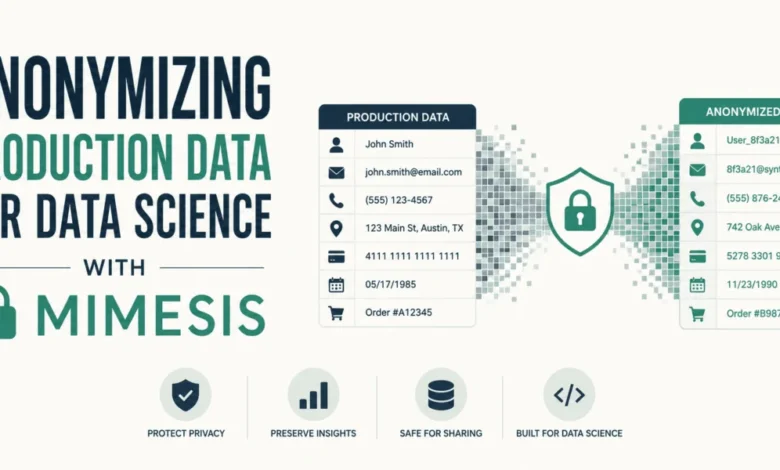
The increasing confluence of big data, advanced analytics, and stringent global privacy regulations has placed an unprecedented emphasis on the secure handling of sensitive information. In this intricate landscape, the ability to anonymize production data effectively has become not merely a best practice but a critical imperative for virtually every real-world data science project aiming to deploy data-driven products, services, or solutions. A notable open-source solution gaining traction in this domain is Mimesis, a Python library distinguished by its capacity to generate realistic synthetic data with high performance, all while operating locally and offering a robust, free data pipeline solution. This article delves into the utility of Mimesis, illustrating its application in anonymizing sensitive production data through a practical, step-by-step example, and contextualizing its significance within the broader data privacy ecosystem.
The Imperative of Data Privacy in Modern Analytics
The digital age has ushered in an era where data is often referred to as the new oil, fueling innovation and economic growth. However, this vast repository of information frequently contains Personally Identifiable Information (PII) such as names, email addresses, phone numbers, and other unique identifiers that, if exposed or misused, can lead to severe privacy breaches, financial penalties, and a catastrophic loss of consumer trust. Governments and regulatory bodies worldwide have responded to these risks by enacting comprehensive data protection laws.
The General Data Protection Regulation (GDPR) in Europe, the California Consumer Privacy Act (CCPA) in the United States, and numerous other national and international statutes like HIPAA (for healthcare data) and Brazil’s LGPD impose strict rules on how personal data is collected, processed, stored, and shared. Non-compliance can result in exorbitant fines, reaching tens of millions of euros or a significant percentage of a company’s annual global turnover, alongside reputational damage that can be even more costly in the long run. For instance, in 2023 alone, fines under GDPR surpassed several billion euros, highlighting the financial stakes involved. Beyond legal mandates, ethical considerations also compel organizations to safeguard user privacy, fostering a culture of responsible data stewardship.
Data science teams frequently require access to production-like datasets to develop, test, and refine algorithms and models. However, using actual customer data, even for internal development, often clashes with these privacy regulations and internal corporate policies. This creates a dilemma: how can data scientists build robust solutions if they cannot interact with data that mirrors real-world complexity and characteristics? The answer lies in effective data anonymization and the generation of synthetic datasets that retain the statistical properties and structural integrity of the original data without exposing sensitive PII.
Mimesis: A Solution for Realistic Data Anonymization
Mimesis stands out as a powerful, open-source Python library designed to address this challenge by generating realistic "fake" data. Unlike simplistic masking or pseudonymization techniques that might still leave data vulnerable to re-identification attacks, Mimesis allows for the wholesale replacement of sensitive fields with synthetically generated, yet contextually appropriate, alternatives. The library’s strengths include:
- Realism: Mimesis generates data that looks and feels authentic, mimicking real-world patterns for names, addresses, emails, phone numbers, and more, across various locales. This realism is crucial for data science projects where the structure and format of data are important for model training and testing.
- Performance: Built for efficiency, Mimesis can generate large volumes of data quickly, making it suitable for populating extensive test environments or creating substantial datasets for machine learning model development.
- Local Execution: Being a Python library, Mimesis runs entirely on local infrastructure, ensuring that sensitive production data never leaves the controlled environment, thereby mitigating cloud-related privacy concerns or data transfer risks.
- Open-Source & Free: Its open-source nature means it is freely available, continually improved by a community of developers, and highly customizable, offering a cost-effective solution for data anonymization.
The library offers a diverse set of "providers"—modules dedicated to generating specific types of data (e.g., Person, Address, Datetime, Finance, Internet). These providers support numerous locales, enabling the generation of culturally relevant data for international applications.
A Step-by-Step Guide to Anonymizing Data with Mimesis
To illustrate the practical application of Mimesis, let’s consider a common scenario: anonymizing customer data from a software product’s subscription system. This demonstration is designed to be easily reproducible in any Python IDE or notebook environment, such as Google Colab.
1. Installation and Setup:
Before utilizing Mimesis, it must be installed in your Python environment. This is typically done via pip:
pip install mimesis pandasIf operating within a Google Colab or Jupyter notebook environment, prefixing the command with ! is necessary: !pip install mimesis pandas. It’s also advisable to work within a virtual environment to manage dependencies effectively, although for this simple demonstration, direct installation is sufficient.
2. Creating a Mock Production Dataset:
For our scenario, we will synthetically generate a small dataset representing customer information, including highly sensitive PII. This dataset mimics the structure of real production data that a data science team might encounter.
import pandas as pd

# Creation of a mock "production" customer dataset
production_data =
    'user_id': [101, 102, 103, 104, 105, 106, 107, 108, 109, 110],
    'real_name': ['Alice Smith', 'Bob Jones', 'Charlie Brown', 'Diana Prince', 'Eve Adams', 'Frank White', 'Grace Hall', 'Henry King', 'Ivy Lee', 'Jack Green'],
    'email': ['[email protected]', '[email protected]', '[email protected]', '[email protected]', '[email protected]', '[email protected]', '[email protected]', '[email protected]', '[email protected]', '[email protected]'],
    'phone': ['555-0100', '555-0101', '555-0102', '555-0103', '555-0104', '555-0105', '555-0106', '555-0107', '555-0108', '555-0109'],
    'subscription_tier': ['Premium', 'Basic', 'Basic', 'Enterprise', 'Premium', 'Basic', 'Enterprise', 'Premium', 'Basic', 'Enterprise']


df = pd.DataFrame(production_data)
print("--- Original Sensitive Data ---")
print(df.head())
In this dataset, user_id and subscription_tier might not be considered sensitive for certain analyses, but real_name, email, and phone are unequivocally sensitive PII. The goal is to replace these sensitive fields while preserving the integrity of the user_id and subscription_tier columns, which are often crucial for understanding user behavior and segmentation.
3. Initializing a Mimesis Provider:
Mimesis operates through "providers," which are specialized generators for different types of data. Since our sensitive data pertains to individuals, the Person provider is the most appropriate choice. We also specify the locale (e.g., Locale.EN for English) and a random seed for reproducibility. The seed ensures that if the code is run multiple times, the generated fake data will be consistent, which is valuable for testing and debugging.
from mimesis import Person
from mimesis.locales import Locale

# Initializing a Person provider for English locales
# Using a seed for reproducible fake data generation
person = Person(locale=Locale.EN, seed=42)
The Person provider offers a wide array of functions to generate various personal details, from full names and email addresses to job titles and birth dates. This flexibility allows data scientists to replace PII with highly realistic, yet entirely fabricated, substitutes.
4. Anonymizing Personally Identifiable Information (PII):
The core of the anonymization process involves iterating through the DataFrame and replacing the sensitive columns with newly generated data from the Mimesis Person provider. This is achieved by applying the appropriate Mimesis functions to each record.
# 1. Replacing real names with fake, realistic names
df['real_name'] = [person.full_name() for _ in range(len(df))]

# 2. Replacing real emails with fake ones
df['email'] = [person.email() for _ in range(len(df))]

# 3. Replacing real phone numbers with fake ones
df['phone'] = [person.telephone() for _ in range(len(df))]

# 4. Renaming the column to reflect that it is no longer the real name
df.rename(columns='real_name': 'anon_name', inplace=True)
In this step:
person.full_name()generates a plausible full name.person.email()generates a realistic email address, often incorporating parts of a fake name or common email patterns.person.telephone()generates a valid-looking phone number format for the specified locale.
The renaming of the real_name column to anon_name is a crucial best practice. It serves as a clear indicator that the data in that column has been transformed and is no longer the original sensitive information. This transparency helps prevent accidental misuse and maintains clarity in downstream analyses.
5. Verifying the Anonymized Results:
After performing the anonymization, it is essential to verify that the sensitive fields have indeed been transformed and that the non-sensitive fields remain untouched.
print("n--- Anonymized Data for Data Science Analyses ---")
print(df.head())
Output:
--- Anonymized Data for Data Science Analyses ---
   user_id         anon_name                     email            phone
0      101    Anthony Reilly     [email protected]     +13312271333
1      102           Kai Day     [email protected]  +1-205-759-3586
2      103  Cleveland Osborn      [email protected]     +13691067988
3      104       Zack Holder   [email protected]  +1-574-481-3676
4      105   Anthony Herrera  [email protected]     +1-447-382-7065

  subscription_tier
0           Premium
1             Basic
2             Basic
3        Enterprise
4           Premium
The output clearly demonstrates that anon_name, email, and phone columns now contain entirely different, yet highly realistic, synthetic data. The user_id and subscription_tier columns, which were not targeted for anonymization, remain perfectly intact. This confirms the successful transformation of sensitive data into a privacy-preserving format suitable for various data science tasks, such as exploratory data analysis, model development, and internal testing, without the risk of exposing real individuals’ information.
Broader Applications and Best Practices
While this example focused on basic PII, Mimesis’s capabilities extend far beyond. It can generate a myriad of data types, including:
- Geographical data: Addresses, cities, countries, postal codes.
- Financial data: Credit card numbers, IBANs, currencies.
- Internet-related data: IP addresses, URLs, user agents.
- DateTime data: Dates, times, timezones.
This versatility makes Mimesis invaluable for a wide range of anonymization needs across different industries. For instance, in healthcare, patient IDs or specific dates could be anonymized. In e-commerce, order IDs or customer loyalty numbers could be replaced while maintaining product category or purchase behavior data.
Key Best Practices for Data Anonymization with Mimesis:
- Identify All Sensitive Fields: Conduct a thorough audit to identify every piece of PII or other sensitive information within your dataset. Overlooking even one field can compromise the entire anonymization effort.
- Choose Appropriate Providers: Select Mimesis providers and functions that best match the type of data being anonymized to ensure realism and consistency.
- Maintain Data Utility: While anonymizing, strive to preserve the structural and statistical properties of the data necessary for your analytical goals. Mimesis excels here by generating data in the correct format and with plausible values.
- Use Seeds for Reproducibility: Employing a random seed (
seed=42in our example) is crucial for consistent synthetic data generation, especially in testing and development environments where repeatable results are desired. - Rename Columns: Clearly rename anonymized columns to indicate their transformed state (e.g.,
real_nametoanon_name). This acts as a visual cue and prevents confusion. - Combine with Other Techniques (if necessary): For extremely high-stakes privacy requirements, Mimesis can be part of a multi-layered anonymization strategy, potentially combined with techniques like k-anonymity, differential privacy, or more advanced synthetic data generation methods (e.g., using Generative Adversarial Networks for statistically identical data). However, for many practical data science applications focused on PII replacement, Mimesis offers a robust standalone solution.
- Regular Audits: Periodically review your anonymization processes and the resulting datasets to ensure they remain compliant with evolving regulations and sufficiently protect privacy.
Implications and Broader Impact
The availability and ease of use of tools like Mimesis have significant implications for the data science community and businesses at large:
- Accelerated Development: Data scientists can develop and test models more rapidly without waiting for lengthy data provisioning or navigating complex privacy approval processes.
- Enhanced Collaboration: Anonymized datasets can be more safely shared across teams, with external partners, or even publicly (for research purposes), fostering collaboration without compromising privacy.
- Reduced Risk: By eliminating PII from development environments, organizations drastically reduce the risk of data breaches and non-compliance penalties. This strengthens trust with customers and stakeholders.
- Cost Efficiency: As an open-source tool, Mimesis provides a cost-effective alternative to commercial synthetic data generation solutions, making advanced privacy techniques accessible to a broader range of organizations.
- Ethical AI: By promoting responsible data handling, Mimesis contributes to the broader movement towards ethical AI development, ensuring that data-driven innovations are built on a foundation of privacy and trust.
Iván Palomares Carrascosa, a recognized leader and adviser in AI, machine learning, deep learning, and LLMs, frequently emphasizes the critical balance between leveraging data for insights and upholding stringent privacy standards. Tools like Mimesis embody this philosophy, providing practical solutions for real-world challenges. "The ability to rapidly iterate on data models while maintaining absolute privacy is no longer a luxury but a fundamental requirement for competitive advantage and ethical stewardship in AI," states Palomares Carrascosa. "Mimesis offers a direct, powerful pathway to achieving this."
Conclusion
In an era defined by data and the ever-present demand for privacy, libraries like Mimesis are indispensable. This article has demonstrated how Mimesis, a powerful Python library for anonymized and fake data generation, can transform a sensitive production dataset into a version that can be safely used for further analysis without compromising private information like real people’s PII. Its high performance, realism, local execution, and open-source nature make it an attractive and practical solution for data scientists and organizations grappling with the complexities of data privacy and compliance. As the regulatory landscape continues to evolve and data volumes grow, the strategic adoption of robust anonymization tools like Mimesis will be paramount for fostering innovation responsibly and securely in the data-driven world.