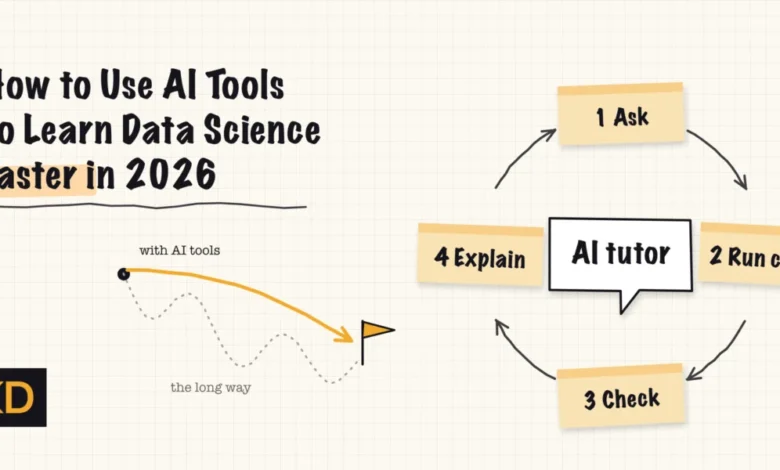
The landscape of data science education has undergone a seismic shift as we enter 2026, transitioning from traditional, static curriculum models to dynamic, AI-augmented learning environments. As recently as 2023, students often spent significant portions of their study time debugging simple syntax errors or navigating fragmented documentation. Today, generative AI tools have effectively compressed these friction points, allowing learners to focus on high-level analytical strategy rather than rote implementation. However, this increased efficiency presents a new pedagogical challenge: the risk of cognitive atrophy. To master data science in the current climate, learners must navigate the fine line between utilizing AI as a force multiplier and falling into the trap of passive dependency.
The Evolution of the Learning Curve (2020–2026)
The chronology of data science education mirrors the rapid advancement of Large Language Models (LLMs). In the early 2020s, the primary barriers to entry were high costs for specialized bootcamps and the steep learning curve associated with complex library dependencies. By 2024, the integration of conversational AI into Integrated Development Environments (IDEs) began to normalize.
Industry data from late 2025 indicates that learners utilizing AI-assisted workflows complete technical onboarding projects approximately 35% faster than their counterparts who rely solely on traditional documentation. This acceleration is largely attributed to the reduction in "context switching"—the time spent jumping between Stack Overflow, official library documentation, and the IDE. As of early 2026, the industry standard has moved toward "AI-native" learning platforms, such as DataCamp and Dataquest, which incorporate real-time feedback loops that mirror the professional experience of pair programming with a senior mentor.
Establishing the Foundational Imperative
Despite the sophistication of AI, industry experts maintain that foundational knowledge remains non-negotiable. The consensus among educators is that AI serves as a powerful tutor only when the student possesses the baseline literacy to verify the output. If a learner cannot mathematically describe the mechanics of a confusion matrix, they lack the diagnostic capability to determine if an AI-generated explanation is hallucinatory or accurate.
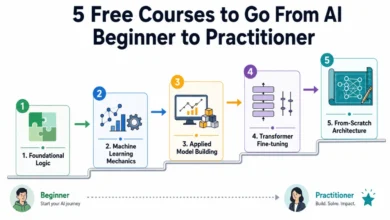
Professional guidelines suggest that the first phase of any data science journey—spanning approximately 200 to 400 hours of study—should focus on core Python programming, linear algebra, calculus, and basic statistical inference. During this period, AI should be relegated to the role of a supplementary guide rather than a primary instructor. Once the user is comfortable with libraries like pandas, NumPy, and scikit-learn, the role of AI shifts from a crutch to a "force multiplier," allowing the student to explore advanced edge cases that would previously have required hours of manual research.
Conversational AI as the Modern "Office Hours"
The role of the AI assistant has effectively replaced the traditional "office hours" model of the university setting. Platforms such as ChatGPT and Claude provide instant, context-aware assistance, yet their utility is contingent upon the user’s prompting strategy. Rather than using these tools to simply generate code, advanced learners are now utilizing them for "Socratic tutoring."
Techniques currently gaining traction in self-study programs include:
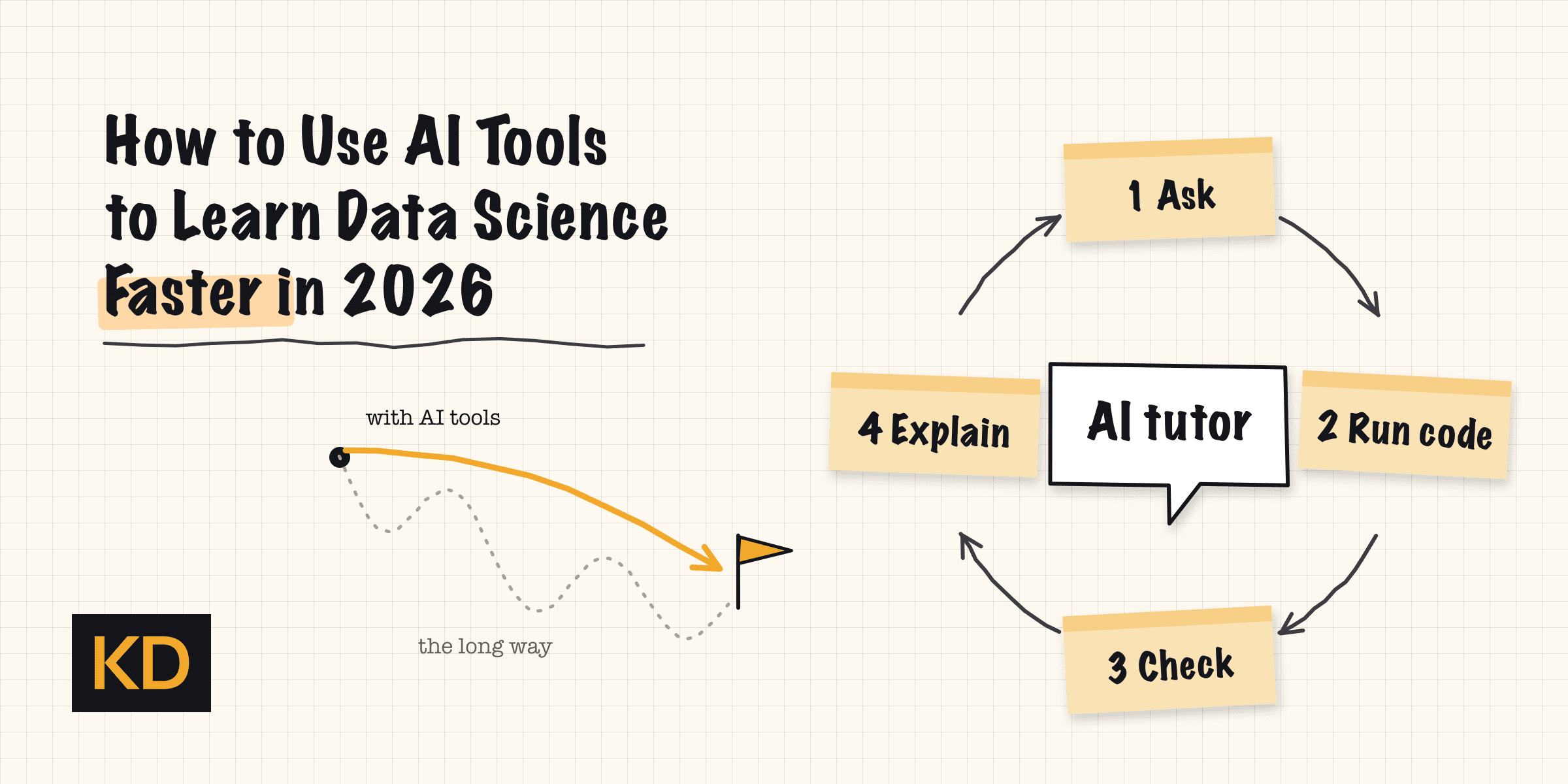
- Active Retrieval Practice: Instead of reading through documentation, learners are increasingly prompting AI to generate targeted quizzes on specific machine learning architectures, such as the nuances between Bagging and Boosting, requiring the student to articulate the concept before revealing the correct answer.
- The "Rubber Ducking" Method 2.0: By explaining their code logic to an AI, learners expose gaps in their own understanding. If the AI identifies a logical fallacy in the user’s code, it prompts the learner to explain why they chose a specific function, fostering a deeper mental model of data manipulation.
- Structured Peer Review: By treating an AI as a virtual senior data scientist, students can paste their code and specifically request feedback on "idiomatic structure, memory efficiency, and readability," rather than just asking for a functional fix.
The Rise of the AI Orchestrator
The job description for entry-level data scientists has evolved significantly. Employers are increasingly looking for "AI orchestrators"—individuals who understand how to integrate LLMs into existing data pipelines using frameworks like LangChain or LlamaIndex. This shift implies that the curriculum for 2026 and beyond must include RAG (Retrieval-Augmented Generation) systems and agentic workflows.
The impact of this shift on the job market is measurable. Internal hiring reports from mid-sized technology firms indicate that candidates who demonstrate proficiency in building AI-integrated applications—even at a prototype level—are viewed as more "day-one ready" than those who only possess traditional predictive modeling skills. This has created a secondary industry of "portfolio-building" where AI is used to scope out project ideas, clean messy datasets, and document findings, allowing the student to produce high-quality case studies that demonstrate real-world utility.
Fact-Based Analysis of Implementation Risks
While the advantages of AI-accelerated learning are clear, educational researchers warn of a "de-skilling" effect. If a student becomes overly reliant on code completion tools like GitHub Copilot or Cursor, they risk failing to develop the "muscle memory" required to debug code during high-pressure scenarios, such as live technical interviews or production outages.
A balanced pedagogical approach, supported by many senior practitioners, involves the "Three-Attempt Rule." Before prompting an AI for assistance, a learner should spend a minimum amount of time attempting the solution independently. This ensures that the brain has engaged with the problem, making the subsequent AI-generated solution a point of comparison rather than a substitute for effort.
Strategic Recommendations for 2026
For those embarking on a data science career today, the recommended toolkit is focused on integration and efficiency:
- Environment: Utilize VS Code integrated with GitHub Copilot to maintain a standard professional workflow.
- Theory: Use Perplexity for citation-heavy research to ensure that explanations are rooted in peer-reviewed documentation rather than probabilistic hallucinations.
- Practice: Engage in project-based learning via Jupyter Notebooks, using AI to help scope projects that solve tangible problems, such as automating a personal financial tracker or scraping and analyzing public health data.
- Mentorship: Leverage tools like Claude for multi-step reasoning tasks, which currently outperform other models in pedagogical clarity and complex logical decomposition.
The Road Ahead
As AI continues to lower the barrier to entry, the competitive advantage for data scientists will not be the ability to write basic SQL queries or implement a random forest model—these tasks are increasingly becoming commoditized. Instead, the premium is shifting toward critical thinking, system architecture, and the ability to verify and interpret the outputs provided by increasingly autonomous systems.
In summary, the role of the learner in 2026 is no longer to be a repository of syntax and algorithms, but rather a curator of information and an orchestrator of intelligent systems. By maintaining a rigorous adherence to fundamentals while embracing the productivity gains offered by AI, students can navigate the current learning landscape with greater speed, depth, and professional relevance than in any previous era of data science. The technology exists to accelerate the journey, but the responsibility for deep, durable learning remains firmly with the practitioner.