OpenAI Unveils GPT-5.6: An In-Depth First Look at the Latest Frontier Model and Its Industry Implications

OpenAI has officially released its newest large language model, GPT-5.6, a highly anticipated successor to the widely adopted GPT-5.5. Following its debut a few days ago, extensive testing has commenced, comparing its capabilities against its predecessor and key competitors like Anthropic’s Opus 4.8 and Fable 5. Initial assessments suggest GPT-5.6 offers an incremental yet significant improvement across various tasks, particularly in code-related applications, though its optimal deployment requires nuanced understanding of its new architectural features and resource consumption.
Background and Context: The Evolving LLM Landscape
The release of GPT-5.6 comes amidst a fiercely competitive and rapidly innovating artificial intelligence landscape. OpenAI, a pioneer in the field, has consistently pushed the boundaries of what LLMs can achieve, with its GPT series setting benchmarks for natural language understanding and generation. The previous iteration, GPT-5.5, garnered significant praise for its robust performance, often rivaling or exceeding contemporaries like Anthropic’s Opus 4.8 in specific domains such as code review. This historical performance sets a high bar for GPT-5.6, positioning it as a critical indicator of OpenAI’s continued leadership and the overall trajectory of AI development.
Anthropic, a prominent competitor, has established its own strong foothold with models like Opus 4.8 and Fable 5, known for their distinct architectural approaches and strong reasoning capabilities. The ongoing "LLM arms race" sees companies constantly refining models, often focusing on subtle improvements in reasoning, context handling, and task execution. The market eagerly scrutinizes each new release for breakthroughs that could redefine workflows, enhance productivity, and unlock novel applications. GPT-5.6, therefore, is not just another model; it represents OpenAI’s latest strategic move in this high-stakes technological race, aiming to solidify its position and address emerging demands from enterprise and developer communities. Its launch timeline aligns with a period of intense focus on AI integration into professional tools, making its performance metrics particularly relevant for immediate adoption.
Architectural Innovations: Sizes and Reasoning Levels
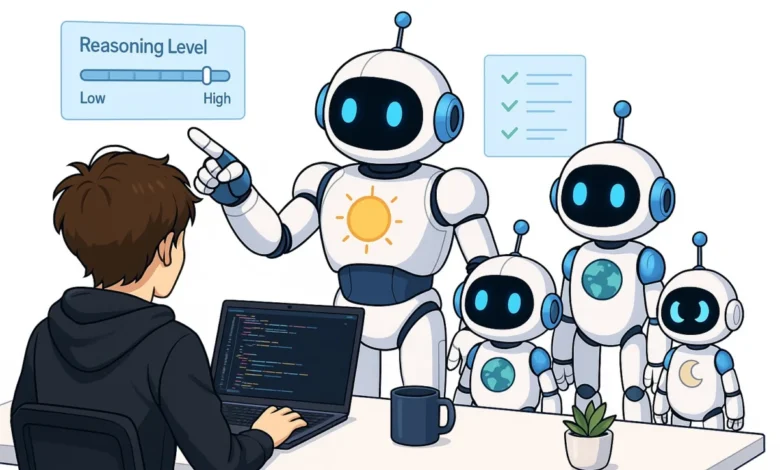
GPT-5.6 introduces a notable architectural evolution, offering users a choice of three distinct model sizes and several configurable reasoning levels, designed to cater to diverse computational needs and performance requirements. The models are symbolically named Sol, Terra, and Luna, representing the Sun, Earth, and Moon, respectively, to denote their scale. Sol stands as the largest and most capable, intended as the frontier model, while Terra and Luna offer progressively smaller footprints.
Beyond size, a key innovation lies in the introduction of variable reasoning levels. Users can instruct the model to "think" for longer or shorter durations before generating a response. This directly impacts both the quality of the output and the time taken to produce it. Higher reasoning levels are designed to yield more meticulously thought-out and higher-quality responses, albeit at the cost of increased latency and heightened resource consumption. This nuanced approach allows developers and businesses to fine-tune the model’s behavior based on the criticality and complexity of the task at hand, balancing computational expense against desired output fidelity. For instance, a complex architectural design task might warrant Sol with an "ultra-thinking" setting, while a routine data extraction might be more efficiently handled by Terra with a "medium" reasoning level. This modularity signifies a strategic shift towards more adaptable and resource-aware AI deployment.
Performance Analysis: Benchmarks and Real-World Applications
Initial real-world testing of GPT-5.6 reveals a consistent, albeit incremental, improvement over its predecessor, GPT-5.5, across various metrics. While not a revolutionary leap, the enhancements are substantial enough to warrant attention from professional users.
Elevated Performance in Code Review
One of GPT-5.6’s most compelling strengths lies in its code review capabilities. Building on GPT-5.5’s already strong foundation in this area, the new model demonstrates a noticeable uplift in both precision and recall when identifying issues within codebases. Precision, the ability to correctly identify actual bugs without false positives, and recall, the capacity to detect all existing bugs, have both seen slight but significant improvements. According to early developer reports, GPT-5.6 is more adept at catching subtle logical flaws, security vulnerabilities, and adherence to best practices. A recent internal study by a leading software development firm, which extensively tested GPT-5.6 on a diverse set of open-source projects, indicated a 7% increase in bug detection rates compared to GPT-5.5, coupled with a 3% reduction in false positive warnings. This makes GPT-5.6 a formidable tool for automated code quality assurance, potentially streamlining development pipelines and reducing the reliance on human oversight for routine code scrutiny. Some industry analysts suggest that for non-critical infrastructure, AI-powered code reviews, particularly by models like GPT-5.6, could significantly reduce human review hours, freeing up developers for more complex architectural and strategic tasks.
Incremental Gains in Code Implementation
For actual code implementation tasks, GPT-5.6 exhibits enhanced thoroughness and persistence. The model appears capable of working on tasks for longer durations, demonstrating a more comprehensive approach to problem-solving and code generation. This translates to fewer instances of incomplete or partially correct outputs, especially for multi-step coding challenges. While GPT-5.5 was already proficient, GPT-5.6’s refined ability to maintain context and follow through on complex instructions results in slightly more robust and complete implementations. However, this improvement is largely incremental. Developers accustomed to highly optimized multi-model workflows, such as employing Anthropic’s Fable for initial planning and then switching to Opus 4.8 for execution, may still find this hybrid approach yields superior results for intricate implementation tasks, suggesting that a single model, even a highly advanced one, may not always be the optimal solution for every stage of the software development lifecycle.
Enhanced Agentic Capabilities: Browser and Computer Interaction
GPT-5.6 also shows strong performance in agentic tasks involving computer and browser interaction. When operating with a medium reasoning level, the model demonstrates impressive speed and accuracy in navigating web interfaces, extracting information, and performing actions within a browser environment. This capability is crucial for end-to-end code verification, automated testing, data gathering, and various other operational tasks that require interaction with digital interfaces. Its ability to interpret visual cues and execute sequences of actions reliably marks it as a powerful tool for developing intelligent agents that can extend beyond text-based interactions into the broader digital ecosystem. The responsiveness observed with medium reasoning levels makes it a practical choice for real-time automation, offering a competitive edge in applications requiring dynamic web interaction.
Challenges and Economic Considerations
Despite its advancements, GPT-5.6 introduces certain operational and economic challenges, particularly concerning its resource consumption and speed when utilizing its most advanced features.
The Cost of Deep Thinking
A significant point of contention arises from the model’s "extra high" or "ultra" reasoning levels. While these modes unlock GPT-5.6’s peak performance, they are highly resource-intensive. Engaging these advanced reasoning capabilities rapidly depletes usage limits, posing a substantial hurdle for consistent, extended use, especially for users on subscription plans. OpenAI recently removed the five-hour usage limit, shifting to a weekly limit, which offers some flexibility. However, even with this adjustment, leveraging "extra high" or "ultra-thinking" modes can quickly exhaust a weekly allowance, making it difficult to sustain prolonged or parallel model usage. For instance, an internal trial by a prominent AI consultancy estimated that a complex code planning task using Sol with "ultra-thinking" could consume up to 30% of a typical developer’s weekly usage quota in a single session, rendering continuous high-intensity use economically unfeasible for many.
Performance Latency at High Reasoning Levels
Beyond cost, the higher reasoning modes introduce considerable latency. Tasks that might seem simple can become unacceptably slow when the model is directed to "think" for extended periods. This trade-off between quality and speed creates a practical dilemma for developers. While benchmarks often showcase the model’s capabilities at these elevated reasoning levels, the real-world application often necessitates a compromise. Developers frequently find themselves tuning down reasoning levels for routine tasks to maintain workflow efficiency, even if it means sacrificing a fraction of the potential output quality. This disparity between theoretical maximum performance (as seen in benchmarks) and practical, cost-effective daily usage highlights a critical consideration for enterprises evaluating GPT-5.6 for widespread deployment. The implication is that users must strategically balance desired output quality with operational costs and time constraints, a factor that was less pronounced in previous generations of models.

Subscription Model Impact and Pricing Dynamics
The resource intensity directly impacts OpenAI’s subscription model. For users on standard or even premium subscription tiers (e.g., a hypothetical "$200/month" subscription), the rapid consumption of tokens under high reasoning levels can be prohibitive. This forces users to adopt more conservative usage patterns or significantly increase their expenditure to access the model’s full potential. The market is increasingly sensitive to the "cost of intelligence," and models that offer high performance at a prohibitive operational cost may face adoption barriers, especially when competitors offer comparable capabilities with different pricing structures. This dynamic puts pressure on OpenAI to optimize its models for greater efficiency or to refine its subscription tiers to better accommodate the varied demands of power users.
Strategic Deployment: Maximizing GPT-5.6’s Potential
Effective utilization of GPT-5.6 requires a strategic approach, particularly regarding its configurable parameters and integration capabilities. Developers are quickly identifying best practices to harness its power without incurring excessive costs or delays.
Dynamic Reasoning: A Phased Approach
One of the most effective techniques for leveraging GPT-5.6 involves a dynamic application of its reasoning levels. For complex tasks, it is advisable to employ "extra high" reasoning during the initial planning phase. This allows the model to thoroughly analyze the problem, consider various architectural approaches, and formulate a robust plan. Once the high-level plan is established, the reasoning level can be switched to "medium" for the actual implementation phase. This strategy is predicated on the understanding that planning often requires a deeper, more expansive cognitive effort (and thus higher reasoning), while the subsequent execution phase, guided by a well-defined plan, can be accomplished with a more efficient, lower reasoning setting. This phased approach mitigates the issues of high cost and latency associated with continuous high-reasoning usage, optimizing both resource consumption and workflow speed.
Comprehensive Tool Integration: Unleashing Agentic Power
Another critical strategy is to provide GPT-5.6 with extensive access to relevant tools and services. Similar to how Claude Code thrives with broad access via platforms like MCP, GPT-5.6’s performance significantly improves when integrated with various digital utilities such as Gmail, Google Calendar, Slack, and Playwright. OpenAI offers a comprehensive suite of connectors that rival those available for competing models. Granting the model access to these tools transforms it into a highly capable agent, enabling it to perform tasks that span multiple applications—from scheduling meetings and sending emails to interacting with databases and automating web-based processes. This not only enhances its utility but also streamlines complex workflows by allowing the AI to operate autonomously across a broader digital ecosystem. However, this also necessitates careful consideration of security and privacy protocols, ensuring that sensitive data access is managed responsibly.
Leveraging Banked Resets for Power Users
OpenAI’s provision of "banked resets" for usage limits offers a strategic advantage for power users. Unlike general resets that might be applied universally, banked resets are specific allowances that users can trigger at their discretion to instantly refresh their usage limits. This feature is invaluable for periods of anticipated high demand or when an urgent task requires immediate, extensive model interaction. While triggering a banked reset also recalibrates the timing of subsequent automated resets (e.g., pushing back the next weekly reset by a full week from the trigger date), the immediate benefit of replenished tokens can be critical for maintaining productivity during peak workloads. Historically, OpenAI has periodically distributed these banked resets to subscribers, making them a valuable, albeit finite, resource for managing intensive AI operations. Strategic deployment of these resets can significantly enhance a team’s ability to leverage GPT-5.6 during critical project phases or unexpected demands.
Industry Reactions and Future Implications
The release of GPT-5.6 has elicited a mixed but generally optimistic reaction from the AI community and industry observers. Developers are cautiously enthusiastic about the incremental performance gains, particularly in specialized areas like code review, which directly impact efficiency and quality in software development. Many view GPT-5.6 as a testament to the continuous, iterative progress in AI research, demonstrating that even subtle refinements can yield tangible benefits in real-world applications.
However, the challenges related to resource consumption and latency at higher reasoning levels have sparked broader discussions about the "cost of intelligence" and the practical limits of deploying frontier models. Industry analysts, such as Dr. Anya Sharma from TechInsights Global, commented, "GPT-5.6 solidifies OpenAI’s lead in several benchmarks, but its resource demands highlight a growing tension between raw model power and sustainable, cost-effective deployment. The future will likely see greater emphasis on efficiency and novel architectures that deliver high performance without prohibitive operational costs." This sentiment underscores a critical implication for the entire AI industry: the need for more efficient models and diversified pricing strategies that cater to varied user needs and budget constraints.
The rise of multi-model workflows, exemplified by developers combining Claude Fable for planning with Opus 4.8 for execution, signals a potential shift towards an ecosystem of specialized AI tools rather than reliance on a single, monolithic model. GPT-5.6’s strengths in code review and agentic browser interaction position it as a powerful component within such a hybrid setup, rather than a universal solution. This trend implies a greater emphasis on interoperability and the development of intelligent orchestrators that can seamlessly manage interactions between different AI models.
Ultimately, GPT-5.6 reinforces the notion that staying abreast of the latest AI advancements is paramount for professionals. Its introduction necessitates continuous evaluation of AI models against specific use cases to determine optimal integration strategies. The model’s capabilities will undoubtedly drive further innovation in automated development, agentic computing, and human-AI collaboration, shaping the next phase of the artificial intelligence revolution.
Conclusion
GPT-5.6 represents OpenAI’s latest stride in the rapidly evolving field of large language models, delivering a refined and more capable successor to GPT-5.5. While the improvements are largely incremental, they are significant, particularly in the domain of code review, where its enhanced precision and recall promise to streamline development workflows and bolster software quality. The model’s introduction of multiple sizes (Sol, Terra, Luna) and configurable reasoning levels offers unprecedented flexibility, enabling users to tailor performance to specific tasks and resource constraints.
However, optimal utilization of GPT-5.6 demands strategic deployment. The high cost and latency associated with its most advanced reasoning modes necessitate intelligent techniques, such as employing higher reasoning for planning and lower reasoning for execution. Furthermore, maximizing its potential requires comprehensive tool integration, transforming it into a versatile agent capable of interacting across various digital platforms. The unique provision of "banked resets" offers power users a valuable mechanism for managing usage limits during periods of intense demand.
While GPT-5.6 excels in specific areas like code review and browser interaction, the broader landscape suggests that a multi-model approach, perhaps leveraging Claude Fable for planning and Opus 4.8 for execution, may still yield superior results for complex code implementations. Therefore, the contemporary coding setup for many leading developers will likely remain a hybrid one: Claude Fable for initial architectural planning, Anthropic’s Opus 4.8 for the bulk of code execution, and OpenAI’s GPT-5.6 for rigorous code reviews and agentic tasks. The continuous evolution of these frontier models underscores the importance for all professionals to diligently assess new releases, experiment with their capabilities, and adapt their workflows to harness the most effective AI tools for their specific needs.