The performance dichotomy between CSS and JavaScript-driven animations in modern web development

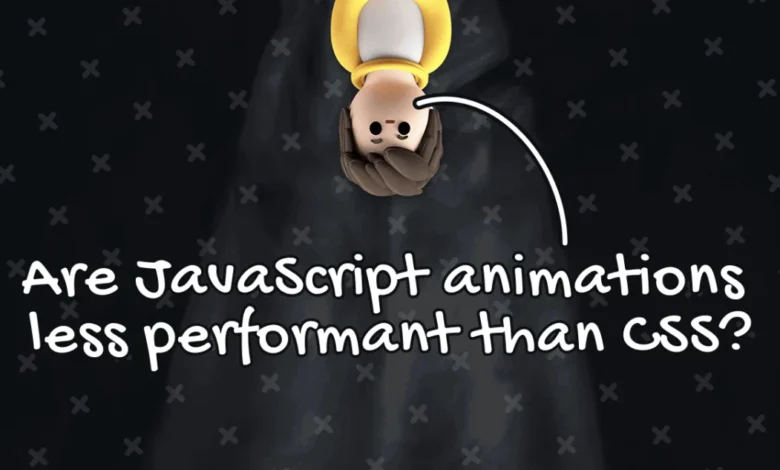
The long-standing debate regarding whether JavaScript-based animations are inherently slower than their CSS-based counterparts has reached a new level of technical scrutiny. As web applications grow in complexity, developers are increasingly forced to choose between the simplicity of CSS transitions and the robust programmatic control offered by JavaScript libraries. While conventional industry wisdom has long suggested that CSS is universally superior for performance, recent advancements in browser rendering engines and the emergence of the Web Animations API (WAAPI) have complicated this narrative, requiring a more nuanced understanding of how browser threads handle motion.
The architecture of browser rendering and the main thread
To understand why performance differences exist, one must look at how the browser manages computational tasks. A web browser operates primarily on a "main thread," which is responsible for parsing HTML, executing JavaScript, processing user interactions, and coordinating layout and style calculations.
When an animation is powered by JavaScript—specifically through techniques like requestAnimationFrame—it requires the main thread to compute values, update styles, and trigger reflows or repaints on every frame. If the main thread is occupied by heavy data processing, such as parsing a large JSON response from an API or performing complex state updates within a framework like React, the animation execution is delayed. This leads to dropped frames, visual "stuttering," and a degraded user experience.
Conversely, CSS animations and transitions are designed to be declarative. By offloading these instructions to the browser’s compositor thread, the browser can handle motion independently of the main thread’s current workload. Because the compositor thread is dedicated to visual output, CSS animations can maintain a consistent frame rate even if the main thread is under significant computational stress.
Historical context and the evolution of animation standards
Historically, early web animation relied on setInterval or setTimeout functions, which were notorious for being inefficient and lacking synchronization with the display’s refresh rate. The introduction of requestAnimationFrame in the early 2010s marked a significant milestone, allowing developers to sync animations with the browser’s internal refresh cycle. However, this did not solve the fundamental bottleneck: the reliance on the main thread.
The arrival of the Web Animations API (WAAPI) signaled a paradigm shift. WAAPI provides a bridge, offering the programmatic power of JavaScript while allowing the browser to optimize the animation in a manner similar to CSS. By utilizing WAAPI, modern libraries like Motion (formerly Framer Motion) can execute complex animations that remain fluid even during periods of high main-thread activity, effectively bridging the performance gap that previously existed between native CSS and script-based logic.
Comparative analysis of animation implementation
For developers, the choice of implementation often comes down to the requirements of the specific feature. CSS keyframes are the gold standard for simple, state-driven movements. For instance, a repeating "bounce" animation can be defined entirely in CSS with minimal code:
@keyframes bounce
  to  transform: translateX(-200px);

.ball  animation: bounce 1000ms infinite alternate;
This approach is highly performant because it informs the browser of the desired final state and timing, leaving the interpolation to the highly optimized rendering engine. However, CSS struggles with dynamic constraints. If the "bounce magnitude" needs to be calculated based on the viewport width or a user-defined input, the developer must resort to JavaScript to update CSS variables or inline styles.
In contrast, JavaScript animation libraries—such as GSAP—offer granular control, easing functions, and complex sequencing that CSS cannot easily replicate. While libraries like GSAP are powerful, they historically run on the main thread, making them susceptible to the "jank" associated with heavy JavaScript execution. The trade-off is clear: GSAP provides unmatched creative flexibility, while CSS provides native, thread-safe performance.
Empirical performance data and developer implications
Performance benchmarks consistently indicate that CSS animations exhibit lower CPU overhead for basic transformations (like transform and opacity). When the main thread is blocked—simulated by long-running synchronous JavaScript loops—CSS-based animations often continue to run at a steady 60 frames per second (FPS), whereas raw requestAnimationFrame loops may drop to 20–30 FPS or lower, depending on the severity of the task.
The implications for enterprise-grade web applications are significant. In an era where "Core Web Vitals" directly impact search engine rankings and user retention, developers are encouraged to prioritize non-blocking animation paths. Data suggests that even minor UI stutters can correlate with lower conversion rates in e-commerce and SaaS platforms.
Modern toolsets and the shift toward native APIs
The landscape is shifting as the W3C introduces new specifications aimed at reducing the need for JavaScript in animation entirely. Features such as Scroll-Driven Animations and the View Transitions API are enabling developers to achieve high-fidelity interactions that were once the exclusive domain of complex JavaScript libraries.
- View Transitions API: Allows for seamless state changes between different views in a single-page application without the need for manual DOM manipulation.
- Linear Timing Function: Provides a native way to create complex easing curves that previously required specialized JavaScript plugins.
- Scroll-Driven Animations: Links animations directly to the scroll offset of an element, offloading the logic from the main thread entirely.
Future outlook and industry response
Industry experts maintain that while JavaScript remains an essential tool for complex, state-dependent UI interactions, the trend is moving toward "CSS-first" development. Framework authors are increasingly integrating WAAPI into their core animation primitives, acknowledging that off-main-thread execution is a requirement for modern, fluid interfaces.
As browser engines like Chromium and WebKit continue to optimize their rendering pipelines, the distinction between "native" and "scripted" animations will likely continue to blur. However, the fundamental rule remains: if an animation can be performed by the browser’s engine without the intervention of the main thread, it should be. For developers, the challenge is no longer just about writing code that works, but about writing code that respects the browser’s limited resource pool, ensuring that complex applications remain responsive regardless of the device’s hardware limitations.