In the rapidly evolving landscape of artificial intelligence, the mechanisms that enable machines to process and generate human language often remain shrouded in technical complexity. At the heart of modern large language models (LLMs) such as OpenAI’s GPT-4, Meta’s Llama series, and Google’s Gemini lies a fundamental, century-old mathematical framework: information theory. By leveraging information entropy and cross-entropy loss, researchers have developed a rigorous, quantifiable method for teaching machines how to predict the next token in a sequence with increasing precision. This objective, data-driven approach has transformed AI from simple statistical pattern matching into sophisticated generative systems.
The Origins of Information Theory: A Foundation for Modern AI
To understand the mathematical bedrock of contemporary AI, one must look back to 1948, when mathematician Claude Shannon published "A Mathematical Theory of Communication." Shannon, often referred to as the "father of information theory," sought to quantify the transmission of information through a communication channel. His pivotal contribution was the concept of information entropy—a measure of the average uncertainty or "surprise" inherent in a variable’s possible outcomes.
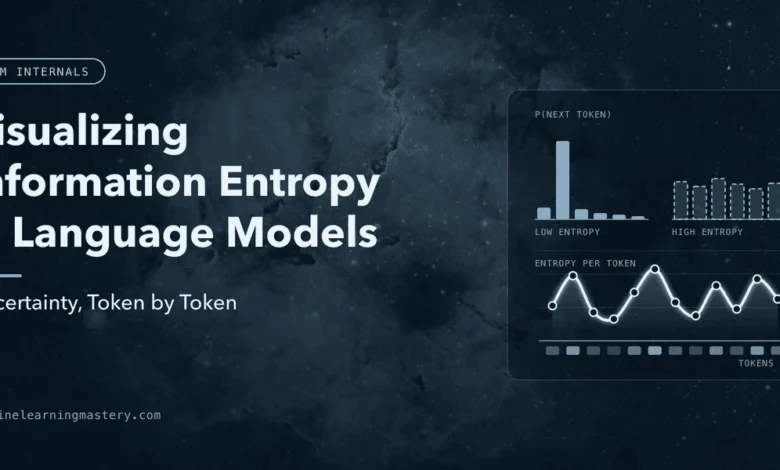
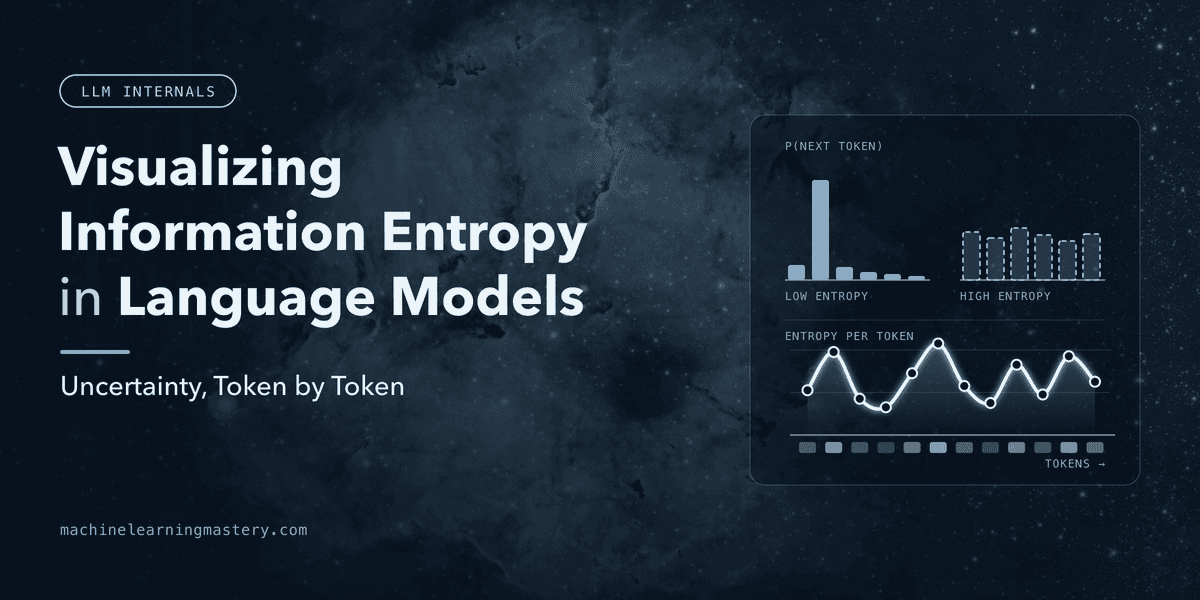
In the context of probability distributions, entropy provides a numerical value representing the degree of randomness. For example, a perfectly fair coin toss carries maximum entropy because the outcome is entirely unpredictable. Conversely, a biased coin that lands on "heads" 99% of the time possesses low entropy; there is little surprise in the result because the outcome is nearly certain. Shannon’s formula, $H(P) = -sum P(x) log_2 P(x)$, remains the standard for measuring this uncertainty in data science today.
From Information Theory to Neural Network Optimization
The leap from Shannon’s mid-century theoretical framework to the training of trillion-parameter neural networks is bridged by the concept of cross-entropy loss. In machine learning, a neural network is essentially an optimization engine designed to map inputs to specific outputs. For LLMs, the "output" is a probability distribution across a vocabulary of tens of thousands of potential tokens.
When an LLM processes a prompt, it does not "think" in the human sense; it calculates the likelihood of every word in its vocabulary appearing next. The training process involves feeding the model vast swathes of text—the "ground truth"—and measuring how closely the model’s predicted distribution aligns with the actual next word in the sequence. Cross-entropy loss serves as the primary metric for this alignment. It calculates the divergence between the model’s prediction and the true target. If the model assigns a high probability to the correct word, the cross-entropy loss is low. If the model is uncertain or predicts an incorrect word with high confidence, the loss is high, triggering the backpropagation algorithm to adjust the model’s internal parameters (weights) to improve accuracy in future iterations.
Chronology of Development: Scaling the Learning Process
The integration of these mathematical principles into large-scale models has followed a distinct historical progression:
- 1948–1980s: Foundations of information theory are established, primarily applied to telecommunications, cryptography, and basic data compression.
- 1990s–2010s: The shift toward connectionism and deep learning begins. Early neural networks utilize cross-entropy for classification tasks, such as handwritten digit recognition (e.g., the MNIST dataset).
- 2017: The introduction of the "Transformer" architecture by researchers at Google fundamentally changes how models process sequences. Transformers leverage self-attention mechanisms to better understand context, making the application of cross-entropy over long sequences significantly more effective.
- 2020–Present: The era of "Foundation Models." With the advent of GPT-3 and its successors, the scale of cross-entropy optimization expands to include billions of parameters and petabytes of training data, enabling the human-like fluency seen in current AI assistants.
Quantitative Analysis: Visualizing Model Confidence
To illustrate the interplay between entropy and loss, consider a model presented with the incomplete sentence, "The cat sat on the…" Given a hypothetical vocabulary of five words—"apple," "banana," "cat," "dog," "elephant"—a perfectly trained model would assign a near 100% probability to the correct term.
When we evaluate different model states, the data reveals clear trends:
- Confident and Correct: The model assigns 90% probability to the correct word. Here, entropy is low (the model is focused), and cross-entropy loss is minimal.
- Confident and Wrong: The model mistakenly assigns 80% probability to the wrong word. The loss is extremely high because the "true" word (the target) received very little probability mass.
- Uncertain (Flat): The model assigns a uniform 20% to every word. Entropy is at its maximum because the model is essentially guessing at random. The loss is high because the model fails to commit to the correct outcome.
Industry Implications and Technical Challenges
The reliance on cross-entropy loss as the primary optimization target has significant implications for AI development. While it is highly effective at driving models toward factual accuracy and syntactic correctness, it is not without limitations.
Critics and researchers point out that minimizing cross-entropy forces the model to mimic the statistical distribution of its training data. If the training data contains biases, inaccuracies, or toxic content, the model will inherently learn those patterns because they appear "correct" within the statistical framework of the source text. Consequently, the industry has shifted toward "Alignment" techniques—such as Reinforcement Learning from Human Feedback (RLHF)—to steer models away from the raw, cold statistical output suggested by simple cross-entropy minimization and toward more socially responsible, useful, and safe responses.
Furthermore, the "Entropy Trap" remains a concern. As models become more confident (lower entropy), they may become prone to "hallucinations"—the generation of false information stated with high certainty. Because the training process rewards the model for aligning its internal distribution with the training set, a model that is "confident and wrong" can be more damaging than one that is "uncertain," as it provides the user with incorrect data presented with the authoritative tone of a high-probability prediction.
Conclusion
The bridge between Claude Shannon’s 1948 theoretical work and the cutting-edge large language models of today is built on the rigorous application of information theory. By treating text generation as a problem of minimizing uncertainty and divergence, engineers have provided a systematic way to scale artificial intelligence to unprecedented levels of complexity.
As we look to the future, the challenge for AI researchers will not merely be the continued reduction of cross-entropy loss through more data and compute, but the refinement of these models to prioritize truth, reasoning, and safety. Understanding that these systems are essentially "uncertainty engines" governed by the laws of information entropy allows users and developers alike to approach modern AI with a more informed perspective—recognizing both the immense power of its predictive capabilities and the inherent limitations of its mathematical foundation. The next generation of LLMs will likely continue to use these core principles, while increasingly relying on secondary, nuanced layers of control to ensure that the "next word" is not just statistically likely, but logically sound and factually accurate.
Related posts: