The Evolution of Data Drift in the Generative Era
In the early stages of machine learning deployment, drift was typically categorized as either "concept drift," where the statistical relationship between input variables and the target variable changes, or "covariate shift," where the distribution of the input variables themselves changes. With the advent of LLMs, these definitions have evolved. Modern LLMs process information by converting raw text into dense, multi-dimensional numerical vectors known as embeddings. These vectors capture the semantic essence of user queries, documents, or conversation logs.
When a production system is trained on a specific corpus—such as technical support manuals for a software suite—its embedding space becomes finely tuned to that domain. If the user base suddenly begins querying the model about a different subject, such as corporate restructuring or external market trends, the input embeddings shift into a region of the vector space where the model’s internal representations are less robust or entirely uncalibrated. This shift is "embedding drift." Because the model continues to generate tokens based on its training, the resulting output may seem syntactically correct while becoming semantically irrelevant or hallucinated, posing significant risks to enterprise applications.
Chronology of a Silent Failure
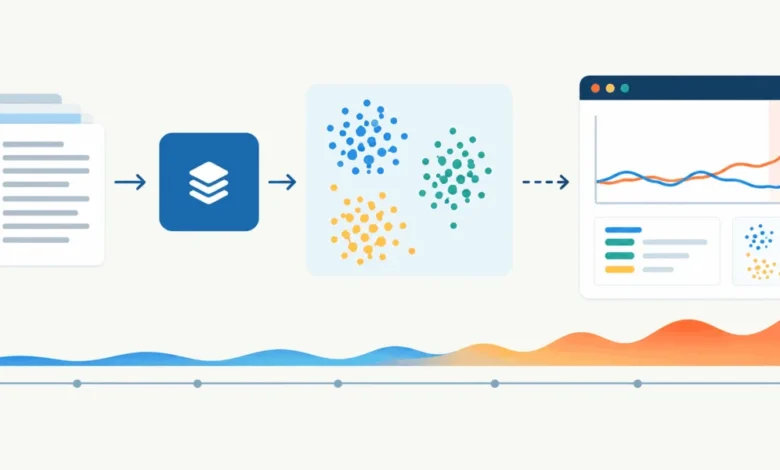
The timeline of embedding drift typically follows a predictable but dangerous trajectory. Initially, a model is deployed with high performance metrics, validated against a hold-out test set that reflects historical data. During this "golden period," the model exhibits low latency and high accuracy.
As time progresses, external events—such as a new product launch, a sudden market disruption, or even a change in how users interact with the interface—alter the nature of the incoming data. This is the "incubation phase" of drift. During this time, the model continues to function, but the underlying vector density begins to move away from the training distribution. Without a monitoring system, this drift remains invisible.
Eventually, the system reaches a "tipping point" where the cumulative semantic distance between the production data and the training baseline exceeds the model’s generalization capabilities. It is at this stage that users begin to report "incorrect" or "out-of-context" responses. In a production environment, failing to identify this transition early can lead to sustained periods of service degradation, potentially damaging user trust and organizational reputation.
Technical Methodologies for Detection
To mitigate these risks, MLOps engineers employ two primary techniques to track and visualize drift in high-dimensional space: the Domain Classifier approach and the Centroid Distance method.
1. The Domain Classifier (Model-Based Detection)
The Domain Classifier is a sophisticated, supervised approach to drift detection. The core logic involves training a secondary, lightweight classifier—such as a Random Forest or a Gradient Boosted Tree—to act as a binary judge. This judge is fed two datasets: the "reference" set (the original data the LLM was trained or fine-tuned on) and the "production" set (the recent, real-world data).
The classifier is tasked with a simple goal: distinguish between the two datasets. If the classifier achieves a high ROC-AUC score, it indicates that the two datasets are statistically distinct and easily separable. A score approaching 1.0 serves as a definitive signal that the production data has drifted significantly from the baseline, necessitating a review of the model’s training data or an immediate fine-tuning update. This method is particularly effective because it captures non-linear, complex shifts that simple distance metrics might overlook.
2. The Centroid Distance (Center of Mass)
The Centroid Distance method, often described as the "center of mass" approach, is a more computationally efficient alternative. By calculating the mean vector (the centroid) of the reference data and comparing it to the mean vector of the production data using metrics like Cosine Distance or Euclidean Distance, engineers can identify a drift in the overall "focus" of the model.
While this method is significantly faster and requires less memory than training a classifier, it carries inherent trade-offs. By aggregating thousands of vectors into a single point, the centroid method risks losing the nuance of the distribution. For example, if a model’s inputs shift from being highly concentrated to being widely dispersed, the centroid might remain in a similar position, effectively masking the structural change. Despite this, it remains a standard "first-alert" mechanism in many production pipelines due to its simplicity and ease of implementation.
Implementation with Scikit-LLM and Modern Stacks
The implementation of these techniques is facilitated by modern Python libraries like Scikit-LLM, which provide a seamless interface for bridging standard scikit-learn workflows with LLM-generated embeddings. Using a tool like SentenceTransformer, developers can rapidly convert raw user text into 384-dimensional vectors.
Consider a scenario where a company utilizes an LLM for customer support. By storing the embeddings of the initial training data and comparing them against the daily influx of user queries, the system can calculate a daily drift score. Using an open-source library and an API wrapper (such as those for Groq or similar LLM service providers), an automated pipeline can be constructed to trigger an alert via Slack or email the moment the ROC-AUC score exceeds a pre-defined threshold (e.g., 0.65).
This proactive monitoring is not merely a "nice-to-have" but a requirement for modern AI governance. As regulatory bodies begin to mandate transparency and reliability in AI systems, the ability to demonstrate that a model is being monitored for performance shifts will become a critical component of compliance audits.
Broader Implications and Strategic Outlook
The necessity of detecting embedding drift highlights a broader trend in the AI industry: the transition from "model-centric" to "data-centric" AI. In the past, researchers focused almost exclusively on optimizing model architectures, layers, and hyperparameters. Today, the focus has shifted toward the quality, consistency, and distribution of the data entering the model.
Organizations that ignore embedding drift are essentially operating their models blind. The cost of failing to identify drift is not limited to performance; it extends to financial liability. If an LLM is used to process financial transactions or provide medical summaries, a drift-induced error could lead to disastrous real-world outcomes.
Furthermore, the emergence of "continuous learning" pipelines, where models are automatically updated based on new data, necessitates even more rigorous drift detection. Without a guardrail to distinguish between "meaningful new information" and "corruptive drift," an automated pipeline might inadvertently train a model on noisy, biased, or irrelevant data, further compounding the degradation.
In conclusion, as LLMs continue to permeate every sector of the global economy, the tools and techniques used to monitor them must keep pace. Techniques like domain classification and centroid tracking are foundational to the next generation of AI observability. By treating embeddings as dynamic, shifting signals rather than static inputs, developers can ensure their models remain aligned with the evolving needs of their users, ultimately fostering a more reliable, transparent, and effective ecosystem for artificial intelligence. Monitoring is not the end of the development cycle; it is the beginning of the operational phase that ensures the longevity and integrity of the system in an unpredictable world.