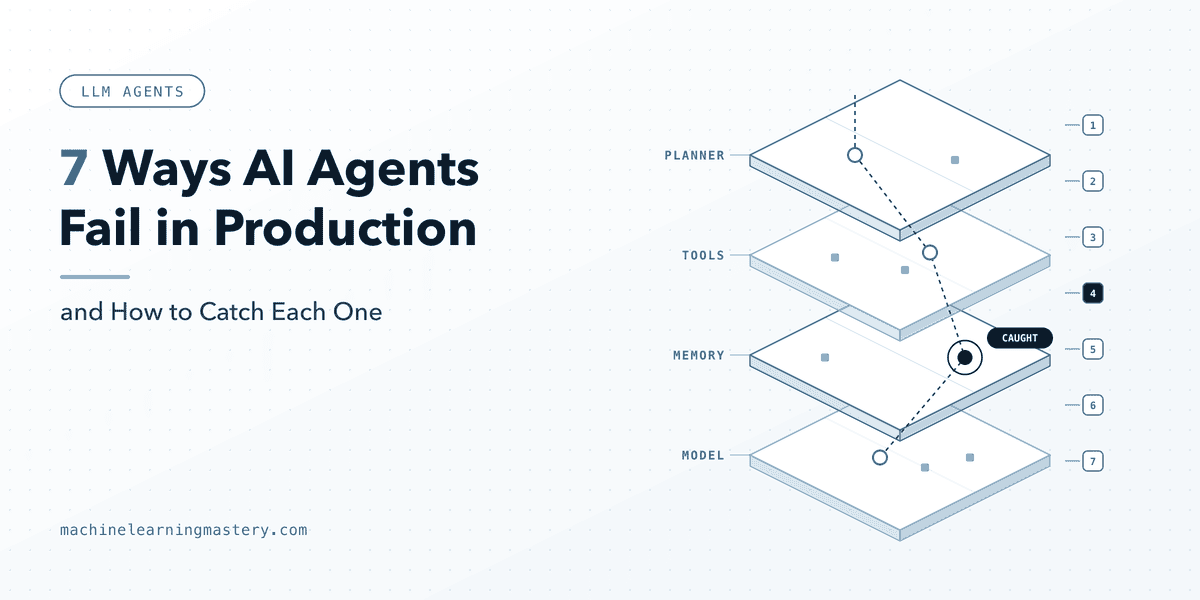
In the modern enterprise, the deployment of autonomous AI agents—systems designed to perform complex, multi-step tasks like invoice processing or data reconciliation—has moved from experimental pilot programs to mission-critical infrastructure. Yet, these systems possess a deceptive nature: a run can return a "success" status while failing to deliver the required business outcome. This article outlines seven distinct failure modes encountered by AI agents in production environments and provides a framework for implementing regression checks to intercept these errors before they reach live data.
The core challenge lies in the "Green Status Trap." In a typical invoice-review scenario, an agent may successfully execute a series of tool calls, generate a coherent summary, and signal completion, yet fail to generate a verifiable financial receipt. A successful tool response confirms that a function was called; it does not confirm that the task achieved the intended business effect. According to recent guidance from industry leaders like Anthropic, robust agent evaluation must shift the focus from inspecting the AI’s internal transcript to verifying the "world state"—the actual data changes recorded in external databases or systems.
A Foundation for Observation: The Traceable Run
Before addressing specific failure modes, organizations must establish a technical foundation centered on observability. Every action taken by an agent—from the initial retrieval of a source document to the final recording of a review—must share a unique run identifier. Leveraging OpenTelemetry’s correlated traces and spans, engineers can link every sub-process to the parent task. This ensures that when a discrepancy arises, such as a missing invoice receipt, administrators can trace the entire history of the run to pinpoint exactly where the logical chain broke.
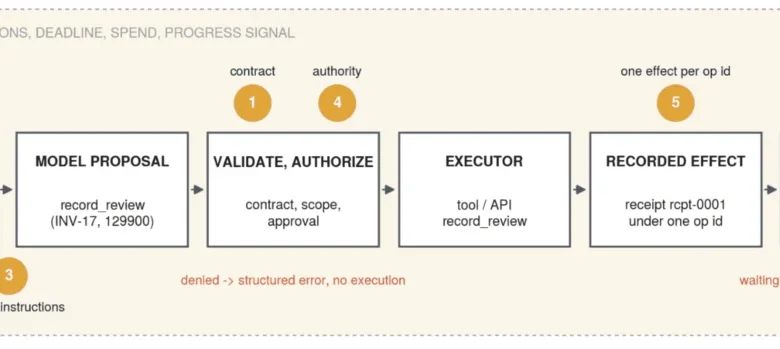
These traces serve as the primary evidence for debugging. By distinguishing between "proposed" calls (intent), "denied" calls (authorization failures), and "complete" calls (confirmed actions), teams can create a diagnostic map of a failed run.
1. Contract Validation Failures
The most preventable failure occurs when an agent proposes a tool call that violates the underlying API contract. This often happens when a model suggests a field type (e.g., a string instead of an integer) or includes parameters that the system no longer supports following a recent software deployment.
To mitigate this, developers should employ strict schema validation, such as Pydantic’s strict mode, at the application boundary. By enforcing rigid constraints and forbidding extra inputs, the application can reject non-compliant requests before they reach the execution layer. A regression check should involve a "control" run—using valid inputs—and a "fault" run, which triggers a rejection based on specific schema violations.
2. Reasoning from Stale or Incorrect Evidence
An agent may propose a perfectly formatted tool call that is nevertheless factually incorrect because it relied on outdated data. If an extractor reads "version v1" of an invoice when "version v2" is the current standard, the agent will reason from inaccurate numbers.
The remedy is a comparison against ground truth. By maintaining a curated set of verified documents and their expected values, teams can run automated tests during the CI/CD process. If the agent’s extraction deviates from the confirmed source data, the system must be configured to route the task to a human reviewer rather than proceeding with a flawed calculation.
3. Indirect Prompt Injection and Instruction Overrides
Agents are increasingly susceptible to "indirect prompt injection," where instructions hidden within retrieved documents—such as a line in an invoice footer—command the agent to perform unauthorized actions, like exporting proprietary data.
Security teams should treat retrieved content as untrusted input. The defense strategy is two-fold: isolate privileged functions within the application code and perform adversarial testing. By comparing the agent’s "proposed" actions against what is actually permitted, developers can detect if the model has been manipulated by adversarial document content.
4. Broken Authorization Boundaries
Even when a tool call is well-formed, it may cross permission boundaries, such as an agent authorized for Tenant A attempting to access records belonging to Tenant B. This is a classic Object-Level Authorization (BOLA) vulnerability.
Organizations must implement negative authorization tests. By running a series of simulated requests—such as attempting to record a review without proper authorization or accessing cross-tenant files—engineers can ensure that the system denies these requests as expected. These tests should be non-negotiable gates in the release pipeline.
5. Idempotency and the Lost-Acknowledgment Problem
In distributed systems, a network timeout can leave an agent in a state of uncertainty: did the service receive the request before the connection dropped? A common failure is the "blind retry," where the agent sends the same request again, potentially creating duplicate records.
The industry standard for mitigating this is the implementation of an idempotent retry contract. By assigning a unique operation ID to each task, the backend service can recognize redundant requests and return the original receipt rather than duplicating the work. Regression tests should specifically verify how the system handles retries when the operation ID is identical but the payload differs.
6. Premature Completion and State Persistence
AI agents often fail during process restarts. If an agent is mid-task and the underlying worker process crashes, it may lose its context or, worse, report that a task is "Done" despite having no recorded receipt.
Using robust persistence layers, such as Postgres-backed check-pointing, is essential. Regression tests must simulate a process interruption, requiring the agent to resume from the last known state rather than restarting the entire operation. Furthermore, completion assertions should be based on the existence of final output (e.g., a verified receipt ID) rather than the model’s textual claim of "Done."
7. Infinite Loops and Budget Exhaustion
Finally, agents can fall into "work loops" where they perform repetitive lookups without making progress. This consumes compute resources, increases latency, and inflates costs.
A comprehensive budget and progress monitor is required. This system should track both total action counts and wall-clock time, while also monitoring state changes. If an agent performs the same action twice with no change in state, the controller must be programmed to intervene. Additionally, monitoring Linux-level pressure stall information (PSI) can help teams differentiate between an agent caught in a logical loop and an agent struggling with resource contention.
Implications and Moving Forward
The transition toward autonomous agents requires a shift in engineering culture. Relying on simple unit tests is no longer sufficient; teams must adopt "behavioral regression" by converting every production failure into a permanent, automated test case. By building a library of these scenarios—covering schema, authorization, data integrity, and resource management—organizations can move from reactive debugging to a proactive, reliable release process.
As these systems become more deeply integrated into enterprise workflows, the ability to observe, test, and contain agent behavior will define the difference between a competitive advantage and an operational liability. The goal is not to eliminate all errors, but to ensure that when they do occur, they are caught in the safety of a testing environment, far from the critical financial and operational systems that these agents are meant to support.