When your physical set is restricted to three walls and a ceiling, the world beyond the window must bear the weight of the entire narrative. For SNTIENT 2.0, the latest collaborative film project from the Fashion Innovation Agency (FIA) at the London College of Fashion, the solution to this spatial limitation was found in the boundless digital horizons of Unreal Engine 5. The film serves as both a compelling piece of science fiction and a technical case study in how modern virtual production techniques are democratizing high-end filmmaking, allowing small teams to craft dystopian worlds that feel vast, lived-in, and authentic.
A Dystopian Narrative Framework
The story of SNTIENT 2.0 is rooted in a post-resource-depletion dystopia. In this bleak future, humanity has largely retreated into a digital simulation, leaving behind a skeleton crew of autonomous robots tasked with maintaining the physical world. The narrative arc focuses on these machines, which—in a twist on traditional sci-fi tropes—begin to discover aesthetic value and beauty within the decaying remnants of human civilization.
Dickon Knowles, director of content at the creative studio Dandelion + Burdock, notes that this concept provided the vital visual anchor for the production. "That gave us our visual starting point," Knowles explains. "A bleak, oppressive sci-fi environment with the potential for transformation." While the final cut of the film emphasizes the atmospheric tone of the city over the explicit evolution of the robotic consciousness, the setting serves as a character in its own right, influencing the mood and lighting of every frame.

The Technical Evolution of Virtual Production
The choice to utilize Unreal Engine 5 was driven primarily by the need for agility and visual fidelity. Historically, the process of creating "plate" shots—the digital backgrounds seen through windows—involved a tedious cycle of rendering, compositing, and lengthy feedback loops. In the traditional pipeline, a filmmaker might wait hours or even days to see a final render, only to discover that the lighting or perspective did not align with the practical set.
By moving to a real-time engine, the production team achieved a fluid creative process. They were able to manipulate light, texture, and atmospheric density on the fly. This speed was critical when the team realized that initial attempts at using generative AI for the city backdrops lacked the necessary resolution and visual consistency. By pivoting back to a bespoke Unreal Engine environment, the team regained total control over the artistic output.
One significant technical hurdle involved the atmospheric treatment of the digital city. The original assets, designed to be foggy and desaturated, failed to read correctly through the camera lens. The LED wall, which acts as the primary light source for the scene, struggled with contrast when the fog was too pervasive. Knowles and his team replaced the general ambient fog with detailed VDB (Volumetric Data Block) volumes, simultaneously boosting the saturation of light sources within the city’s windows. This adjustment allowed for deeper blacks and higher contrast, ensuring the backdrop felt like a tangible, external environment rather than a flat, glowing screen.
The Synergy of LED Walls and Practical Sets
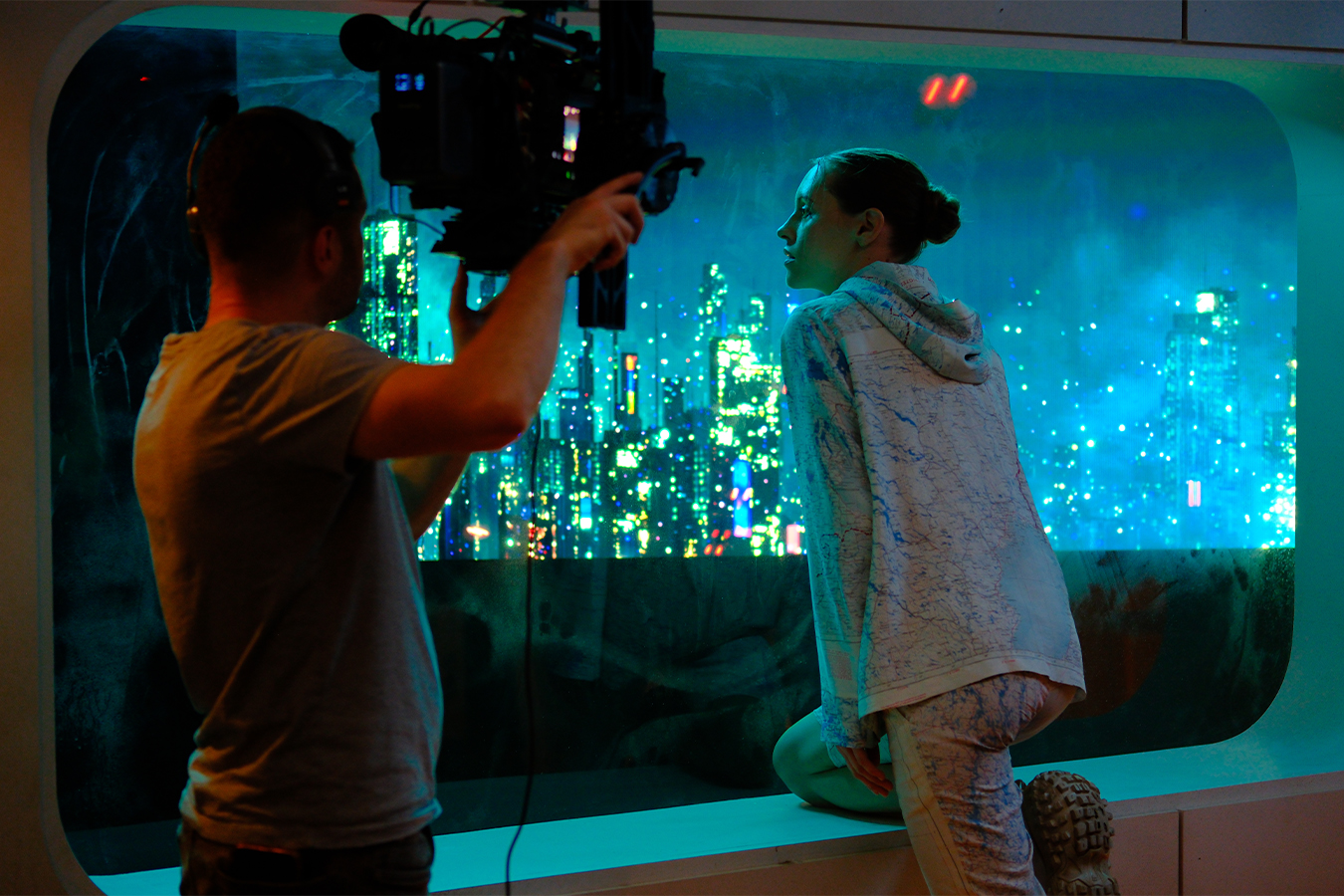
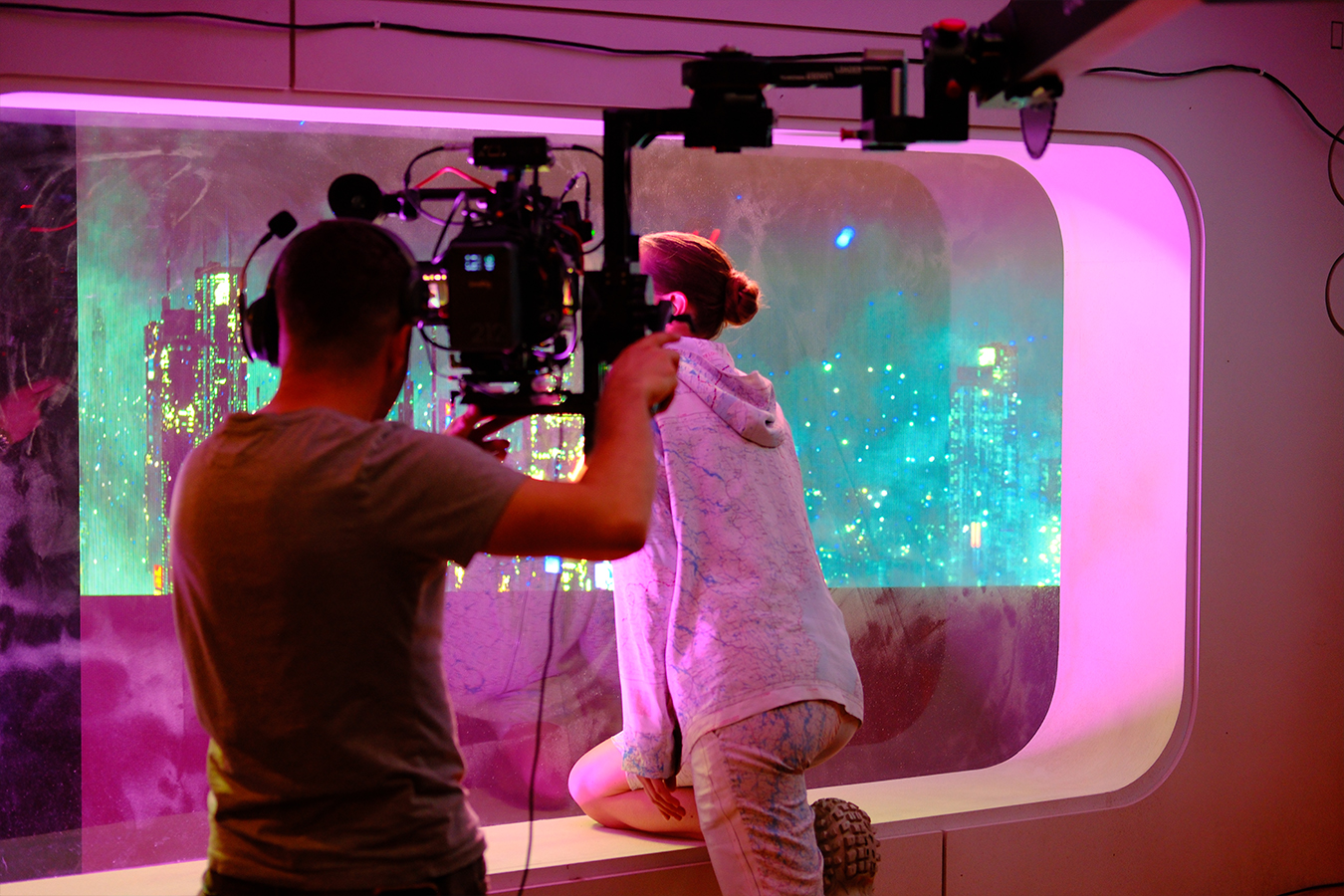
The use of an LED wall for SNTIENT 2.0 served two distinct purposes: providing a photorealistic background and acting as an integrated lighting rig. Cinematographer Ben Saffer, whose company Supervision VP managed the virtual production, emphasized that this approach eliminates the guesswork inherent in green-screen production.

"You’re doing it all in-camera and capturing everything together at once," Saffer explains. "You’re not having to guess at anything." In a traditional green-screen studio, lighting the performer to match a background that does not yet exist is notoriously difficult. With the LED wall, the light emitted by the digital city—the flickers of neon, the cold blue hues of a dying metropolis—was captured by the camera alongside the actor, reflecting off their skin and the surfaces of the physical props. This level of immersion provides a realistic "bounce" and color interaction that is nearly impossible to replicate post-production.
Overcoming Budgetary and Logistical Constraints
Virtual production also solved a logistical problem regarding the film’s set design. The script called for a mechanical shutter to rise, revealing the city outside. Constructing a physical, automated shutter was cost-prohibitive. Furthermore, creating the movement in post-production would have stripped the scene of its grounded, in-camera energy.
The team turned to the LED wall as the solution. By animating the digital shutter within Unreal Engine, they were able to reveal the environment in real-time. For reverse angles, the team utilized a secondary, mobile LED wall to act as a fourth wall, maintaining consistent lighting and reflections regardless of the camera position. This modular approach allowed the crew to maintain the gritty, confined feeling of the pod without being trapped by the limitations of a static set.
Cinematic Precision and Optical Experimentation
Despite the heavy reliance on cutting-edge software, the production team remained committed to traditional filmmaking sensibilities. To capture the story within a two-minute window, they utilized the Blackmagic URSA Cine 17K 65, a high-end camera with a large-format sensor. This allowed the cinematographer to capture a wider field of view without needing extreme wide-angle lenses, which often introduce unwanted barrel distortion that can ruin the illusion of scale.
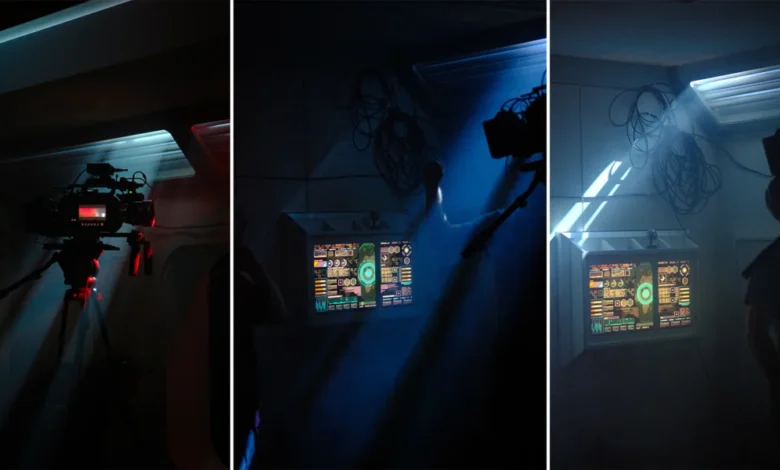
The production also embraced "low-tech" solutions to enhance the final image. Saffer utilized a common toy—a Polly Pocket—to create unique lens flares and light distortions. By placing the toy in front of the lens and aiming a mobile phone light through it, he introduced organic, unpredictable optical artifacts that contrasted with the pristine, synthetic look of the digital city. These small, tactile interventions provided the film with a "lived-in" texture, bridging the gap between the virtual and the physical.
Implications for the Future of Filmmaking
The success of SNTIENT 2.0 underscores a broader shift in the film industry. Virtual production is no longer the exclusive domain of massive, blockbuster-budget franchises. By leveraging real-time engines like Unreal, smaller production houses are now capable of achieving a level of visual complexity that rivals major studio output.
This shift has profound implications for independent cinema and student projects at institutions like the London College of Fashion. It suggests a future where the limitation of physical space is no longer a barrier to epic storytelling. As these tools become more accessible, the focus of the filmmaker shifts from "how do we build this?" to "what can we create with this?"
However, this transition also places a higher burden of preparation on the pre-production phase. Because the world is "built" in the engine before the cameras roll, the traditional flexibility of editing is partially moved into the pre-visualization stage. The ability to iterate on set is a significant advantage, but it requires a specialized skill set—a hybrid of traditional cinematography and real-time 3D art—that is currently in high demand.
Ultimately, SNTIENT 2.0 stands as a testament to the power of hybrid production. By blending the precision of Unreal Engine with the tactile unpredictability of physical props and lenses, the creators have demonstrated that the future of cinema lies not in choosing between the digital and the real, but in finding the point where they become indistinguishable.