Blender 5.3 brings native Gaussian Splat support to the industry standard for open-source 3D production

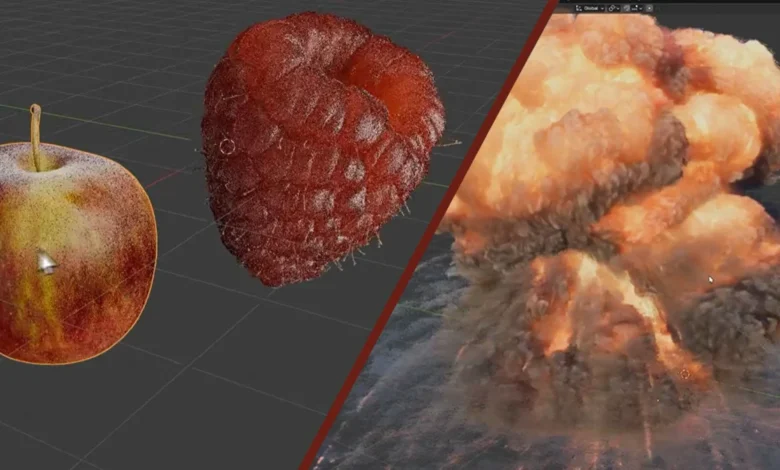
Blender 5.3 is currently in the alpha stage of development, representing the next major evolution of the world’s most widely used free and open-source 3D creation suite. While the full, stable release is slated for November, the developer community has already begun rigorous testing of the software’s latest experimental feature: native support for 3D Gaussian Splats. This integration marks a significant shift in how digital artists incorporate photorealistic, real-world data into their workflows, moving away from cumbersome third-party workarounds toward a more unified, native pipeline.
Understanding the Gaussian Splat Revolution
Gaussian Splatting has emerged as a disruptive technology in the field of computer vision and digital content creation. Unlike traditional photogrammetry, which constructs 3D objects using rigid geometric meshes, vertices, and polygons, Gaussian Splats represent a volumetric approach to scene reconstruction.
The technology functions by taking a series of ordinary photographs or video footage of a real-world object or environment and processing them into millions of tiny, overlapping 3D Gaussian blobs. Each of these blobs contains specific data regarding its spatial position, opacity, color, size, and rotation. When viewed collectively, these splats create a high-fidelity, photorealistic representation of the original scene that can be navigated and rendered in real-time. This methodology has proven particularly effective for capturing complex lighting, reflections, and organic textures that are notoriously difficult to replicate with manual polygon modeling.
The Chronology of Integration
The push toward native Gaussian Splat support in Blender began in earnest following the rapid adoption of the technique by the VFX and gaming industries throughout 2023 and 2024. Previously, the workflow for a Blender artist was fractured. Users were required to utilize external software—most notably COLMAP for structure-from-motion processing or specialized tools like Brush—to generate the necessary point cloud data. Once generated, these files were exported as .ply or .spz formats and imported into Blender via community-maintained, third-party add-ons.
This fragmented process often resulted in compatibility issues, loss of data integrity, and a steep learning curve for those unfamiliar with the underlying mathematics of the splats. By incorporating this functionality into the core of Blender 5.3, the Blender Foundation is standardizing the import process. Users can now load these files directly, bypassing the need for secondary, unstable plugins, and render the resulting scenes directly through Blender’s native engines: Workbench, EEVEE, and the path-tracing powerhouse, Cycles.
Current Technical Limitations and Development Status
Despite the excitement surrounding this update, the implementation in Blender 5.3 is currently in its nascent stages. According to official release notes from the Blender developer portal, there are four primary limitations that users must navigate during this alpha phase:
- Performance Bottlenecks: Rendering millions of Gaussian points is computationally expensive. While the software can now handle the data natively, the real-time performance in the viewport may be sluggish depending on the complexity of the splat and the hardware capabilities of the workstation.
- Color Space Discrepancies: The current pipeline operates under the assumption of sRGB color space. This can create inconsistencies for artists working in high-dynamic-range (HDR) pipelines, as the math underlying Gaussian splats does not always align seamlessly with the linear space utilized by Cycles and EEVEE.
- Radiance and Opacity Errors: Cycles and EEVEE perform calculations in linear color space, which can lead to visual artifacts when rendering areas defined by high radiance or low opacity, often resulting in "flickering" or incorrect light intensity in the final render.
- Transform Constraints: The "Apply Transform" command, a fundamental tool for scaling, rotating, or moving objects in a 3D scene, does not yet fully support the unique attributes of Gaussian splats. As a result, users may encounter errors when attempting to manipulate the scale or orientation of a splat within the scene hierarchy.
The Impact on the 3D Production Landscape
The inclusion of native support in such a widely used platform is expected to accelerate the democratization of high-fidelity digital scanning. For architectural visualization, heritage preservation, and indie game development, the ability to rapidly scan a physical location and render it within a professional 3D environment without needing an expensive 3D scanning rig is a paradigm shift.
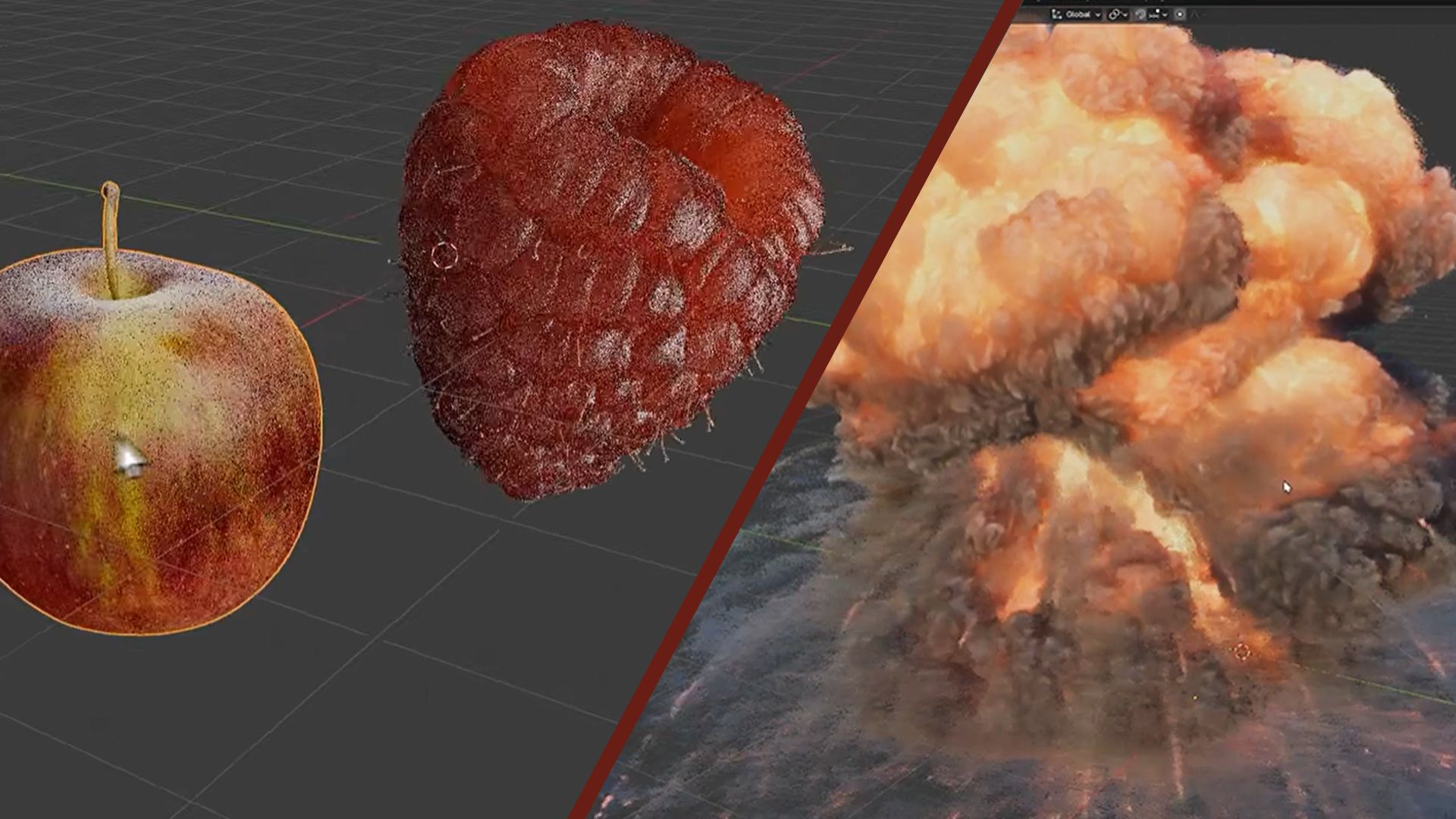
Industry experts observe that this move by the Blender Foundation places pressure on proprietary software developers to follow suit. While competitors have experimented with point cloud data for years, the specific optimization for Gaussian Splatting indicates a broader industry trend toward volumetric rendering over traditional mesh-based surfaces.
However, a lingering challenge remains: relighting. Because Gaussian Splats are essentially a "baked" representation of light and shadow from the moment of capture, they are difficult to integrate into scenes with dynamic lighting. Recent innovations from companies like Chaos, which has developed methods to isolate and relight these splats, suggest that the ecosystem surrounding this technology is maturing rapidly. As Blender 5.3 moves toward its final November release, developers are expected to prioritize stability and the refinement of these rendering calculations.
Implications for Hardware Requirements
The shift toward Gaussian Splatting also highlights the evolving hardware requirements for modern 3D artists. While photogrammetry once required significant CPU power to calculate mesh geometry, Gaussian Splatting places a heavier burden on the GPU and memory bandwidth to store and display millions of data points in real-time.
For professionals looking to integrate this workflow, the shift necessitates a reassessment of their current hardware stacks. Creative professionals are increasingly moving toward high-VRAM GPU configurations to ensure that complex splat-based environments can be manipulated within the Blender viewport without crashing the software or causing significant frame-rate drops. As the software continues to evolve, the demand for hardware that can balance compute power with high-speed memory access will only grow.
Looking Ahead: The November Release and Beyond
The upcoming release of Blender 5.3 serves as a bellwether for the software’s commitment to modernizing its toolset. By embracing experimental but highly sought-after technologies like Gaussian Splatting, the Blender Foundation maintains its competitive edge against expensive, subscription-based alternatives.
The community response, as evidenced by technical demonstrations from creators such as CGMatter and VFX specialists like Jason Key, has been largely positive. While users acknowledge the current alpha-stage bugs, the consensus is that the removal of the "add-on barrier" is a massive step forward for accessibility.
As the calendar approaches the November release date, the focus for the Blender development team will remain on stabilizing the viewport, improving the conversion between color spaces, and perhaps most importantly, providing a more robust set of tools for manipulating the splats once they are in the scene. Whether or not Gaussian Splatting will ever fully replace traditional geometry is a matter of ongoing debate, but its place in the modern digital toolkit is now firmly secured within the most popular open-source 3D application in the world.
For the average user, the message is clear: the future of 3D scanning is becoming more integrated, more accessible, and significantly more photorealistic. By staying at the forefront of these technical shifts, Blender continues to solidify its role as the backbone of the independent digital creative industry.