A quarter of organizations report that poor data quality drains more than $5 million annually from their bottom line, with 7% of firms experiencing losses exceeding $25 million, according to research from Forrester and IBM. While these figures represent significant financial hemorrhaging, the most insidious aspect of this crisis is that much of the damage remains invisible. Standard automated data cleaning pipelines are designed to intercept null values, duplicate rows, and schema type mismatches. These checks function rapidly, effectively sanitizing datasets of structural irregularities, but they often cease their diagnostic efforts the moment a column passes basic syntax validation.
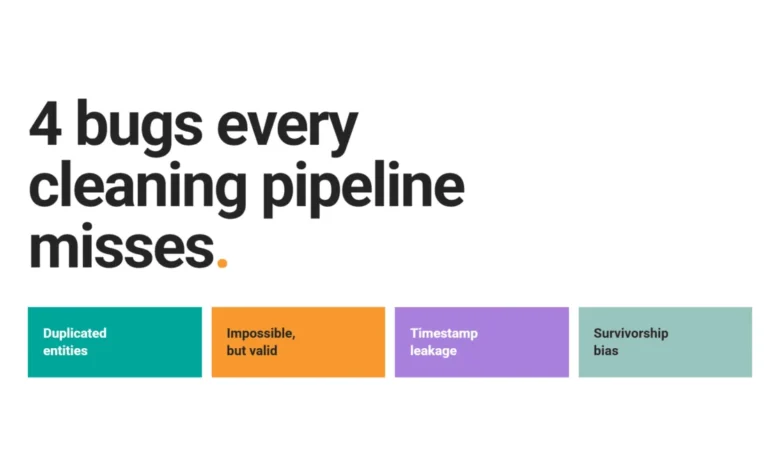
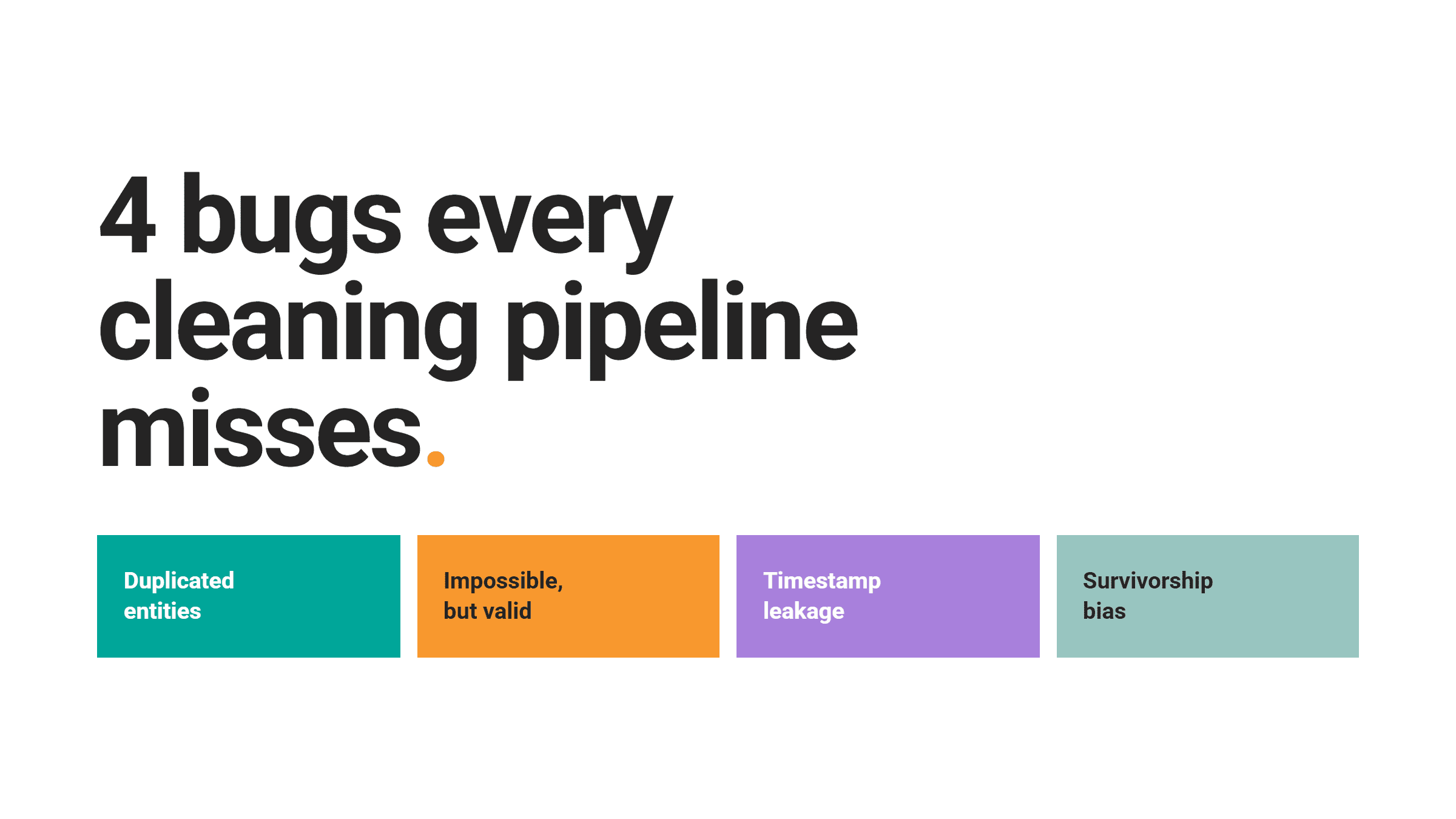
This creates a dangerous false sense of security. Beneath the surface of these "clean" datasets, four specific categories of silent errors frequently persist, corrupting downstream machine learning models, financial reports, and strategic dashboards. These errors—duplicated entities that lack byte-for-byte similarity, contextually impossible values, future-leaking timestamps, and skewed denominators caused by survivorship bias—regularly evade conventional automated quality gates.
The Linguistics of Data Quality: Syntax, Semantics, and Pragmatics
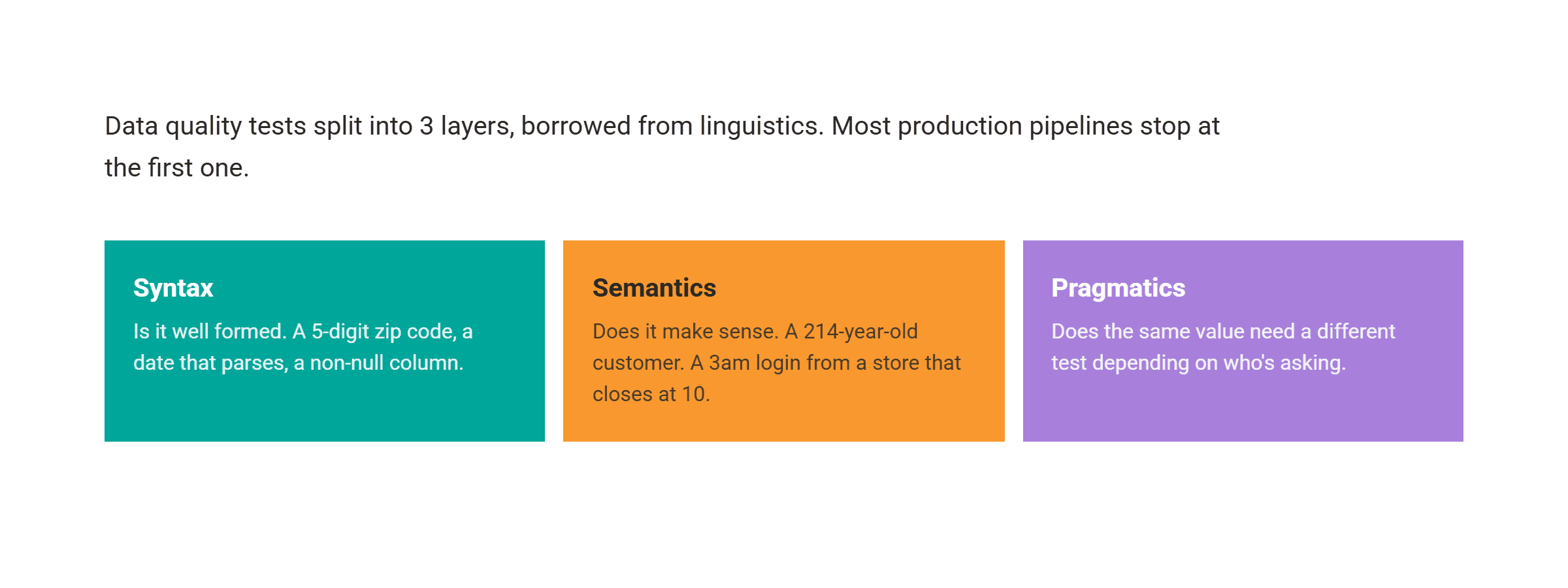
To understand why these errors proliferate, it is helpful to categorize data validation into three layers, a framework borrowed from the field of linguistics. The first layer, syntax, focuses on structural integrity: Is the zip code five digits? Does the date format parse correctly? Is the field populated? Current industry-standard tools such as Pandera and dbt tests excel at these checks because they are agnostic to the business domain.
The second layer, semantics, concerns itself with contextual logic: Is a 214-year-old customer physically possible? Is a 3:00 AM login attempt plausible for a retail store that concludes operations at 10:00 PM? These checks require an intimate understanding of the business domain, which is frequently absent from automated testing scripts.
The third layer, pragmatics, involves the situational interpretation of data. A single data point may be interpreted differently depending on the stakeholder. For instance, a pharmaceutical company’s drug discovery team and its manufacturing division may look at the same batch record but disagree on what constitutes a "valid" status. Because most production pipelines terminate at the syntactic layer, they fail to bridge the gap between machine-readable data and business-meaningful information.
The Mechanics of Silent Failure
1. The Entity Duplication Trap
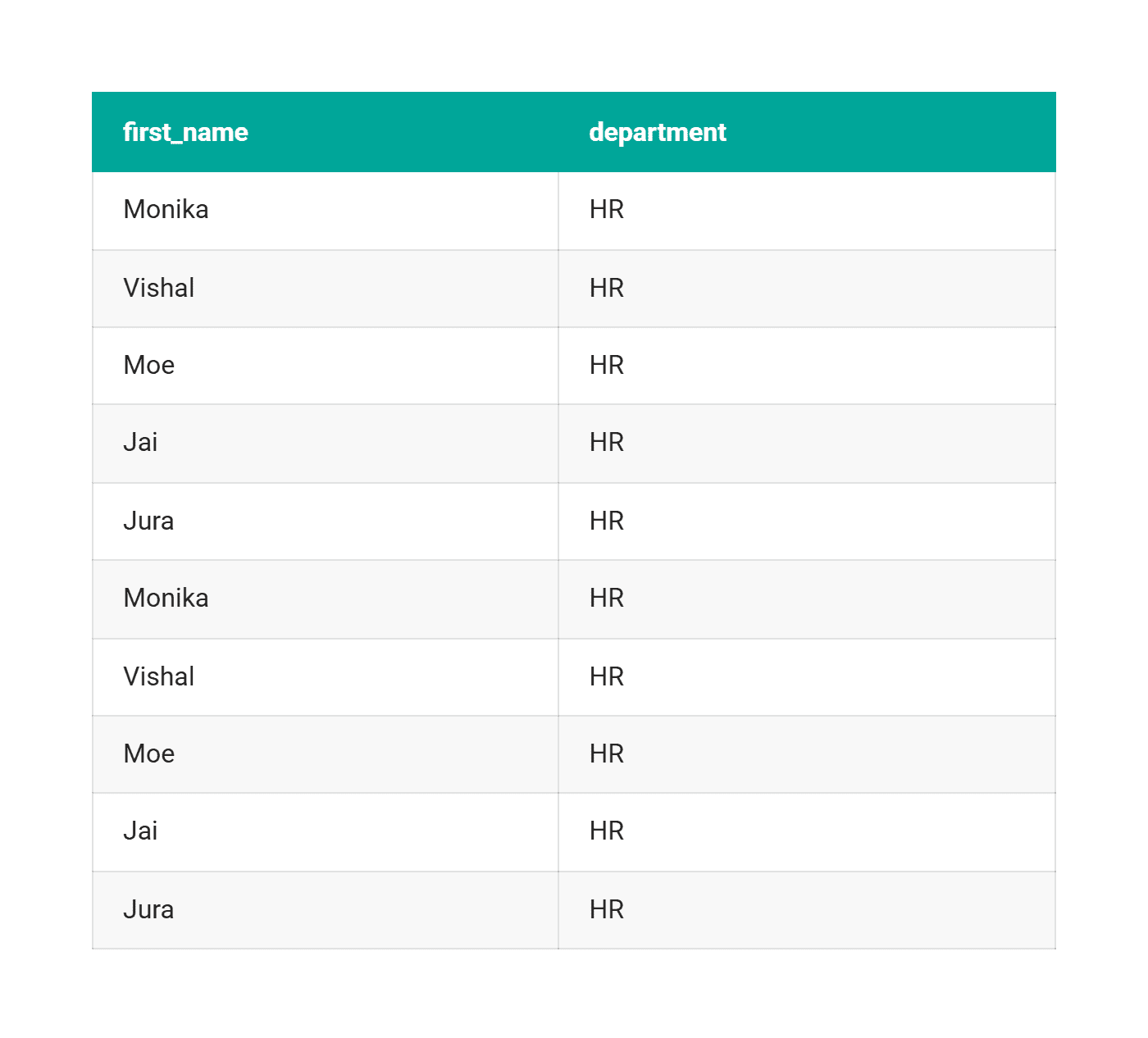
The standard drop_duplicates() function in most programming libraries is designed to identify rows that are byte-for-byte identical. However, it fails to recognize when different records represent the same underlying entity. A customer listed as "John Smith, 123 Main St" and "J. Smith, 123 Main Street" will pass every duplicate check, yet a lifetime-value model will treat them as two distinct individuals.
In enterprise environments, this often occurs when multiple source systems feed a centralized data warehouse without a unified master data management strategy. The result is a double-counting of customers or revenue, which inflates metrics like monthly active users (MAU). Relying on COUNT(*) rather than COUNT(DISTINCT user_id) exacerbates this, as it counts every event associated with a duplicate entity, fundamentally misrepresenting the user base.
2. Contextually Impossible Values
Data points can be perfectly valid in terms of their data type and range while being entirely nonsensical in context. For example, a negative number for a delivered quantity might pass a numeric check, but it contradicts the logic of a logistics pipeline. Similarly, an employee salary that is mathematically valid but statistically anomalous compared to peers in the same department can skew averages significantly. Because the query itself is syntactically sound, these errors do not trigger alerts, and the resulting reports provide skewed insights that may lead to flawed managerial decisions.
3. Temporal Leakage
Leakage occurs when a model or a report inadvertently utilizes information from the future to describe a past event. A common instance of this is the "current salary" problem. When a database contains multiple salary records for an employee but lacks effective-dated timestamps, analysts often rely on a MAX() or ROW_NUMBER() function to extract the "current" salary. If that salary is then used to retroactively predict employee behavior from six months prior, the model is essentially "cheating" by using future information to inform a past state. This undermines the predictive power of machine learning models and creates a misleading historical narrative in business intelligence reports.

4. Survivorship Bias
Survivorship bias is a systemic error in the denominator. It occurs when a dataset excludes entities that have "exited" the system, leading to an artificially positive performance metric. For example, calculating the success rate of a marketing campaign by looking only at active users—while ignoring those who churned during the campaign—creates a biased view of performance. In many technical pipelines, this is masked by table names like fb_active_users, which imply that the dataset is a comprehensive representation of the population, even if it has been filtered to exclude deactivated or deleted accounts.
Establishing a Robust Validation Layer
The path toward mitigating these errors requires a departure from purely syntactic testing. Organizations must transition toward business-aware validation layers that incorporate the following strategies:
- Canonicalization for Entities: Instead of testing for exact matches, developers should implement string canonicalization (normalizing punctuation, casing, and address formats) and similarity scoring. If a record falls into a "gray area" of similarity, it should be routed to a manual review queue rather than being automatically merged or treated as distinct.
- Peer-Group Plausibility Checks: Rather than relying on simple range constraints, organizations should employ peer-group analysis. A salary or an age should be validated against the distribution of its respective category, location, or department. This ensures that the data is not only valid in type but also consistent with its organizational context.
- Structural Temporal Integrity: To prevent timestamp leakage, databases should be engineered to store both the "event time" and the "written time." When performing joins, analysts should enforce a strict
event_time <= feature_timeconstraint. This ensures that a model or report only sees data that was available at the time the event occurred. - Cohort Tracking: To combat survivorship bias, data teams should implement logging that tracks the count of rows at every stage of a filtering process. If a specific filter results in an unexpectedly large drop in the population, it should trigger an alert for investigation, ensuring that the denominator remains representative of the total population being analyzed.
Broader Implications and Industry Outlook
The reliance on basic schema-level testing has created a fragile ecosystem where data-driven decisions are increasingly susceptible to hidden inaccuracies. As organizations continue to integrate Artificial Intelligence and automated decision-making systems, the cost of these "silent" errors will likely escalate. AI models are particularly vulnerable to these issues; they are highly efficient at finding patterns, including patterns that are based on flawed data, which can lead to the automated scaling of poor business decisions.
Industry experts note that while there is no "silver bullet" for data quality, the responsibility lies in integrating business domain expertise into the technical pipeline. Automation is a tool for efficiency, not a substitute for data governance. By shifting from a paradigm of "is the data well-formed?" to "is the data true?", enterprises can build more resilient systems that protect against the long-term, compounding costs of silent data failure. As the volume of enterprise data continues to grow, the adoption of these advanced, context-aware validation strategies will likely become a standard requirement for maintaining competitive advantage and operational integrity.