Amazon Bedrock AgentCore Introduces Secure Session Endpoints for Real-Time Coding Agent Workflows and Live App Previews

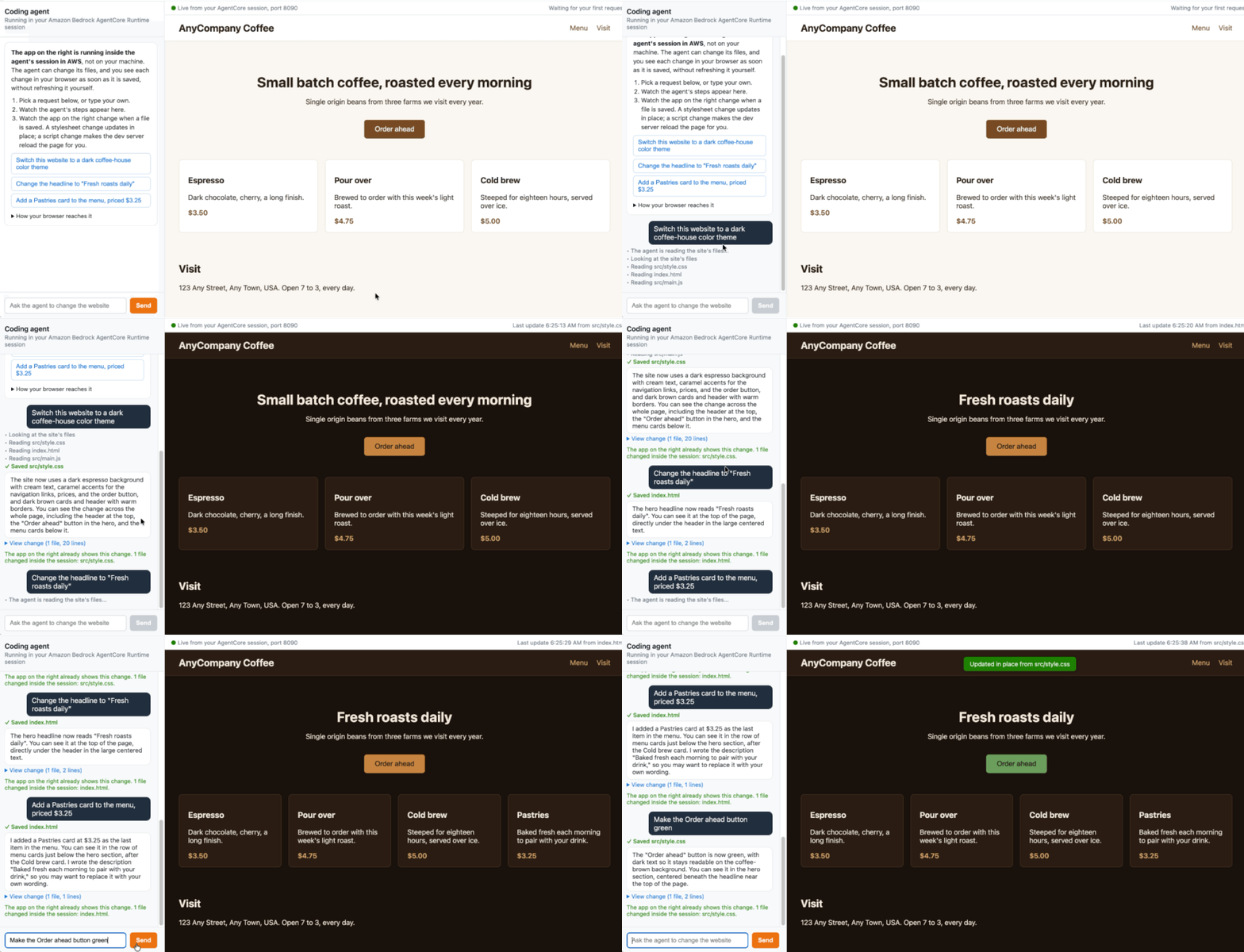
The modern paradigm of software engineering is shifting rapidly toward agentic development, where autonomous coding agents are increasingly capable of constructing functional web applications, complete dashboards, and complex product prototypes entirely from natural language prompts. Historically, however, evaluating the work produced by these artificial intelligence systems introduced a major bottleneck into the development cycle. Traditional review methodologies required developers to manually copy the generated code out of the agent’s environment, initiate a separate deployment pipeline, and wait for external hosting services to provision the changes before a visual verification could occur. This iterative friction severely limited the speed at which product teams could collaborate with generative AI models.
To eliminate this operational lag, Amazon Web Services has unveiled a powerful capability within its Amazon Bedrock AgentCore platform: Session Endpoints. Designed specifically to streamline the validation of AI-generated applications, Session Endpoints provide secure, authenticated, and real-time HTTP and WebSocket access to applications running directly inside isolated microVM agent sessions. By bridging the gap between autonomous backend code generation and frontend visual feedback, this architecture allows developers to watch a live application update in their browser within milliseconds of an agent saving a modified file, fundamentally transforming the feedback loop for AI-assisted software creation.
Understanding the Mechanics of AgentCore Runtime and Isolated MicroVMs
At the core of this architectural breakthrough is the Amazon Bedrock AgentCore runtime environment. When a user initiates a session, the platform provisions an isolated microVM dedicated exclusively to that execution thread. Within this secure boundary, developers have the flexibility to deploy their choice of foundational models and agent frameworks. The introduction of Session Endpoints takes this isolation a step further by assigning a uniquely scoped, authenticated URL to every individual session.
Unlike traditional static deployments or generalized runtime endpoints—which are typically reserved for routing stable production traffic or managing version rollouts—Session Endpoints are ephemeral conduits tailored for development, debugging, and live inspection. When configured through the CreateAgentRuntime API, developers define a specific array of allowed ports ranging between 8000 and 12000. This granular control ensures that only designated services, such as a local development server or a telemetry status route, can be exposed externally.
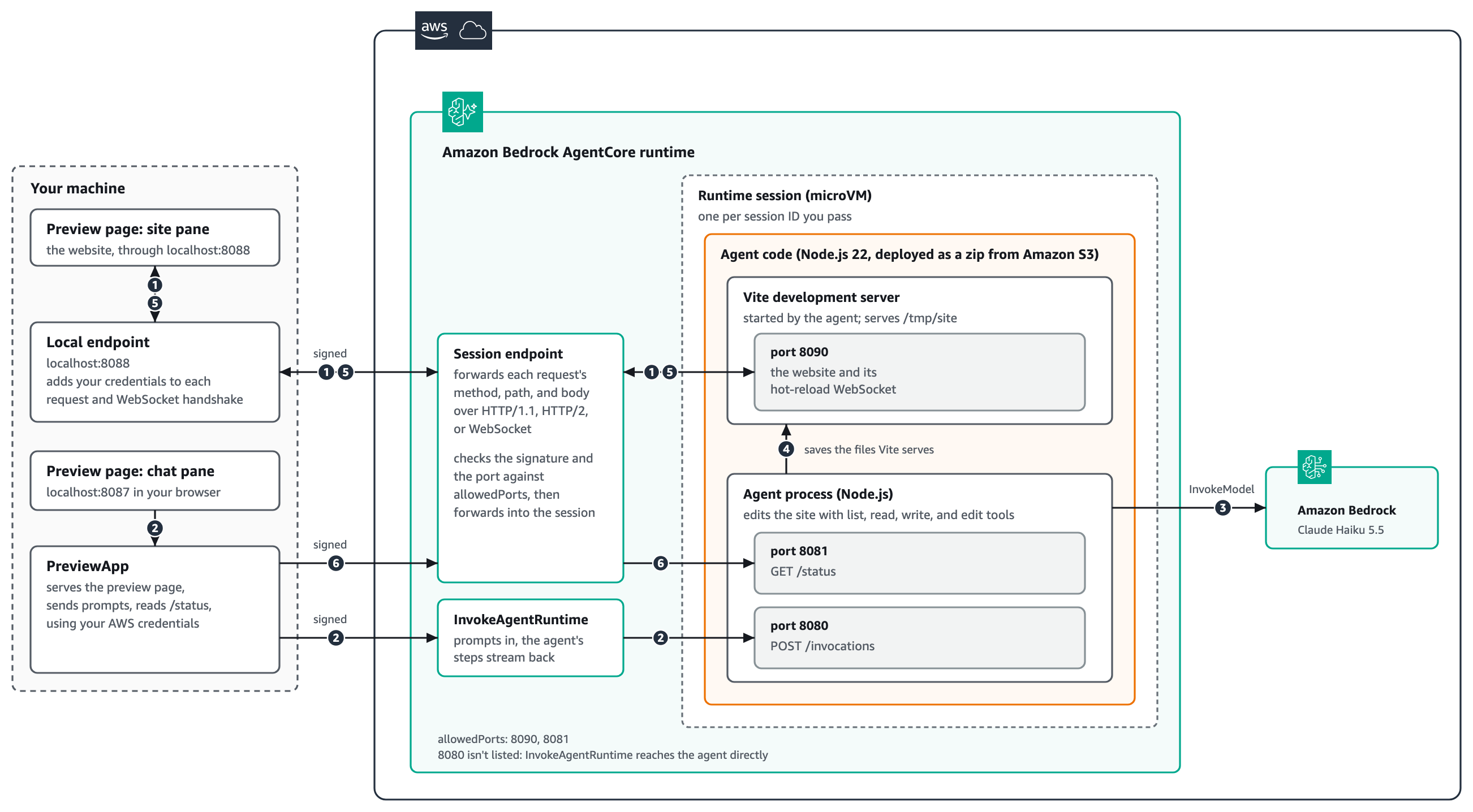
Security remains a paramount consideration in the design of these ephemeral endpoints. Every incoming request, HTTP/2 stream, and WebSocket handshake must carry rigorous authentication credentials. Depending on the runtime configuration, this is enforced either via AWS Identity and Access Management (IAM) utilizing Signature Version 4 (SigV4) protocols or through inbound JSON Web Token (JWT) authorizers. Furthermore, because standard web browsers cannot natively attach complex cryptographic signatures or bearer tokens to automated page requests, the open-source bedrock-agentcore Python SDK provides a local endpoint client. This utility acts as a secure intermediary on the developer’s local machine, handling credential injection and securely forwarding allowed traffic to the remote microVM session.
A Comprehensive Walkthrough of a Live Development Session
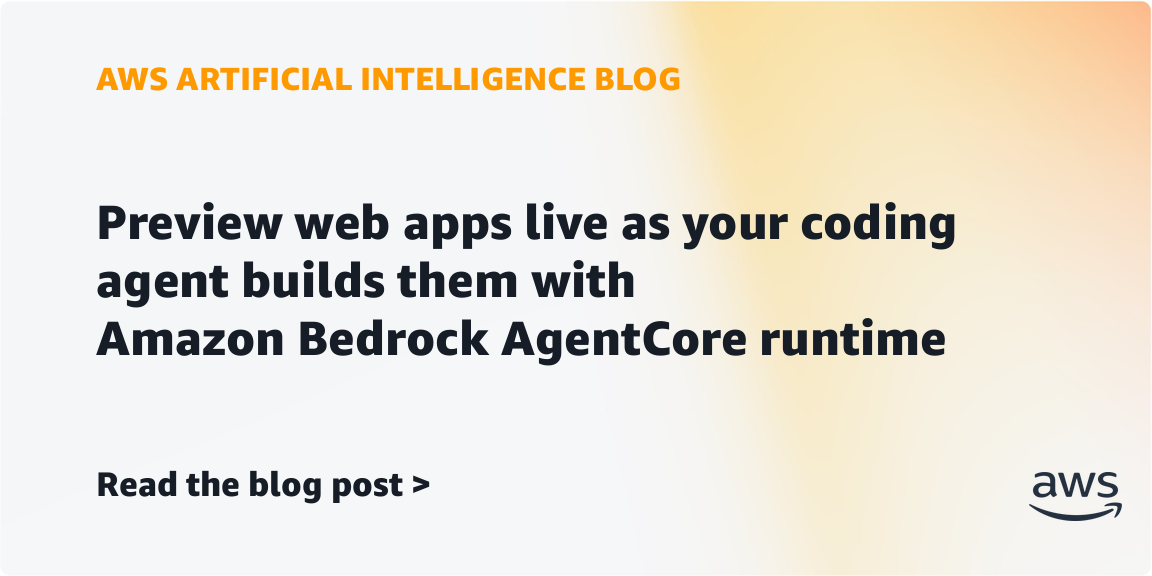
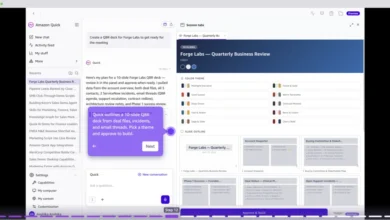
To demonstrate the practical application of Session Endpoints, AWS engineers published an advanced technical reference implementation featuring a Vite-powered website paired with a Node.js-based coding agent. The reference architecture illustrates how developers can construct a unified local preview environment where a chat interface operates on one side of the screen while a live, hot-reloading website renders on the other.
In this setup, the coding agent runs internally on port 8080, equipped with a specialized suite of file-system tools allowing it to read, write, list, and edit project directories. Concurrently, a Vite development server operates on port 8090, serving the web application and leveraging WebSocket connections to instantly push file modifications directly to the browser. When a user submits a natural language instruction—such as requesting a dark color theme or shifting a call-to-action button to a specific hue—the prompt is routed securely via the InvokeAgentRuntime API to the agent.
As the autonomous agent processes the request, it systematically evaluates project dependencies, reads target stylesheets or JavaScript files, and applies the necessary code alterations. The moment these files are saved to disk, the Vite server detects the change and streams the update instantly across the Session Endpoint and the local proxy client. The browser reflects the modification in real time without requiring a manual page refresh. This seamless pipeline eliminates the traditional friction of build-and-deploy cycles, offering an experience akin to working with a human pair programmer sitting side-by-side at the same workstation.
Granular Telemetry and Comprehensive Port Management
Beyond serving frontend web previews, Session Endpoints provide developers with deep visibility into the internal operations of the agent session. Because the architecture supports multi-port configurations within a single microVM, teams are not restricted to monitoring a single application output. For instance, the reference sample configures a secondary service on port 8081 to expose a diagnostic status route.
By executing targeted queries against this secondary port through the same Session Endpoint, developers can programmatically retrieve comprehensive audit trails detailing every prompt processed during the session alongside the precise files modified in response. This capability provides unprecedented transparency into the decision-making processes of autonomous coding agents, enabling rigorous prompt engineering and rapid debugging when unexpected code behaviors arise.
To safeguard system integrity, the AgentCore runtime enforces strict error-handling protocols when unauthorized or misconfigured requests are attempted. If a client tries to access a port that was omitted from the allowedPorts configuration, the runtime immediately rejects the traffic with a standardized 403 AccessDenied status. Similarly, requests lacking valid SigV4 signatures or JWT tokens are summarily blocked, while attempts to reach allowed ports where no active server is listening result in a 502 PortNotReachable response. Expired or terminated sessions correctly yield 404 SessionNotFound codes, ensuring clean state management across the infrastructure.
Enterprise Security, Governance, and CloudTrail Integration
As organizations increasingly integrate generative AI coding assistants into enterprise workflows, robust security and compliance controls are non-negotiable requirements. Amazon Bedrock AgentCore incorporates comprehensive auditing mechanisms to track and monitor all interactions occurring through Session Endpoints. Every proxy invocation is automatically logged within AWS CloudTrail as an InvokeAgentRuntimeProxy event, ensuring that security operations teams maintain complete visibility over data access patterns and developer activities.
At the infrastructure level, the runtime architecture ensures that internal authentication headers are stripped before requests reach the guest application, isolating the underlying web service from direct credential exposure. On the client side, the local endpoint utility restricts its attack surface by binding exclusively to the loopback interface (127.0.0.1) and actively refusing cross-origin WebSocket connections originating from unauthorized domains.
Nevertheless, AWS emphasizes that because both the coding agent and the target web application share the same isolated session compute environment, developers must exercise disciplined privilege management. Execution roles assigned to the agent should be provisioned strictly adhering to the principle of least privilege. Furthermore, to prevent malicious or malformed prompts from compromising application integrity, developers are encouraged to integrate services such as Amazon Bedrock Guardrails to filter inputs and outputs, alongside implementing robust human-in-the-loop validation checkpoints before deploying AI-generated code to production environments.
Broader Industry Implications and Future Outlook
The launch of Session Endpoints within Amazon Bedrock AgentCore signals a maturing ecosystem for generative AI application development. For years, the industry has focused heavily on improving the raw reasoning capabilities and code-generation accuracy of foundation models. However, the operational overhead associated with testing, reviewing, and deploying agent-authored code remained a persistent bottleneck.
By streamlining the evaluation phase into a sub-second, interactive feedback loop, AWS is directly addressing the developer experience paradigm. This capability lowers the barrier to entry for building complex, multi-agent software engineering workflows, making it feasible for enterprises to safely test prototypes, design internal dashboards, and iterate on client-facing features entirely within sandboxed, cloud-hosted microVMs.
As organizations look toward the future of autonomous software engineering, tools that bridge the gap between AI generation and human verification will become increasingly critical. The flexibility of Session Endpoints—supporting standard protocols such as HTTP/1.1, HTTP/2, Server-Sent Events, gRPC, and WebSockets across configurable port ranges—positions Amazon Bedrock AgentCore as a versatile foundation for the next generation of cloud-native development tooling. Developers can immediately begin experimenting with these capabilities by accessing the official sample implementations provided in the open-source agentcore-samples repository on GitHub, marking a significant step forward in the practical adoption of agentic software architecture.