Enabling Seamless Cross-Region Data Governance with AWS Lake Formation Trusted Identity Propagation

Organizations that operate global data analytics infrastructures often face a persistent technical dichotomy: the necessity for granular, individual-level access control and the requirement for comprehensive, immutable auditability. Historically, these needs were often compromised by the limitations of shared AWS Identity and Access Management (IAM) roles, which masked the identity of the end user behind a common service account. This lack of transparency presented significant compliance challenges for enterprises operating under strict regulatory frameworks. AWS has addressed this architectural hurdle by expanding the capabilities of AWS IAM Identity Center Trusted Identity Propagation (TIP) to operate across multiple AWS Regions. This advancement allows for a unified identity plane where user credentials remain consistent, authorized, and logged regardless of the geographic location of the data or the compute resource performing the query.
The Evolution of Identity-Driven Analytics
The deployment of TIP across Regions represents a critical milestone in the maturation of cloud-native data governance. For years, the "shared role" pattern was the industry standard for cross-account data access, despite its inherent lack of visibility into individual query behavior. By allowing identity objects—users, groups, and session metadata—to be replicated across all selected AWS Regions, AWS has effectively eliminated the need for users to assume disparate local roles. This ensures that when a data analyst executes a query, the system identifies the actor as an individual, not an anonymous service entity.
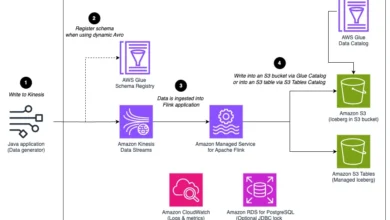
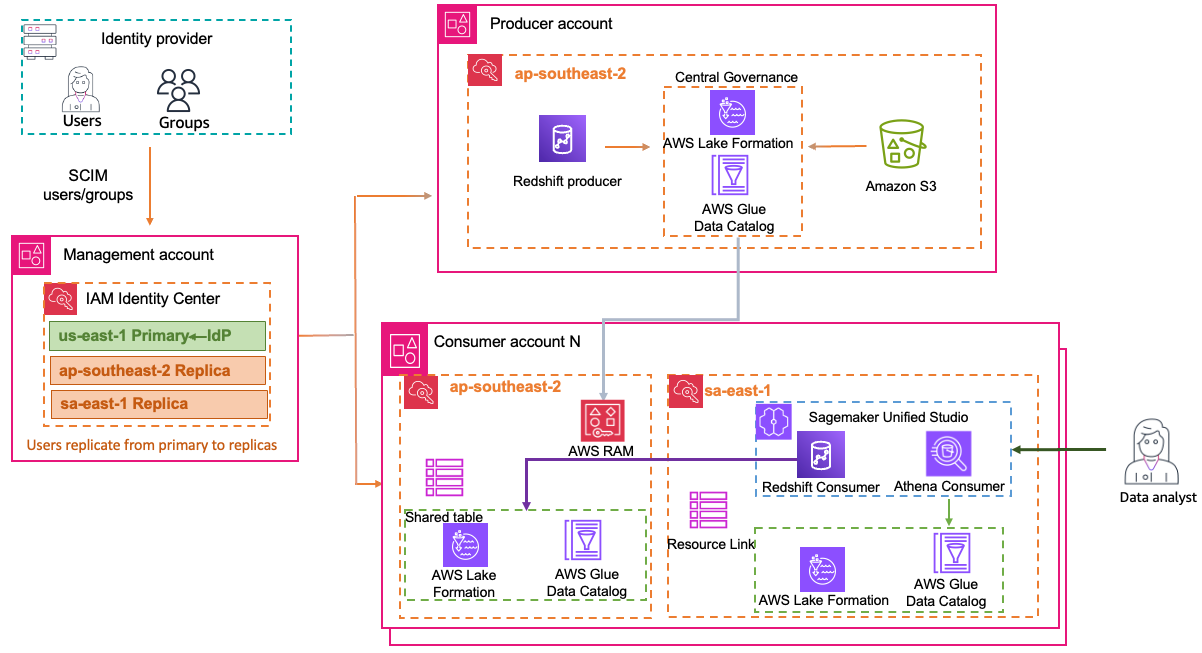
This architectural shift is built upon the System for Cross-domain Identity Management (SCIM) protocol, which synchronizes corporate identities into the AWS ecosystem. Once established, this identity travels with the request from the client application through the query engine and directly to the storage layer via AWS Lake Formation. Consequently, every interaction is recorded in AWS CloudTrail under the specific user’s identity, providing the high-fidelity audit trail demanded by modern cybersecurity standards.
Chronology and Implementation Strategy
The rollout of cross-Region TIP follows a multi-part integration roadmap designed to bridge the gap between data producers and consumers. The initial phase focuses on foundations, specifically covering Amazon SageMaker Unified Studio, Amazon Athena, and Amazon Redshift. Subsequent phases will integrate Amazon QuickSight and Amazon EMR, ensuring that the identity propagation mechanism becomes a pervasive feature across the entire AWS analytics stack.
The operational workflow for this cross-Region model involves a producer-consumer architecture. For example, a producer in the Asia Pacific (Sydney) Region can govern data through Lake Formation, while a consumer in the South America (São Paulo) Region accesses that data as their own identity. This "federated query" pattern ensures that data remains anchored in its source location for compliance and performance reasons, while the query itself traverses geographic boundaries.
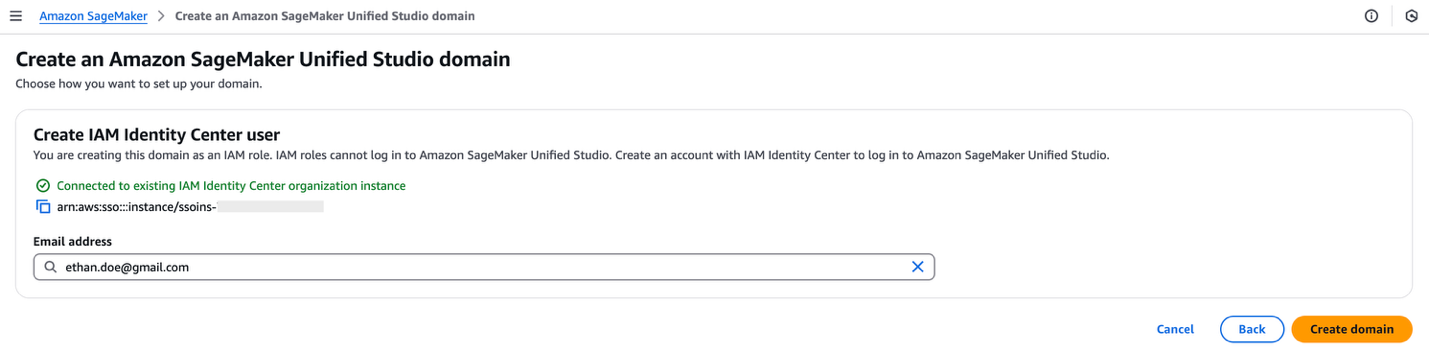
To execute this, organizations must ensure that the producer and consumer accounts exist within the same AWS Organization and share a unified instance of the IAM Identity Center. This is not merely a technical requirement but a strategic one; it prevents the fragmentation of identity silos that often plague large-scale global enterprises.
Supporting Architecture and Technical Requirements
The integrity of this system relies on four primary capabilities working in tandem. First, the IAM Identity Center acts as the central identity plane, ensuring that user and group definitions are consistent globally. Second, the widespread adoption of Trusted Identity Propagation within the stack allows for the seamless hand-off of credentials without reverting to legacy IAM role assumptions. Third, the use of corporate sign-in mechanisms provides the necessary authentication context for cross-Region sessions. Finally, AWS Resource Access Manager (AWS RAM) facilitates the sharing of data resources across account boundaries, acting as the bridge that allows the consumer to "see" the producer’s cataloged assets.

A key technical detail for implementers is the requirement for sts:SetContext in the trust policies of IAM roles used for data registration. Standard service-linked roles do not include this permission, necessitating the creation of custom roles. This ensures that the identity propagation request is explicitly authorized to include the necessary context headers, preventing unauthorized credential usage.
Data Governance and Compliance Implications
The implications of this development for enterprise data strategy are substantial. By moving away from shared roles, organizations can now implement "least-privilege" access models at a much finer level of granularity. Because Lake Formation evaluates permissions based on the individual user, administrators can grant access to specific databases, tables, or even individual columns without worrying that a shared role might inadvertently grant excessive privileges.
Furthermore, the ability to maintain auditability in CloudTrail means that security teams can conduct precise forensics. In the event of a data breach or an unauthorized query attempt, investigators can trace the activity back to a specific corporate identity, facilitating rapid incident response and reducing the blast radius of credential compromise. This is particularly vital for organizations subject to GDPR, HIPAA, or CCPA, where "who accessed what and when" is a non-negotiable compliance requirement.
Comparative Analysis: Athena vs. Redshift
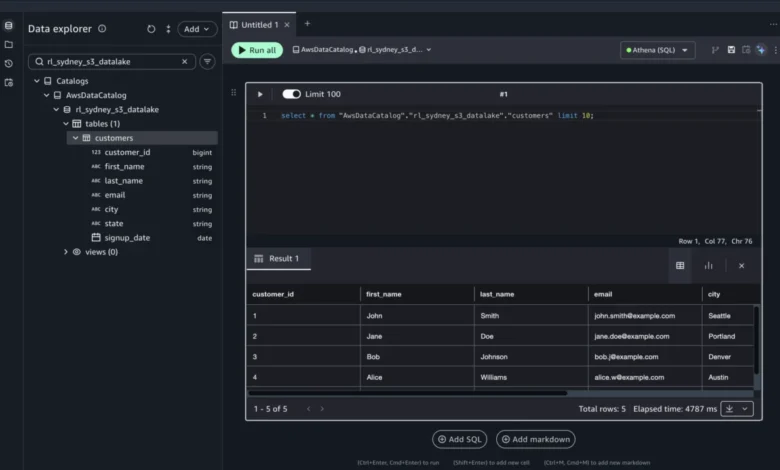
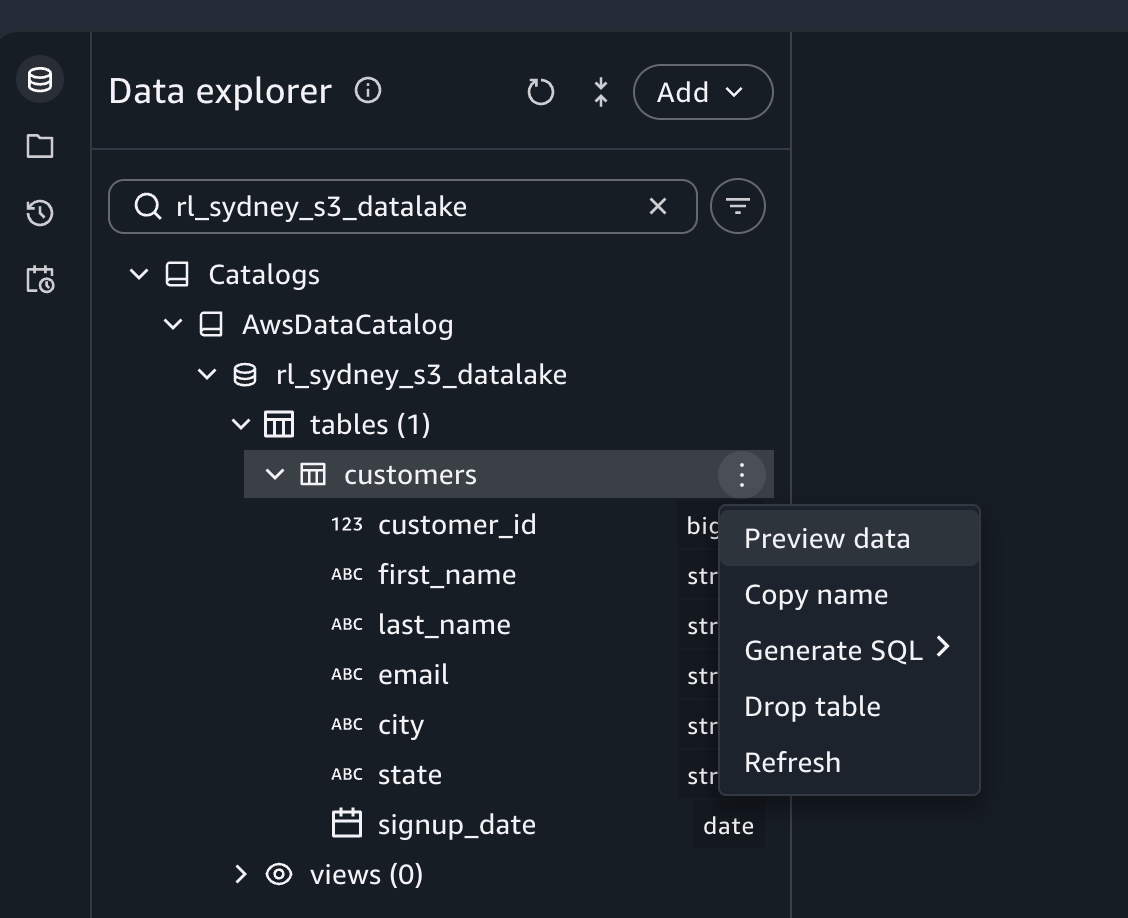
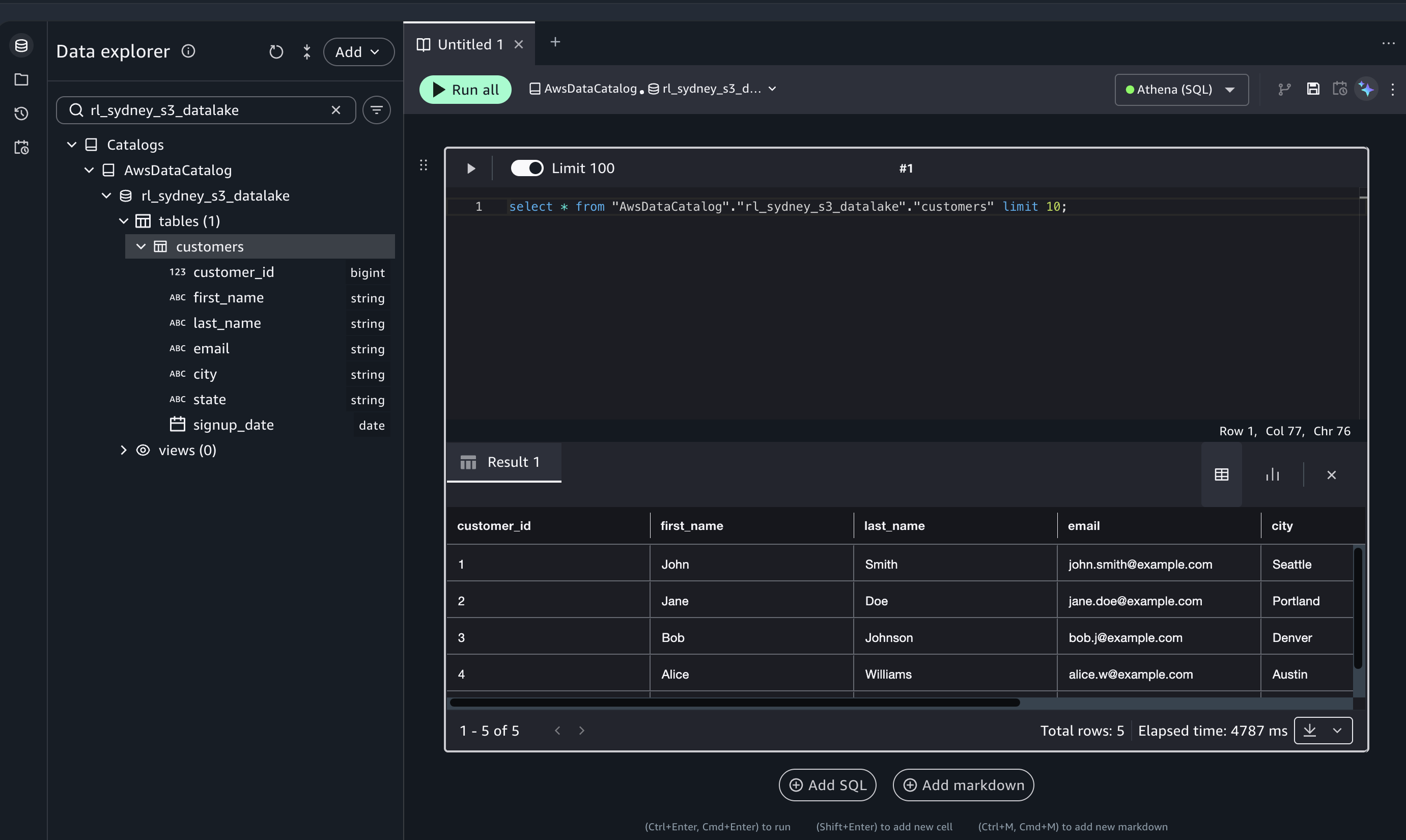
While the overarching goal of cross-Region TIP is consistency, the implementation details vary based on the query engine employed. When using Amazon Athena (Case 1), the process involves creating a resource link in the consumer’s query Region. This link points back to the producer’s shared database, allowing the user to treat remote data as if it were local. This approach is highly flexible and aligns with modern data lake architectures where S3 is the primary storage layer.
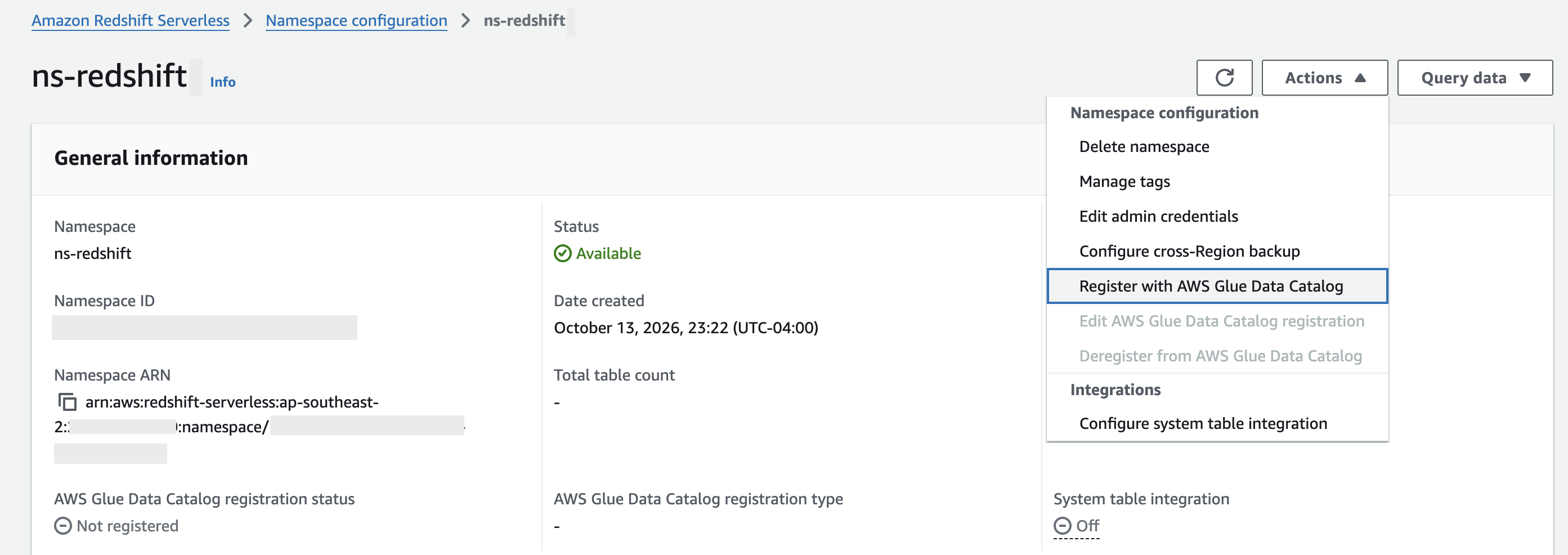
Conversely, when using Amazon Redshift Serverless (Case 2), the integration utilizes an external schema. This schema directly references the producer’s AWS Glue Data Catalog, which resides in the producer’s region. This setup is optimized for high-performance warehousing, as it allows the Redshift query engine to leverage local compute power while remaining governed by the centralized catalog. These distinctions are crucial; developers must choose the path that best fits their specific workload—Athena for ad-hoc, lake-based analytics and Redshift for high-concurrency, structured data warehousing.
Looking Ahead
As AWS continues to scale the availability of TIP across its service catalog, the burden of managing complex, cross-Region identity mapping will decrease significantly. The current launch provides the foundation for a global, identity-centric data fabric. For organizations looking to implement this, the primary recommendation is to prioritize the consolidation of identity providers through the IAM Identity Center. By centralizing the "who," organizations can focus their engineering efforts on the "what" and the "where," effectively turning regional boundaries from obstacles into transparent components of a global analytics ecosystem.
The transition to this model requires careful coordination, particularly regarding the synchronization of IAM roles and the initial configuration of Glue Data Catalogs. However, the long-term benefits—reduced operational overhead, enhanced compliance, and a simplified security posture—make the adoption of cross-Region Trusted Identity Propagation an essential step for any enterprise committed to a robust, scalable cloud data strategy. As organizations continue to distribute their data workloads across continents to meet latency and residency requirements, this unified identity framework will serve as the bedrock for secure and efficient global data collaboration.
Related posts: