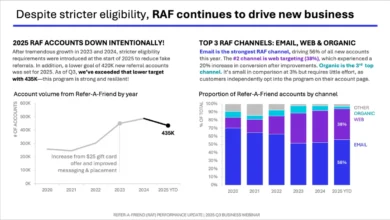
In an era defined by data-driven decision-making, organizations across the globe increasingly rely on complex quantitative analyses to guide policy, commerce, and scientific advancement. Yet, a fundamental tension persists between analytical rigor and effective communication, particularly among researchers, data scientists, and statisticians. During a recent professional data visualization workshop, a recurring point of friction emerged: the discomfort associated with applying narrative frameworks—commonly referred to as "storytelling"—to empirical research.
The participant, a data analyst collaborating closely with academic researchers, raised a question central to modern quantitative communication: Doesn’t telling a story inherently require choosing a perspective? And doesn’t choosing a perspective introduce bias? Furthermore, wouldn’t it ultimately be more objective to simply display the raw data and allow audiences to draw independent conclusions?
This perspective, while intuitively appealing, fundamentally misunderstands the nature of data communication and human cognition. Far from being a neutral window into reality, the act of withholding interpretation does not eliminate bias; rather, it introduces vulnerability, misinterpretation, and a vacuum that is routinely filled by less informed actors.
The Anatomy of Quantitative Discomfort
The reluctance among quantitative professionals to embrace narrative techniques often stems from a semantic hurdle. To many scientists and statisticians, the word "story" carries pejorative connotations, evoking images of embellished facts, manufactured dramatic tension, or the deliberate cherry-picking of evidence to validate a predetermined hypothesis.
However, this interpretation misconstrues the objective of data storytelling. Within a professional and analytical context, storytelling does not mean fabricating a narrative; it means establishing a coherent context that allows complex evidence to be understood, scrutinized, and acted upon. When analysts dismiss storytelling entirely under the guise of maintaining absolute neutrality, they often default to an excuse that prevents them from adapting communication strategies to specific audiences.
Communication experts note that storytelling is not a rigid formula. A narrative constructed for a peer-reviewed academic journal necessarily differs from one presented to a corporate board of directors or a legislative body. The challenge lies not in rejecting the framework, but in defining what effective communication entails for a given audience and dataset.
Bias Versus Perspective: A Critical Distinction
A foundational error in the debate over data presentation is the conflation of bias with perspective. Analytical bias—the systematic distortion of data collection, processing, or interpretation—must be rigorously minimized to preserve scientific and commercial integrity. However, eliminating bias is entirely distinct from eliminating perspective.
Long before a researcher presents a single chart, a cascade of subjective decisions has already occurred. Consider the foundational steps of any quantitative project:
- The determination of research scope and subject matter.
- The selection of specific metrics and measurement instruments.
- The formulation of survey or analytical questions.
- The extraction, cleaning, and filtering of datasets.
- The decision to highlight specific comparisons while omitting others.
Even the deliberate choice to display a single graph out of dozens of possible visualizations represents an exercise of human agency. There is no neutral moment in data presentation; every visualization frames the information in a specific light. Consequently, the true alternative to a well-crafted narrative is not unvarnished objectivity, but rather an unguided, chaotic interpretation by the audience.
The Hidden Risks of Withholding Interpretation
Researchers and analysts typically spend months or years immersed in their data. They understand the nuances, explore anomalies, map limitations, and contextualize findings in ways that casual observers cannot replicate. When these analysts adopt a passive stance—refusing to provide a clear interpretation—they do not achieve neutrality; instead, they outsource the responsibility of sense-making.
Industry studies on data literacy indicate that untrained audiences struggle to interpret complex visualizations without contextual guidance. When presented with uninterpreted dashboards or dense statistical tables, stakeholders frequently commit one of several errors:
- They may overlook critical insights entirely.
- They may misinterpret statistical anomalies as definitive trends.
- They may selectively extract data points to support preconceived agendas or political narratives.
By refusing to lead with a clear perspective, analysts inadvertently leave their data unprotected against misinterpretation or malicious appropriation. Silence does not protect data integrity; it compromises it.
Establishing Rigor Without Passivity
For professionals uncomfortable with traditional narrative structures, the remediation lies in scaling down the concept. Instead of constructing a grand narrative, analysts can begin by examining the core perspective rooted in their evidence:
- What specific trends or anomalies demand immediate attention?
- What reasonable conclusions can be drawn from the margins of error?
- What strategic decisions or operational conversations should this data inform?
Importantly, bringing perspective to data does not equate to overstating certainty. Ethical communication requires the explicit inclusion of uncertainty, methodological limitations, caveats, and plausible alternative explanations. Researchers can present multiple valid interpretations, guiding stakeholders through various scenarios without manufacturing false precision.
This balanced approach refutes the notion that methodological rigor requires passive communication. An analyst can simultaneously maintain rigorous scientific standards, acknowledge statistical uncertainty, and direct an audience’s attention toward meaningful conclusions.
Implications for Modern Organizations
As the volume of generated data continues to expand exponentially, the ability to communicate quantitative insights effectively has become a critical organizational competency. Organizations that cling to the outdated paradigm of passive data presentation risk creating internal friction, misallocating capital, and failing to execute timely strategies.
Ultimately, refusing to tell a story with data does not preserve objectivity. It merely abandons the narrative responsibility to others, ensuring that someone else will interpret the findings—often with far less accuracy and integrity than the original analyst. For researchers, statisticians, and business leaders alike, the path forward requires abandoning the myth of raw objectivity and embracing the responsibility of clear, contextualized, and rigorous communication.