The Evolving Landscape of Agentic AI: From Orchestrated Loops to Decentralized Swarms by Mid-2026

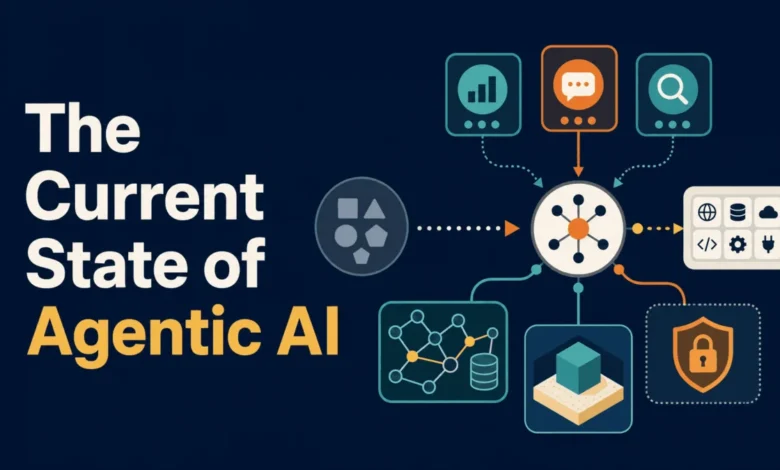
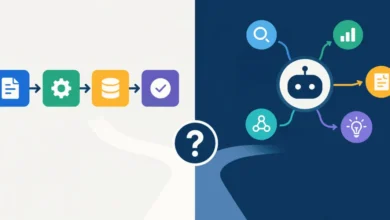
The realm of agentic AI architecture has undergone a profound transformation by mid-2026, pivoting sharply from the brute-force orchestration methods prevalent just a year prior. This rapid evolution has redefined how AI systems are designed, deployed, and secured, moving towards more autonomous, specialized, and interoperable paradigms. The dominant shifts include a significant departure from hand-crafted reasoning loops, the ascendancy of multi-agent swarms, and the crucial standardization of tool protocols through the Model Context Protocol (MCP). This period marks the maturation of agentic AI from a research curiosity into a critical engineering discipline, complete with its own constraints, failure modes, and sophisticated design principles.
A Retrospective: The Era of Brute-Force Orchestration
Looking back to mid-2025, the development of AI agents was largely characterized by a labor-intensive, imperative approach. Engineers frequently found themselves meticulously hand-crafting complex Reasoning and Acting (ReAct) loops. This involved battling brittle prompt chains and attempting to coerce single, often massive, language models (LLMs) into simultaneously managing planning, tool execution, and context retention. Frameworks like LangChain and LlamaIndex, while instrumental in their nascent stage, primarily served as external scaffolding to impose a step-by-step cognitive process onto models that inherently lacked sophisticated internal reasoning capabilities. Patterns such as Plan-and-Execute and Reflexion required explicit code to force a model to iterate, critique its own outputs, and attempt corrections. This monolithic architecture, where a single, all-encompassing agent was tasked with an ever-growing array of responsibilities and tools, inevitably led to bottlenecks, increased latency, and considerable token overhead, proving difficult to scale and maintain in production environments.
The Paradigm Shift: Native Reasoning and System 2 Thinking
The most dramatic change in how agents "think" stems from advancements in foundation models themselves. By mid-2026, leading LLMs have natively integrated what researchers often refer to as "System 2 thinking" directly into their architectures. This means models are now capable of generating hidden reasoning tokens, exploring multiple solution branches internally, and self-correcting their thought processes before producing a final output for the user. The extensive external scaffolding previously built to simulate reflection and step-by-step planning has, in many cases, become redundant.
This fundamental shift has significant architectural implications. Developers no longer need to construct elaborate orchestration frameworks merely to enable an agent to plan or reflect. As one leading AI architect, Dr. Anya Sharma, recently noted, "The liberation from manual prompt chaining and external reflection loops has been immense. Our engineering efforts can now be redirected from trying to force cognition to designing robust environments for truly intelligent agents." The orchestration layer’s role has consequently narrowed, focusing instead on high-level routing, efficient state management across interactions, and secure environment execution. The agent’s core cognitive loop is now handled intrinsically by the model, allowing engineers to concentrate on building the "sandbox" and communication protocols within which these self-reasoning entities operate. This move has not only streamlined agent design but also improved efficiency, with early adopters reporting up to a 30% reduction in computational latency for complex reasoning tasks.
The Rise of Decentralized Intelligence: Multi-Agent Swarms
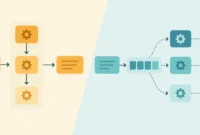
With the cognitive burden lifted from external orchestration, engineering energy has converged on decomposing work across multiple specialized agents, giving rise to "agentic swarms" – a paradigm akin to microservices in traditional software development. The prevailing philosophy by mid-2026 is that a single agent should be responsible for as little as possible. Attaching dozens of tools to a singular large model proved to be a scalability and performance bottleneck. Instead, production teams have increasingly adopted collections of smaller, highly specialized agents that communicate through standardized protocols.
Consider a complex data analysis request:
- Instead of one monolithic agent attempting to understand the query, access databases, write code, execute it, analyze results, and present findings, a swarm approach would involve:
- A Triage Agent that acts as the initial entry point, routing the request to the most appropriate specialist.
- A Data Fetcher Agent (e.g., SQL Agent) specializing solely in writing and executing read-only database queries. It possesses only the tools necessary for database interaction.
- A Data Analyst Agent dedicated to analyzing datasets using specialized libraries like Python’s pandas. Its toolset is confined to a secure Python sandbox for analytical tasks.
- A Report Generation Agent focused on synthesizing findings into user-friendly reports or visualizations.
This distributed architecture brings substantial benefits. While the overall system complexity doesn’t vanish, it becomes segmented, manageable, testable, and replaceable. Each agent can be developed, tested, and updated independently. Context windows remain lean, as each agent only receives the information pertinent to its specific task, rather than the entire conversational history. This also allows for the strategic use of cheaper, faster small language models (SLMs) for individual, narrowly scoped nodes within the swarm, reserving larger, more capable models for critical routing, synthesis, or complex problem-solving tasks. A recent industry survey indicates that over 60% of new enterprise AI deployments by Q2 2026 are adopting multi-agent architectures, citing improved maintainability and scalability as primary drivers.
The orchestration in these swarms relies on handoff tools. For example, when the Data Fetcher Agent completes its task of retrieving raw data, it doesn’t try to analyze it itself. Instead, it invokes a specialized tool (e.g., transfer_to_analyst) that passes control and the relevant data context to the Data Analyst Agent. This ensures that individual agents remain stateless per call, yet the system as a whole maintains a coherent, stateful workflow. "This microservices approach to AI agents dramatically reduces the cognitive load on any single model and allows for far more robust error handling and specialized performance," commented the CTO of a prominent financial technology firm, whose company has migrated significant internal processes to swarm-based AI.
Standardizing Interoperability: The Model Context Protocol (MCP)
Building agent swarms is only half the battle; connecting them seamlessly to the myriad real-world systems users interact with is the other. Historically, this integration work was one of the most tedious and error-prone aspects of agent development. Prior to mid-2026, integrating an external API often necessitated writing custom JSON schemas for every tool, meticulously handling HTTP requests, and debugging arbitrary JSON parsing errors from the model. Each new integration meant reinventing a significant portion of the wrapper logic.
The current state of tool calling is increasingly defined by the Model Context Protocol (MCP), an open standard that acts as a universal adapter between AI models and both local and remote data sources. MCP abstracts away the complexities of direct API interaction, offering a standardized interface.
| Old Paradigm (Pre-2025) | Current State (Mid-2026) |
|---|---|
| Hardcoded API keys directly into the agent’s environment. | Agent connects to an isolated, secure MCP server. |
| Engineer writes custom JSON schemas and parsing logic for every tool. | MCP server automatically discovers and exposes available tools and resources via a standardized interface. |
| Agent directly constructs and executes API calls inline, leading to tight coupling. | Execution happens securely on the MCP server, separating concerns and enhancing security. |
| High integration effort for new APIs, prone to custom errors. | Significantly reduced integration effort, improved reliability, and interoperability. |
This standardization means that an enterprise can plug a pre-built GitHub MCP server, a Slack MCP server, and a PostgreSQL MCP server into their agent swarm without needing to write the underlying API wrappers. While careful credential management on the server side remains crucial, the integration surface for individual agents is drastically smaller. Analysts estimate a 40% reduction in integration time for new tools using MCP-compliant systems, accelerating deployment cycles and fostering a richer ecosystem of interoperable AI services. A developer advocate for a major cloud provider recently remarked, "MCP has done for agentic tools what HTTP did for web services – it’s the glue that makes large-scale AI ecosystems possible."
Enabling Continuous Learning: Memory Graphs for Persistent Knowledge
One of the most compelling promises of agentic AI has always been the ability for agents to learn and improve from their own execution history. By mid-2026, this capability is moving firmly into production through the implementation of memory graphs. This approach cleverly distinguishes between per-call statelessness at the individual agent level and persistent, system-level memory. While individual agents remain stateless during each invocation to keep context windows lean and reduce computational overhead, the overall system carries persistent memory, typically managed through a graph database like Neo4j or through managed alternatives injected directly into the agent’s context pipeline.
The mechanism involves a specialized Memory Agent that runs asynchronously in the background. Its sole purpose is to observe and evaluate the main swarm’s task trajectories, extract persistent facts, insights, and successful strategies, and then update the graph database.
Here’s how it works in practice:
- Task Execution: The agent swarm executes a user request, performing complex multi-step operations and utilizing various tools.
- Trajectory Capture: The entire sequence of actions, observations, intermediate thoughts, and final outcomes is recorded.
- Memory Agent Analysis: Asynchronously, the Memory Agent processes this trajectory. It employs its own reasoning capabilities to identify salient facts, recurring patterns, successful problem-solving paths, or critical data points that should be retained as long-term knowledge.
- Graph Update: These extracted facts are then used to update the graph database, forming nodes (entities) and edges (relationships) that represent the system’s growing understanding of its operational environment, past solutions, and user preferences.
- Context Injection: For subsequent, related tasks, the system queries the memory graph to retrieve relevant knowledge. This retrieved context is then injected into the prompts of the appropriate agents in the swarm, enhancing their performance and decision-making without requiring fine-tuning of the underlying models.
This "context engineering" approach means the system improves over time, demonstrating a form of continuous, self-supervised learning. Early adopters report up to a 25% improvement in task completion efficiency and accuracy for repetitive or complex multi-step processes, as the system leverages accumulated experience rather than starting from scratch each time. "This shift from reactive prompting to proactive knowledge building is a game-changer for enterprise AI," stated Dr. Ben Carter, a lead data scientist at a major logistics company, highlighting the operational efficiencies gained from agents that truly learn.
Addressing the Expanded Attack Surface: Security in Agentic Swarms
With the advent of multi-agent systems connected via universal protocols, the attack surface for AI systems has expanded considerably. Concerns about "AIjacking" – indirect prompt injections hijacking automated workflows – which were previously warned about, are now among the primary security considerations for enterprise adoption. The swarm architecture, while offering immense functional benefits, inherently introduces new security vulnerabilities.
The core risk lies in the lateral movement of malicious instructions. If Agent A, which is designed to read external emails or process unstructured user input, can transfer context and control to Agent B, which has privileged access (e.g., to a database or internal systems), a cleverly crafted malicious instruction embedded in an email could pivot through the swarm. This mirrors traditional network intrusion patterns, where an attacker gains an initial foothold and then moves laterally to compromise more sensitive systems. The very handoff mechanisms that make swarms powerful also make them susceptible to these sophisticated attacks.
Three emerging defenses are converging to address this critical problem:
- Fine-grained Access Control and Capabilities-Based Security: This involves implementing granular permissions not just at the agent level, but at the tool-call level. An agent might have access to a tool, but only specific functions within that tool, and only under certain verified conditions. For instance, the Data Fetcher Agent might be allowed to
execute_read_querybut explicitly forbidden fromexecute_write_query, and any attempt to invoke a write operation would be blocked at the MCP server level. - Zero-Trust Context Passing and Verification: Every piece of context or instruction passed between agents, or from an external source into the swarm, is treated as untrusted until explicitly verified. This involves employing intermediate verification agents, content filters, and semantic checks to ensure that transferred context aligns with the receiving agent’s intended purpose and does not contain malicious or out-of-scope directives.
- Enhanced Observability and Audit Trails: Robust logging, monitoring, and auditing capabilities are becoming non-negotiable. Every agent interaction, tool call, and context transfer is meticulously recorded, providing a comprehensive audit trail. Anomaly detection systems, often powered by AI themselves, monitor these logs for unusual patterns that could indicate a lateral injection attempt or unauthorized activity.
These defenses, while not yet universally standardized, represent the active frontier of production agentic security. Any team deploying swarms in production today is advised to treat at least one, if not all, of these mechanisms as a baseline requirement. "The security implications of truly autonomous, interconnected agents cannot be overstated. We’re moving beyond mere data privacy to safeguarding entire operational workflows from intelligent adversarial attacks," cautioned Dr. Eleanor Vance, a cybersecurity expert specializing in AI trust and safety.
The Path Forward: Engineering Resilient and Specialized Swarms
Agentic AI has undeniably moved beyond a mere research curiosity, solidifying its status as a sophisticated engineering discipline. The foundational primitives – robust tool calling, intelligent routing, and native model reasoning – are maturing at an unprecedented pace. The remaining leverage for developers and enterprises lies squarely in the systems layer: how elegantly one designs the swarm topology, how effectively memory is architected to allow systems to compound knowledge over time, and how rigorously security boundaries are established to enable these intelligent systems to operate safely and reliably at scale.
The most successful teams today are not chasing incrementally "smarter" individual agents in isolation. Instead, their focus is on constructing more resilient, highly specialized, and securely interconnected swarms. For organizations embarking on their agentic AI journey, the consensus advice is to start small: pick one of the established patterns, implement it at a manageable scale, and instrument it meticulously. The architectural intuitions and operational best practices gleaned from a three-agent swarm are directly transferable and scalable to a thirty-agent or even three-hundred-agent ecosystem. This structured approach is paving the way for the next generation of truly autonomous and impactful AI applications, fundamentally reshaping how businesses operate and innovate in the digital age.