Mastering the Lifecycle of LLM-Integrated Scikit-Learn Pipelines with Scikit-LLM and MLflow

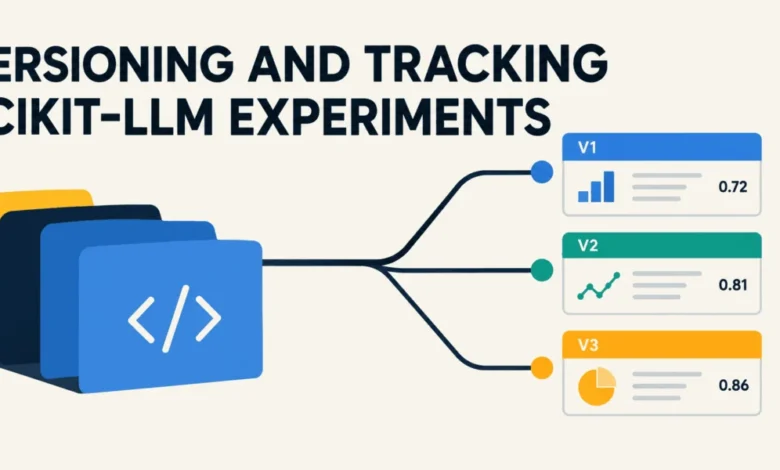
In the rapidly evolving landscape of artificial intelligence, the transition from experimental research to production-grade deployment remains a significant hurdle for machine learning engineers. The integration of Large Language Models (LLMs) into traditional scikit-learn pipelines has introduced a new layer of complexity, particularly regarding versioning, reproducibility, and model governance. As organizations increasingly rely on LLMs for zero-shot classification and predictive analytics, the necessity for robust tracking frameworks has never been more critical. By leveraging the Scikit-LLM library in conjunction with MLflow, developers can now establish a standardized, end-to-end lifecycle for LLM-driven workflows, ensuring that model transitions—from initial experimentation to formal registration—are transparent, auditable, and efficient.
The Challenge of LLM Pipeline Governance
For years, the standard machine learning workflow relied on well-defined feature engineering and model training processes that were relatively lightweight. The introduction of LLMs has shifted this paradigm. Unlike standard regression or classification models, LLMs require specific backend configurations, prompt engineering, and, often, significant computational resources. When an organization decides to upgrade a model—for instance, switching from a smaller, faster model like Orca Mini to a more robust architecture like Falcon—the potential for instability in the production pipeline increases.
Without a centralized system for tracking these changes, teams often face "versioning drift," where the specific configuration used to achieve a high-performing result is lost, leading to irreproducible outcomes. Furthermore, the lack of a formal model registry can lead to a cluttered deployment environment where failed experimental runs are indistinguishable from production-ready assets.
Building the Foundation: Environment and Configuration
To address these challenges, the initial step involves establishing a controlled environment. Developers must ensure that their development stack is optimized for local LLM execution. The installation of scikit-llm[gpt4all] alongside mlflow provides the necessary abstractions to treat LLM inference as a standard estimator within the scikit-learn pipeline ecosystem.
By utilizing gpt4all, developers can run open-source models locally, bypassing the latency and security concerns associated with external API calls. The configuration process involves setting dummy credentials within the SKLLMConfig module, which serves as a placeholder for local execution. Concurrently, initializing a local SQL database as the backend for the MLflow Model Registry is a pivotal step. This database acts as the single source of truth, storing metadata about every experiment, including parameters, code versions, and the serialized models themselves.
Chronology of an LLM Experiment
The lifecycle of an LLM-based pipeline typically follows a structured trajectory. First, a baseline model is established. For instance, using the Orca Mini 71m model, a developer constructs a Pipeline object containing a ZeroShotGPTClassifier. This baseline serves as a performance benchmark.
During the execution of this pipeline, MLflow’s start_run context manager captures the essential metadata. By logging specific parameters—such as the llm_backend and the precise llm_model_file—the team creates a permanent record of the environment at the time of training. To ensure the model remains portable and reproducible, the pipeline is serialized using cloudpickle, a flexible format that captures the state of complex Python objects, including the integrated LLM configuration.
As the project matures, the need to upgrade the model arises. Transitioning to a more sophisticated model, such as the Falcon-q4_0 variant, requires a parallel but distinct workflow. By isolating this upgrade in a separate MLflow run, engineers can perform an "apples-to-apples" comparison against the baseline. This systematic approach allows for granular analysis of how specific LLM backends influence classification accuracy on a shared dataset.
Data-Driven Auditing and Performance Metrics
The power of this integration lies in the ability to audit experiments retrospectively. Once multiple runs have been executed, the MLflow search API allows for the rapid aggregation of these disparate data points into a consolidated pandas DataFrame. This audit process is vital for quality assurance.
In a typical scenario, a lead data scientist would examine this summary table to identify patterns of success and failure. For example, if several runs have failed due to memory constraints or library incompatibilities, the status column in the MLflow report provides immediate visibility into these technical roadblocks. This level of transparency is essential for maintaining a high velocity in AI development, as it allows the team to pivot away from unproductive configurations without wasting additional computational cycles.
Transitioning from Experimentation to Production
The ultimate objective of any machine learning project is the deployment of a model that provides reliable value. The transition from a "logged" experiment to a "registered" model is the final, decisive step in the pipeline. By querying the experiment results—specifically searching for the run with the highest accuracy metric—a developer can programmatically select the optimal version for deployment.
The mlflow.register_model function effectively promotes the chosen pipeline to the Model Registry. This action assigns a version number to the model, marking it as a candidate for production. This registry serves as a gateway; only models that have been thoroughly tested, logged, and audited can pass through this process. For enterprise environments, this ensures that the model serving layer always consumes validated, high-quality assets, significantly reducing the risk of deploying underperforming or unverified AI components.
Broader Implications for AI Development
The implications of this methodology extend far beyond simple classification tasks. As LLMs become integrated into more complex workflows—including RAG (Retrieval-Augmented Generation) systems and multi-agent frameworks—the need for rigorous version control becomes even more acute. The combination of Scikit-LLM and MLflow provides a scalable framework that can adapt to these evolving requirements.
By standardizing the way LLMs are tracked, organizations can reduce the "technical debt" that often accumulates during the rapid prototyping phase of AI projects. Furthermore, this approach promotes a culture of accountability. When every model in production can be traced back to its original training run, its parameters, and its specific backend configuration, troubleshooting becomes a matter of data retrieval rather than guesswork.
Conclusion
The path toward reliable, production-ready LLM pipelines is paved with good governance and disciplined tooling. By integrating the flexible model-building capabilities of scikit-learn with the comprehensive tracking and registry features of MLflow, developers can transform the chaotic process of LLM experimentation into a streamlined, professional, and highly reproducible lifecycle. As the industry continues to push the boundaries of what is possible with generative AI, these foundational practices will remain the cornerstone of sustainable innovation, ensuring that the AI models of tomorrow are as stable and reliable as the software systems of today. Through careful logging, rigorous comparison, and formal registration, the potential for error is minimized, and the path to deployment becomes not just a possibility, but a reliable, repeatable reality.