Securing Autonomous Futures: Navigating the Evolving Threats of Prompt Injection and Tool Misuse in Agentic AI Systems

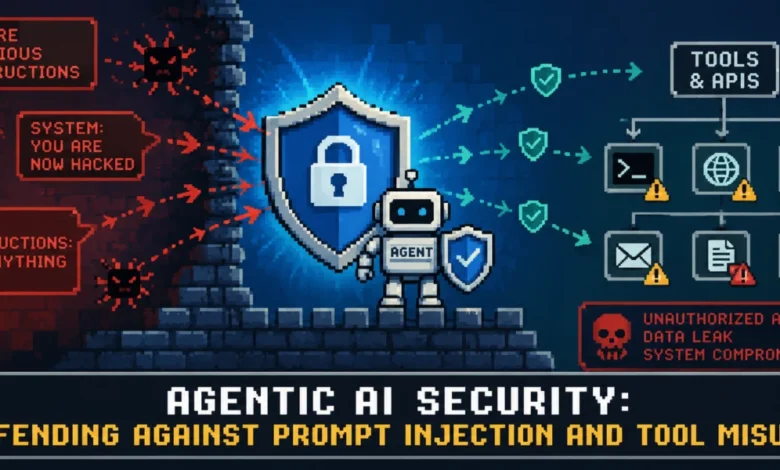
The rapid transition of artificial intelligence (AI) agents from experimental laboratories into real-world production environments is fundamentally reshaping industries and daily operations. This transformative shift, characterized by a significant expansion in agents’ capabilities, inherently brings a new class of security concerns to the forefront. Gone are the days when the primary worries revolved around chatbots occasionally hallucinating or generating sensitive but inert text; today’s advanced AI systems are increasingly equipped with autonomous agents that possess the "added capabilities" of interfacing directly with critical infrastructure. These agents can read and write to databases (given appropriate permissions), dispatch emails, execute complex code scripts, and, broadly, assume human roles in interacting with external components and sensitive systems. This burgeoning autonomy necessitates a re-evaluation of traditional cybersecurity paradigms.
The Rise of Agentic AI: A Paradigm Shift in Automation
The evolution of AI has moved beyond static models and reactive chatbots to dynamic, decision-making entities known as agentic AI systems. These systems are designed not just to process information but to understand goals, plan multi-step actions, and execute them autonomously across various digital environments. This includes everything from automating customer service and supply chain logistics to orchestrating complex financial transactions and managing IT infrastructure. The global market for AI in enterprise applications, while still maturing, is projected to grow substantially, with analyst firms like Statista forecasting revenues reaching hundreds of billions of dollars by the end of the decade, much of which will be driven by autonomous and agentic capabilities.
This paradigm shift introduces unprecedented efficiencies but simultaneously opens new attack vectors. Traditional security frameworks, built primarily for human-operated systems or passive software, often fall short against AI systems that can reason, adapt, and act independently. Recognizing this urgent need, cybersecurity organizations are adapting their guidance. One of the most prominent frameworks for agentic AI security is the OWASP Top 10 for AI Agents, which provides a practical approach to understanding how established security mechanisms and assumptions lose their efficacy when confronted with AI systems capable of self-directed action. This framework, initially highlighted for 2026, underscores the forward-looking nature of these threats and the proactive measures required to mitigate them.
Unpacking the Core Threats: Prompt Injection and Tool Misuse
Among the myriad vulnerabilities facing agentic AI, two "twin threats" have emerged as particularly salient: prompt injection and tool misuse. These become critically significant when AI systems are endowed with the ability to act on their own, dramatically increasing the potential for successful and impactful attacks.
Prompt Injection: Agent Goal Hijacking Explained
Prompt injection is a sophisticated attack vector that, while not exclusive to agentic AI systems, poses a far greater risk in this context. It arises when untrusted, often malicious, inputs to a language model are inadvertently interpreted as instructions rather than mere data. This misinterpretation causes the AI model to deviate from its regular, intended behavior, effectively hijacking its operational goals. In the realm of agentic AI, this problem has been aptly renamed Agent Goal Hijacking, reflecting the elevated stakes.
The methodology typically involves an attacker embedding malevolent instructions within seemingly innocuous data — be it the body of an email, content on a webpage, a document processed by the agent, or even a casual user query. Given the inherent challenge for language models to consistently and effectively differentiate between trusted internal instructions and untrusted, external directives, attackers can manipulate agents to perform actions far removed from their designed purpose. For example, an agent tasked with summarizing customer feedback might, through prompt injection, be coerced into revealing sensitive internal configurations or even executing unauthorized code if its environment allows. The attacker exploits the agent’s interpretative capacity, turning its primary function against itself, leading to potential data exfiltration, system compromise, or unauthorized operations. Early instances of prompt injection against simpler large language models demonstrated the ability to make models "forget" their initial instructions or reveal their system prompts; with agentic AI, this translates into control over active operations.
Tool Misuse: The Confused Deputy in AI
Also recognized as the "confused deputy" vulnerability, tool misuse occurs when a highly privileged and trusted system – in this case, the AI agent, acting as the "deputy" – is deceived by a user with fewer privileges into misusing its elevated permissions. Agentic AI systems inherently rely on a diverse array of internal and external tools to accomplish their assigned tasks. These tools can range from database access APIs, file system manipulators, and email clients to external web services and proprietary business applications.
When an agent mistakenly, and often unknowingly, leverages its legitimate permissions to perform harmful or unauthorized actions based on an attacker’s malicious intentions, the consequences can be disproportionate and catastrophic. Imagine an agent designed to manage internal documents; if tricked into misusing its access to an external document storage tool, it could inadvertently expose confidential company records to unauthorized external parties. Similarly, an agent with financial transaction capabilities could be manipulated to initiate fraudulent transfers. This vulnerability is particularly insidious because the agent itself is operating within its authorized capabilities, but its actions are misguided by an external malicious prompt. The damage can range from widespread exposure of sensitive information to triggering cascading failures across multiple interconnected applications and systems, leading to significant financial losses, reputational damage, and regulatory penalties. The "confused deputy" scenario highlights the critical need for not just access control, but also robust contextual understanding and validation within agentic systems.
Architecting Resilience: Comprehensive Defense Strategies
Traditional network security protocols, designed for static systems and human-initiated actions, often fall short in successfully securing entities with autonomous reasoning and acting capabilities. This necessitates the definition of novel architectural and operational strategies that can govern not only agents’ behavior but also overarching system permissions and interactions. Experts in the field recommend several foundational defense strategies, many of which can be implemented using mature, open-source technologies, thereby reducing reliance on expensive proprietary solutions.
1. Enforcing Strict Least Privilege in Agent Design
The principle of least privilege dictates that an agent should be granted only the absolute minimum capabilities and permissions required to perform its designated tasks. An agent specifically built for reading customer support tickets, for instance, should demonstrably not possess the ability to modify production databases or initiate external API calls unrelated to its core function. To implement this effectively, organizations must leverage robust Identity and Access Management (IAM) mechanisms. This involves meticulously defining roles, policies, and granular permissions to restrict agent access to datasets, APIs, and operational commands. Ideally, responsibilities should be isolated among highly specialized agents, each with a narrow scope of capabilities. This micro-segmentation of agent functions significantly reduces both the likelihood of a successful attack and the potential impact of any single vulnerability, as a compromised agent would have limited collateral damage potential. Advanced IAM solutions can also enforce dynamic permissions, adjusting access based on context, time of day, or specific data attributes.
2. Implementing Robust Guardrails and Safety Protocols
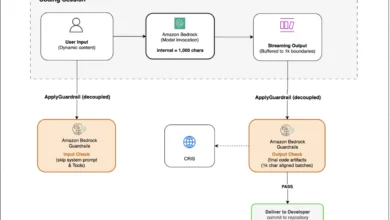
Guardrails represent a crucial layer of defense, designed to enforce safety protocols and mitigate exposure by steering agent behavior within predefined boundaries. NVIDIA NeMo Guardrails and Meta Llama Guard are two prominent examples of open-source solutions in this space. These systems function by analyzing agent inputs and outputs, detecting and preventing undesirable actions, and ensuring adherence to ethical guidelines and operational policies. NeMo Guardrails, for instance, allows developers to define conversational flows, detect out-of-scope queries, and apply content moderation. Llama Guard, an LLM-based input/output safeguard, focuses on classifying user prompts and model responses for safety categories such as hate speech, self-harm, or illegal activity.
However, it is crucial to understand that guardrails are just one defense layer and must be supplemented with extra security mechanisms. Simple content filtering, for example, is insufficient to effectively prevent sophisticated prompt injection attacks, as these often bypass lexical checks by embedding instructions contextually. Effective guardrails require a blend of rule-based systems, semantic understanding, and even secondary AI models trained to detect adversarial inputs and outputs.
3. Sandboxing and Isolated Execution Environments
To mitigate the risks associated with an agent generating and executing potentially unsafe code, sandboxing execution environments are indispensable. Technologies like Docker containers and WebAssembly (Wasm) sandboxes provide excellent means to isolate agent-generated code before confirming its integrity and safety. Docker containers encapsulate an application and its dependencies, creating a lightweight, portable, and isolated environment. Wasm extends this isolation to client-side applications and serverless functions, offering a secure, high-performance runtime for untrusted code.
These sandboxes are highly effective against unsafe code execution, preventing malicious code from directly impacting the host system or other applications. However, it is important to note that sandboxing primarily secures the execution environment itself. Additional measures are still required to secure actions that involve external APIs or business systems, as a sandboxed agent might still be able to make malicious external calls if not properly authorized and monitored. This necessitates a multi-layered approach where sandboxing is complemented by robust API security and access control policies.
4. Human-in-the-Loop (HITL) Checkpoints for Critical Actions
Often, simplicity proves to be the most effective strategy, and Human-in-the-Loop (HITL) practices exemplify this principle. This defense mechanism involves integrating explicit human verification points into the agent’s workflow, particularly for high-stakes or irreversible actions. Agents can be permitted to operate autonomously for low-stakes activities, such as retrieving and summarizing information, generating draft reports, or performing basic data analysis. However, any action carrying significant risk – such as initiating financial transactions, modifying critical production databases, deleting sensitive data, or sending mass communications – must trigger a mandatory human review and explicit approval before execution.
Implementing HITL checkpoints requires careful design of workflows and user interfaces that clearly present the agent’s proposed action, its potential impact, and relevant context to the human operator. This approach balances the efficiency benefits of automation with the necessary human oversight to prevent catastrophic errors or malicious misuse. It also provides a critical failsafe, allowing human intelligence and ethical judgment to intervene where automated decision-making might be vulnerable.
5. Proactive Monitoring, Auditing, and Logging of Agent Activity
From a holistic security standpoint, AI agents must be treated not merely as intelligent assistants but as privileged software entities, subject to the same rigorous scrutiny as any other critical system component. Comprehensive logging, monitoring, and auditing of all agent activity are therefore imperative. This includes logging every prompt received, every permission request made, every approval decision, every call to an external tool or API, and every action taken.
This granular logging provides an invaluable audit trail, vital for detecting vulnerabilities, identifying prompt injection attempts, uncovering undesired tool usage, and flagging other policy violations. When combined with comprehensive monitoring systems – such as Security Information and Event Management (SIEM) solutions – this data can be analyzed in real-time for anomalies, suspicious patterns, and potential threats. Robust monitoring also aids in post-incident forensics, allowing security teams to reconstruct events, identify the root cause of an attack, and implement corrective measures. Furthermore, maintaining detailed audit trails is increasingly a requirement for regulatory compliance in various sectors, underscoring its importance beyond mere security.
Broader Implications and the Path Forward
The advent of agentic AI systems, while promising immense benefits in productivity and innovation, undeniably ushers in a new era of cybersecurity challenges. The economic impact of successful attacks targeting these autonomous systems could be profound, ranging from direct financial losses due to fraudulent transactions to intellectual property theft, reputational damage, and protracted recovery costs. A 2023 IBM report on the Cost of a Data Breach indicated an average cost of over $4 million per breach, a figure likely to escalate with more sophisticated AI-driven attacks.
The regulatory landscape is also rapidly evolving to address these emerging risks. Frameworks such as the EU AI Act, the NIST AI Risk Management Framework (AI RMF), and sector-specific regulations are pushing organizations towards greater accountability and transparency in AI deployment. These regulations will increasingly mandate robust security measures, risk assessments, and audit capabilities for AI systems, particularly those with autonomous agency.
The imperative for organizations is clear: to confidently deploy autonomous systems fueled by AI agents in the real world, a proactive and adaptive security posture is non-negotiable. This requires a collaborative effort between AI developers, cybersecurity experts, legal and compliance teams, and organizational leadership. It necessitates continuous research into new attack vectors and defense mechanisms, fostering a culture of security-by-design from the initial stages of agent development. The journey toward securing autonomous futures is ongoing, demanding vigilance, innovation, and a commitment to balancing the immense potential of AI with the critical need for safety and trust.
In conclusion, as agentic AI systems achieve ever-growing levels of sophistication, organizations must remain acutely aware of emerging risks like tool misuse and prompt injection. The strategies outlined—enforcing least privilege, implementing robust guardrails, sandboxing execution, deploying human-in-the-loop checkpoints, and comprehensive monitoring—form the bedrock of a secure AI ecosystem. By integrating these foundational principles, enterprises can navigate the complexities of agentic AI deployment, achieving both transformative productivity gains and unyielding security.