Amazon Quick Transforms Sales Productivity, Freeing Representatives to Focus on Core Selling and Strategic Growth

The modern sales landscape, increasingly competitive and complex, demands unparalleled efficiency from its professionals. However, a recent report from Salesforce indicates a stark reality: the average sales representative dedicates only 40% of their workday to actual selling activities. The remaining 60% is consumed by a myriad of essential, yet lower-value, administrative tasks. These include meticulous customer relationship management (CRM) updates, exhaustive prospect research, crafting personalized email communications, and the constant, productivity-draining context-switching between disparate digital tools. This pervasive inefficiency often leads to days where high-value, deal-closing interactions represent only a fraction of a sales professional’s efforts, impacting both individual performance and broader organizational revenue targets.
In response to this critical industry challenge, Amazon has introduced Amazon Quick, an innovative AI assistant designed to fundamentally redefine enterprise productivity. Quick acts as an intelligent co-pilot, adept at transforming inquiries into actionable insights, and these insights into tangible business outcomes. For sales teams, this translates into a significant reclaiming of time, allowing representatives to focus predominantly on selling and strategic customer engagement rather than administrative burdens. The platform operates seamlessly across various environments, whether directly within a web browser, through its dedicated desktop application, or integrated into widely used productivity suites like Microsoft 365 and Outlook. This pervasive integration ensures that AI-powered assistance is always at hand, regardless of the user’s current workflow. The anticipated result for businesses adopting Quick is profound: expanded market coverage, accelerated deal closures, and a tangible deepening of customer loyalty across all operational scales.

Leading enterprises, including the diversified global conglomerate 3M, AWS Global Sales, and Amazon itself, have already begun leveraging Amazon Quick to unlock the full potential of their sales forces. These early adopters are demonstrating how Quick can revolutionize insight delivery, ensure sales teams remain current with new product launches and offerings, and streamline the deployment of comprehensive AI suites across thousands of users. The insights gleaned from these implementations underscore Quick’s capacity to drive meaningful, measurable improvements in sales efficiency and effectiveness.
This comprehensive overview delves into the myriad ways Amazon Quick delivers on its promise of enhanced sales productivity. We will navigate through the entire sales cycle, illustrating how Quick empowers representatives from the initial identification of high-priority prospects, through tailored outreach, diligent deal nurturing, and eventual closure, all while ensuring CRMs remain impeccably updated as accounts mature. Critically, Quick serves as a guardian of a salesperson’s most valuable and scarcest resource: their time.
The Shifting Landscape of Sales Productivity: A Deep Dive into Challenges
The statistic that only 40% of a sales rep’s time is spent selling is not merely a number; it represents a significant drain on potential revenue and a source of considerable frustration for sales professionals. The tasks that absorb the remaining 60% – CRM data entry, manual research, email composition, meeting scheduling, and constant switching between communication platforms, internal databases, and external research tools – are undeniably necessary for the sales process. However, their manual execution creates bottlenecks, introduces errors, and detracts from direct customer interaction.
According to a 2023 report by HubSpot, sales reps spend an average of one hour per day on data entry alone. Furthermore, studies by Gartner indicate that sales organizations that leverage AI for sales forecasting and pipeline management can see up to a 10% increase in forecast accuracy. This context highlights not just the problem of inefficiency, but the burgeoning opportunity presented by AI-driven solutions. The global market for AI in sales is projected to grow substantially, driven by the imperative for companies to optimize their sales processes, improve customer engagement, and ultimately boost revenue in an increasingly competitive global economy. This shift underscores a broader trend in enterprise technology, where artificial intelligence is moving beyond experimental applications to become an indispensable tool for enhancing core business functions.
Amazon Quick: An AI Assistant for Every Stage of the Sales Cycle

Amazon Quick is positioned as more than just a tool; it’s an intelligent partner embedded throughout the sales journey. Its design philosophy centers on context-awareness and actionability, transforming raw data into strategic advantage. By integrating with existing sales ecosystems, Quick minimizes disruption while maximizing impact. This section provides an overview of how Quick tackles key pain points across the sales lifecycle.
Intelligent Prioritization: Navigating the Lead Maze with Precision
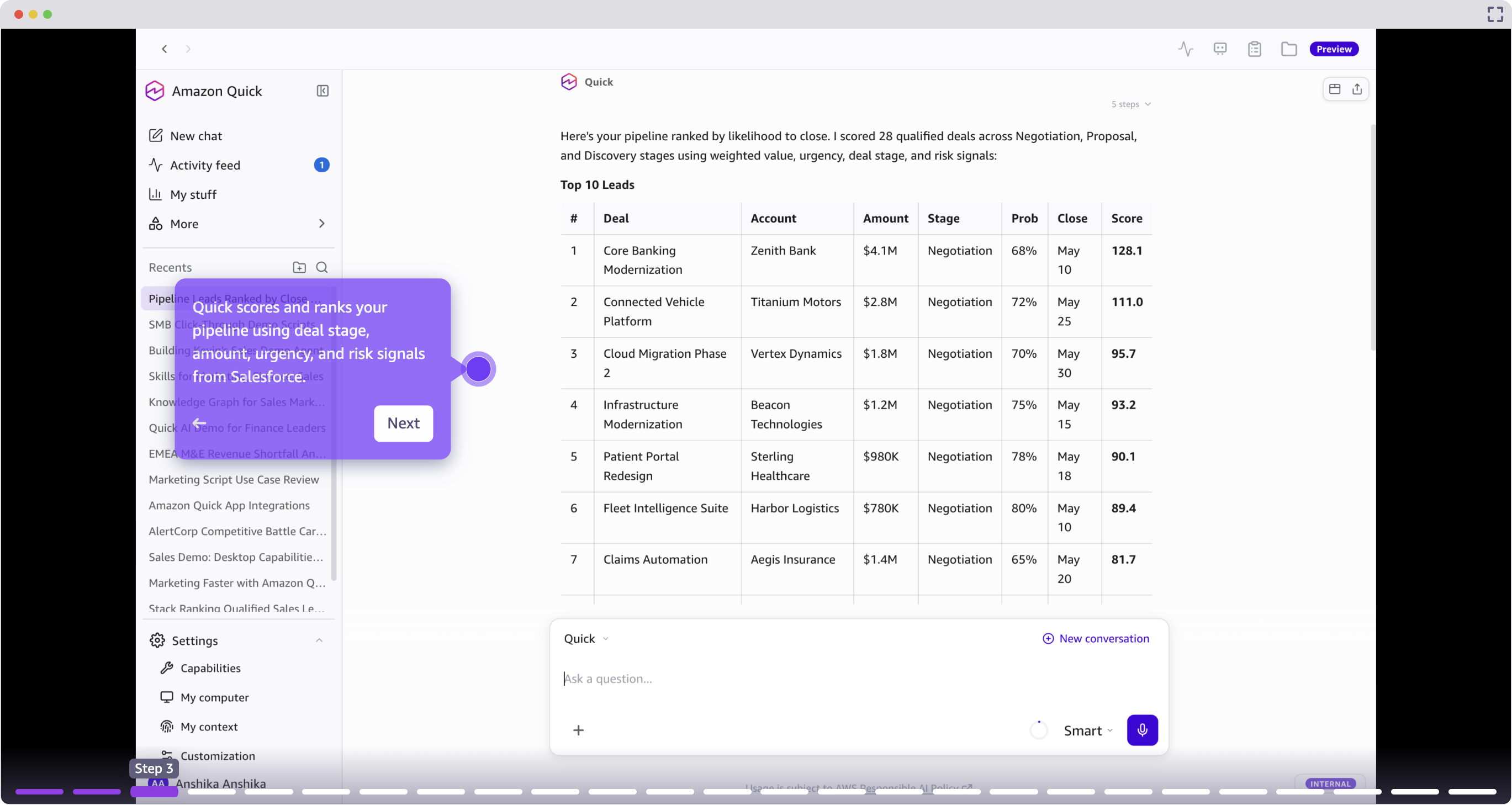
One of the most enduring challenges for sales teams is accurately identifying and prioritizing high-intent prospects from a vast, often unstructured, pool of leads. Imagine a sales professional confronting a CRM dashboard displaying 200 leads: some from a form submission six months ago, others from a whitepaper download last week, and a few from recent cold email replies. Without a clear mechanism for prioritization, valuable time can be wasted pursuing dormant leads, or worse, smaller opportunities may overshadow larger, more lucrative ones. This lack of visibility into true buying intent frequently leads to prolonged sales cycles and missed revenue opportunities.
Amazon Quick addresses this by offering automated, intelligent lead scoring and prospect prioritization. It achieves this by seamlessly connecting to a company’s CRM, email platforms, web analytics tools, and customer support systems. Through this comprehensive data integration, Quick analyzes a multitude of engagement signals – website visits, email opens, content downloads, support ticket history, and more – to dynamically rank leads based on their current buying intent. Furthermore, Quick’s custom chat agents can pull relevant context directly from internal documents, existing opportunity details, and extensive account history, ensuring that sales representatives are consistently focusing their efforts on the prospects most likely to convert.
To harness this capability, the initial step involves integrating Quick with existing CRM systems such as Salesforce, HubSpot, or ServiceNow. Detailed, step-by-step instructions are readily available in the Quick documentation for these and other supported integrations. Once integrated, sales teams can leverage Amazon QuickSight, the business intelligence service within Amazon Quick, to build interactive dashboards from their connected data sources. A natural language prompt, such as "rank my pipeline," can then trigger Quick to analyze the dashboard, aggregating data across all connected systems to produce a dynamically prioritized view of the sales pipeline. Deals exhibiting stalled progression, overdue follow-ups, or competitive pressure are immediately surfaced at the top, enabling immediate, informed action.
Risk Detection and Proactive Next Steps
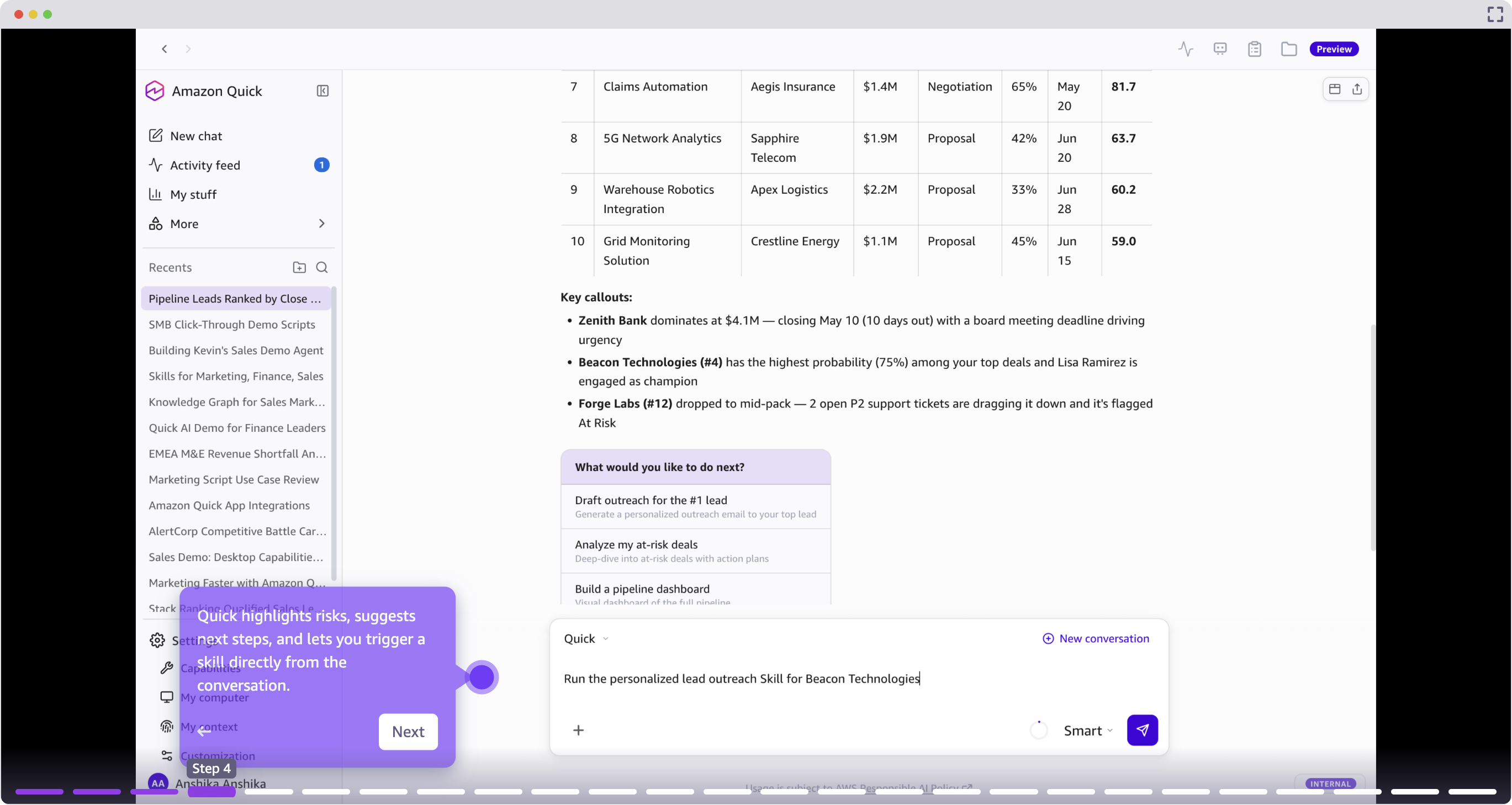
Beyond mere prioritization, Quick excels at identifying specific risk signals within individual deals. These can range from a stalled email thread, a missed follow-up, or even mentions of competitors in recent communications. Crucially, Quick doesn’t just flag risks; it recommends concrete next actions. This proactive guidance empowers sellers to address potential issues before they escalate. For instance, a salesperson can directly trigger a follow-up skill from within a Quick conversation, eliminating the need to switch applications or manually initiate the task. This seamless transition from insight to action is a hallmark of Quick’s design.
Crafting Connections: The Power of Personalized Outreach
Once high-priority prospects are identified, the next critical step is initiating contact with a message that resonates. Traditionally, crafting a sufficiently personalized outreach email demands significant manual research, spanning CRM records, internal documents, external sources like company websites and press releases, and individual LinkedIn profiles. The alternative, a generic email, is almost certainly destined for the digital trash bin. This creates a challenging trade-off between personalization and time efficiency.
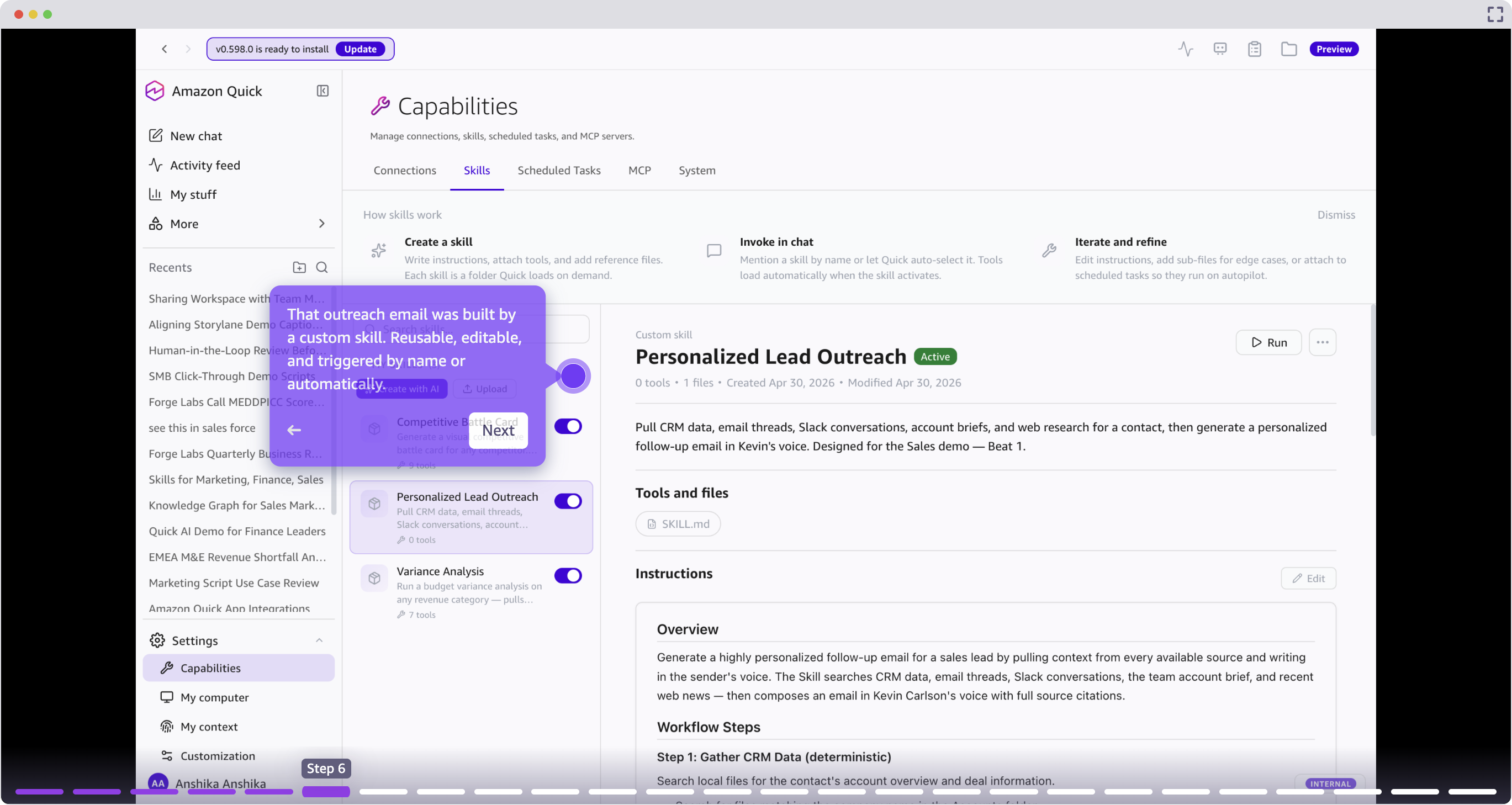
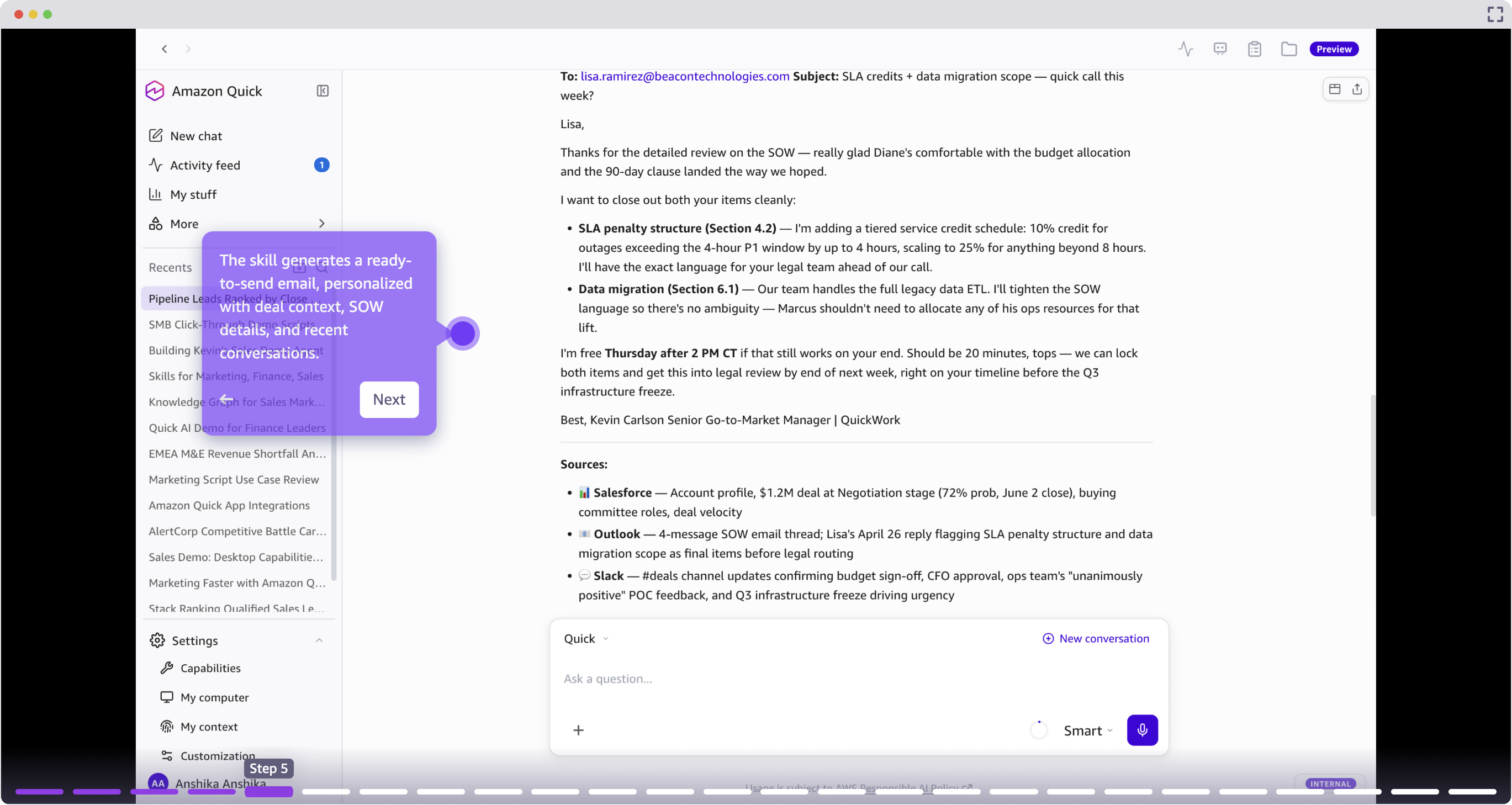
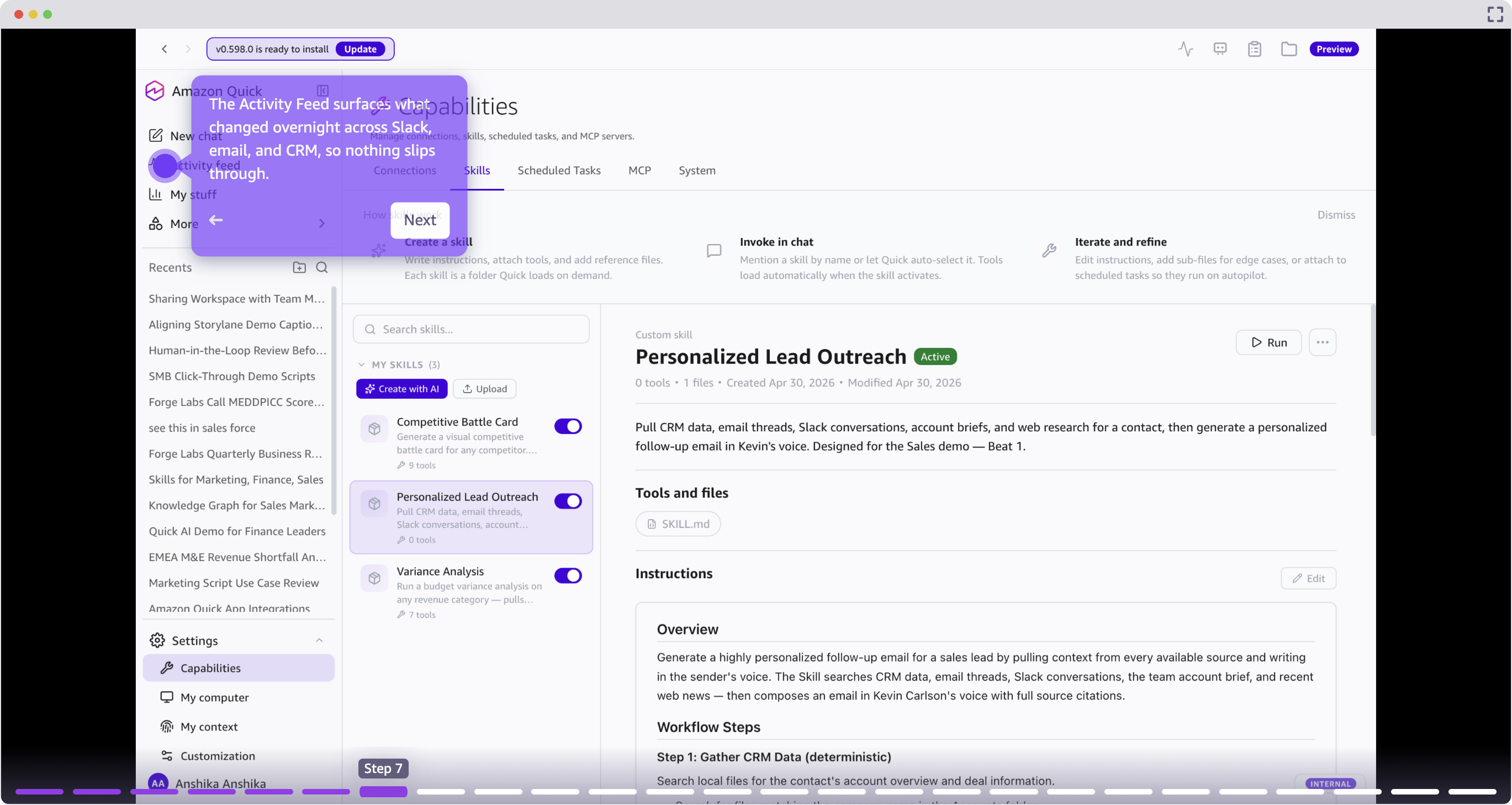
Amazon Quick elegantly resolves this dilemma. It enables sales professionals to craft highly tailored outreach messages that incorporate specific, relevant context—such as recent company news, pain points identified in past interactions, and applicable use cases—all without requiring hours of manual research. Recognizing that personalized outreach is a recurring necessity, Quick allows users to create "skills." An Amazon Quick skill is a reusable, automated workflow that executes a series of steps on behalf of the user. For instance, a skill can be configured to "research a prospect by pulling data from multiple sources (CRM, email threads, Slack conversations, account briefs, and web research), then generate a personalized outreach message." This skill, once created, can be deployed for the current prospect and then easily repurposed across all accounts, ensuring consistent, high-quality personalization at scale. This functionality is significantly enhanced through integration with email clients like Microsoft Outlook, allowing messages to be generated and sent directly from Quick. Furthermore, with extensions for Microsoft 365, sales professionals can work directly within Outlook or Teams, with Quick appearing as a side panel to generate personalized content, retrieve account context, and refine messaging without ever leaving their communication environment.
Streamlined Operations: From Daily Digests to Meeting Mastery
The daily grind of sales often involves juggling multiple communication channels and data sources, making it challenging to stay abreast of all developments. Quick’s Activity Feed provides a solution by surfacing changes that have occurred overnight across various platforms like Slack, email, and CRM. Crucially, these updates are prioritized by their relevance to the seller’s active deals, replacing fragmented morning triage across multiple tools with a single, consolidated, intelligent view.
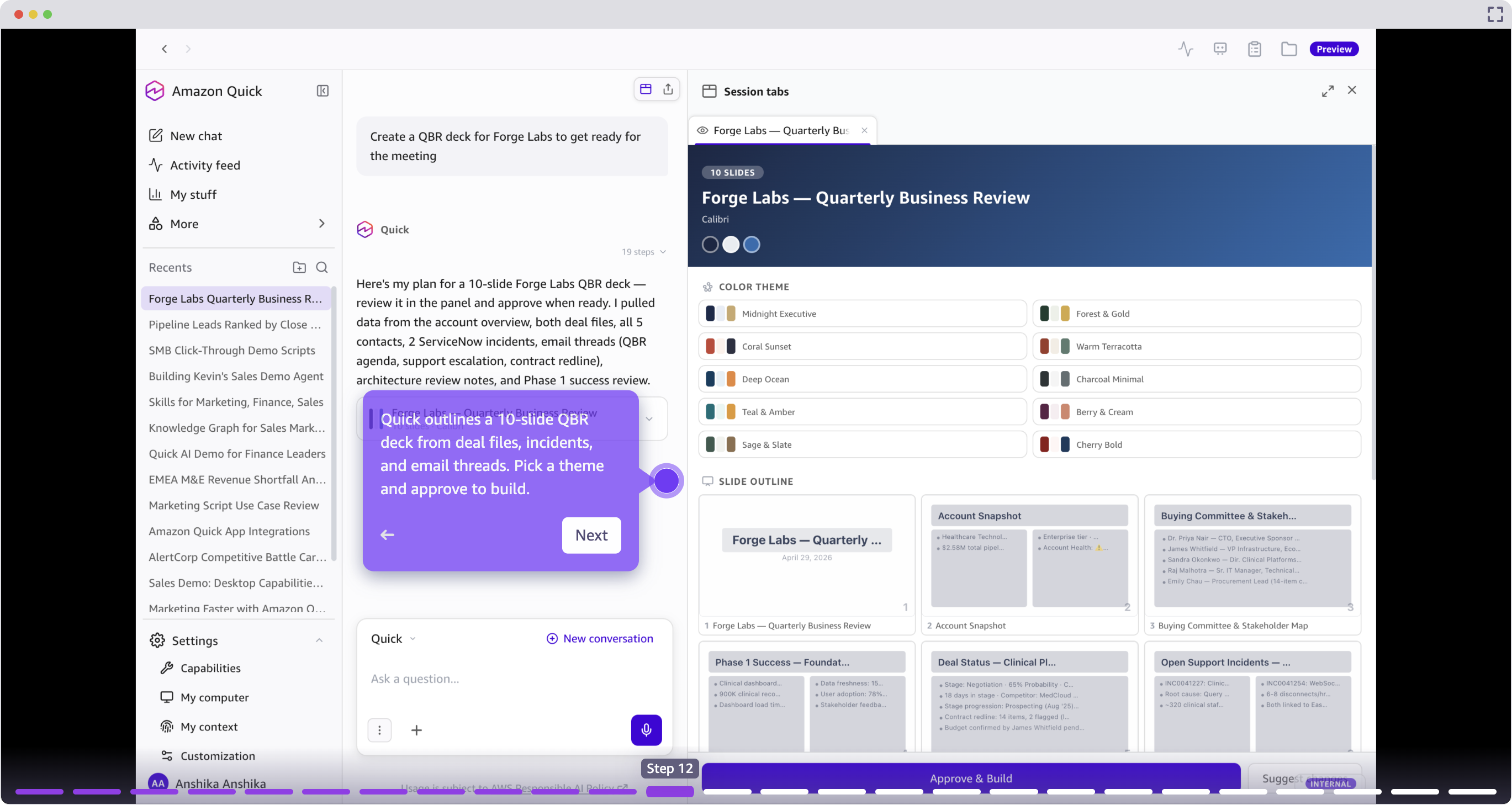
Preparing for crucial customer meetings—be it an initial discovery call or a comprehensive Quarterly Business Review (QBR)—is another significant time sink. Traditionally, this preparation could consume hours, requiring toggling between CRM for deal history, service management platforms like ServiceNow for support tickets, email clients for past conversations, and search engines for industry context. By the time a complete picture is assembled, an hour or more might have elapsed. Quick revolutionizes this process. A sales professional can simply prompt Quick to generate a one-page meeting prep document, replete with an account snapshot, attendee biographies, pertinent questions, and identified risks. This is made possible by linking Quick Chat to a Quick Space, a centralized knowledge repository where documents, data sources, and files relevant to an account are organized and accessible for Quick to reference.
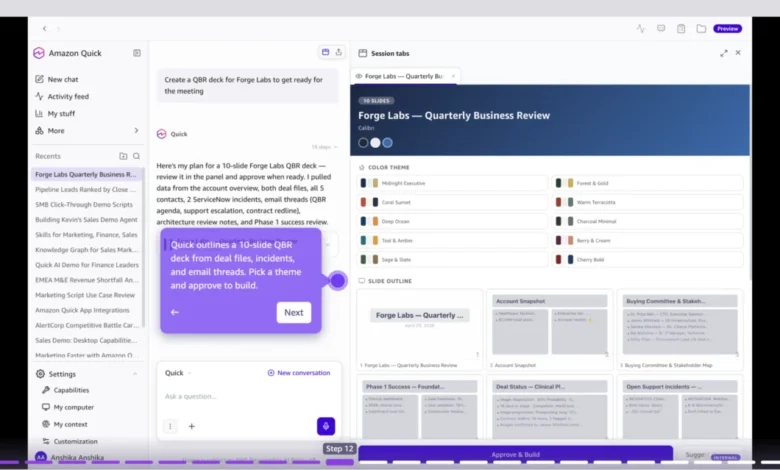
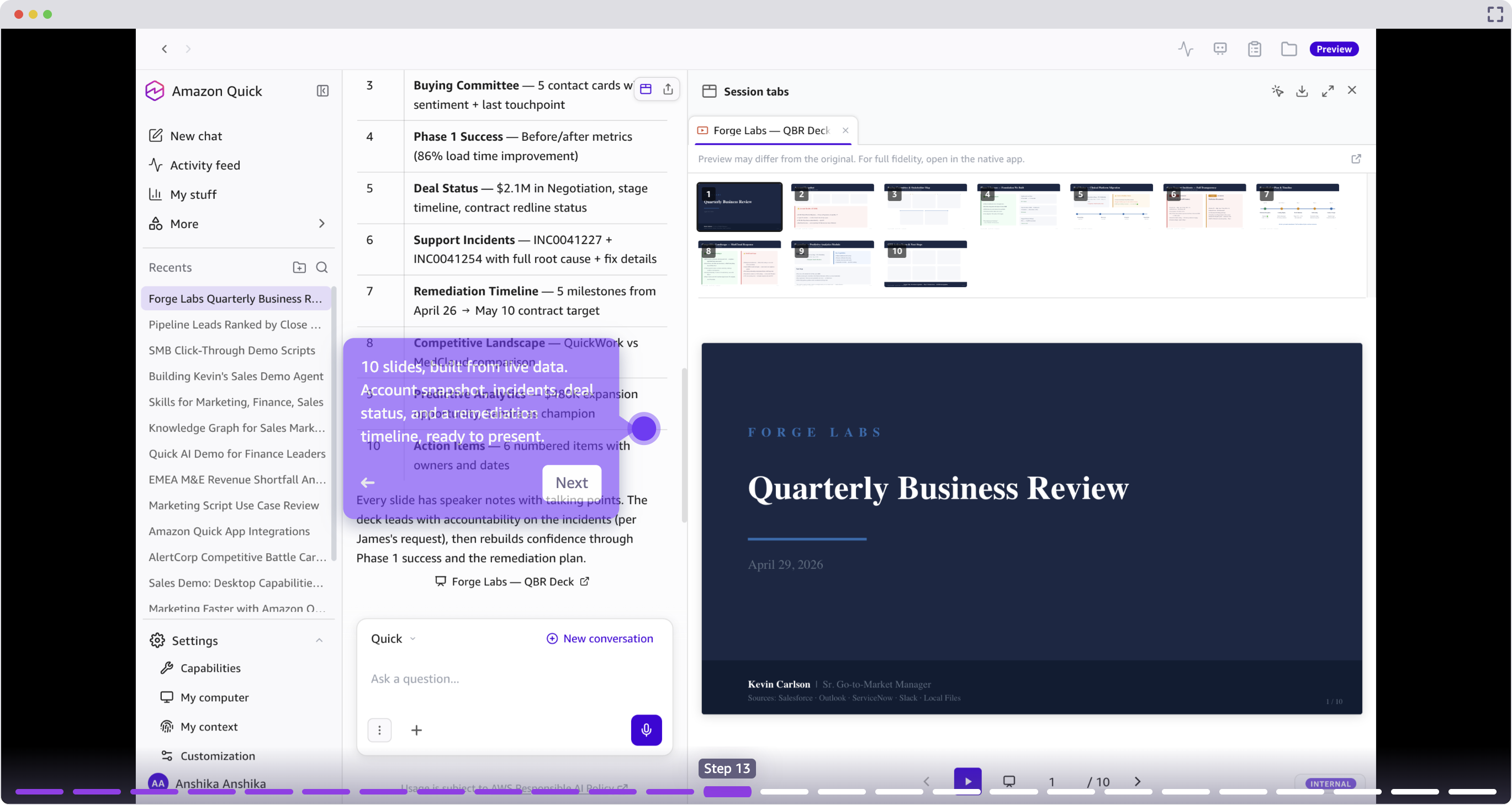
For more extensive preparations, such as a QBR, Quick can go further. It can outline and even build a full presentation deck by drawing from deal files, support incidents, and email threads. The seller reviews Quick’s proposed outline, selects a desired theme, and approves the build. The resulting presentation deck is dynamically generated, including an account snapshot, an incident timeline, current deal status, and a remediation plan, all constructed from live, current data rather than manually pieced together. This capability drastically reduces preparation time from hours to mere minutes, ensuring sellers enter every meeting with confidence and comprehensive information.
Elevating Performance: Analyzing Conversations and Automating CRM
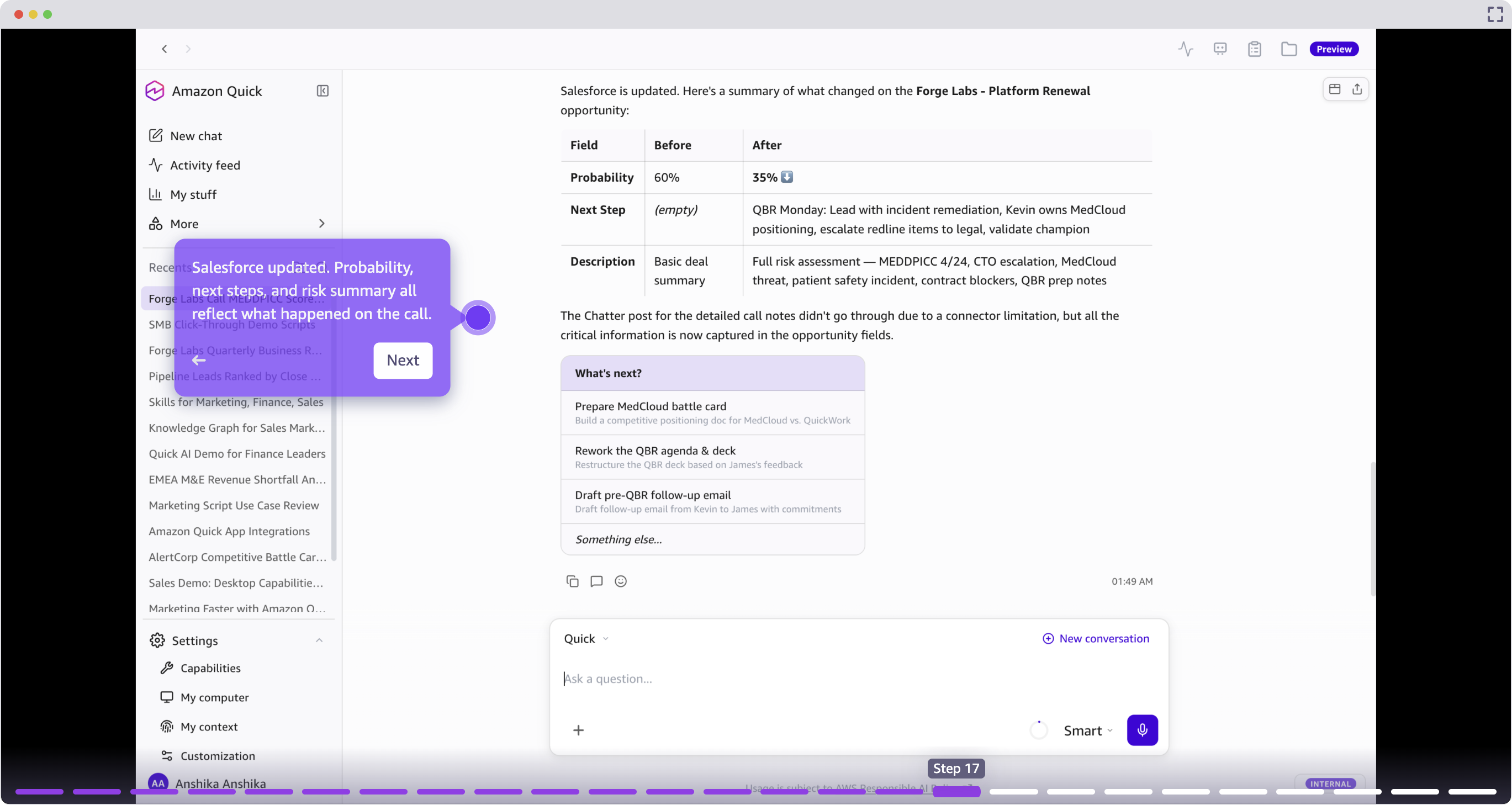
Post-meeting activities often include the critical, yet tedious, task of updating CRM records. Each interaction can demand 15-20 minutes of data entry, a task often deprioritized amidst other time-sensitive customer interactions. The longer the delay between a meeting and the CRM update, the greater the risk of losing context and critical details.
Amazon Quick offers a powerful solution through its call transcript scoring feature. After a meeting, sellers can simply input a call transcript into Quick for automated scoring against their chosen sales methodology—be it MEDDPICC, BANT, or a custom framework. Quick intelligently identifies key topics covered, highlights remaining gaps, and provides a structured assessment of deal health based on the conversation’s content. Following this comprehensive call analysis, Quick automatically pushes structured updates to CRM systems like Salesforce. These updates can include revised deal probabilities, clearly defined next steps, identified risk flags, and a concise conversation summary. This seamless automation ensures that the system of record remains accurate and up-to-date without requiring manual data entry, thereby freeing up valuable sales time and improving data integrity.
Empowering Innovation: No-Code Applications and Relationship Intelligence
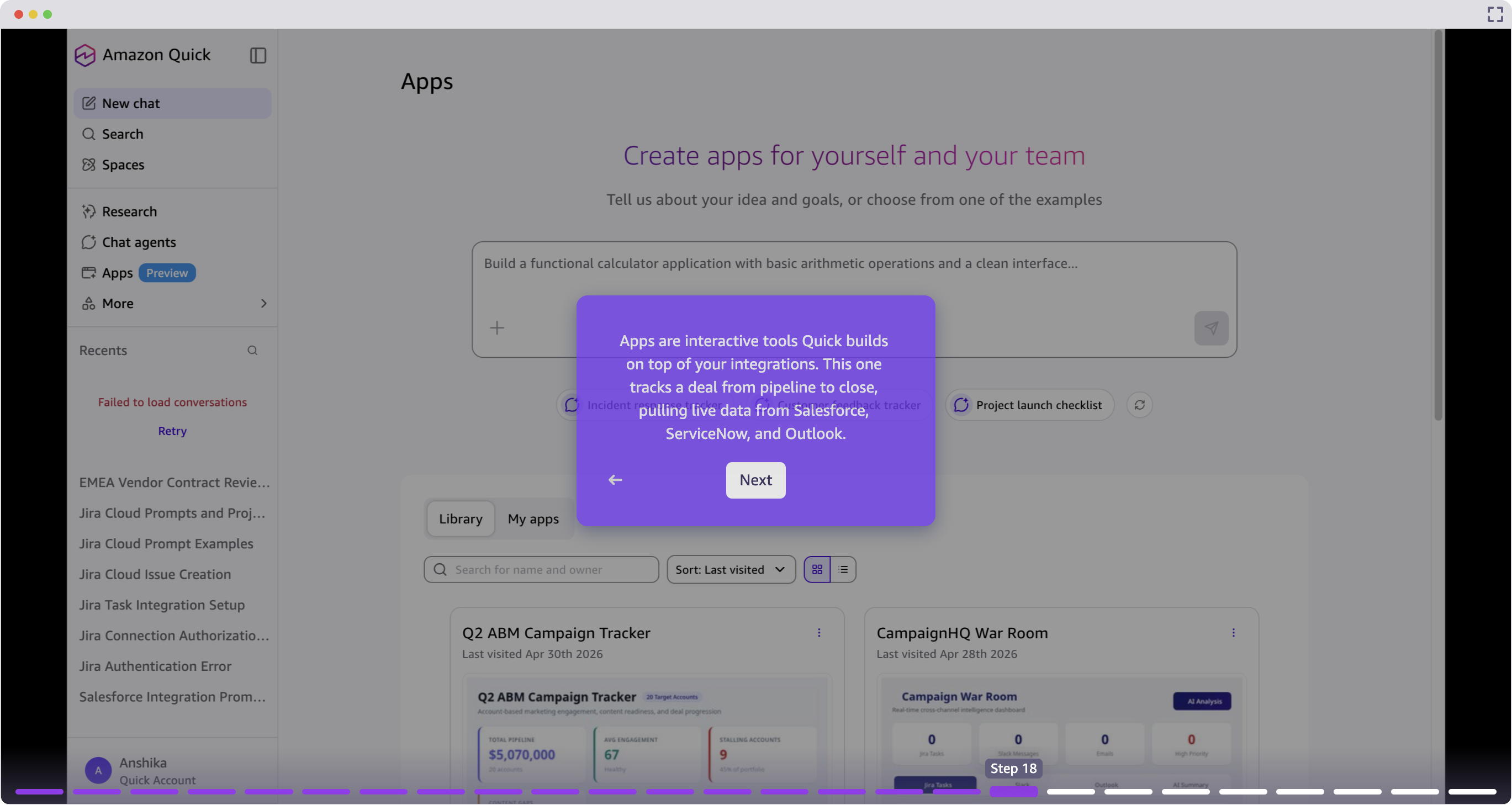
Amazon Quick extends its utility beyond pre-defined workflows by empowering sellers and sales operations teams to build interactive applications from natural language prompts. This capability allows users to automatically read connected data schemas and scaffold a live application without writing a single line of code. For instance, a sales manager could simply prompt Quick to "build a pipeline tracker application," and Quick would generate a functional, live application. The resulting application is not only functional but also shareable and iterable. Users can add new features, modify layouts, or connect new data sources with subsequent natural language prompts, fostering a culture of agile development within sales teams.
Furthermore, Quick’s Knowledge Graph capability offers a sophisticated visualization of relationships across a salesperson’s entire book of business. This graph maps connections between people, accounts, deals, and interactions, all learned from the connected tools within the Quick ecosystem. Sellers can intuitively query relationship history, identify warm introduction paths through their network, and gain a profound understanding of complex account structures, all without arduous manual research. This holistic view of relationships is invaluable for strategic account management and unlocking new opportunities.
Early Adopters Pave the Way: Real-World Impact

The utility of Amazon Quick is already being validated by leading organizations. Companies like 3M, AWS Global Sales, and Amazon itself are experiencing tangible benefits. While specific financial figures are proprietary, early reports and testimonials highlight significant improvements in sales efficiency, pipeline velocity, and customer engagement. For example, teams at AWS Global Sales have reported enhanced insights delivery, enabling more data-driven decision-making and faster responses to market shifts. Similarly, the deployment of Quick Suite across thousands of Amazon users underscores the platform’s scalability and its capacity to standardize and optimize sales workflows across large, distributed organizations. These implementations serve as compelling evidence of Quick’s potential to transform sales operations, shifting the focus from mundane administrative tasks to strategic, revenue-generating activities. Industry analysts have noted that such robust AI-driven platforms are crucial for companies aiming to maintain a competitive edge in fast-evolving markets, predicting a widespread adoption trend as more enterprises recognize the bottom-line impact of enhanced sales productivity.
The Broader Implications: Reshaping the Future of Sales
The introduction and widespread adoption of tools like Amazon Quick signify a pivotal moment in the evolution of sales. For individual sales representatives, this means a liberation from the drudgery of administrative tasks, allowing them to dedicate their energy to what they do best: building relationships, understanding customer needs, and closing deals. This shift not only enhances productivity but also significantly improves job satisfaction and reduces burnout. Sales professionals can transition from being data entry clerks to strategic advisors, leveraging AI to gain deeper insights and deliver more personalized value.
For businesses, the implications are even broader. Increased sales efficiency translates directly into revenue growth, faster market penetration, and a stronger competitive position. The ability to scale sales operations without proportionally increasing headcount, coupled with more accurate forecasting and risk management, provides a powerful advantage. Moreover, the enhanced data integrity and analytical capabilities offered by Quick facilitate more informed strategic decision-making across the entire organization. As AI continues to advance, platforms like Amazon Quick will become indispensable, fundamentally reshaping the role of the sales professional and empowering businesses to achieve unprecedented levels of growth and customer loyalty. Amazon’s commitment to responsible AI development and robust data security protocols also ensures that these powerful tools can be adopted with confidence, addressing concerns around privacy and ethical data use.
Getting Started: Embracing the AI Transformation
This exploration has demonstrated a comprehensive sales workflow powered by Amazon Quick, spanning from the initial morning pipeline review through personalized outreach, meticulous meeting preparation, insightful call scoring, automated CRM updates, intuitive custom application creation, and sophisticated relationship mapping. Each of these capabilities is interconnected, fostering a continuous, fluid workflow that keeps sellers engaged and productive, eliminating the disruptive context-switching that has long plagued sales teams.
The table below summarizes the core capabilities discussed in this post:
| Capability | Function |
|---|---|
| Pipeline scoring | Ranks deals using live CRM signals for optimal focus. |
| Risk detection | Surfaces stalled deals and competitive threats with actionable advice. |
| Personalized outreach | Generates context-aware email messages from deal history. |
| Custom skills | Codifies and shares reusable, automated workflows. |
| Activity Feed | Monitors overnight changes across systems, prioritized by relevance. |
| Meeting prep & QBR decks | Builds presentations from live account data, saving hours. |
| Call scoring | Evaluates call transcripts against sales methodology for insights. |
| CRM updates | Pushes structured updates to Salesforce automatically. |
| Custom applications | Builds interactive tools from natural language prompts without code. |
| Knowledge Graph | Maps relationship intelligence across accounts and contacts. |
The question for sales organizations is no longer if they will adopt AI, but how quickly and effectively they will integrate it into their core operations. What could your sales day look like with 60% more time dedicated to selling? The journey begins by embracing one workflow, be it intelligent lead scoring, automated meeting preparation, or streamlined CRM updates, and experiencing the transformative difference. To learn more about how to integrate this powerful AI assistant into your sales strategy, explore the Amazon Quick for Sales page, or witness Quick in action through the detailed sales demo and full walkthrough videos available online. The future of sales efficiency is here, and it’s powered by Amazon Quick.