Marimo Pair and the Integration of Agentic AI Within Reactive Python Notebook Environments

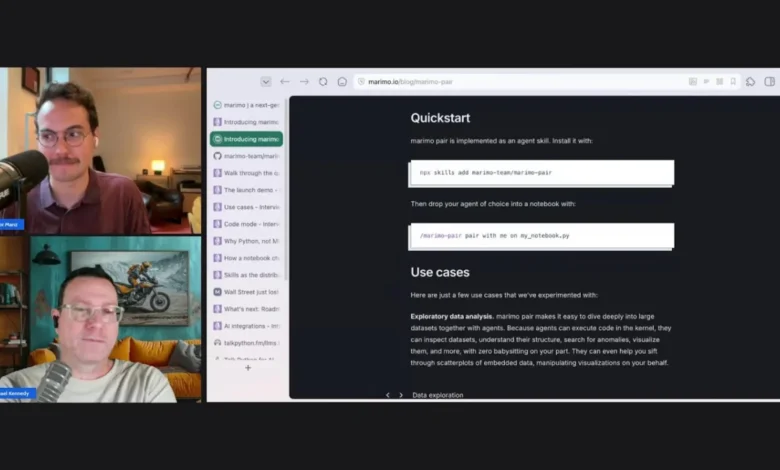
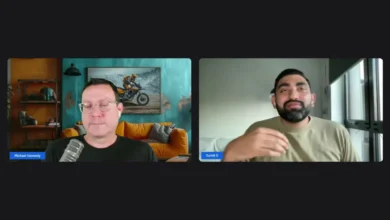
The technological landscape of software development and data science has undergone a significant paradigm shift with the emergence of agentic workflows, yet a persistent gap has remained between the file-based operations of coding agents and the state-dependent nature of data analysis. On June 30, 2026, during an industry-leading technical discussion, Trevor Manz of Marimo introduced "Marimo Pair," a specialized agent skill designed to bridge this divide. By integrating artificial intelligence agents directly into an active Python kernel, Marimo Pair allows these autonomous entities to access in-memory variables, live state, and real-time visual outputs, effectively transforming the computational notebook into a shared canvas for human-agent collaboration.
The Convergence of Reactive Programming and Agentic Intelligence
For several years, coding agents such as Claude Code and Codex have demonstrated high proficiency in traditional software engineering tasks. These workflows typically involve scoping a feature, editing static files on a disk, running unit tests, and committing changes. However, data science work is fundamentally different; it is iterative, exploratory, and heavily reliant on the live state of data held in system memory. Until the release of Marimo Pair, AI agents were largely "blind" to this live state, restricted to viewing the underlying file formats rather than the actual data objects those files produced during execution.
Marimo, the platform hosting this new capability, distinguishes itself from traditional tools like Jupyter through its reactive execution model. In a standard notebook, execution order is determined by the user, often leading to "hidden state" problems where a variable’s value does not match the code visible on the screen. Marimo utilizes a Directed Acyclic Graph (DAG) to track dependencies between cells. When a variable is updated in one cell, all descendant cells are automatically re-executed. This deterministic environment provides a stable foundation for AI agents, ensuring that the "truth" the agent sees in the code aligns perfectly with the data stored in the Python kernel.
Technical Architecture of Marimo Pair
The implementation of Marimo Pair relies on a "skill" distribution model rather than a heavy, monolithic integration. This approach allows the agent to learn how to interact with the Marimo environment through a slim markdown-based specification. Once the skill is installed, the agent is equipped with a primary tool: the ability to execute Python code within a running Marimo kernel.
The "Code Mode" API
Central to this integration is a semi-private API within Marimo known as "Code Mode." This interface is specifically designed for agent consumption, allowing the AI to:
- Inspect Notebook State: The agent can list all variables currently in memory, identify their data types, and view the source code of the cells that declared them.
- Mutate the Notebook: The agent can programmatically create, edit, and run cells, providing a mechanism for the AI to build up an analysis incrementally.
- Multimodal Feedback: In advanced implementations, the agent can receive visual feedback, such as screenshots of charts or tables, allowing for a more nuanced understanding of the data’s distribution and outliers.
By using Python itself as the communication language between the agent and the kernel—rather than a rigid JSON schema or a complex Model Context Protocol (MCP) toolset—the agent can compose complex operations. For instance, an agent can run a loop to generate five different visualizations simultaneously, adapting its strategy based on the success or failure of each previous step within the same execution cycle.
Chronology of Development and Distribution
The development of Marimo Pair follows a timeline marked by the rapid acceleration of AI tooling in the mid-2020s.
- Late 2023 – Early 2024: Marimo gains traction as a reactive alternative to Jupyter, appealing to software engineers who demand reproducibility in data science.
- 2025: The "agentic explosion" occurs, with tools like Claude Code and Cursor becoming standard for terminal-based development. Users begin requesting deeper integration between these agents and their data science workspaces.
- Fall 2025: The Marimo team begins experimenting with MCP tools but identifies friction in the schema-heavy requirements of existing protocols.
- Spring 2026: Development shifts toward the "Skill" model, focusing on a decoupled architecture where the agent learns to drive the notebook via Python commands.
- June 30, 2026: Marimo Pair is officially detailed, showcasing its compatibility with major agent harnesses including Claude Code, Codex, and OpenCode.
The distribution of Marimo Pair reflects the modern developer’s preference for lightweight, package-manager-driven workflows. Users can install the skill via NPM or utilize the uv package manager with Dino to add the skill to their system without leaving their preferred environment.
Industry Adoption and Token Economics
Market data from 2026 indicates that Claude Code has become the dominant harness for software engineers, followed by Google Copilot, Cursor, and Codex. Marimo’s decision to support these external harnesses—rather than forcing users into a proprietary Marimo chat interface—is a strategic move to remain "tool-agnostic."
From a technical efficiency standpoint, Marimo Pair offers significant advantages in "token economics." Traditional agents often require the entire contents of a notebook file (which may include thousands of lines of JSON-formatted metadata and stale outputs) to be fed into the context window. In contrast, Marimo Pair allows the agent to focus exclusively on the relevant variables in memory. Instead of the agent "reading" a 10,000-row CSV file, it simply asks the kernel for the data frame’s schema and summary statistics. This offloading of context to the Python kernel reduces the token burden on the Large Language Model (LLM), leading to faster response times and lower operational costs for the user.
Use Cases: From Exploratory Analysis to Headless Generation
Marimo Pair facilitates two primary modes of operation that cater to different stages of the data science lifecycle.
Hands-On Exploratory Data Analysis (EDA)
In this mode, the human remains the primary driver, using the agent as a sophisticated pair programmer. A user might highlight a specific section of a plot or a subset of a data frame and ask the agent to explain an observed anomaly. The agent, seeing the live data, can instantly run diagnostic queries—such as checking for null values or correlation coefficients—and suggest a course correction. This "vibe coding" approach lowers the barrier to entry for complex APIs, such as those used for advanced geospatial mapping or specialized financial modeling.
Headless Notebook Generation
Alternatively, users are increasingly employing Marimo Pair for headless tasks. A developer can point an agent toward a raw dataset and command it to "generate a full exploratory notebook with five key visualizations." Because the agent builds the notebook cell-by-cell within a live kernel, it can self-correct if a specific library is missing or if a data transformation fails. The resulting artifact is a guaranteed-to-run Marimo notebook that the human can then review and refine.
Official Responses and Strategic Outlook
While major cloud providers have sought to lock users into specific ecosystems, the Marimo team has advocated for an open-access model. Trevor Manz emphasized that the goal is to ensure Marimo remains a useful tool regardless of which model or harness a developer chooses. This sentiment is echoed by many in the open-source community who view the fragmentation of AI billing and subscription models as a significant hurdle to productivity.
Industry analysts suggest that the integration of state-aware agents into notebooks represents the "final mile" of AI-assisted data science. By moving beyond text-based suggestions and into live state manipulation, tools like Marimo Pair enable a level of precision previously unavailable in automated workflows.
Future Roadmap and Implications
The roadmap for Marimo Pair includes tighter integration with VS Code’s native notebook editor and the introduction of real-time collaboration features. Future iterations are expected to support "multi-agent" environments, where different AI entities can collaborate on the same notebook kernel alongside multiple human users.
Furthermore, the integration with cloud-hosted environments like "Molab" (Marimo’s cloud-hosted infrastructure) allows users to drive high-performance GPU clusters from a local terminal. This capability effectively sandboxes the AI’s execution in a secure cloud environment while providing the developer with a seamless, local-feeling interface.
As agentic AI continues to evolve, the distinction between "writing code" and "directing analysis" will likely continue to blur. Marimo Pair stands at the forefront of this evolution, asserting that the future of data science lies not in the static files on a disk, but in the dynamic, reactive, and shared memory of the computational kernel. By breaking down the wall between the agent and the live state, the data science community has gained a powerful new ally in the quest for insight.