Modernizing Data Lakes with Amazon S3 Tables and Trino on Amazon EMR: A New Paradigm for Scalable Analytics

The landscape of big data management is undergoing a significant transformation as enterprises shift away from the traditional, labor-intensive maintenance of data lakes toward automated, high-performance table formats. Organizations that rely on Amazon Simple Storage Service (Amazon S3) have historically faced a mounting operational tax—managing Apache Iceberg table maintenance, such as file compaction, snapshot expiration, and metadata tracking. These tasks, while essential for performance, often distract data engineering teams from their core mission: delivering actionable business insights. The introduction of Amazon S3 Tables, a purpose-built storage layer that provides native Apache Iceberg support with fully automated maintenance, marks a pivotal advancement in this space. When integrated with the high-performance distributed SQL query engine Trino, running on Amazon EMR, this architecture offers a robust, open-standards-based analytics stack designed to eliminate the “undifferentiated heavy lifting” of modern data infrastructure.
The Evolution of the Modern Data Lakehouse
To understand the significance of this integration, one must look at the evolution of the data lakehouse. Historically, companies struggled to reconcile the flexibility of S3-based data lakes with the performance requirements of interactive SQL workloads. Apache Iceberg emerged as the industry standard for table formats, allowing for schema evolution, ACID transactions, and time travel. However, Iceberg requires active management. As data volumes grow into petabytes, the overhead of managing millions of small files and stale snapshots can degrade query performance and increase costs.
The Amazon S3 Tables service effectively shifts this burden to the cloud provider. By leveraging the Apache Iceberg REST catalog specification, S3 Tables creates a standardized interface that decouples storage from compute, allowing disparate engines—such as Trino, Spark, and Flink—to interact with data in a consistent manner. The integration with Trino on Amazon EMR provides a high-concurrency, low-latency execution layer that is specifically optimized for this storage model.
Chronology of the Integration
The path to this unified architecture reflects a broader trend in AWS’s strategy to commoditize infrastructure management. Throughout late 2025 and 2026, the demand for "zero-touch" data management reached a critical inflection point. Data architects, burdened by custom-built compaction scripts and cron jobs designed to clean up Iceberg metadata, increasingly lobbied for managed services that could handle these tasks internally.
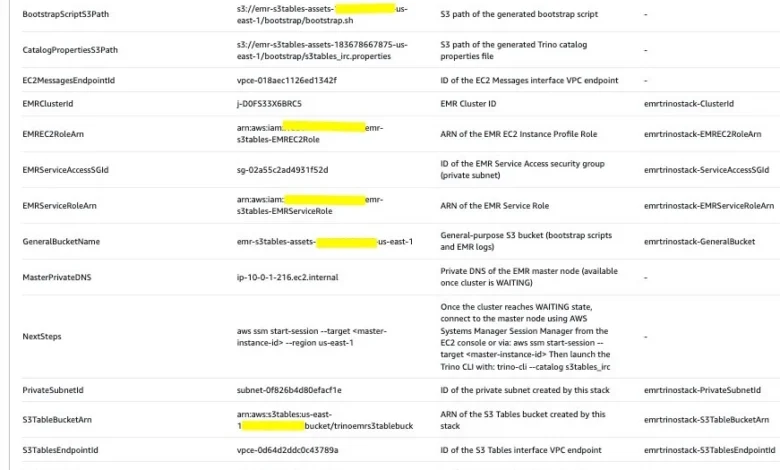
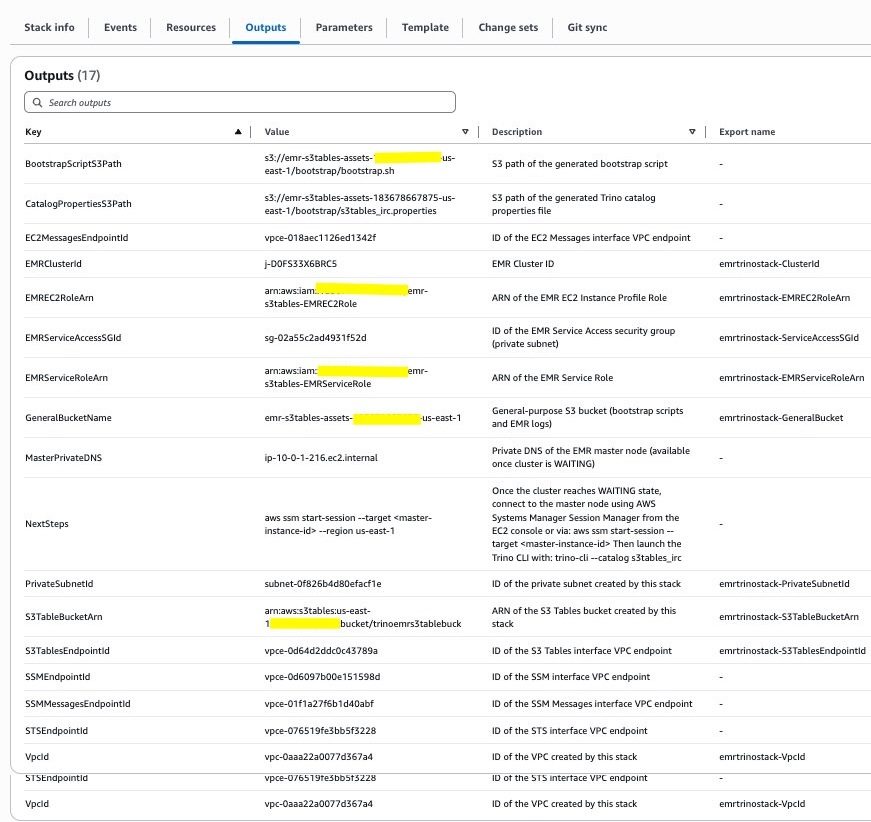
In response, the release of Amazon S3 Tables provided the missing link. By late 2026, with the release of Amazon EMR 7.12, the support for the Iceberg REST catalog endpoint was fully matured. This allowed organizations to replace complex, manually configured catalog services with a managed REST interface. The current deployment model, facilitated by CloudFormation, allows for the instantiation of these clusters in approximately 15 minutes, representing a significant reduction in the time-to-value for new analytics environments.
Technical Architecture and Data Flow
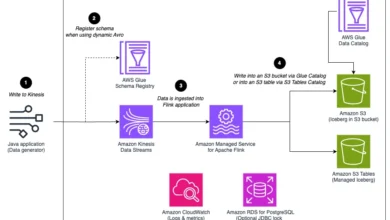
The architecture is built upon a modular design where compute and storage scale independently. At the compute layer, Amazon EMR handles the heavy lifting of cluster provisioning and automatic scaling. Apache Trino serves as the SQL engine, leveraging its advanced connector architecture to communicate with the S3 Tables REST endpoint.
When a user submits a query, the interaction follows a structured, efficient sequence:
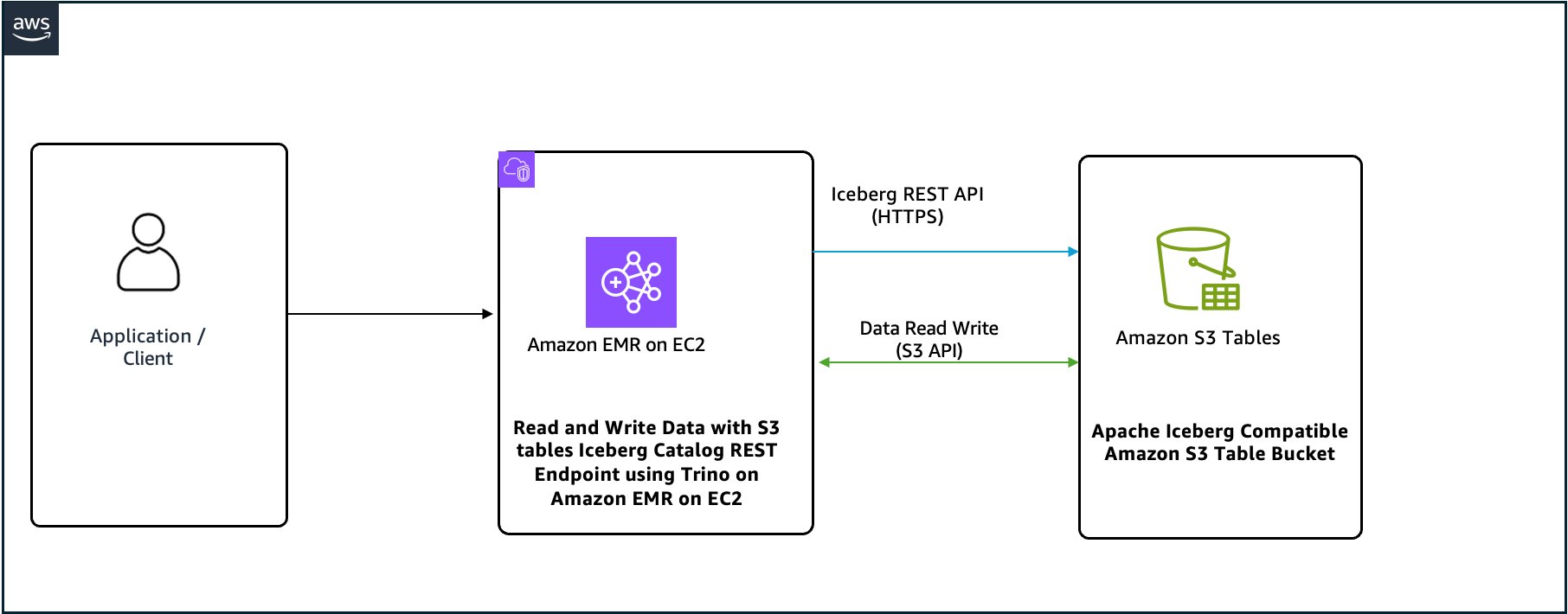
- Catalog Handshake: Trino communicates with the S3 Tables REST endpoint to retrieve metadata, partition maps, and file locations.
- Predicate Pushdown: Leveraging Iceberg’s metadata, Trino performs partition pruning, ensuring only the necessary data blocks are scanned.
- Execution: The query engine reads the data directly from S3, utilizing high-performance formats like Parquet or ORC.
- Transaction Commitment: During write operations, Trino coordinates with the S3 Tables service to perform atomic commits, ensuring that data is only visible to readers once the transaction is fully finalized.
This workflow is supported by AWS Signature Version 4 authentication, ensuring that the communication between the compute engine and the storage layer is as secure as it is performant.
Performance and Economic Implications
The primary benefit of this shift is the drastic reduction in total cost of ownership (TCO). By automating file compaction, the service ensures that query performance does not degrade over time—a common "performance tax" in unmanaged data lakes. Furthermore, because S3 Tables manages the lifecycle of snapshots, storage costs are optimized by preventing the accumulation of unused data versions.
Data from early implementers suggests that the separation of compute and storage allows for a "right-sized" environment. Organizations no longer need to provision excess compute capacity just to handle maintenance tasks; instead, the storage layer performs these operations in the background. For large-scale data platforms, this can result in a 20-30% reduction in infrastructure management time and a comparable improvement in query response consistency.
Standardizing the Industry: The Role of Open Standards
A central pillar of this solution is the adherence to open-source standards. By using the Apache Iceberg format and the REST catalog specification, AWS is effectively enabling a vendor-neutral ecosystem. This is a strategic move to prevent vendor lock-in, a common concern for enterprises migrating from legacy data warehouses.

Because the tables are formatted in open-standard Iceberg, an organization is not tethered to a single compute engine. If a business needs to pivot from Trino to Apache Spark for specific ETL workloads, or to Flink for real-time streaming, the underlying data remains accessible and consistent. This portability is increasingly cited by CTOs as a requirement for modern data strategy, as it ensures that the organization maintains control over its most valuable asset: its data.
Security and Governance in a Distributed World
Security remains a primary concern for any data lake implementation. The integration with AWS Lake Formation allows for granular, fine-grained access control that extends down to the row and column level. In a typical corporate environment, this means that a data scientist in the finance department can be granted access to specific, sanitized columns of a customer table, while an analyst in marketing might be restricted from accessing personally identifiable information (PII).
The use of IAM roles and resource-based policies ensures that access is governed by the principle of least privilege. By centralizing the security policy in Lake Formation, organizations can enforce consistent access controls regardless of whether the query originates from a Trino CLI, a Jupyter notebook, or an external business intelligence tool.
Broader Industry Impact and Future Outlook
The industry-wide move toward managed table formats like S3 Tables signifies the end of the "DIY" era for data lakes. For the past decade, data engineering teams have spent significant portions of their time building and maintaining custom glue code to keep their data lakes performant. The automation of these tasks allows for a shift in resource allocation toward higher-value activities, such as data modeling, feature engineering, and advanced analytics.
Looking forward, the integration between managed storage services and distributed SQL engines is expected to become even tighter. Future developments will likely focus on even deeper integration between query planners and storage metadata, further reducing the latency of interactive queries. As generative AI and machine learning workloads continue to demand high-quality, up-to-date data, the role of an automated, reliable, and performant data lakehouse will only grow in importance.
Conclusion
The combination of Amazon S3 Tables and Trino on Amazon EMR represents a sophisticated solution for modernizing data platforms. By prioritizing operational simplicity, performance at scale, and strict adherence to open standards, this architecture provides a blueprint for organizations looking to build a sustainable, future-proof data foundation.
For technical teams, the message is clear: the era of managing the intricacies of table maintenance is drawing to a close. By leveraging cloud-native automation, engineers can move beyond the mechanics of infrastructure and focus on the data itself, enabling faster innovation and more reliable decision-making. As the ecosystem continues to mature, this pattern of managed, open-standard storage will likely become the default architectural choice for enterprises navigating the complexities of the modern data-driven economy. Through this integration, AWS has not only addressed the technical bottlenecks of the present but has also established a framework that provides the flexibility required for the uncertain data demands of the future.